
Reviewed · BELGIAN FRIES TOURS
Frietmuseum Entrance Ticket
Bruges has a museum devoted to one of its most familiar foods: the humble potato fry. Inside the historic Saaihalle building, you follow the potato from Peru to Europe, then learn how fries became a Belgian specialty before reaching the medieval cellars for a serving you purchase separately.
I like two things here: the subject is unmistakably local, and the visit is easy to fit into a day of sightseeing. The English audioguide helps you move through the displays, while the basement fry counter gives the museum a tasty finish. The main drawback is that this is largely a self-guided, text-heavy museum, and some displays feel more suited to children than to adults seeking a polished food museum.
In This Review
- Key points to know
- A food museum in Bruges with a clear local theme
- The Saaihalle gives the visit an old-Bruges setting
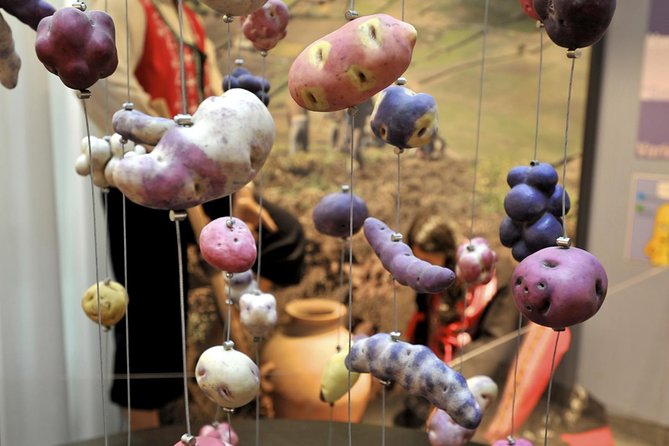
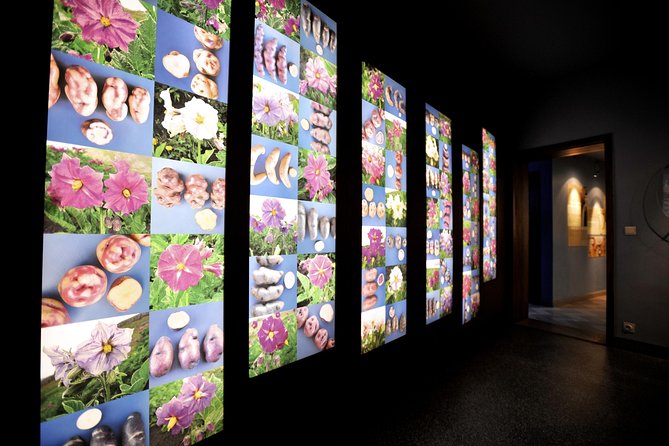
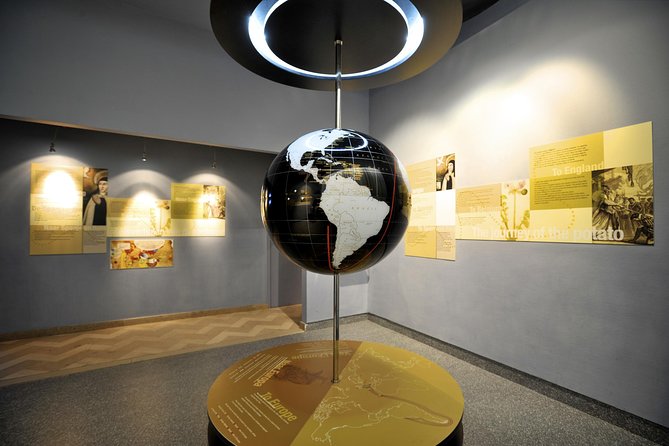
- Ground floor: begin with the potato in Peru
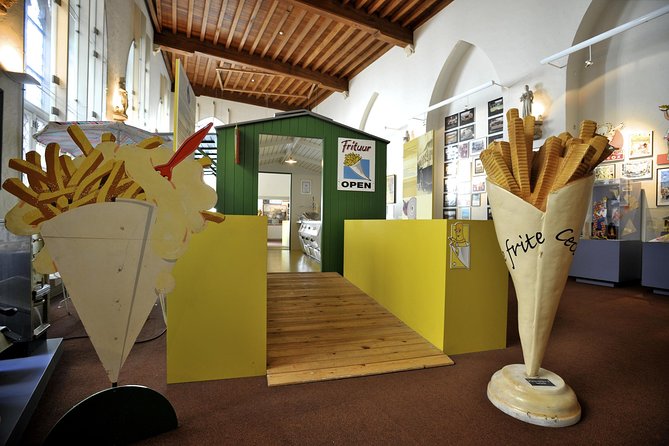
- First floor: trace the rise of Belgian fries
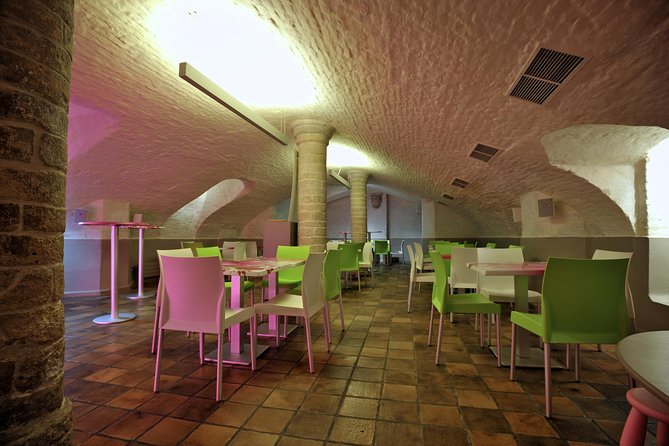
- Medieval cellars: the edible finish
- How much time should you allow?
- Is the English audioguide enough?
- The family-friendly style is both strength and weakness
- Price and value at $14.44
- When the Frietmuseum fits best into your day
- Who should book, and who should skip it?
- FAQ
- Where is the Frietmuseum located?
- How long does the visit take?
- What does the Frietmuseum explain?
- Is the tour available in English?
- Are fries included in the admission ticket?
- Can I buy food inside the museum?
- What are the museum’s opening hours?
- Do children need an adult with them?
- Is the museum suitable for families?
- Can I cancel the booking for a refund?
Key points to know
- Three levels tell one food story: Start with the potato on the ground floor, continue with the history of fries upstairs, and finish in the medieval cellars.
- The tasting costs extra: Admission includes the museum and audioguides, but fries and drinks are not included.
- The building is part of the appeal: The Frietmuseum occupies the historic Saaihalle, one of Bruges’ prettiest buildings.
- Plan on 40 minutes to an hour: Readers who study every panel may want longer, while a quicker visit works well on a busy sightseeing day.
- The museum suits families and food lovers: Interactive, child-friendly touches sit beside serious information about potatoes and fry production.
- Timing matters: It is open daily from 10 a.m. to 5 p.m., with the last tickets sold at 4:15 p.m.
A food museum in Bruges with a clear local theme
The Frietmuseum is not trying to cover all of Belgian cuisine. It has one job: explain the potato and the fry, two foods closely tied to Belgium’s culinary identity.
That narrow subject is useful. You do not need to commit half a day, and you can understand the museum’s story without prior knowledge. The visit takes place across several floors, so you get a little history, a little food culture, and a final chance to eat what you have just been reading about.
I like the way the museum connects an everyday snack with a much older story. The potato originated in Peru more than 10,000 years ago, and the ground-floor exhibits use that starting point to show how a crop from South America became central to European food traditions.
This is not a grand national museum with rare masterpieces. It is a focused, lighthearted stop that works best when you treat it as a short cultural break rather than the main event of your Bruges day.
More belgian fries tours in Bruges:
- Bruges: Frietmuseum Entry Ticket
★ 4.2 · 652 reviews - Brussels Walking and Tasting Tour (Beers,Chocolates&Fries/Waffle)
★ 5.0 · 929 reviews - Brussels Food Tour: 10 Tastings of Waffles, Beers, Fries & More
★ 5.0 · 89 reviews
The Saaihalle gives the visit an old-Bruges setting
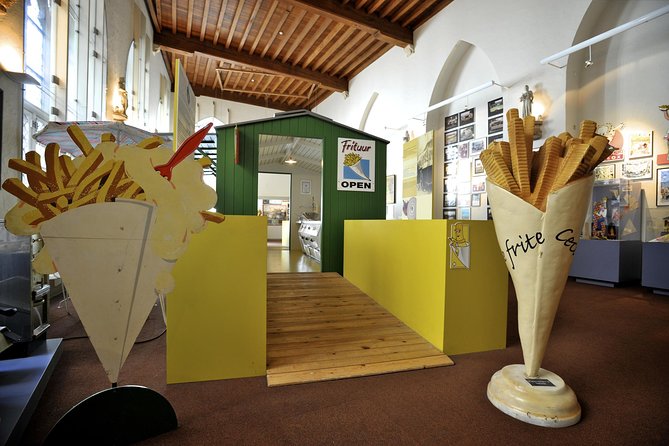
The museum is housed in the Saaihalle, a historic building described as one of the prettiest in Bruges. That setting adds something important: you are not visiting a modern food attraction in an anonymous retail space.
The building’s older character helps tie the subject to Bruges itself. You move through a historic structure while learning about a food that is still part of ordinary Belgian life. The contrast is fun. Medieval architecture outside and a museum about fried potatoes inside is exactly the kind of pairing that makes Bruges feel less formal and more human.
Because the Frietmuseum is near public transportation, it is a practical stop when your feet need a rest. It can also fill a wet morning or afternoon. The opening hours make it flexible, though you should not leave it until the last minute, since the final tickets are sold at 4:15 p.m.
Ground floor: begin with the potato in Peru
Your visit starts on the ground floor with the history of the potato. The key point is that the potato did not begin in Belgium, France, or anywhere else in Europe. Its story starts in Peru more than 10,000 years ago.
This first section gives the fry a wider context. Before asking who invented the dish, the museum asks where the main ingredient came from and how it became important enough to support so many food traditions.
Expect a self-guided format. You can use the audioguide in English, but much of the experience also involves reading panels and looking at displays. If you enjoy food history, this section gives you a useful foundation. If you came mainly for a quick snack, it may feel slower than expected.
Some of the presentation is intentionally accessible to children. That can be a plus for families, since younger visitors have a better chance of staying interested. Adults who prefer a more sophisticated exhibition may find parts of the ground floor fairly basic.
Still, the potato section is more than filler. It explains why a simple food deserves a museum at all. The fry begins with agriculture, travel, and changing eating habits, not just a fryer and a paper cone.
First floor: trace the rise of Belgian fries
On the first floor, the focus shifts from the potato to the fry. You learn how fries came to Belgium and how the food developed into a national specialty.
This is the heart of the visit. The subject is familiar, but the route from potato to fry is not something most people stop to examine. The displays give you a chance to think about how a simple preparation can become a strong part of a country’s identity.
The museum’s approach is educational rather than theatrical. You should expect information panels, displays, and an audioguide, not a cooking class or a live demonstration. There is a fair amount of reading, so your experience depends on how much time and attention you want to give it.
I would allow at least 40 minutes for a sensible visit. If you read most of the material, pause at the displays, and stop for fries afterward, an hour or a little more is more realistic. The overall duration is easy to control, which makes this a good add-on to a day built around Bruges’ canals, squares, and churches.
The first floor also helps explain why the food is called Belgian fries in this setting. The museum takes pride in fries as a Belgian culinary specialty, and the tone is understandably proud rather than detached. That national affection is part of the charm, even if you should not expect a debate on every competing claim about the dish’s origins.
A few more Bruges trips to weigh up
- Bruges: Historium Bruges Story and VR Ticket
★ 4.5 · 595 reviews - Historium Story + VR Ticket
★ 4.5 · 369 reviews - Bruges: Historium Bruges Medieval Experience Ticket
★ 4.3 · 220 reviews - Bruges Beer Experience Entrance Ticket
★ 4.0 · 185 reviews
Medieval cellars: the edible finish
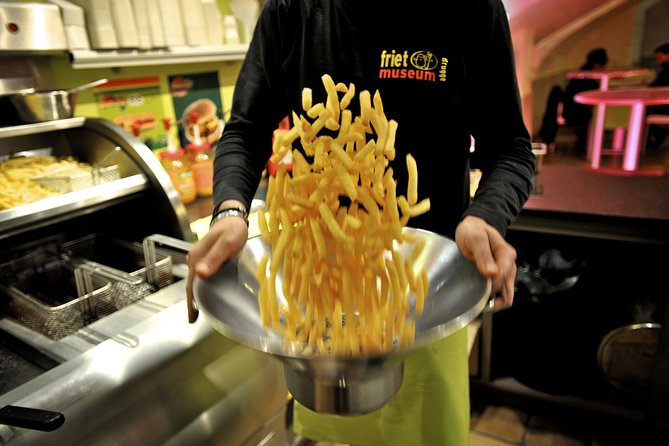
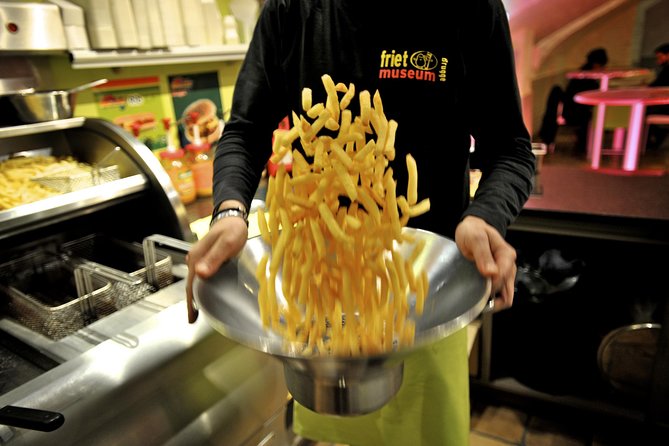
The museum ends in the building’s medieval cellars, where you can buy fries. This is the part many people will remember most clearly, and for good reason. After reading about potatoes and fry culture, you get the chance to eat a serving in an atmospheric old setting.
The crucial detail is that the fries are not included in the admission price. Food and drinks are available on site, but you pay separately. The ticket covers entry and the audioguides, so budget for an extra purchase if you want the full experience.
That arrangement may disappoint you if you arrive expecting a tasting to be part of the ticket. One visitor specifically expected a fry tasting and only discovered that the serving had to be purchased. The practical fix is simple: treat the basement food stop as an optional café visit, not an included sample.
The fries have received strong praise, and the basement is a sensible place to try them. You can also use the visit as a way to learn the local approach to eating fries. The museum aims to give you tips on enjoying them like a local, which makes the food stop more than a quick purchase.
I would plan the visit around this final stop. You can tour the exhibits first, then decide how hungry you are. If you already have a major Belgian meal booked, the museum still works without food, but the basement serving gives the experience a more complete ending.
How much time should you allow?
The stated visit length is approximately 40 minutes to one hour. That estimate is realistic for a focused visit, but your pace matters.
Use this rough guide:
- 40 minutes: Move steadily, listen to selected audioguide material, and avoid reading every panel.
- One hour: Take your time with the potato and fry displays, then buy fries in the basement.
- Longer than an hour: Read most of the text, pause often, and make the food stop part of a relaxed break.
The museum is easy to pair with other Bruges sights because it does not demand a fixed tour departure. You are not joining a guide at a set time or waiting for a group to move. The maximum group size is 15, but the experience itself is self-guided, so the small capacity should help keep the visit manageable.
It is also a useful rainy-day choice. The subject is light enough to lift a gray afternoon, and the visit gives you an indoor stop without requiring a major time commitment.
Is the English audioguide enough?
The ticket includes audioguides, and English is the offered language for this experience. That matters if you want more than a quick look at the displays but do not want to read every panel.
An audioguide can make the visit easier to follow, especially as the museum moves from the potato’s origins to the development of fries. It also gives the museum a clearer narrative than you might get by wandering through the floors without a plan.
At the same time, do not expect a fully guided tour with a live expert. There are no guide names provided because this is a self-guided museum visit. Your experience depends on the recorded material, the displays, and your own pace.
The amount of reading is the main consideration. Some adults will find the text useful and well translated into English. Others may feel there is too much reading for a museum devoted to one food. You can make the visit work either way by choosing the sections that interest you most.
The family-friendly style is both strength and weakness
The Frietmuseum is designed to suit a wide age range. Its interactive elements and simpler displays can help children stay engaged, and children must be accompanied by an adult.
That family-friendly approach is useful if you are visiting Bruges with children and want a break from churches, art, and architecture. Fries are an easy subject to sell to younger visitors, and the final food stop gives them a clear reward for paying attention.
For adults, the tone may feel uneven. Some parts take the history of potatoes seriously, while others use a more playful, child-oriented style. That mix means the museum does not always feel equally engaging from one display to the next.
I would recommend it most to families, food lovers, and anyone who enjoys small specialty museums. If you prefer major collections, formal interpretation, or hands-on cooking instruction, you may find the visit average.
Price and value at $14.44
At $14.44 per person, the ticket is not a major expense, but it is also not simply a cheap snack stop. You are paying for access to a focused museum, the English audioguide, and the historic setting.
The value depends on what you want from Bruges. If you are curious about Belgian food culture and enjoy reading museum displays, the ticket can fill an hour well. If your only goal is to eat fries, you can skip the admission and buy food elsewhere, since the serving in the basement costs extra.
I see the price as fair for a short specialty museum, provided you accept its limits. The experience is not packed with elaborate exhibits, and some of the material feels basic. Its value comes from the combination of three things: a very clear subject, an old Bruges building, and the chance to eat fries at the end.
The experience is often booked around 13 days ahead. That does not mean you must reserve two weeks in advance, but it suggests that planning ahead is sensible during busy periods. Confirmation is provided at booking, and the activity allows free cancellation up to 24 hours before the start time.
When the Frietmuseum fits best into your day
The museum works well in several situations:
On a rainy day: You get an indoor activity with a warm, edible finish.
With children: The food theme and family-friendly displays may hold attention better than a traditional art museum.
For food-focused sightseeing: It adds context to a dish you are likely to encounter throughout Belgium.
Between major Bruges sights: The short duration makes it easy to place between other stops.
When you want something less formal: This is a playful specialty museum, not a solemn cultural institution.
I would avoid treating it as your main Bruges attraction. The city offers major historic sights, and the Frietmuseum is best used as a supporting stop. Its appeal is strongest when you want something specific, easy, and a little quirky.
Who should book, and who should skip it?
I would book this if you like food history, enjoy small museums, or need a family-friendly indoor activity. The historic Saaihalle setting and the basement fries give the visit a clear sense of place, while the audioguide lets you explore without keeping up with a group.
I would think twice if you dislike reading, want a live guide, or expect the food to be included. The museum has a lot of written information, some displays feel child-oriented, and the fry serving is an extra purchase.
The best plan is simple: allow about an hour, visit before 4:15 p.m., use the English audioguide, and keep a little extra money for the basement fries. Book it when you want a short taste of Belgian food culture, not when you are searching for Bruges’ grandest museum.
FAQ
Where is the Frietmuseum located?
The Frietmuseum is in Bruges, Belgium, inside the historic Saaihalle building.
How long does the visit take?
Allow approximately 40 minutes to one hour. You may need longer if you read most of the displays and stop for fries.
What does the Frietmuseum explain?
The museum explains the history of the potato, including its origins in Peru more than 10,000 years ago, then traces the history of fries and their arrival in Belgium.
Is the tour available in English?
Yes. The experience is offered in English and includes audioguides.
Are fries included in the admission ticket?
No. Food and drinks are not included. You can buy fries in the medieval cellars for an additional cost.
Can I buy food inside the museum?
Yes. Food is available on site, including fries in the basement area.
What are the museum’s opening hours?
The museum is open every day from 10 a.m. to 5 p.m. The last tickets are sold at 4:15 p.m.
Do children need an adult with them?
Yes. Children must be accompanied by an adult.
Is the museum suitable for families?
Yes. The exhibits include family-friendly and interactive elements, though adults should expect a self-guided visit with a fair amount of reading.
Can I cancel the booking for a refund?
Yes. You can cancel for a full refund up to 24 hours before the experience start time. Cancellations or changes made less than 24 hours before the start time are not accepted for a refund.
Just added around Bruges
- 2-Hour Private Walking Tour of Bruges★ 5.0 · 13 reviews
- The Waffles ‘n Coffee Breakfast in Bruges Centre★ 4.5 · 9 reviews
- Explore the Instaworthy Spots of Bruges with a Local★ 5.0 · 3 reviews
- Photo Tour “Jan van Eyck”★ 4.0 · 7 reviews
- 6 Hour Bruges Shore Excursion from Zeebrugge Cruise Port★ 4.5 · 23 reviews
- Ticket Expo Body Worlds in Bruges, Belgium★ 4.5 · 11 reviews
- Bruges Walking Tour with Audioguide on Your Smartphone★ 4.5 · 14 reviews
- Discover the secrets of Bruges by playing!★ 4.5 · 7 reviews
Belgian Fries Tours, compared.
Brussels Walking and Tasting Tour (Beers,Chocolates&Fries/Waffle)
Read our review →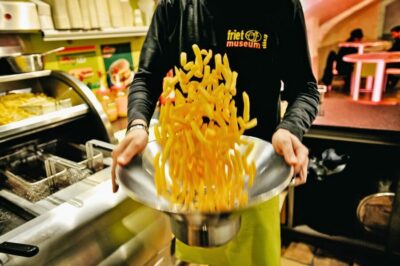

Brussels Food Tour: 10 Tastings of Waffles, Beers, Fries & More
Read our review →
Browse the lists this tour appears in