
Reviewed · 3-HOUR EXPERIENCES
Brussels 3-Hour Guided Art Nouveau Tour
Brussels hides its best Art Nouveau work behind ordinary-looking streets, and this tour takes you straight to it. You’ll follow the style from the Grand-Place to the Bailli district, where iron, glass, wood, and stone curve into façades that look nothing like standard city blocks. I especially like the focused route through the Bailli district and the way guides such as Maria connect architecture with politics, technology, and daily life. I also like the interior photographs used to explain buildings you cannot enter.
The main catch is simple: the houses are viewed from outside. The tour finishes at the Victor Horta Museum, but admission is not included, and you need to arrange your own ticket if you want to go inside. Expect plenty of walking, an uphill start, and a tram ride, with bilingual explanations sometimes making the three-hour outing longer.
In This Review
- Key points at a glance
- Why this three-hour route is worth your time
- From Old England House to Victor Horta
- Hotel Tassel and the ideas behind Art Nouveau
- What the Bailli district adds
- Why the interior photographs matter
- Guide style and language
- Price, pace, and practical value
- Who should book this Brussels walk?
- Should you book the Art Nouveau tour?
- FAQ
- Where does the Brussels Art Nouveau tour start?
- Where does the tour end?
- How long does the tour last?
- Is admission to the Victor Horta Museum included?
- Can I enter Hotel Tassel or the other houses?
- Which buildings are included?
- Which languages are available?
- Is transportation included?
- What should I bring?
- Is the tour wheelchair accessible?
- What is the cancellation policy?
Key points at a glance
- Hotel Tassel anchors the story: See Victor Horta’s 1893 to 1894 town house, often treated as a key early Art Nouveau work.
- Bailli offers a less-touristed Brussels: The route reaches a district with one of the city’s largest collections of Art Nouveau buildings.
- The guide supplies the interiors: Printed photographs help you understand rooms and decoration that remain closed to the public.
- Architecture comes with social context: The tour links Art Nouveau to new building methods, politics, and the changing city.
- The finish is well chosen: You end outside the Victor Horta Museum, making a separate museum visit easy to plan.
- Plan for walking: Comfortable shoes matter, and transportation costs are not included.
Why this three-hour route is worth your time
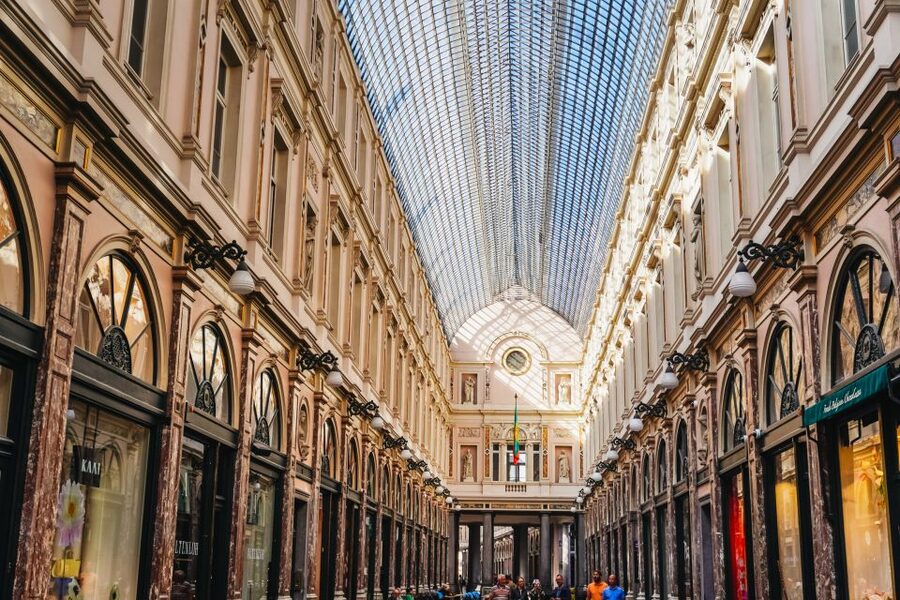
Art Nouveau is easy to miss when you walk through Brussels on your own. You may notice a curling balcony or a flower-shaped doorway, but without context, it can look like decorative fussiness. A good guide shows you the organizing ideas: flowing lines, plant forms, unusual windows, exposed structure, and a refusal to treat a building as a plain box.
I like this tour because it treats Art Nouveau as more than a collection of pretty façades. The guide explains how architects combined iron, glass, wood, and stone in new ways. You also hear about the people who commissioned these houses and the social and political setting that allowed such experimental design to appear in Brussels.
The experience has earned a rating of 4 out of 5 from 282 bookings, with especially strong praise for the guides’ preparation and enthusiasm. Maria is singled out in several accounts for her research, use of interior photographs, and ability to connect buildings with wider events. Guides have also included Danielle and a guide identified as Mary or Marie, so the exact personality and presentation may vary by date.
The meeting point is the Grand-Place at 10:00, with the guide holding a white umbrella. That is a useful landmark in a busy square, but arrive early enough to locate the group without rushing. From there, the route uses a tram to reach Bailli before continuing on foot.
A few more Brussels trips to weigh up
- Brussels: Private 3-Hour Sightseeing Walking Tour
★ 4.6 · 112 reviews - Beer Tasting and Scavenger Hunt in Brussels – About 3 Hours
★ 4.5 · 35 reviews - Private Wellness (3 hours)
★ 5.0 · 6 reviews
From Old England House to Victor Horta
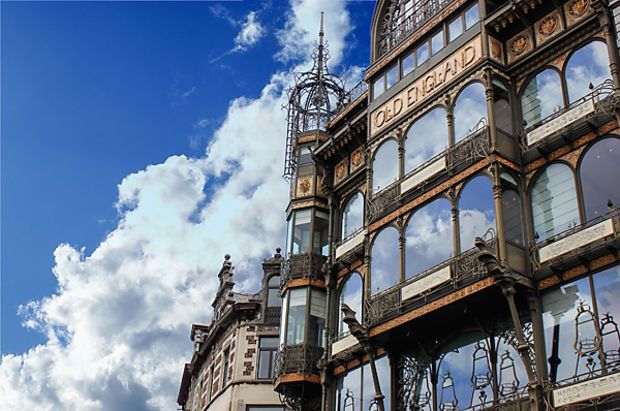
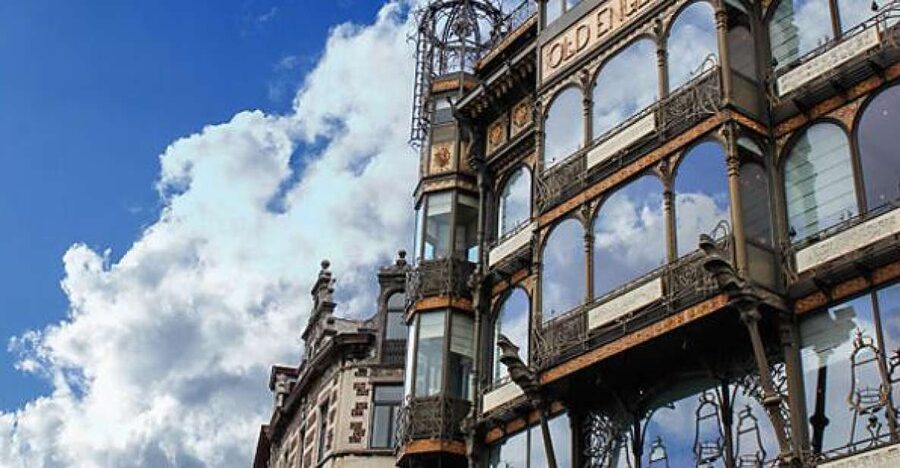
The itinerary begins with Old England House, now home to the Musical Instrument Museum. Its elaborate metalwork and curved forms offer an immediate introduction to Brussels Art Nouveau. It is a good first stop because you can start looking for the details the guide will explain throughout the morning.
Next comes Hotel Tassel, designed by Victor Horta in 1893 and 1894. Horta is the name most closely linked with Brussels Art Nouveau, and this house gives the tour a strong architectural reference point. You will see the exterior and hear why Horta’s work mattered, but you will not enter the building as part of the tour.
The route then moves through several houses connected with Octave Van Rysselberghe and other major figures. The Van Rysselberghe House dates from 1912. Hotel Otlet was designed by Octave Van Rysselberghe and Henry van de Velde between 1894 and 1898, while Hotel Goblet d’Alviella dates from 1882.
That range of dates helps you see that Art Nouveau did not appear fully formed in one year. The route includes work from different stages of the movement, with architects testing new ideas in different ways. I find this more useful than seeing a single famous house without comparison.
You will also see Hotel Ciamberlani, designed by Paul Hankar in 1897, and the home of painter René Janssens, built by Hankar in 1898. The route includes work connected with architect Armand Van Waesberghe, the Beukman House by Albert Roosenboom from 1900, and Paul Hankar’s private home.
The itinerary covers many addresses, but the experience is not an architectural inspection of every building in the area. The guide chooses specific examples and explains why they matter. If you want to see a larger number of houses, ask for addresses during the walk or use the tour as an introduction to a self-guided Art Nouveau outing afterward.
Hotel Tassel and the ideas behind Art Nouveau
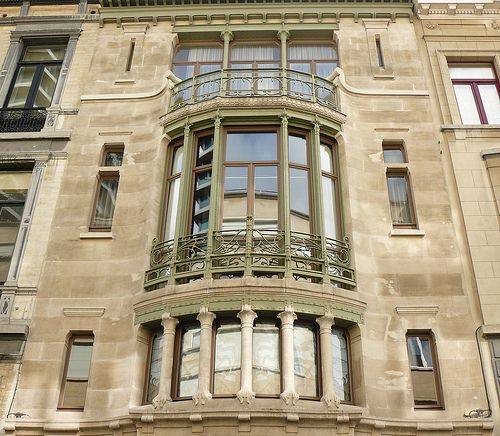
Hotel Tassel is more than another stop for a photograph. It gives your guide a chance to explain how Victor Horta moved away from rigid historical styles and treated the interior and exterior as parts of one design.
You will hear about the use of iron, glass, wood, and stone, along with the way these materials could be shaped into curves and patterns. The point is not simply that the building looks ornate. It is that the structure, decoration, light, and movement through the house were considered together.
The guides praised most often are strong at making these ideas understandable. Maria, in particular, has explained links between the Art Nouveau movement and political parties of the period, as well as social and technological changes. That extra context gives the façades a human setting instead of leaving you with a list of architects and dates.
I also appreciate that the tour can help you distinguish Art Nouveau from Art Deco. The styles sit close together in time, and many visitors confuse them. A careful explanation of line, ornament, materials, and period lets you keep looking for those differences later in Brussels.
What the Bailli district adds
The Bailli district is the heart of the walk. It is described as a village within Brussels and has one of the city’s largest concentrations of Art Nouveau buildings. The setting matters because you are not being sent from one isolated monument to another. You are seeing how experimental architecture fits into a real residential neighborhood.
This part of Brussels is outside the usual Grand-Place route. The change of setting is one of the tour’s best features. You get away from the city center and see streets that many first-time visitors would not find without a guide.
The route is not flat from the start. One detailed account describes the opening section as uphill, with the strongest Art Nouveau material arriving after about an hour. That is useful to know. If you want immediate architectural spectacle, the first part may feel like a slow build. If you enjoy a story that gathers pace, the progression works well.
The tour involves a tram ride and substantial walking. The tram ticket or other transportation cost is not included, so carry a little extra for that. Wear comfortable shoes, especially if you plan to visit the Horta Museum after the walk.
Same old town, a completely different kind of day:
- Brussels: Atomium Entry Ticket with Design Museum Ticket
★ 4.4 · 9,254 reviews - From Brussels: Guided Day Trip to Bruges and Ghent
★ 4.6 · 8,353 reviews - From Brussels: Bruges & Ghent Day Tour – 2 Fairytale Cities
★ 4.7 · 8,242 reviews - Choco-Story Brussels: Chocolate Museum Entrance with Tasting
★ 4.3 · 4,883 reviews
Why the interior photographs matter
The largest limitation is also the reason the guide’s materials are valuable. You will look at the houses from the street and cannot tour their interiors during this activity. For buildings designed as total works of art, that leaves out an important part of the story.
Maria has used printed photographs of interiors to show staircases, rooms, furnishings, and decorative details that you cannot see through the front door. This does not replace entry, but it changes the way you read the exterior. A window, doorway, or curve becomes part of a larger interior plan rather than an isolated ornament.
If seeing Horta’s own home matters to you, reserve admission to the Victor Horta Museum before the tour. The walk ends in front of it, but museum entry is separate. One person arrived without a pre-booked ticket and could not go inside, which is an avoidable disappointment.
The museum is the natural follow-up because the guided explanation gives you a set of questions to carry indoors. You will already be watching for how Horta handles space, materials, light, and decoration. The tour and museum work better together than either one alone, provided tickets are available for the time you need.
Guide style and language
The activity is offered in Spanish, English, and French. A live local guide leads the walk, and the guide’s level of preparation is one of the most praised parts of the experience.
The strongest guides do not simply point at façades. They tell stories about the architects, explain the materials, answer questions, and connect design with the city’s past. Some have handed out small photo postcards or printed images, which can make the presentation more concrete.
The group may be bilingual. When the same explanation is given in two languages, the tour can take longer and the rhythm may feel less brisk. One account describes a large bilingual group where the guide repeated the full discussion, yet still made sure everyone could hear and follow.
That format may suit you if you value detail more than speed. It may frustrate you if you prefer a quick walk with short explanations. At its best, the interactive approach includes questions and even a little humor. One earlier account felt that questions were not always welcomed, so guide-to-guide variation is possible.
Price, pace, and practical value
At $35 per person, this is a fair price for a three-hour specialist walk, particularly if Art Nouveau is one of your reasons for visiting Brussels. You are paying for the route, the guide’s research, and access to a part of the city that is easy to overlook.
The value is less obvious if you only want to see famous landmarks from the outside. You will not enter Hotel Tassel, Hotel Otlet, or the private houses, and museum admission is not included. In that case, the tour works best as an orientation rather than a complete architectural visit.
I would compare the cost with the time it saves you. Finding these addresses, understanding their architects, and learning what to look for would take planning. The guide also adds stories and interior images that a map alone cannot provide.
The activity allows free cancellation up to 24 hours before departure and offers reserve-now, pay-later booking. The tour is listed as wheelchair accessible, but the uphill walking, tram transfer, and street route are still worth discussing when booking if mobility is a concern.
Who should book this Brussels walk?
I would choose this tour if you enjoy architecture, design, city history, or photography. It is also a good fit if you have already seen the Grand-Place and want to understand another side of Brussels.
You do not need a technical background. The guide explains the buildings in plain terms and helps you spot features you might otherwise walk past. The route is especially useful for first-time Art Nouveau visitors who want a clear introduction before visiting the Horta Museum.
I would think twice if you dislike walking, uphill streets, or long explanations. I would also skip it if your main goal is interior access. The tour cannot provide that, and the Horta Museum requires a separate ticket.
For independent explorers, the walk can serve as a starting map. Take note of the addresses, use the guide’s explanations to sharpen your eye, then continue through the district at your own pace. The tour covers only part of Brussels’ remaining Art Nouveau houses, so there is room for a second outing.
Should you book the Art Nouveau tour?
Book it if you want a well-explained introduction to Brussels architecture rather than a quick photo stop. The route reaches the Bailli district, includes Hotel Tassel and several less familiar houses, and gives you useful context about materials, architects, politics, and city life.
My practical advice is to reserve the Horta Museum separately before you go, bring comfortable shoes, and allow extra time if the group is bilingual. With those points handled, the $35 cost is sensible for anyone who wants to see Brussels through its doors, curves, ironwork, and carefully planned façades.
FAQ
Where does the Brussels Art Nouveau tour start?
The tour starts at the Grand-Place in Brussels at 10:00. The guide holds a white umbrella.
Where does the tour end?
The route ends in front of the Victor Horta Museum.
How long does the tour last?
The guided walk lasts three hours.
Is admission to the Victor Horta Museum included?
No. Museum admission is not included, so you need to arrange and pay for it separately.
Can I enter Hotel Tassel or the other houses?
No. The buildings on the route are viewed from outside. The guide may use photographs to explain their interiors.
Which buildings are included?
The itinerary includes Old England House, Hotel Tassel, Van Rysselberghe House, Hotel Otlet, Hotel Goblet d’Alviella, Hotel Ciamberlani, René Janssens’ house, work connected with Armand Van Waesberghe, the Beukman House, Paul Hankar’s private home, and the Victor Horta Museum exterior.
Which languages are available?
The live tour is offered in Spanish, English, and French.
Is transportation included?
The route includes a tram ride, but transportation costs are not included.
What should I bring?
Bring comfortable shoes because the activity involves walking and includes an uphill section.
Is the tour wheelchair accessible?
Yes, the activity is listed as wheelchair accessible.
What is the cancellation policy?
You can cancel up to 24 hours in advance for a full refund. You can also reserve now and pay later.
Just added around Brussels
- Standard vehicle from Brussels airport to city of Antwerp★ 5.0 · 4 reviews
- Private transfer from BRU Airport to Brussels city with luxury limousine 3 pax★ 4.5 · 8 reviews
- Luxury vehicle from Brussels airport to the city of Brussels★ 4.0 · 5 reviews
- Transfer Brussels Airport –> City MB E Class 1-3 PAX (ONE WAY)★ 5.0 · 6 reviews
- PRIVATE MPV TRANSFER FROM/TO BRUSSELS AIRPORT (Max 6 pax) ONE-WAY★ 5.0 · 4 reviews
- Transfer Brussels Airport (BRU) –> City Center 7 PAX (ONE WAY)★ 5.0 · 7 reviews
- Transfer Brussels Airport –> Brussels MB V Class 7 PAX (ONE WAY)★ 5.0 · 4 reviews
- Brussels: City Walk with Audioguide in 7 Languages on your Phone★ 3.5 · 4 reviews
3-Hour Experiences, compared.

Beer Tasting and Scavenger Hunt in Brussels – About 3 Hours
Read our review →
BRYGGJA ROMANTICA – 3 Hour Romantic Tour in Bruges
Read our review →
Private 3-hour walking tour of Bruges with official tour guide
Read our review →Browse the lists this tour appears in