Reviewed · CITY TOURS
Brussels: Private Tour of the Upper and Lower City
Brussels reveals itself in two layers on this private walking tour: the busy Lower City of squares, arcades, and old trading streets, then the hilltop Upper City of churches, palaces, museums, and grand views. You get a useful lesson in how the capital grew, rather than a random parade of monuments.
I like the clear split between the two areas, and I like having a guide who can shape the talk around Art Nouveau, beer, chocolate, or architecture. Guides Emil and Mr. Boeykens have been singled out by name for keeping the history lively and well paced. The main drawback is that three hours is tight for two substantial walks, especially since museum tickets, food, drinks, and transport cost extra.
In This Review
- Key points at a glance
- Why the Upper and Lower City format works
- Grand Place, Brussels’s grand opening scene
- Manneken Pis and the playful side of Brussels
- Saint-Géry and Saint-Catherine: water, food, and old city structure
- De Brouckère, Monnaie, and the opera house
- The Royal Galleries, a polished finish to the Lower City
- The cathedral and the climb into the Upper City
- Royal Park and the Place des Palais
- Choosing between the Musical Instruments Museum and Magritte area
- Petit Sablon and Grand Sablon
- What the $353 group price means
- Language, pickup, and physical demands
- Who will get the most from this tour
- Should you book it?
- FAQ
- How long is the Brussels Upper and Lower City tour?
- What is the price of the private tour?
- Is the tour private?
- What languages are available?
- Can the guide pick me up at my hotel?
- Are museum tickets included?
- Are meals and drinks included?
- Is the tour wheelchair accessible?
Key points at a glance
- Two sides of Brussels: Walk the Lower City around Grand Place, then climb to the Upper City and the royal quarter.
- A genuinely private format: The listed price is $353 per group of up to 20, with groups limited to 25 participants.
- Strong guide flexibility: Request an entertaining, academic, or professional approach, with eight language options.
- Big-name sights without a museum-heavy schedule: See the cathedral, opera house, royal park, Sablon, and major museums from outside or choose one museum stop.
- Hotel pickup is possible: This can simplify the start, but transport during the tour is not included.
- Plan for walking: The route includes an uphill section and several central squares, so comfortable shoes matter.
Why the Upper and Lower City format works
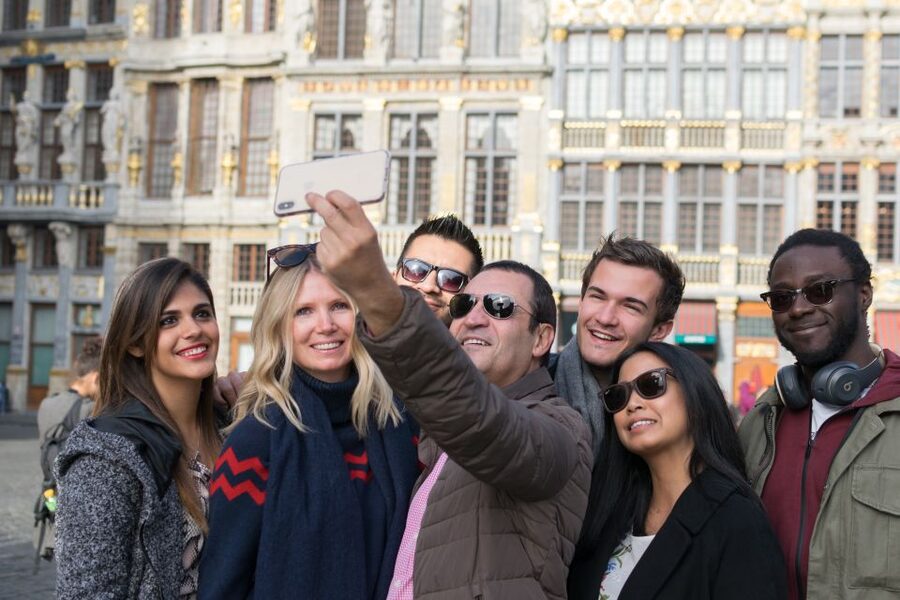
Brussels can feel scattered if you only tick off its famous sights. The city center mixes medieval lanes, nineteenth-century boulevards, royal institutions, museums, shopping arcades, and modern urban life. This tour gives that mixture a simple shape.
The Lower City is the commercial and street-level Brussels. You begin at Grand Place, move toward Manneken Pis, then continue through the former Saint-Géry island area, Saint-Catherine, De Brouckère, Monnaie, and the Royal Galleries. The route helps you see how water, trade, theater, shopping, and civic power shaped the center.
The Upper City rises toward the cathedral, royal park, palace, museum quarter, and Sablon. Here the mood changes. The streets feel more formal, and the buildings point toward Belgium’s monarchy, state institutions, fine arts, and music.
I like this structure because it gives you a mental map you can use after the guide leaves. You are not just hearing dates. You are learning why one part of Brussels feels commercial and close to the ground while another feels ceremonial and uphill.
There is one practical catch. The description presents both sections within a three-hour experience, with the Upper City described as an afternoon continuation. Confirm the exact timing when you reserve. A three-hour walking tour can cover the main story, but it will not allow a long museum visit, leisurely tastings, and detailed exploration of every square.
A few more Brussels trips to weigh up
- Brussels Highlights & Hidden Gems Private Tour with a Local Guide
★ 5.0 · 251 reviews - Brussels: Belgian Beer Tasting and Course at a Private Bar
★ 4.6 · 219 reviews - Brussels PRIVATE TOUR With Locals: Highlights & Hidden Gems
★ 5.0 · 177 reviews
Grand Place, Brussels’s grand opening scene
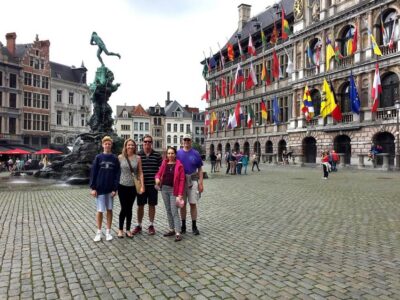
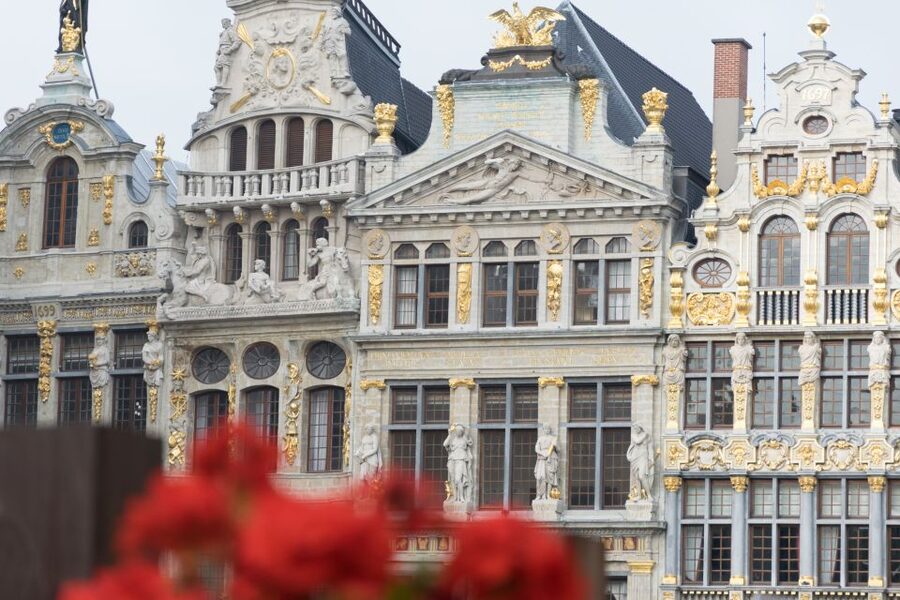
The tour starts at Grand Place, the obvious place to begin. This central square is the city’s visual calling card, with ornate historic buildings enclosing a broad public space. Your guide can help turn the impressive architecture into a readable story about Brussels rather than leaving you to admire a wall of gold trim and move on.
Grand Place is also a useful meeting point because it sits at the heart of the Lower City route. From here, you can quickly reach several major sights on foot.
Expect the square to be one of the more popular parts of central Brussels. That makes it photogenic but not quiet. A private guide is useful here because you can ask about details that catch your eye, and you can pause briefly without being tied to a large public group’s script.
The tour does not include food or drink, so Grand Place is not automatically a tasting stop. If Belgian chocolate or beer is a priority, tell the guide early. The itinerary specifically allows the discussion to include both, but a paid tasting or restaurant visit is not part of the price.
Manneken Pis and the playful side of Brussels
From Grand Place, you head to Manneken Pis, the small bronze statue that has become one of Brussels’s best-known symbols. It is a quick stop, and its fame is out of proportion to its size. That contrast is part of the fun.
This is a good moment to ask your guide about the city’s sense of humor and civic identity. Brussels is not presented here as a solemn capital only. The route balances royal buildings and grand squares with a cheeky little figure that has long attracted attention.
Do not expect a large monument or an extended visit. Manneken Pis is compact, and the value comes from context. Your guide can explain why such a modest statue matters to the city’s public image and how it fits the character of central Brussels.
Saint-Géry and Saint-Catherine: water, food, and old city structure
The route continues toward Saint-Géry island, once the largest island in the Senne River. That detail gives you a useful clue about Brussels before modern streets and public works changed the center. The city’s relationship with the river is part of its early development, even if you do not see an island in the form you might expect today.
Next comes Saint-Catherine Square. This part of the walk offers a different look at central Brussels, with a setting linked to the old waterways and the city’s food and social life. The tour description highlights the square as one of the city’s beautiful urban spaces, so it is a place to slow down and compare with the tighter medieval feel around Grand Place.
I would use this section to ask practical questions about local eating and drinking. Belgian beer and chocolate are central themes offered by the tour, but neither is included. Your guide can point out the cultural importance of those products, while you decide later where to buy or taste them.
The value here is not one must-see monument. It is the change in scale. You move from a formal showpiece square to parts of the city that help explain how people lived, traded, and gathered.
Same old town, a completely different kind of day:
- Brussels: Atomium Entry Ticket with Design Museum Ticket
★ 4.4 · 9,254 reviews - From Brussels: Guided Day Trip to Bruges and Ghent
★ 4.6 · 8,353 reviews - From Brussels: Bruges & Ghent Day Tour – 2 Fairytale Cities
★ 4.7 · 8,242 reviews - Choco-Story Brussels: Chocolate Museum Entrance with Tasting
★ 4.3 · 4,883 reviews
De Brouckère, Monnaie, and the opera house
The walk then passes through De Brouckère Square and Monnaie Square, two broad urban spaces that show a more open and formal side of Brussels. These squares help connect the old center with later city growth and major civic buildings.
At Monnaie, you discover Belgium’s federal opera house. The theater adds music and performance to the tour’s cultural theme. It also gives your guide a chance to explain how Brussels functions as a national capital, not simply as a picturesque old town.
This is one of the places where the private format earns its keep. You can ask for more architectural detail if that interests you, or keep the pace moving if you would rather spend time in the museum quarter later. The available styles can be entertaining, academic, or professional, so tell the guide what kind of visit you want.
A possible limitation is that the route focuses on seeing and understanding the opera house, not attending a performance. Tickets are not included, and the tour is not presented as an interior theater visit. Think of it as a cultural and architectural stop.
The Royal Galleries, a polished finish to the Lower City
The Lower City section ends at the Saint-Hubert Royal Galleries, a group of glazed shopping arcades. Their covered design gives the walk a change of pace. After open squares and busy streets, you enter a more polished setting devoted to shopping, display, and strolling.
The galleries are also a good place to connect Brussels’s older commercial life with its modern visitor economy. You will find the kind of elegant setting that makes a short city walk feel theatrical without requiring an admission ticket.
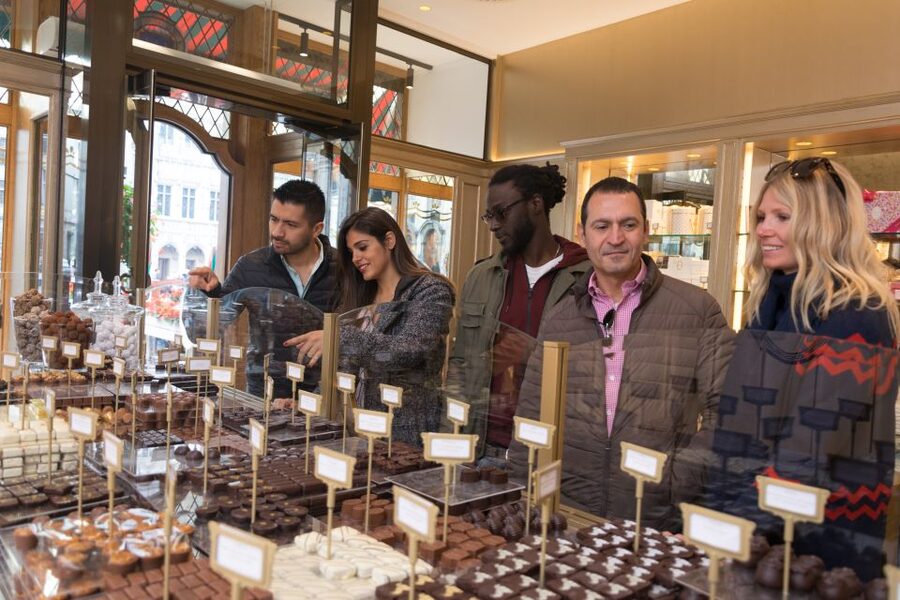
This is a natural point to pause for chocolate, though the cost is yours. The tour introduces Belgian chocolate as a cultural subject, but it does not include samples or drinks. If you want the guide’s recommendations, ask before the tour ends or request that chocolate be part of the conversation.
The cathedral and the climb into the Upper City
The Upper City section begins again at Grand Place, then heads uphill toward the Cathedral of St. Michael and St. Gudula. The climb is not presented as a mountain, but it is a real change in terrain after the flatter Lower City route. Wear shoes that can handle several hours of city walking.
Inside the cathedral, you can admire the stained-glass windows. This is one of the tour’s more rewarding interior moments because the glass gives you something specific to look at while the guide explains the building’s religious and artistic importance.
The cathedral is also a good dividing line between the two halves of Brussels. Grand Place and the Lower City show commercial energy and street life. The cathedral points you toward the formal Upper City, where royal institutions and museums take over.
Because the tour has only three hours, do not expect a long, quiet examination of every chapel or window. You will get an introduction and a chance to see the interior. If sacred art matters greatly to you, ask how much time the guide plans to spend inside.
Royal Park and the Place des Palais
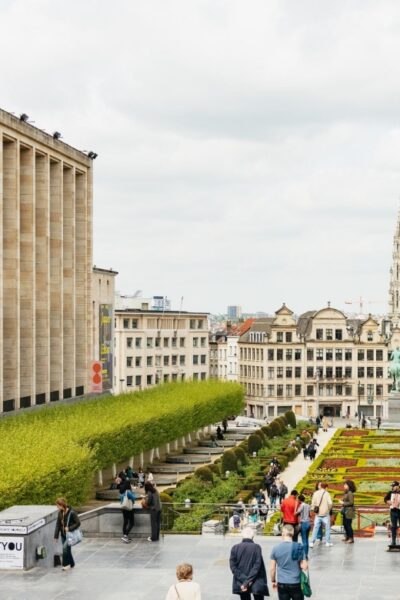
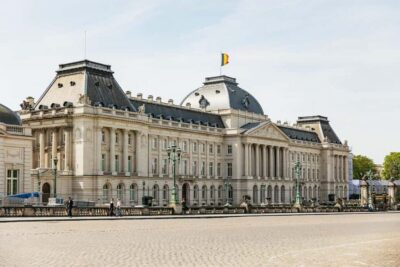
From the cathedral, the walk continues to Place des Palais, home to the royal park and palace. This part of Brussels gives you the clearest sense of the capital’s official side. Broad spaces and royal institutions replace the close-packed streets of the old center.
The park offers a welcome visual break. After several urban squares and architectural facades, greenery opens the view and gives the route breathing room. The palace itself is part of the external city experience described here, not a guaranteed palace interior visit.
I like this section for the contrast it creates. You can see how close the commercial heart and the formal seat of power are, while still feeling that they belong to different parts of the city.
Keep your expectations precise. The tour includes the royal quarter as a sightseeing stop, but tickets to museums and other paid attractions are not included. If entering a royal site is your main goal, ask the operator what the current visit arrangements are before booking.
Choosing between the Musical Instruments Museum and Magritte area
The Upper City route gives you a choice involving Brussels’s museum and arts district. You may visit the Musical Instruments Museum, or pass by the Magritte Museum and the Palace of Fine Arts on the way to the Sablon.
This choice matters because the interests are quite different. The Musical Instruments Museum offers a focused cultural subject, while the Magritte Museum and Palace of Fine Arts place you among major Belgian art institutions and concert culture. With a private guide, you can explain whether you prefer music, painting, architecture, or a broad overview.
The museum ticket is not included, so budget for admission if you choose to go inside. Also remember the time limit. A museum visit during a three-hour city tour will be an introduction, not a complete collection visit.
If you already plan a separate museum day, passing by the Magritte Museum and Palace of Fine Arts may make better use of this tour. Your guide can provide orientation, then you can return later with more time. If you have only one short stay in Brussels, the Musical Instruments Museum option could add an indoor cultural stop to a mainly outdoor walk.
Petit Sablon and Grand Sablon
The route finishes at the Petit Sablon and Grand Sablon, an attractive Upper City area known for its formal squares, antiques, art, and chocolate associations. These final stops give the tour a graceful ending after the cathedral, palace, and museum quarter.
Petit Sablon provides a more composed garden-and-monument setting. Grand Sablon feels like a place to linger, browse, and eat. It is a useful end point because you can continue exploring on your own, stop for chocolate, or find a meal without having to cross the city again.
Since food and drinks are not included, plan to treat the Sablon as your own follow-up stop. You can ask the guide for suggestions, but the tour price covers guiding, not purchases.
The Sablon also ties the tour’s main themes together. Architecture, art, royal Brussels, chocolate, and city life all meet here. It is a stronger ending than simply returning to the starting point, provided you still have energy after the uphill walk.
What the $353 group price means
The listed price is $353 per group of up to 20 people, rather than a per-person fare. For a large family, corporate group, school party, or group of friends, that can be good value. Split among 10 people, it works out to about $35 per person. With 20 people, the per-person cost drops to roughly $18.
The price is harder to justify for one or two people unless you place a high value on privacy, language choice, hotel pickup, and a guide who can adjust the material to your interests. A public walking tour may cost less, though it would not offer the same control over pace or subject.
Transport, museum tickets, meals, and drinks are extra. The tour is therefore best viewed as a private orientation walk, not an all-inclusive day package.
The group information needs a quick check. The price is stated for up to 20 people, while the operating notes say tours are limited to 25 participants per group. Ask the provider to confirm the maximum and the exact price for your party before paying.
Language, pickup, and physical demands
You can request a live guide in Spanish, Dutch, English, French, German, Italian, Russian, or Portuguese. That is a strong choice for families and mixed-language groups. It also lets you choose a guide who can explain Belgian culture in the language where you ask the most useful questions.
Pickup is possible from your Brussels hotel, which saves time if you are unfamiliar with the center. Since transport during the tour is not included, the core experience remains a walking tour. Ask where the walk finishes and how hotel pickup affects the start time.
The tour is wheelchair accessible, according to the activity details. Still, the route includes an uphill move toward the Upper City and several central public spaces. If you use a wheelchair or have limited mobility, discuss the exact route and any preferred adjustments when booking.
The flexible itinerary is one of the better features. You can request an entertaining, academic, or professional approach. That is especially useful for a company group, students, or a family with children who will need a lighter presentation.
Who will get the most from this tour
I would choose this tour if you want a clear first look at Brussels and prefer conversation over a fixed audio script. It suits first-time visitors, families, private groups, and anyone who wants to connect monuments with the city’s development.
It also works well for people with a specific interest in Art Nouveau, Belgian beer, chocolate, architecture, or museums. Tell the guide your priority before the walk starts, because three hours is not enough to cover every subject in equal depth.
You should think twice if you want long museum visits, a formal food tour, or extensive time inside the royal palace. Those are not included. You may see the relevant buildings and receive useful context, but paid admissions and tastings require extra time and money.
The overall rating of 4.3 from 33 bookings suggests a generally positive but not flawless experience. The strongest praise centers on the guides’ ability to explain different periods of the city and keep the group engaged despite cold weather. That points to the main product here: the guide’s interpretation and flexibility, not a long list of included extras.
Should you book it?
Book this tour if you are traveling with a group and want Brussels explained in a logical, personal way. The Lower City and Upper City format is easy to follow, the language range is excellent, and the guide can adjust the tone to match your interests.
I would reserve it early for a large party, then ask three questions: exactly how the three hours are divided, which museum option is available, and whether your group falls under the $353 rate for up to 20 people. If you want chocolate, beer, or museum time, treat those as planning choices and extra costs.
For a couple on a tight budget, the price may be too high. For a group that wants a private guide, hotel pickup, and a well-shaped introduction to central Brussels, it can be a practical use of your first afternoon.
FAQ
How long is the Brussels Upper and Lower City tour?
The tour lasts three hours.
What is the price of the private tour?
The listed price is $353 per group of up to 20 people.
Is the tour private?
Yes. It is offered as a private group experience.
What languages are available?
Live guiding is available in Spanish, Dutch, English, French, German, Italian, Russian, and Portuguese.
Can the guide pick me up at my hotel?
Yes. Pickup is possible from your Brussels hotel.
Are museum tickets included?
No. Tickets to museums are not included in the tour price.
Are meals and drinks included?
No. Drinks and meals are not included.
Is the tour wheelchair accessible?
Yes. The activity is listed as wheelchair accessible.
Just added around Brussels
- Standard vehicle from Brussels airport to city of Antwerp★ 5.0 · 4 reviews
- Private transfer from BRU Airport to Brussels city with luxury limousine 3 pax★ 4.5 · 8 reviews
- Luxury vehicle from Brussels airport to the city of Brussels★ 4.0 · 5 reviews
- Transfer Brussels Airport –> City MB E Class 1-3 PAX (ONE WAY)★ 5.0 · 6 reviews
- PRIVATE MPV TRANSFER FROM/TO BRUSSELS AIRPORT (Max 6 pax) ONE-WAY★ 5.0 · 4 reviews
- Transfer Brussels Airport (BRU) –> City Center 7 PAX (ONE WAY)★ 5.0 · 7 reviews
- Transfer Brussels Airport –> Brussels MB V Class 7 PAX (ONE WAY)★ 5.0 · 4 reviews
- Brussels: City Walk with Audioguide in 7 Languages on your Phone★ 3.5 · 4 reviews