
Reviewed · SCAVANGER HUNTS
e-Scavenger hunt Hasselt: Explore the city at your own pace
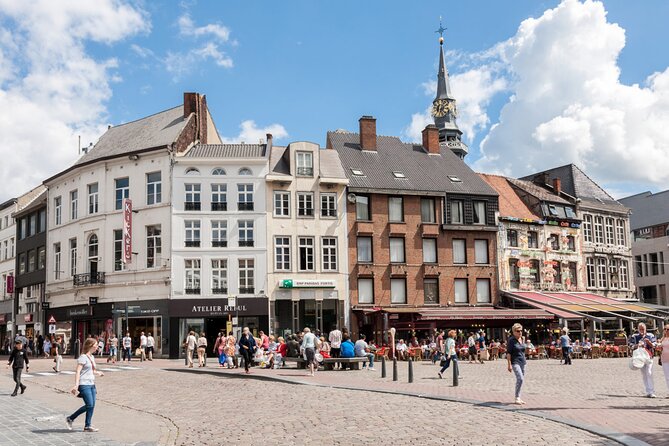
Hasselt’s best feature here is freedom. You get a city game on your phone rather than a guide with a fixed departure time, so your group can begin when ready, pause for lunch, or stop to look around. The trail links gin, fashion, churches, gardens, and local history, giving you a broad first look at the city.
I like the private format, with up to six people sharing one activity, and I like the mix of map and GPS navigation. The main drawback is depth: this is a playful way to see Hasselt, not a full guided history tour. Some stops receive only brief explanations, and the price is less attractive for a group of two.
In This Review
- Key points at a glance
- How the Hasselt city game works
- From gin to Hasselt’s old streets
- Fashion in the Oud Gasthuis
- New city hall and the lost beguinage
- The Japanese Garden and Herkenrode
- Dusart, the Grote Markt, and local memory
- What the app does well, and where it falls short
- Price, timing, and who gets the best value
- Should you book the Hasselt e-Scavenger Hunt?
- FAQ
- Where does the Hasselt e-Scavenger Hunt start?
- Where does the activity end?
- How long does the city trail take?
- When can I start the activity?
- How many people can join one group?
- Is a guide included?
- Is the activity available in English?
- What do I need to bring?
Key points at a glance

- Thirteen varied Hasselt stops: Expect churches, museums, squares, a Japanese garden, a former abbey, and modern city buildings.
- Start any time: The activity is available daily from noon until midnight, giving you room to fit it around meals and other plans.
- Best value with a group: The $37.21 price covers up to six people, making the per-person cost much lower for larger groups.
- Play rather than listen: You follow digital tasks, games, and facts, so the appeal is discovery and teamwork rather than a long spoken explanation.
- Use the app carefully: The phone, mobile data, and correct translation settings are your responsibility.
- Plan for two to four hours: Your pace, stops, and willingness to explore will shape the total time.
How the Hasselt city game works
You begin at Diesterstraat 1, 3500 Hasselt, and finish back at the same meeting point. The activity is private, so only your own group takes part. There is no guide waiting to lead you through the streets, and no need to join a departure at a set hour.
The online app supplies the game and city trail. You use your own smartphone and data connection, then follow the route through a mixture of GPS guidance and map navigation. That choice is useful because GPS can help you get oriented, while a map gives you a clearer idea of the wider route.
The trail is designed for teams of up to six. That makes it a natural fit for families, couples with friends, or a small group that likes solving tasks together. With six people sharing the $37.21 price, the cost works out to about $6.20 each. For two people, it is about $18.61 per person, so the value changes sharply with group size.
Allow two to four hours. You can move quickly if you mainly want the questions and sights, or take longer around the museums and landmarks. The lack of a guide means you control the rhythm, but it also means you need to keep yourselves moving and decide how much time each place deserves.
More scavanger hunts in Belgium:
- e-Scavenger hunt Antwerp: Explore the city at your own pace
★ 4.5 · 67 reviews - e-Scavenger hunt Bruges: Explore the city at your own pace
★ 4.5 · 58 reviews - Bruges Scavenger Hunt and Highlights Self Guided Audio Tour
★ 4.0 · 54 reviews
From gin to Hasselt’s old streets

The Gin Museum is an excellent opening idea for a Hasselt trail. The museum focuses on the drink that gives the city a distinctive identity, while also presenting the visit as an experience involving both mind and body. The stop gives the game an immediate local flavor instead of starting with a generic square or monument.
You should treat the museum as one of the places where a short app prompt may not replace the full visit. The trail can point you toward the attraction, but the available information suggests a game-first format rather than a museum tour with detailed room-by-room interpretation.
The route then brings you to a church built in the 18th century. Inside is the 14th-century statue of Mary of Jesse, also known as Virga Jesse. The church is now a basilica, and this stop connects Hasselt’s religious life with the city’s long-running devotion to the statue.
St. Quintinus Cathedral gives you another clear piece of local context. It is dedicated to Quintinus and sits in central Hasselt. The church became a cathedral in 1967, when the Diocese of Hasselt was founded. The two religious stops should help you see that Hasselt is not only a shopping and café town, even if the app keeps its explanations fairly compact.
Fashion in the Oud Gasthuis
Modemuseum Hasselt occupies the Oud Gasthuis, a distinctive seventeenth-century building. That setting matters. You are not simply ticking off a modern gallery, but seeing fashion presented in an older structure with its own architectural story.
The museum adds a different subject to the route. After gin and religious heritage, fashion broadens the picture of Hasselt as a cultural city. If you are interested in design, this may be one of the stops where you want to pause rather than rush through for the next challenge.
The trail also lists Plopsa Indoor Hasselt, Belgium’s first partly covered theme park. It is next to the Ethias Arena and Grenslandhallen. This stop may appeal most to families, though it is a different sort of attraction from the cathedral or museum.
You should check your expectations here. The city game can introduce the attraction as part of Hasselt’s wider collection of places, but the activity price does not include admission to attractions. The supplied information does not state that entry to the Gin Museum, Modemuseum, Japanese Garden, Plopsa Indoor, or Herkenrode is included, so budget for those separately if you choose to go inside.
New city hall and the lost beguinage
The town hall, also called Stadskantoor, opened in 2018. It replaced Hasselt’s Old Town Hall, giving the route a modern civic stop alongside its older buildings.
This is a useful reminder that a city trail should not turn every stop into a medieval relic. Hasselt has continued to change, and the new town hall shows the working city of today. The tradeoff is visual and historical: some people will find a modern public building less compelling than a church or museum.
The old beguinage offers a more poignant stop. Hasselt’s oldest beguinage was mentioned as early as 1245 and once stood outside the city walls, approximately near the Virga Jessecollege on Guffenslaan. It was destroyed during the Iconoclasm.
There may be little surviving structure to admire at the original site, which is precisely why the story matters. A good city game can make absence meaningful. Here, you learn how religious communities once shaped the edge of Hasselt and how conflict erased part of that past.
A few more Belgium trips to weigh up
- Antwerp: City Highlights Walking Tour
★ 4.7 · 816 reviews - Antwerp: City Highlights Guided Bike Tour
★ 4.7 · 529 reviews - Brussels: City Highlights Walking and Tasting Tour
★ 4.9 · 505 reviews - Ghent: 40-Minute Historical Boat Tour of City Center
★ 4.3 · 430 reviews
The Japanese Garden and Herkenrode
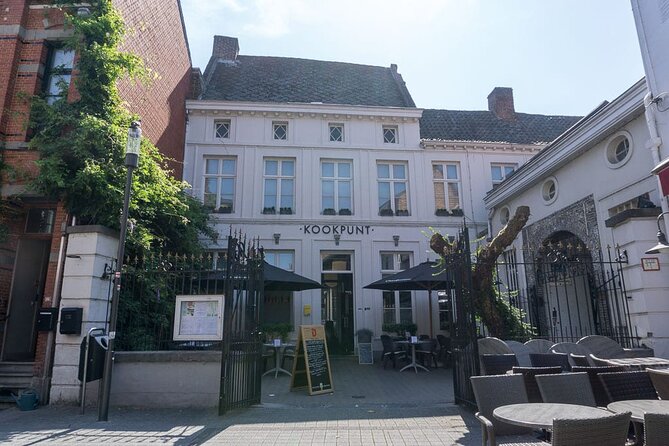
The Japanese Garden in Hasselt is described as the largest of its kind in Europe. It is intended as a place to experience Japanese culture, and it gives the route a strong change of mood from streets, churches, and civic buildings.
The information does not specify how much time the trail allocates to the garden or whether admission is included. If your schedule allows, treat it as a place that may deserve more than a quick task. The game can give you a reason to reach it, but your own pace determines how much you see.
Herkenrode adds a much longer historical thread. Its abbey story is presented through a chronological trail covering 600 years of women at Herkenrode. That focus makes it more than a stop for a photograph. It gives you a way to follow the institution across time and consider the role of women in its history.
The supplied route does not spell out transport arrangements between every stop. Since the listed sites include central Hasselt attractions as well as places outside the immediate core, check the app’s route before setting out and allow extra time if a stop is not close to the previous one. The tour lasts about two to four hours, but that estimate may depend on how directly you follow the trail.
Dusart, the Grote Markt, and local memory

One stop tells the story of Dusart. He attended the Royal Military School in Brussels and became a lieutenant at 19. In 1890, he left for Congo, then the private property of King Leopold II.
This is a short biographical doorway into Belgium’s colonial past. The app format may not give you the space for a long discussion, but the subject deserves your attention. Read the prompt carefully, and do not treat the detail as a simple adventure tale. It belongs to a difficult period in Belgian history.
The Grote Markt is much smaller than its name might suggest, because Hasselt’s city center itself is compact. The square is partly surrounded by cozy restaurants, hotels, and shops. That makes it a practical pause point as well as a sightseeing stop.
I like this kind of inclusion in a city trail. A square is not only a monument to inspect. It is a place to notice how the city works now. You can use the stop to orient yourself, eat, or take a short break before continuing.
The Minderbroederskerk brings a more personal form of devotion. Its burial chapel and museum honor Father Valentinus Paquay, attracting thousands of visitors each year. The stop shows how local religious history can remain active and personal, rather than being confined to dates on a plaque.
Finally, The Stadsmus museum presents Hasselt through its streets and famous inhabitants. It also tells the story of one mysterious citizen who appears only once every seven years. That unusual detail gives the final part of the trail a touch of local storytelling and reminds you that a city’s identity is built from legends as well as official history.
What the app does well, and where it falls short
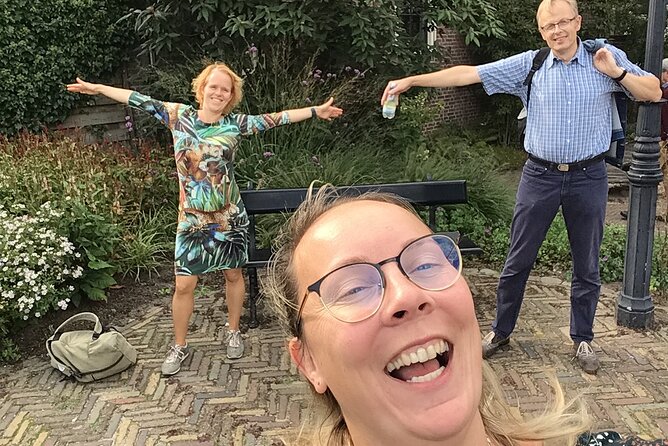
The strongest part of the experience is the balance between direction and independence. You are not left with a bare list of places. The digital trail gives you tasks, games, facts, and a route to follow. At the same time, you can begin when you wish and keep the experience private.
The app also lets you use GPS or a map. That is important in practice. If your phone location is slow or inaccurate, the map gives you another way to understand where you are. It also helps you see the route as a whole instead of following each instruction blindly.
The weakness is the amount of information at each stop. One assessment of the activity found that the individual explanations could use more content, perhaps with a short version and a longer version. That is a fair concern if you want a proper city guide or hope to ask questions about Hasselt.
The questions themselves may not appeal to everyone. This is a game about discovering a city, not a carefully staged academic tour. If you enjoy puzzles and light competition, that is a benefit. If you want substantial historical commentary, a live guide may give you more for your time and money.
Language also needs attention. The activity is offered in English. An automatic phone translation can create awkward double translations, so check your phone’s translation settings before starting. The app includes a demonstration game with the purchase, which gives you a chance to test the format. If it is not suitable, you can cancel within the stated cancellation period for a full refund.
Price, timing, and who gets the best value
At $37.21 per group of up to six, the price is straightforward. Six people make it a strong value. Three people pay about $12.40 each, while two people pay about $18.61 each. Since the activity is private, you are paying for flexibility and a shared game rather than a seat on a group tour.
For two people, compare the price with a guided city walk before booking. A live guide may cost a similar amount, depending on the alternative available to you, and would offer conversation and fuller explanations. The app wins on timing, privacy, and the ability to pause.
The daily operating window runs from 12:00 AM to 11:59 PM in the supplied schedule, but the practical activity duration remains two to four hours. Starting at midday is likely more useful for most sightseeing plans, especially if you want to combine the route with museum visits or lunch.
You receive confirmation at booking. Bring a smartphone and mobile data, since neither is included. Service animals are allowed, the activity is near public transportation, and most people can participate. It is also described as user-friendly for people with hearing impairments because there is no spoken guide to follow.
Free cancellation is available if you cancel at least 24 hours before the start time. Cancellations or changes made later are not accepted for a refund, and the cut-off uses local time.
Should you book the Hasselt e-Scavenger Hunt?
Book it if you want a flexible first look at Hasselt, have a group of three to six, and enjoy answering questions as you walk. The route covers enough ground and subject matter to help you decide which places deserve a longer visit later.
It is also a good fit for families and friends who prefer an activity with a clear purpose. You can start late, take breaks, and keep the experience to yourselves. The mix of the Gin Museum, Japanese Garden, Grote Markt, churches, museums, and Herkenrode gives you more variety than a simple central-square walk.
Think twice if you are a couple seeking the lowest possible cost, or if you want a detailed account of every landmark. In that case, a live guide may offer better value through conversation and fuller context. For everyone else, especially a larger group that wants independence, this is a practical and entertaining way to get your bearings in Hasselt.
FAQ
Where does the Hasselt e-Scavenger Hunt start?
It starts at Diesterstraat 1, 3500 Hasselt, Belgium.
Where does the activity end?
The activity ends back at the meeting point.
How long does the city trail take?
The estimated duration is two to four hours.
When can I start the activity?
The listed operating hours are daily from 12:00 AM to 11:59 PM.
How many people can join one group?
One team can include up to six people.
Is a guide included?
No live guide is listed. The experience uses an online app with a digital city trail, games, tasks, and facts.
Is the activity available in English?
Yes. English is one of the offered languages.
What do I need to bring?
You need a smartphone and mobile data. These are not included in the activity price.
Just added around Belgium
- Standard vehicle from Brussels airport to city of Antwerp★ 5.0 · 4 reviews
- Visit of Bruges in 1 day private tour from Paris★ 5.0 · 3 reviews
- Private transfer from BRU Airport to Brussels city with luxury limousine 3 pax★ 4.5 · 8 reviews
- Luxury vehicle from Brussels airport to the city of Brussels★ 4.0 · 5 reviews
- Transfer Brussels Airport –> City MB E Class 1-3 PAX (ONE WAY)★ 5.0 · 6 reviews
- PRIVATE MPV TRANSFER FROM/TO BRUSSELS AIRPORT (Max 6 pax) ONE-WAY★ 5.0 · 4 reviews
- Transfer Brussels Airport (BRU) –> City Center 7 PAX (ONE WAY)★ 5.0 · 7 reviews
- Transfer Brussels Airport –> Brussels MB V Class 7 PAX (ONE WAY)★ 5.0 · 4 reviews
Scavanger Hunts, compared.

e-Scavenger hunt Antwerp: Explore the city at your own pace
Read our review →
e-Scavenger hunt Bruges: Explore the city at your own pace
Read our review →
Bruges Scavenger Hunt and Highlights Self Guided Audio Tour
Read our review →

Beer Tasting and Scavenger Hunt in Brussels – About 3 Hours
Read our review →
e-Scavenger hunt Mechelen: Explore the city at your own pace
Read our review →
e-Scavenger hunt Brussels: Explore the city at your own pace
Read our review →
e-Scavenger hunt Leuven: Explore the city at your own pace
Read our review →Browse the lists this tour appears in