
Reviewed · SCAVANGER HUNTS
e-Scavenger hunt Turnhout: Explore the city at your own pace
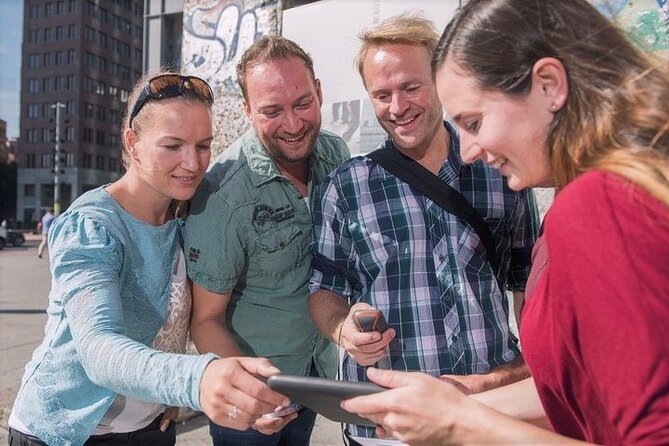
Turnhout’s best feature is its surprise factor. This phone-led scavenger hunt takes you from a UNESCO-listed beguinage to the city’s playing-card past, historic museums, an old café, and a major cultural center. I like that you learn as you go, without having to follow a guide’s fixed schedule.
I also like the private format for up to six people and the freedom to pause for food, drinks, or a closer look. The $37.33 group price is especially fair for families or friends sharing one booking. The main caution is navigation: the app works, but some people have found the directions and wording less clear than they would like.
In This Review
- Key points to know before you book
- Why Turnhout works so well for a city game
- Starting at Stationstraat 38
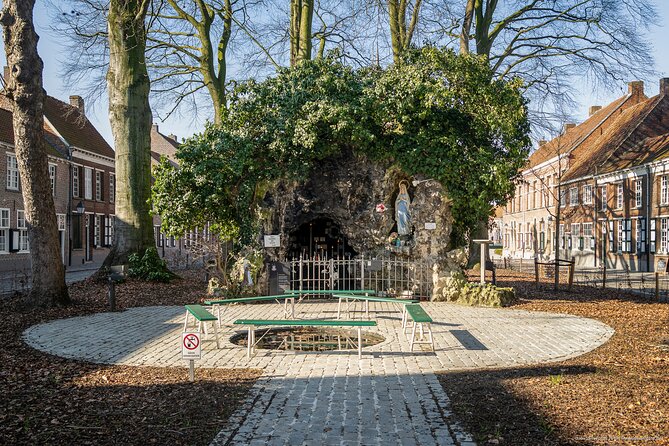
- The beguinage and its quiet square
- St. Peter’s Church, plain outside and lavish within
- Turnhout’s playing-card story
- Taxandria Museum in House Metten Thoren
- Paper, printing, and the Historical Printing Company
- A pause at De Penge
- De Warande and Turnhout’s cultural life
- How difficult is the route?
- Value at $37.33 per group
- Who should choose this Turnhout experience?
- Booking, cancellation, and practical details
- Should you book the Turnhout scavenger hunt?
- FAQ
- How much does the Turnhout scavenger hunt cost?
- How long does the activity take?
- Where does the scavenger hunt start and finish?
- What is included in the booking?
- Do I need to bring a smartphone?
- Is the activity offered in English?
- Can I join with a service animal?
- What is the cancellation policy?
Key points to know before you book

- Turnhout’s UNESCO-listed beguinage gives the route an impressive early stop and a peaceful change from ordinary city streets.
- Playing-card history is central, with the story of Philip Jacobus Brepols and Turnhout’s rise as a major card-producing city.
- You control the pace, and the game can include breaks for cafés, meals, and photos.
- The route is made for teams of up to six, so it works well for families, friends, and small work groups.
- The average distance between tasks is about 350 meters, though route-finding can make the full walk much longer.
- You need your own smartphone and mobile data, since those are not included.
Why Turnhout works so well for a city game
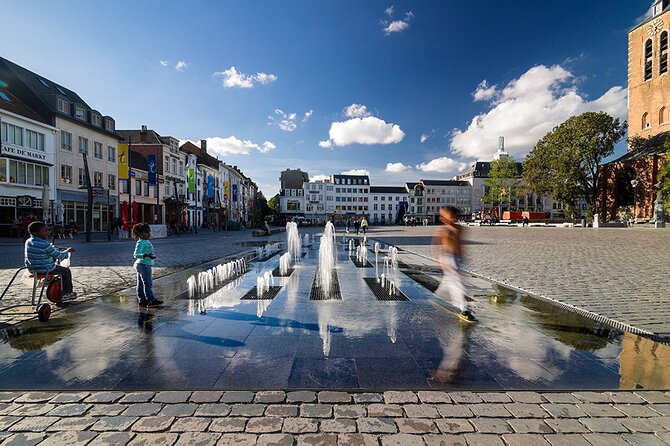
Turnhout is easy to underestimate. It does not have the instant name recognition of Bruges, Ghent, or Antwerp, but that is part of the appeal here. The city reveals itself in layers: a quiet beguinage, an austere church exterior with a lavish interior, old printing traditions, museums in historic buildings, and everyday places such as a long-running café.
The Qula game gives you a reason to look closely. Instead of simply walking from one landmark to the next, you answer questions and search for details. That changes the pace. You are not just passing through the center, and children can take responsibility for finding the next answer or spotting a feature on a building.
The route is mainly centered on Turnhout’s urban core. You should expect a walking game rather than a guided sightseeing tour. There is no live guide explaining each stop, so the app provides the structure and the questions provide the motivation.
The listed duration is about two to four hours, but the provider indicates there is no strict time limit. That makes the experience flexible. You can finish in an afternoon, or stretch it with a café stop and a longer look at the museums and churches. One outing lasted six hours and covered about 12 kilometers, largely because finding the way took extra time. That is not the normal expectation, but it is a useful warning to leave room in your plans.
More scavanger hunts in Belgium:
- e-Scavenger hunt Antwerp: Explore the city at your own pace
★ 4.5 · 67 reviews - e-Scavenger hunt Bruges: Explore the city at your own pace
★ 4.5 · 58 reviews - Bruges Scavenger Hunt and Highlights Self Guided Audio Tour
★ 4.0 · 54 reviews
Starting at Stationstraat 38
The activity begins at Stationstraat 38 in Turnhout and finishes back at the same meeting point. The starting location is near public transportation, which makes it practical if you arrive by train or local transit.
Before setting out, make sure your phone is charged and has mobile data. The booking includes the online app used to play the game, but not the smartphone or data connection. This is a small detail, yet it matters: the experience depends on your phone for instructions, questions, and route support.
The game is private, so only your own group participates. A maximum of six people can share one game. For a larger family or work gathering, you would need to divide into separate groups, but six is a useful size for keeping everyone involved without turning the game into a crowd.
The listed operating hours cover every day from noon to midnight, although the booking information also presents the activity as available throughout the day. Since the exact booking time can affect your plans, check the available start details when reserving.
The beguinage and its quiet square
The beguinage is one of the strongest stops on the route. Dating from the 14th century, it is recognized as a UNESCO World Heritage Site, a distinction given in 1998. The entrance leads into the Begijnhof, a square with a much calmer feel than the surrounding city.
This is the kind of place that rewards a slower pace. The scavenger hunt may send you looking for a detail, but you should also pause to take in the layout and atmosphere. A quick answer-and-leave approach would miss the point.
For families, the beguinage is a good early lesson in how this activity works. You are asked to observe rather than simply read a long block of text. Children can help locate details, while adults can add context about the religious community and the old buildings.
The drawback is that a game question can sometimes pull your attention away from the setting. Give yourself permission to pause the activity. The route is designed to be flexible, and the beguinage deserves more than a quick photograph.
St. Peter’s Church, plain outside and lavish within
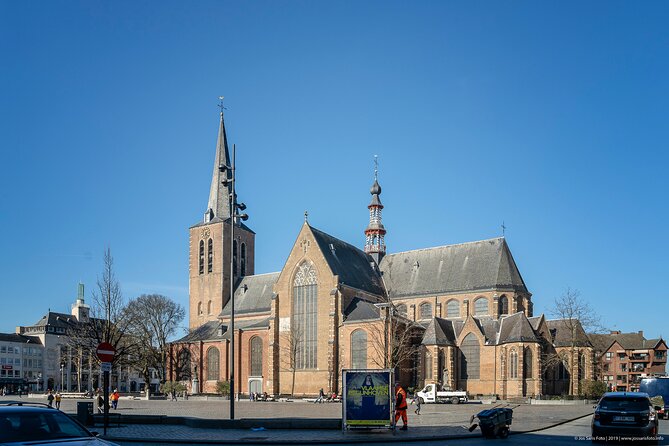
St. Peter’s Church offers a sharp visual contrast. Its exterior is notably restrained, but the interior is described as breathtaking. That difference makes it a good stop for a scavenger hunt because the building asks you to look beyond the first impression.
You may approach expecting a conventional church and then find that the interior changes your view. The route’s question gives you a reason to inspect the space, but the church itself is the main attraction. If it is open when you arrive, allow time to look around rather than treating it as another answer station.
The app cannot replace a person explaining the church’s art or architecture. If you want detailed religious or architectural commentary, this is not the same as a formal church tour. Still, the stop works well for a self-guided route because the contrast between outside and inside is memorable and easy to appreciate.
A few more Belgium trips to weigh up
- Antwerp: City Highlights Walking Tour
★ 4.7 · 816 reviews - Antwerp: City Highlights Guided Bike Tour
★ 4.7 · 529 reviews - Brussels: City Highlights Walking and Tasting Tour
★ 4.9 · 505 reviews - Ghent: 40-Minute Historical Boat Tour of City Center
★ 4.3 · 430 reviews
Turnhout’s playing-card story
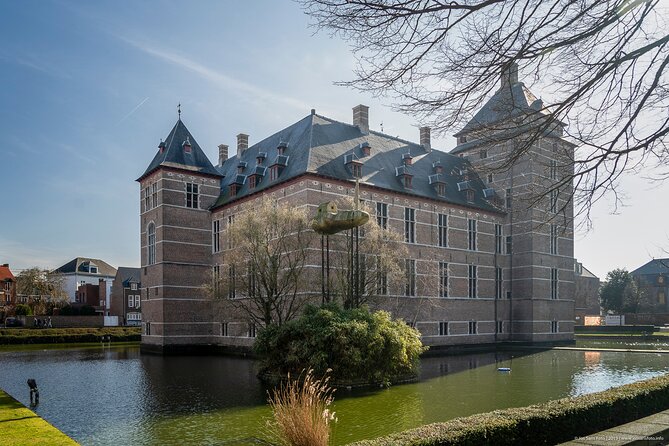
Turnhout is closely tied to playing-card production, and the game gives that local industry proper attention. In 1826, Philip Jacobus Brepols pressed the first playing cards in the city. That act helped set an industry in motion, and Turnhout became one of the world’s important producers.
This is one of the most distinctive facts on the route. Many city walks cover churches, statues, and town halls. Fewer explain why a particular Belgian city became known around the world for something as ordinary as a deck of cards.
The story also gives Turnhout a clear identity. You begin to notice that the city is not simply a collection of old buildings. Printing and paper helped shape its economy and reputation. The questions make this background easier to remember because you connect the facts to places you have just seen.
I especially like this part for families and groups with mixed interests. Someone who is not drawn to church interiors may still enjoy the practical story of manufacturing, trade, and a local product that traveled far beyond Belgium.
Taxandria Museum in House Metten Thoren
The Taxandria Museum is housed in House Metten Thoren, a 16th-century building. Its focus is the past of Turnhout, so it adds local context to the outdoor route.
The museum is important because the scavenger hunt can otherwise feel like a series of clues spread across the streets. Here, the city’s story has a dedicated home. You can connect the older buildings, printing traditions, and local customs with a broader account of how Turnhout developed.
The provided information does not specify an admission arrangement or the amount of time included for a museum visit. Treat the museum as a stop to explore according to its opening conditions and your own schedule, rather than assuming the game includes a guided museum tour or entrance ticket.
If you want to keep the entire outing within two hours, you may need to be selective. If you have a full day, this is one of the places where extending the route makes sense.
Paper, printing, and the Historical Printing Company
The Historical Printing Company continues the printing theme from a different angle. It has an extensive paper collection, including material that has been digitized and made available online. The different sub-collections are brought together there.
This stop is valuable because it moves the story from finished playing cards to the wider world of paper and printing. You get a clearer sense of the skills and materials behind Turnhout’s industrial identity.
Do not expect the scavenger hunt alone to provide a full technical tour of printing. Its role is to point you toward an important part of the city’s culture and give you questions to answer. If printing interests you, note the online digitized collection as a possible follow-up after the walk.
The route’s themes work best when taken together. The beguinage and church show Turnhout’s older civic and religious side. The museums and printing stops explain how the city made a living and developed a name beyond its immediate region.
A pause at De Penge
At 129 years old, De Penge is identified as Turnhout’s oldest café. It is also presented as a place to pause along the route, which is exactly how a city game should use a café.
This stop helps break up the walking and question-solving. You can rest, order something, and discuss the answers before continuing. For adults, it provides a natural social moment. For families, it gives children a break without ending the activity.
The café is not included in the booking price, so plan to pay separately for food and drinks. Its role is part of the independent nature of the experience: you choose how long to stay and what to add to the day.
One of the strongest features of this route is the way it allows ordinary city life to sit beside formal attractions. A historic café can tell you something about a place that a monument cannot. Just remember that a stop for refreshments will extend the advertised two to four hours.
De Warande and Turnhout’s cultural life
De Warande is a provincial cultural center and one of the first cultural centers in Flanders. It includes a theater and concert hall, giving the route a modern cultural stop alongside its older buildings.
This matters because Turnhout is not presented only as a preserved old town. The route shows a city with an ongoing cultural life. De Warande gives you a sense of how residents use the city today, not just how it looked in earlier centuries.
The cultural center is mainly a sightseeing point within the game. The information provided does not promise a performance or admission. If you are interested in seeing a theater or concert, you would need to check the separate program and availability.
As with the other stops, the best approach is to treat the question as a prompt to notice the place. The hunt is not designed to fill every stop with a long lecture. It gives you a path, a task, and a reason to pay attention.
How difficult is the route?
The questions vary. Some are straightforward, while others can be genuinely difficult. That mix keeps the game from becoming a simple checklist, but it can also slow you down if your group gets stuck.
Navigation is the bigger practical issue. Google Maps can help, and the game plan works with it, but the route does not always provide the clearest possible visual direction. A helpful habit is to confirm each location before walking away from the current stop. If your group heads off in the wrong direction, the total distance can grow quickly.
The average distance between assignments is about 350 meters, which is manageable for most people. The full outing is still a walking activity, and one group reported covering 12 kilometers after spending extra time finding the way. Wear comfortable shoes and keep your phone accessible.
The game is user-friendly overall, but the English wording may occasionally feel awkward. Language errors have been noted, and they can distract from otherwise simple questions. This is worth considering if polished English is important to you.
Value at $37.33 per group
At $37.33 for a group of up to six, the cost is reasonable if you are traveling with family or friends. A full group brings the price to roughly $6.22 per person, before any café or museum expenses. That is a low-cost way to get a structured introduction to Turnhout.
The value comes from flexibility as much as from the landmarks. You are not paying for a guide’s fixed two-hour route. You can pause, eat, take photographs, and continue when ready. The private format also means your group can set its own rhythm.
For two people, the per-person cost is higher, but it can still make sense if you want a planned activity rather than an unstructured walk. For a family, the game adds a shared goal that can keep children interested in places they might otherwise find slow.
The main limitation is that the booking does not include a smartphone, mobile data, food, drinks, or any stated museum admission. Add those costs only if you plan to use them. The basic activity remains inexpensive.
Who should choose this Turnhout experience?
I would choose this scavenger hunt for:
- Families who want children involved in navigation and observation
- Friends looking for a casual activity with breaks built in
- Small work groups seeking a private team challenge
- People who know Turnhout already but want fresh facts and a new route
- Independent visitors who prefer not to follow a guide
- Anyone with two to four hours who wants an introduction to the city
I would be more cautious if you need precise directions, polished English throughout, or detailed commentary at every landmark. The activity is a game first and a sightseeing route second. You get prompts and facts, not a full lecture from a local guide.
It is also less suitable if walking is difficult. Most people can participate, and the activity is described as friendly for people with hearing impairments, but the route still involves moving between city stops and may become longer if navigation takes time.
Booking, cancellation, and practical details
You receive confirmation at the time of booking. The activity is offered in English and uses a mobile ticket and online app.
Service animals are allowed. The start and finish are at Stationstraat 38, 2300 Turnhout, Belgium, and the location is near public transportation. Only your group takes part, with a maximum of six people.
Free cancellation is available if you cancel at least 24 hours before the scheduled start time. Cancellations or changes made less than 24 hours before the start are not accepted for a refund, and the cut-off follows local time.
Should you book the Turnhout scavenger hunt?
Book it if you want a flexible, low-cost way to get oriented in Turnhout while sharing a game with family or friends. The UNESCO-listed beguinage, St. Peter’s Church, playing-card story, museums, De Penge, and De Warande give the route more variety than you might expect from a small-city walk.
Go in with comfortable shoes, a charged phone, mobile data, and patience for occasional navigation problems or awkward wording. If you want a polished guided tour, choose something else. If you like finding your own way, taking breaks, and turning sightseeing into a group challenge, this is a smart introduction to Turnhout.
FAQ
How much does the Turnhout scavenger hunt cost?
The price is $37.33 per group, with up to six people included.
How long does the activity take?
The estimated duration is two to four hours. The provider states that there is no strict time limit, so you can pause or take longer.
Where does the scavenger hunt start and finish?
It starts at Stationstraat 38, 2300 Turnhout, Belgium, and ends back at the same meeting point.
What is included in the booking?
The booking includes the online app used to play the game and a city trail for a private team of up to six people.
Do I need to bring a smartphone?
Yes. A smartphone and mobile data are not included, so you need to provide both.
Is the activity offered in English?
Yes. The scavenger hunt is offered in English.
Can I join with a service animal?
Yes. Service animals are allowed.
What is the cancellation policy?
You can cancel up to 24 hours before the scheduled start for a full refund. Cancellations or changes made less than 24 hours before the start are not accepted for a refund.
Just added around Belgium
- Standard vehicle from Brussels airport to city of Antwerp★ 5.0 · 4 reviews
- Visit of Bruges in 1 day private tour from Paris★ 5.0 · 3 reviews
- Private transfer from BRU Airport to Brussels city with luxury limousine 3 pax★ 4.5 · 8 reviews
- Luxury vehicle from Brussels airport to the city of Brussels★ 4.0 · 5 reviews
- Transfer Brussels Airport –> City MB E Class 1-3 PAX (ONE WAY)★ 5.0 · 6 reviews
- PRIVATE MPV TRANSFER FROM/TO BRUSSELS AIRPORT (Max 6 pax) ONE-WAY★ 5.0 · 4 reviews
- Transfer Brussels Airport (BRU) –> City Center 7 PAX (ONE WAY)★ 5.0 · 7 reviews
- Transfer Brussels Airport –> Brussels MB V Class 7 PAX (ONE WAY)★ 5.0 · 4 reviews
Scavanger Hunts, compared.

e-Scavenger hunt Antwerp: Explore the city at your own pace
Read our review →
e-Scavenger hunt Bruges: Explore the city at your own pace
Read our review →
Bruges Scavenger Hunt and Highlights Self Guided Audio Tour
Read our review →
Beer Tasting and Scavenger Hunt in Brussels – About 3 Hours
Read our review →
e-Scavenger hunt Mechelen: Explore the city at your own pace
Read our review →
e-Scavenger hunt Hasselt: Explore the city at your own pace
Read our review →
e-Scavenger hunt Brussels: Explore the city at your own pace
Read our review →Browse the lists this tour appears in