
Reviewed · WALKING TOURS
Historical Walking Tour: Legends of Bruges
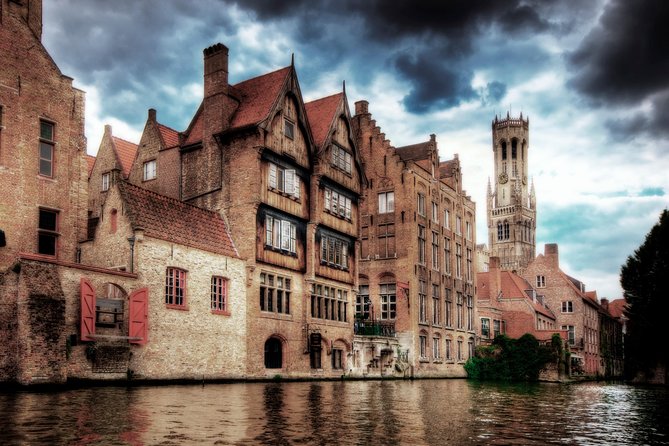
Bruges packs a great deal into a small, handsome center, and this walk gives you the essential sweep in about two hours and fifteen minutes. You move from the Markt to Burg Square by way of the Belfort, canals, beguinage, brewery, lake, churches, and museum gardens, with stories tying the buildings together.
I like the strong first-day orientation and the way the guide uses legends to make dry dates stick. I also like the price: at about $3.62, it is an unusually low-cost way to get a guided introduction, though you should plan to tip the guide. The main drawback is that the tour is outdoors, requires good weather, and may feel brisk if you want long interior visits or much social history.
In This Review
- Key points to know before you go
- Why this walk works well as your Bruges introduction
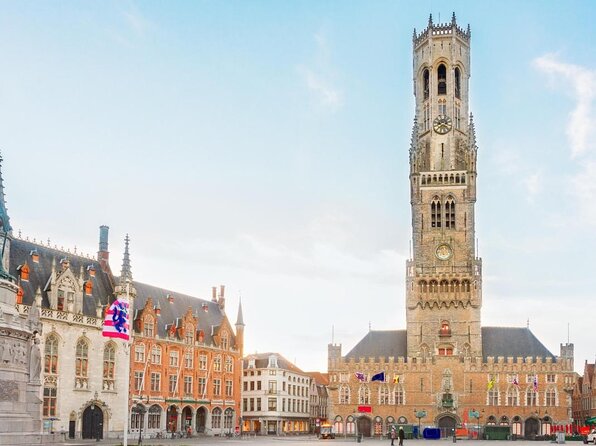
- Starting at the Markt and the Belfort
- Gruuthusemuseum and Sint-Janshospitaal
- The Beguinage and Bruges’ quieter side
- Beer stories at De Halve Maan Brewery
- Minnewater Lake, swans, and imperial conflict
- Michelangelo and the Dukes of Burgundy
- Flemish art and the old Tanner’s Square
- Finishing at Burg Square
- Price, pace, and group size
- Who should book this Bruges walk?
- Should you book Legends of Bruges?
- FAQ
- How long is the Historical Walking Tour: Legends of Bruges?
- What language is the tour offered in?
- How much does the tour cost?
- Is the Belfort tower climb included?
- Where does the tour begin?
- Where does the tour end?
- How many people can join the tour?
- Is a mobile ticket provided?
- Can I cancel for a full refund?
- What happens if bad weather cancels the tour?
Key points to know before you go
- The route covers Bruges’ headline sights: You see 11 important places without arranging separate visits.
- Local storytelling is the main attraction: Guides including Martin, Victoria, Sander, Louis, and Thomas have been praised for humor, warmth, and clear explanations.
- The tour ends at Burg Square: That leaves you in the city’s political heart, close to more sightseeing and dining.
- The price is exceptionally low: All fees and taxes are included, but tips are recommended because the tour operates on a free-tour model.
- You walk for more than two hours: There are several stops, yet the experience remains a moving overview rather than a series of long museum visits.
- Book early for popular dates: The tour is booked an average of 17 days ahead, and the group can include up to 24 people.
Why this walk works well as your Bruges introduction
Bruges can feel almost too pretty at first. Canal views, stepped gables, stone bridges, and horse carriages compete for your attention, while the city’s past can blur into one long medieval picture. A good guide gives that picture shape. Here, the route explains how trade, politics, religion, beer, art, and local pride built the city you see today.
The walk is best for a first visit or a short stay. You will not tour every interior, climb the Belfort, or spend an hour with one painting. Instead, you get a useful map in your head and enough background to decide what deserves a return visit.
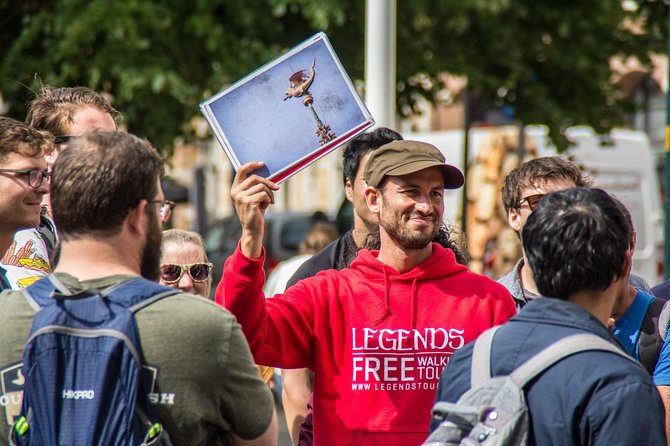
The guides are a major part of the experience, and the quality can vary from person to person. Past visitors have singled out Louis for his deep local connection and storytelling, Victoria for her humor and historical detail, Martin for an entertaining and in-depth walk, and Sander for answering questions clearly. Thomas, Erik, Emiel, Patrick, Celine, Sam, Wouter, Willem, and Nicholas have also drawn praise for making the city easy to understand.
That range of names tells you something useful: the company has several strong guides, but you cannot choose your guide from the information provided. If you enjoy asking questions, a smaller group can make a big difference. One particularly fortunate outing had only four people, allowing plenty of back-and-forth. The maximum group size is 24, so larger departures will feel less personal.
A few more Bruges trips to weigh up
- THE Storytelling Tour of Bruges | First Day Must | History & Tips
★ 5.0 · 925 reviews - Historical Walking Tour: The Story of Bruges – by Legends
★ 4.7 · 483 reviews - Private Historical Tour: The Highlights of Bruges
★ 5.0 · 315 reviews
Starting at the Markt and the Belfort
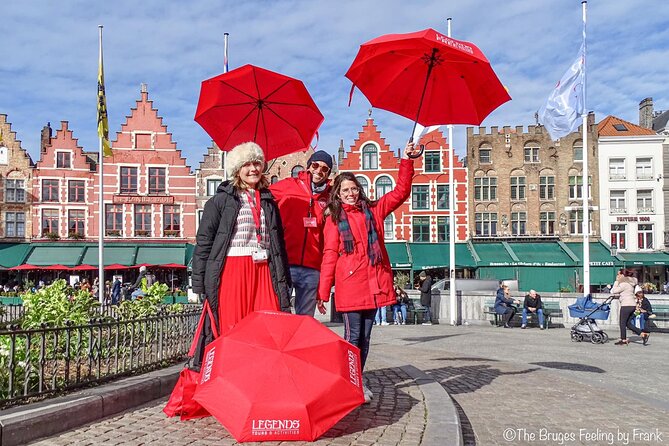
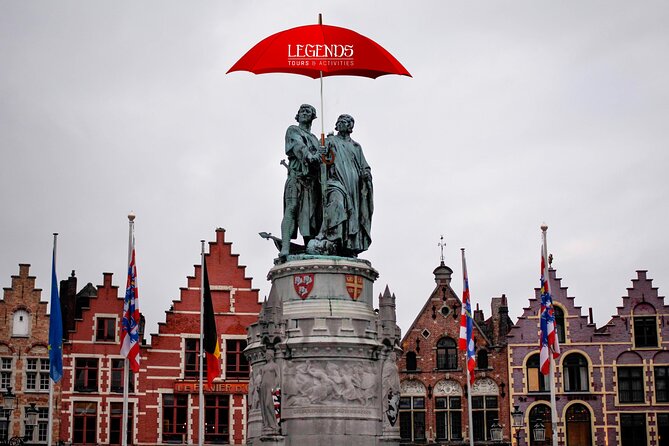
The tour begins at Pieter de Coninck en Jan Breydel Markt, the broad central square known simply as the Markt. This is the right place to begin. It gives you an immediate sense of Bruges as a former trading center, not just a postcard town.
Your guide sets up the city’s medieval role as a place where goods, money, and political power met. You also hear about the difficult relationship between Bruges and the French king, a useful reminder that medieval cities did not quietly accept outside rule. Local wealth brought influence, but it also brought conflict.
The Belfort comes next. The famous bell tower dominates the square, but this tour focuses on the halls behind the belfry and the tower’s role in medieval civic life. Bells were not mere decoration. They helped organize work, warn of danger, and mark the power of the town.
A practical point: this stop does not mean you climb the tower. One person advised buying tower tickets in the morning, which is useful if you want the view from above on your own. Treat the walk as the explanation of the Belfort, then make a separate plan for the climb.
Gruuthusemuseum and Sint-Janshospitaal
At the Gruuthusemuseum, the guide introduces a newly renovated city palace linked to one of Bruges’ wealthy families. The Gruuthuse family held a monopoly in part of the beer trade, giving you a memorable way to connect architecture with business.
That detail is more useful than a list of dates. It helps you read Bruges’ grand houses as signs of commercial success. Behind the elegant stonework were families making money from trade, securing influence, and shaping the city’s public life.
The stop at Sint-Janshospitaal shifts the focus from merchants to care and religion. St John’s is one of the oldest surviving hospitals in the world and was a key part of medieval society. Your guide explains why a hospital mattered in a period when religious institutions often provided care, shelter, and support.
You should not expect a full museum visit here. The value is in seeing the building and understanding its place in city life. If you later return inside, you can give the art and old hospital rooms more attention without trying to absorb them while keeping up with a group.
The Beguinage and Bruges’ quieter side
The Princely Beguinage Ten Wijngaarde offers a change of pace. This picturesque community has housed women living together for more than 800 years and is described as the largest of its kind in the world.
The stop adds an important human layer to Bruges. Medieval and early modern cities were not built only by rulers, merchants, and church officials. Communities of women created their own religious and social world, and the beguinage gives you a calmer setting in which to consider that part of the past.
This is also one of the places where walking pays off. You approach the beguinage through the city rather than arriving, taking a quick photograph, and leaving. The white buildings and quiet atmosphere make a natural pause after the larger squares and monumental churches.
The tour keeps moving, though. Ten minutes is enough for an introduction and a look around, not enough for every detail. I would note anything that catches your eye and return later if you want a slower visit.
Same old town, a completely different kind of day:
- Bruges: Small Group Boat Cruise and Guided Walking Tour
★ 4.8 · 4,102 reviews - Bruges: Walking Tour, Canal Boat Trip w/Beer Tasting Option
★ 4.4 · 2,759 reviews - Bruges: Choco-Story Chocolate Museum Guided Tour w/Tastings
★ 4.2 · 1,379 reviews - From Bruges: Great War Flanders Fields Minibus Tour w/ Lunch
★ 4.9 · 1,257 reviews
Beer stories at De Halve Maan Brewery
At De Halve Maan Brewery, the guide tells how the people of Bruges acquired the nickname Fools of Bruges. The stop also includes a piece of the beer pipeline running beneath the city.
That pipeline is the sort of detail that gives the walk its local flavor. It connects a modern technical solution with an old city problem: how do you keep beer production in the historic center while moving the finished product efficiently? You get a story you can picture, rather than another abstract account of commerce.
The brewery stop also makes the earlier Gruuthuse story easier to remember. Beer was not a minor side note in Bruges. It was tied to money, control, identity, and daily life.
The guide stops outside the brewery, so this portion is not a brewery tour or tasting. If you want to see the inside, you need a separate visit. The walking tour simply gives you the story and a reason to look twice at the building.
Minnewater Lake, swans, and imperial conflict
At Minnewater Lake, often called the Lake of Love, the tone turns toward legend. You hear why swans appear on Bruges’ canals and how the city came into conflict with Emperor Maximilian of Austria.
The swan story is especially effective because it links a familiar sight with a political memory. You may have already noticed swans on the water, but the explanation gives them a place in Bruges’ civic story. It is a small example of what this tour does best: taking something picturesque and showing you the argument, custom, or power struggle behind it.
Minnewater also provides a change from dense streets and busy squares. It is a good point to slow your pace, take in the water, and let the guide connect local folklore with real political events.
Weather matters here. The tour requires good weather, and one person had to leave early on a freezing day with a toddler. Bring suitable clothing and remember that a charming outdoor walk is much less enjoyable when you are cold and wet.
Michelangelo and the Dukes of Burgundy

The Onze-Lieve-Vrouwekerk, or Church of Our Lady, brings together architecture, art, and dynastic history. Its brick tower is the second tallest in the world, and the church houses a Michelangelo statue along with the tombs of the last Dukes of Burgundy.
The guide’s role is to give you the key facts and point out what deserves your attention. You may want to return afterward for a closer look at the statue, the tombs, and the interior. Ten minutes is enough to understand why the church matters, but not enough for a quiet art visit.
This stop is valuable because it shows Bruges at its most ambitious. The tower reflects civic and religious pride, the sculpture connects the city to major European art, and the tombs bring the Burgundian rulers into the story of local power.
As with the Gruuthusemuseum and St John’s Hospital, think of the walk as an introduction. You get the context first, then you can spend your own time inside the places that interest you most.
Flemish art and the old Tanner’s Square
The route continues into the garden of the Groeningemuseum. Some works by major Flemish masters are on display there, giving you a brief taste of Bruges’ artistic importance without turning the walk into a museum lecture.
This is a short five-minute stop, so keep your expectations in check. You get a visual prompt and a useful explanation of the city’s art tradition. If Flemish painting is a priority, plan a separate museum visit.
Next comes Huidenvettersplein, the old Tanner’s Square. The name points to the unpleasant work once carried out there: greasing animal skins and turning them into leather.
I like this stop because it cuts through the polished image of Bruges. Beautiful squares depended on messy trades, strong smells, skilled labor, and people whose work rarely appears in grand accounts of dukes and merchants. It is a quick but memorable reminder that cities are working places, not just historic scenery.
Finishing at Burg Square
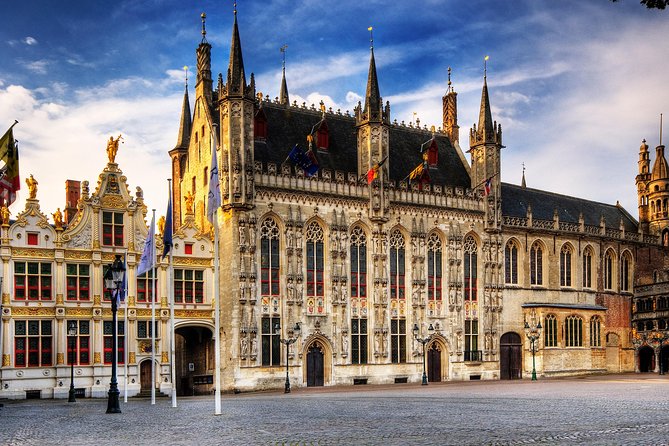
The walk passes the old Fishmarket before ending at Burg Square. This is the political heart of Bruges and the city’s birthplace, making it a fitting finish.
By the end, the route has taken you from trade and royal tension to religion, women’s communities, beer, folklore, art, and leatherwork. Burg Square gives those threads a political home. It also makes a practical ending point because you can continue exploring from there rather than retracing your steps to the start.
The finish is not only a photo stop. Your guide can help you understand why this square mattered and point out places worth revisiting. Several past participants valued tips about food, chocolate, and other things to do, so this is a good time to ask questions.
The route includes a chocolate stop for some departures, with a complimentary truffle mentioned by more than one person. This is a pleasant extra, but I would not book the tour solely for it. The main value is the walking route and the guide’s storytelling.
Price, pace, and group size
At about $3.62 per person, this is a very strong value if you want an overview. All fees and taxes are included, but tips are recommended. Since the cost is so low, a generous tip is part of the social bargain and helps recognize the guide’s time.
The tour lasts roughly two hours and fifteen minutes. That is long enough to cover the center but short enough to fit around lunch, a museum visit, or a canal activity. You will spend most of that time outside, with short explanations at each stop.
The route has many pauses, which helps you recover your feet. Still, you should be ready for a good walk. One guide described the experience as a classic walking tour, and that is accurate: you see many places, but you do not linger at each one.
It is offered in English with a mobile ticket. The group maximum is 24 people, and most people can take part. Service animals are allowed, and the meeting point is near public transportation.
The tour is booked an average of 17 days ahead, so I would reserve it early for a tightly planned visit. Confirmation arrives at booking. You can cancel for a full refund up to 24 hours before the local start time. Within 24 hours, refunds are not available. If poor weather or too few bookings force cancellation, you are offered another date or experience, or a full refund.
Who should book this Bruges walk?
I would choose this tour if you are visiting Bruges for the first time, arriving for a day, or staying only long enough to need a clear plan. It is also a good fit if you like history told through people and odd local details rather than a long lecture.
Families can benefit from the frequent stops and short stories, but cold or wet weather may be hard on young children. A toddler had to leave early on a freezing day, so check the forecast and dress for an outdoor activity.
You should look elsewhere if your main goal is extensive time inside museums, a Belfort climb, beer tasting, or a slow photography walk. Those activities may fit nicely after this tour, but they are not the core experience.
Should you book Legends of Bruges?
Yes, if you want a low-cost, story-led introduction that covers the main sights in one sweep. The best guides bring humor, personal connection, and clear historical detail, and the route gives you a useful sense of how Bruges developed.
Book it near the start of your stay, then return to the Gruuthusemuseum, Church of Our Lady, Belfort, or Groeningemuseum if one of the short stops catches your interest. Just allow for outdoor conditions, a potentially full group, and the need to tip. For a first look at Bruges, the price and coverage are hard to beat.
FAQ
How long is the Historical Walking Tour: Legends of Bruges?
The tour lasts approximately 2 hours and 15 minutes.
What language is the tour offered in?
The tour is offered in English.
How much does the tour cost?
The listed price is about $3.62 per person.
Is the Belfort tower climb included?
No tower climb is specified. The tour visits the halls behind the belfry and explains the tower’s medieval role.
Where does the tour begin?
It begins at Pieter de Coninck en Jan BreydelMarkt, 8000 Brugge, Belgium.
Where does the tour end?
The tour ends at Burg Square, at Burg 15, 8000 Brugge, Belgium.
How many people can join the tour?
The maximum group size is 24 people.
Is a mobile ticket provided?
Yes. The experience includes a mobile ticket, and confirmation is received at the time of booking.
Can I cancel for a full refund?
Yes. You must cancel at least 24 hours before the local start time for a full refund. Cancellations within 24 hours are not refunded.
What happens if bad weather cancels the tour?
If poor weather causes cancellation, you are offered a different date or experience, or a full refund.
Just added around Bruges
- 2-Hour Private Walking Tour of Bruges★ 5.0 · 13 reviews
- The Waffles ‘n Coffee Breakfast in Bruges Centre★ 4.5 · 9 reviews
- Explore the Instaworthy Spots of Bruges with a Local★ 5.0 · 3 reviews
- Photo Tour “Jan van Eyck”★ 4.0 · 7 reviews
- 6 Hour Bruges Shore Excursion from Zeebrugge Cruise Port★ 4.5 · 23 reviews
- Ticket Expo Body Worlds in Bruges, Belgium★ 4.5 · 11 reviews
- Discover the secrets of Bruges by playing!★ 4.5 · 7 reviews
- Bruges Walking Tour with Audioguide on Your Smartphone★ 4.5 · 14 reviews
Walking Tours, compared.
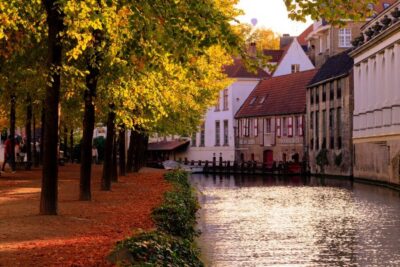
Walking Tour, Canal Boat Trip w/Beer Tasting Option
Read our review →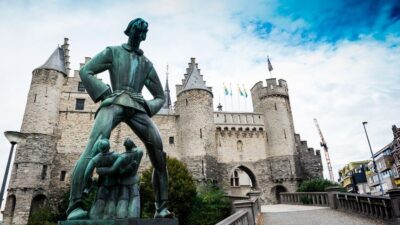
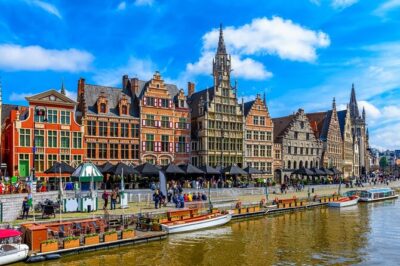

Historical Walking Tour with Chocolate & Waffle Tasting
Read our review →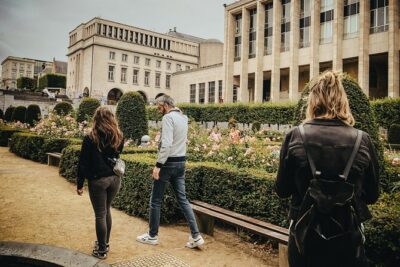
Brussels Walking and Tasting Tour (Beers,Chocolates&Fries/Waffle)
Read our review →
Browse the lists this tour appears in