
Reviewed · WALKING TOURS
Historical Walking Tour: Legends of Gent
Ghent’s best stories are packed into a compact old center, and this two-hour walking tour gives you a lively route through them. You’ll trace the city’s medieval trading power, hear why Ghent’s town hall looks confused, and finish among the famous three towers.
I like the tour’s excellent orientation and its pay-what-you-want format. I also like the mix of major sights and odd local tales, from the covered Butchers’ Hall to the graffiti lane. The main drawback is that you are on your feet for about two hours, often over historic paving, and a large group can make some stops feel crowded.
In This Review
- Key points to know before you go
- Why Ghent makes such a good walking-tour city
- Starting at St Michael’s Bridge and the three towers
- Graslei, Korenlei, and Ghent’s trading waterfront
- Design Museum Gent and the city’s stubborn streak
- The Great Butchers’ Hall and the darker side of old Ghent
- Gravensteen, the castle in the middle of town
- Huis van Alijn and the ordinary people of Ghent
- Vrijdagmarkt and the public life of the city
- Werregarenstraat, where graffiti has a designated home
- Town Hall and the conflict behind its mixed appearance
- St Bavo’s Cathedral and the Van Eyck connection
- The Belfry and the legend of the people’s tower
- St Nicholas’ Church closes the loop
- Price, group size, and the pay-what-you-want setup
- Pace, weather, and who should book
- Should you book Legends of Gent?
- FAQ
- Where does the walking tour start?
- Where does the tour end?
- How long does the tour last?
- What language is offered?
- How much does the tour cost?
- Are attraction admission fees included?
- What landmarks are visited?
- How large can the group be?
- Is the tour accessible by public transportation?
- What happens if the tour is canceled because of weather?
Key points to know before you go
- Thirteen central stops: The route links St Michael’s Bridge, Graslei, Gravensteen, St Bavo’s Cathedral, the Belfry, and St Nicholas’ Church.
- A strong first-day activity: The walk gives you a useful map of the center and helps you decide which sights deserve a longer visit.
- Story-led guiding: Guides including Tatiana, Kasia, Kenny, Sophia, Florian, Robin, and Liedewei are praised for humor, clear explanations, and local advice.
- Pay at the end: The listed price is $3.62 per person, but the tour is built around paying what you think it was worth after the walk.
- Outdoor sightseeing: Most stops are viewed from outside, and admission to interior attractions is not included.
- Small practical limits: Groups can reach 35 people, the walk needs good weather, and cancellation inside 24 hours brings no refund.
Why Ghent makes such a good walking-tour city
Ghent is easy to underestimate. It has the canals and handsome medieval buildings people associate with Belgium, but it also has a more independent, slightly unruly character. This tour leans into that personality rather than giving you only a parade of pretty façades.
The route is especially useful because Ghent’s main sights are close together but not always easy to connect on your own. From the first view at St Michael’s Bridge to the final stop at St Nicholas’ Church, the walk moves through the city’s trading past, religious power, civic pride, punishment, street art, and daily life.
I would take this tour near the start of a Ghent visit. You get the broad picture first, then you can return to the castle, cathedral, Belfry, or canal quays with more context. The guide also gives practical suggestions for places to eat, drink, and explore, although one account found the commercial recommendations too frequent. If you prefer history over shopping advice, say so or simply treat those tips as optional.
A few more Ghent trips to weigh up
- Ghent: 40-Minute Historical Boat Tour of City Center
★ 4.3 · 430 reviews - Private Historical Tour: The Best of Ghent
★ 5.0 · 115 reviews - Bicycle tour in historic Ghent
★ 5.0 · 87 reviews
Starting at St Michael’s Bridge and the three towers
Meet at Hostel Uppelink on Sint-Michielsplein, beside St Michael’s Bridge. This is a smart starting point because the bridge gives you one of Ghent’s classic skyline views.
From here, the guide introduces Ghent as a medieval trading center and points out the three towers that define the city: St Bavo’s Cathedral, the Belfry, and St Nicholas’ Church. Seeing all three at once helps you understand the layout before the walking begins in earnest.
The stop lasts about 15 minutes. It is also a good place to listen for the guide’s style. Past guides such as Tatiana, Kenny, Kasia, and Sophia have been praised for clear delivery, humor, and an easy way of bringing the city’s past to life. Florian is noted for speaking good English while handling history and architecture with a light touch.
Graslei, Korenlei, and Ghent’s trading waterfront
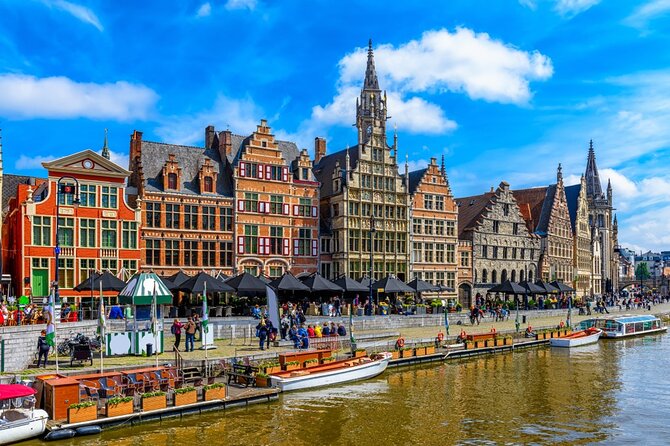
The walk continues to Graslei and Korenlei, the old port area and one of the most attractive stretches in the center. Here, the guide explains which buildings were tied to trade when this waterway was the city’s working harbor.
This is more useful than simply taking photographs of the façades. You begin to see the buildings as warehouses, guild properties, and commercial spaces rather than as a random row of old houses. The canal also gives you a strong sense of why Ghent became powerful.
The stop is brief, around 10 minutes. You will not get a long architectural lecture on every building, but you should leave with a clear idea of how trade shaped the center. If you want quiet photographs, return later, since this is one of the busiest-looking sections of the route.
Design Museum Gent and the city’s stubborn streak
At the Design Museum, the guide connects one feature of the building with the rebellious mindset associated with the people of Ghent. The point is less about touring the museum and more about using it to explain local character.
That change of subject is welcome. A good city walk should not treat every stop as another medieval church or stone façade. This moment gives the tour a cultural angle and helps explain why Ghent is often presented as independent-minded and resistant to outside control.
Admission to the museum is not included. The stop lasts about 10 minutes, so plan to visit separately if the displays interest you. The guided walk is an introduction, not an interior museum tour.
Same old town, a completely different kind of day:
- Ghent: 50-Minute Medieval Center Guided Boat Trip
★ 4.5 · 5,637 reviews - Ghent: 40 Minute Medieval Center Guided Boat Tour
★ 4.4 · 884 reviews - Evening Tour of the Dark Side of Gent
★ 5.0 · 646 reviews - Ghent Bike Tour Off-the-beaten-track
★ 5.0 · 505 reviews
The Great Butchers’ Hall and the darker side of old Ghent
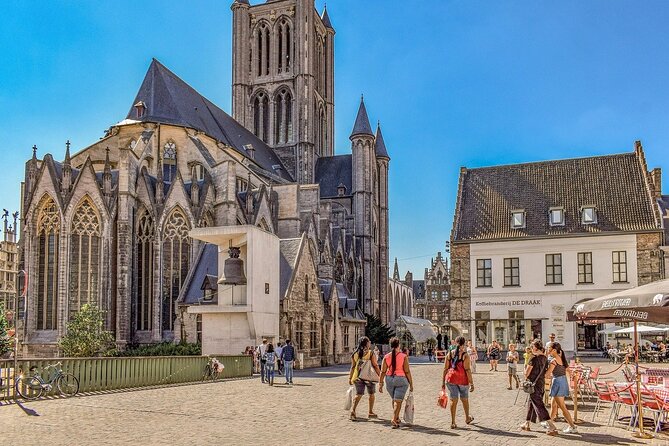
At Het Groot Vleeshuis, you look across the water toward the medieval covered Great Butchers’ Hall. The guide shares darker facts about the building, adding a sharper edge to the usual canal-side sightseeing.
This is one of the tour’s better choices because old cities can look too polished when you only hear about merchants, churches, and grand houses. Ghent’s past also involved strict rules, punishment, and uncomfortable working conditions. The tour’s title promises legends, and this is where the storytelling side becomes clear.
The stop is free to view and takes around 10 minutes. You are mainly listening from outside, so do not expect a full visit to the hall.
Gravensteen, the castle in the middle of town
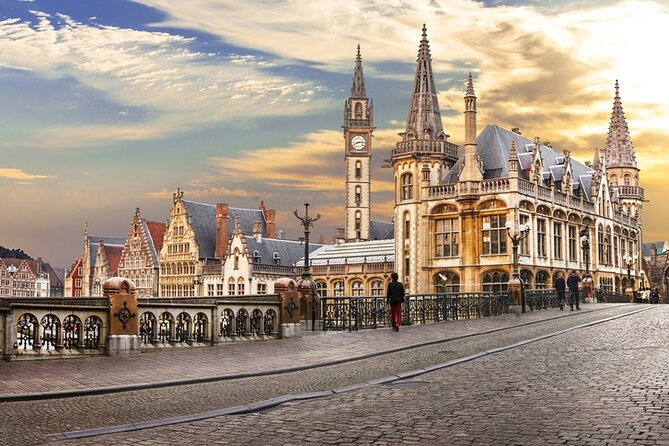
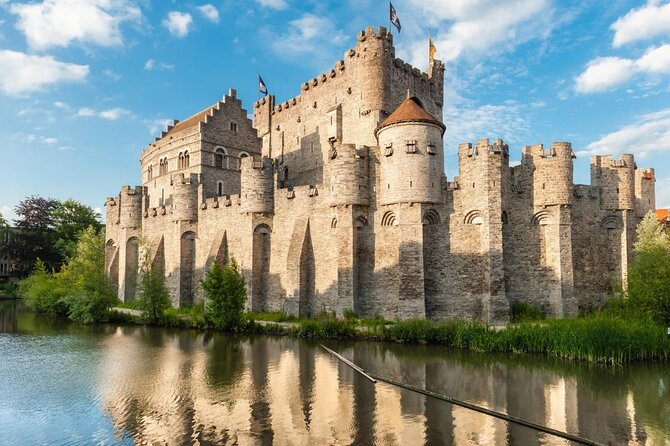
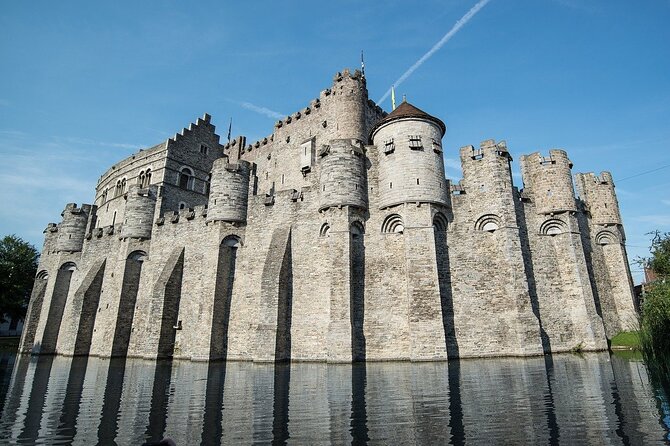
Gravensteen is the route’s most dramatic sight. Unlike a castle set outside the city, the Castle of the Counts sits right in Ghent’s center, surrounded by streets, canals, and ordinary city life. Its preservation makes it easy to picture as a place of power rather than a distant ruin.
The guide explains the castle’s past from outside. That gives you a useful preview if you plan to pay for entry later, but it cannot replace the interior visit. Admission is not included, and the scheduled stop is only about 10 minutes.
The nearby St Veerleplein adds another layer. The square is known both as the square of death and the square of life, and the guide explains the reason for those names. This pairing works well: first you see the fortress, then you hear how the public space in front of it carried such heavy meaning.
Huis van Alijn and the ordinary people of Ghent
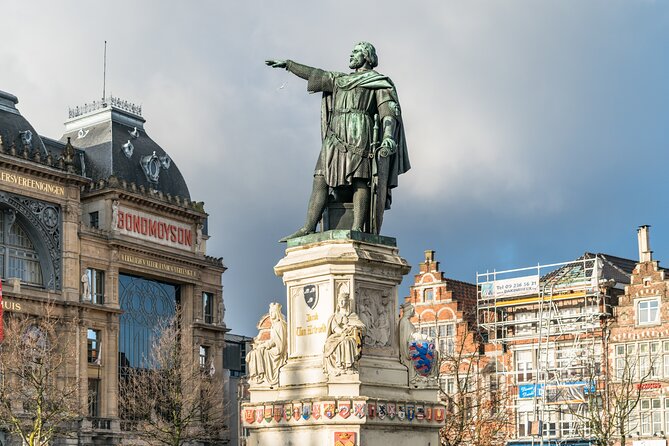
The House of Alijn is the only remaining god house in Ghent, and the guide explains how it became a hospital. The story gives you a break from grand monuments and brings attention to the institutions that served everyday people.
This stop lasts about 10 minutes and is viewed from outside. Its value comes from the story rather than from a long look at the building. It also helps balance the tour, which could otherwise focus too heavily on rulers, merchants, and church leaders.
If you enjoy social history, pay close attention here. If your main goal is architecture, this may feel less immediate than the castle or canal quays, but it is part of what makes the route feel like a city tour instead of a monument checklist.
Vrijdagmarkt and the public life of the city
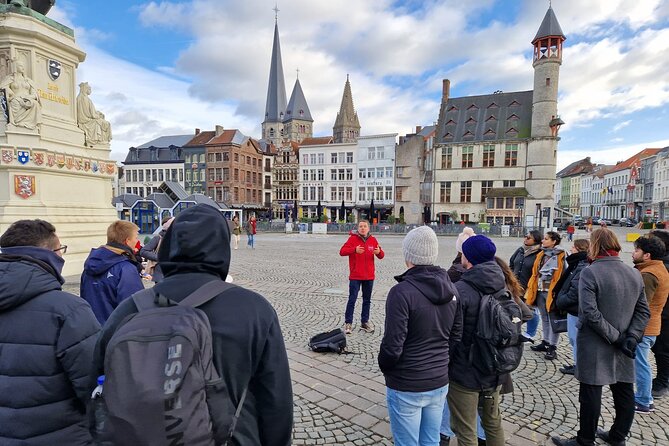
Vrijdagmarkt is one of Ghent’s important squares, and its central statue gives the guide a way to discuss the city’s political and civic past. The stop lasts around 10 minutes.
Squares like this help you read Ghent as a place where people gathered, argued, traded, celebrated, and showed power. The guide uses the square and the statue to explain events that influenced the city’s present character.
This is also a useful point to ask questions. Several guides are praised for encouraging conversation rather than delivering a rigid speech. If you want more detail about a person, event, or local custom, this kind of open stop is the time to speak up.
Werregarenstraat, where graffiti has a designated home
Werregarenstraat offers one of the route’s most obvious changes in mood. Ghent set aside this lane for street artists so historic buildings would be less likely to be sprayed. The guide walks you through the area and explains its place in the city.
You will see a more modern and changing side of Ghent here. It is not polished in the same way as Graslei or the cathedral, and that is precisely why it belongs on the route. The lane shows how a historic city tries to make room for present-day expression.
The walk-through is short and free. Treat it as a quick cultural stop rather than a guaranteed art exhibition, since street work changes over time.
Town Hall and the conflict behind its mixed appearance
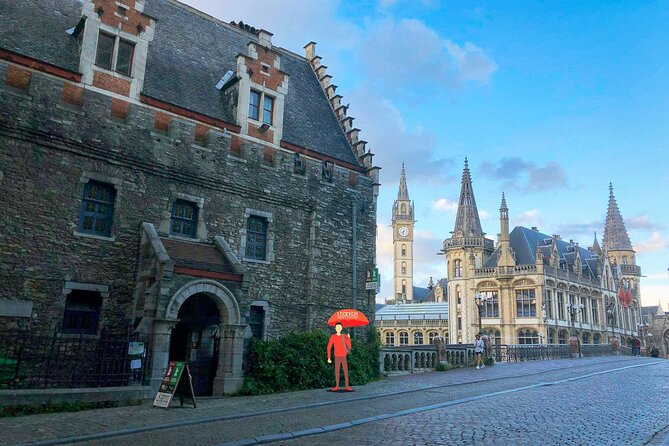
Ghent’s Town Hall looks as if different buildings were joined without agreeing on a plan. The guide explains the major conflict that produced this unusual appearance.
This is a good example of the tour’s method: use something you can see immediately, then attach a story to it. Once you understand the disagreement behind the architecture, the building becomes easier to remember.
The stop takes about 10 minutes, and interior admission is not included. You will get the explanation from outside, with enough context to decide if you want to return for a closer look.
St Bavo’s Cathedral and the Van Eyck connection
St Bavo’s Cathedral is one of the route’s major highlights. The guide explains its long religious story and points out its art treasures, especially the famous Ghent Altarpiece by Hubert and Jan van Eyck.
The walk does not include a full cathedral visit, though the stop itself is listed as free. If seeing the altarpiece is a priority, set aside separate time and check the cathedral’s own arrangements. The guide’s 10-minute introduction helps you understand why the work matters, but the tour is not designed for extended art viewing.
I like this stop because it connects the city’s architecture with its art. You are not just looking at a Gothic building. You are hearing how religion, wealth, craftsmanship, and civic pride met inside it.
The Belfry and the legend of the people’s tower
The Belfry of Ghent reflects the city’s independence and public power. The guide also explains its former use as a prison and shares a strange legend connected with the façade.
This is another place where the tour turns a landmark into a memorable story. The Belfry is easy to photograph, but the tale gives you a reason to look more closely at its exterior. The stop is scheduled for about 10 minutes, and admission to the tower is not included.
The tour ends at Belfort van Gent on Sint-Baafsplein. That ending is practical because you are already in the center and can continue to St Bavo’s Cathedral, the Belfry, or nearby streets afterward.
St Nicholas’ Church closes the loop
The final stop is St Nicholas’ Church, looking over Korenmarkt. It dates to the early 12th century and is dedicated to St Nicholas, protector of merchants and sailors.
The church’s façade carries a legend about its patron saint, making it a fitting close to a walk built around stories. It also brings you back toward the canal and trading areas where the tour began, so the route feels geographically complete.
The stop is free from the outside and lasts about 10 minutes. As with the cathedral, a longer interior visit would require separate time.
Price, group size, and the pay-what-you-want setup
The advertised price is $3.62 per person, with fees and taxes included. The important detail is that the walk operates on a pay-what-you-want basis, so you are expected to decide what the experience was worth at the end.
That makes the tour a strong value for a first look at Ghent. For roughly two hours, you receive a guided route through the city center, historical context at 13 stops, and suggestions for food, beer, chocolate, and other activities. Still, the low listed price should not be mistaken for a fully prepaid conventional tour. Bring a payment method for the end-of-tour contribution.
There is one serious payment warning. One participant reported being asked to pay again and being quoted a much higher amount after showing a paid booking receipt. That account conflicts with the normal pay-at-the-end structure. I would keep your confirmation available, ask the guide at the start how the payment works, and clarify the expected contribution before the walk begins.
Groups can reach 35 people. Many groups are smaller, but you should expect the possibility of a fairly large circle at busy sights. Some guides have used a microphone, which helps, but stay close enough to hear clearly.
Pace, weather, and who should book
The walk lasts about two hours and keeps moving through the center. It is not described as a difficult hike, but you are on your feet for the full period and some streets have cobblestones. Wear comfortable shoes and plan for changing weather.
The tour needs good weather and a minimum number of participants. If poor weather or low enrollment cancels it, you are offered another date, another experience, or a full refund. You can cancel for a full refund up to 24 hours before the start time. Inside 24 hours, refunds and changes are not accepted.
I would choose this tour if you want a broad introduction, enjoy stories more than formal lectures, and like having a local guide point out places to eat and drink. It also suits a first visit because the route covers most of the central landmarks quickly.
I would choose something else if you want long interior visits, detailed art analysis, or a private guide. This is a brisk outdoor overview, not a deep museum tour. Visitors who dislike commercial recommendations should also keep expectations clear, since food, chocolate, and shopping tips may form part of the guide’s commentary.
Should you book Legends of Gent?
Yes, if you want an affordable and entertaining way to get oriented. The 4.9 rating from 1,761 ratings and 98 percent recommendation rate match the tour’s strongest qualities: engaging guides, clear storytelling, a sensible route, and a useful balance of famous sights and unusual local tales.
Book it early if your schedule is fixed, since it averages 16 days of advance booking. Aim for the beginning of your stay, keep your receipt handy, and remember that the cathedral, castle, Belfry, and museum may deserve separate visits.
FAQ
Where does the walking tour start?
It starts at Hostel Uppelink, Sint-Michielsplein 21, 9000 Gent, Belgium.
Where does the tour end?
It ends at the Belfry of Ghent, Belfort van Gent, Sint-Baafsplein, 9000 Gent.
How long does the tour last?
The tour lasts approximately two hours.
What language is offered?
The tour is offered in English.
How much does the tour cost?
The listed price is $3.62 per person. The experience uses a pay-what-you-want format, with payment made at the end based on your experience.
Are attraction admission fees included?
All fees and taxes are included in the booking information, but admission to places such as Design Museum Gent, Gravensteen, Town Hall, and the Belfry is not included.
What landmarks are visited?
The route includes St Michael’s Bridge, Graslei and Korenlei, Design Museum Gent, Het Groot Vleeshuis, Gravensteen, St Veerleplein, Huis van Alijn, Vrijdagmarkt, Werregarenstraat, Ghent Town Hall, St Bavo’s Cathedral, the Belfry, and St Nicholas’ Church.
How large can the group be?
The maximum group size is 35 people.
Is the tour accessible by public transportation?
The meeting point is near public transportation.
What happens if the tour is canceled because of weather?
If poor weather causes a cancellation, you are offered a different date or a full refund.
Just added around Ghent
- Walking Food Tour in Ghent★ 5.0 · 13 reviews
- Historic Highlights, by a local guide★ 5.0 · 9 reviews
- Discover Mons while playing! Escape game – The alchemist★ 4.0 · 5 reviews
- Discover Ghent while playing! Escape game – The Walter case★ 4.5 · 4 reviews
- e-Scavenger hunt Ostend: Explore the city at your own pace★ 4.5 · 10 reviews
- Ghent Walking Tour with Audioguide on Your Smartphone★ 4.5 · 13 reviews
- Discover Ghent with a self-guided Outside Escape city game tour!★ 4.0 · 10 reviews
- e-Scavenger hunt Kortrijk: Explore the city at your own pace★ 4.5 · 15 reviews
Walking Tours, compared.
Walking Tour, Canal Boat Trip w/Beer Tasting Option
Read our review →


Historical Walking Tour with Chocolate & Waffle Tasting
Read our review →
Brussels Walking and Tasting Tour (Beers,Chocolates&Fries/Waffle)
Read our review →
Browse the lists this tour appears in