
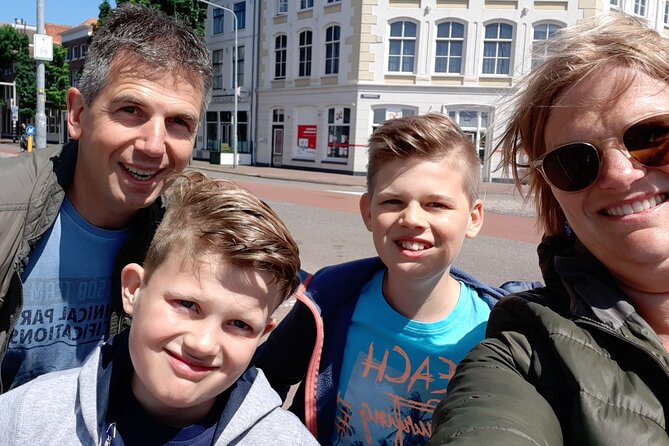
Reviewed · SCAVANGER HUNTS
e-Scavenger hunt Ostend: Explore the city at your own pace
Ostend is made for exploring on foot, and this self-guided scavenger hunt gives you a reason to look beyond the seafront. Starting at the railway station, you follow questions to ships, churches, art, royal statues, the pier, and the beach. It is part city walk, part team game, with no guide setting the pace.
I like the freedom to start at any time and pause for a café or meal. I also like the price: $37.33 per group of up to six makes it good value for families and friends. The main catch is that the route and app may take a little patience. Some questions can be completed out of order, and you should bring a power bank in case your phone battery gives out.
In This Review
- Key Points at a Glance
- Why This Ostend Scavenger Hunt Works
- Starting at Ostend Station and the Mercator
- Churches That Tell Ostend’s Story
- James Ensor and Ostend’s Art Scene
- Walking the Coast: Pier, Beach, and Promenade
- Kursaal, Leopold I, and the City’s Public Face
- How the Game Works in Practice
- Price, Group Size, and Overall Value
- Phone Battery, Route Order, and Other Practical Points
- Who Should Book the Ostend Hunt?
- Should You Book It?
- FAQ
- Where does the Ostend e-Scavenger Hunt start?
- Where does the activity finish?
- How long does the scavenger hunt take?
- How much does the activity cost?
- Is this a private activity?
- Is a guide included?
- What language is available?
- Do I need my own smartphone and mobile data?
- Can I cancel for a full refund?
Key Points at a Glance

- A private Ostend walk for up to six people: One group can play together without strangers or a scheduled guide.
- Thirteen varied sights: The route mixes maritime history, churches, public art, royal monuments, architecture, and the beach.
- Flexible 2 to 4 hour timing: Start any time during the listed operating period and pause when you like.
- Good value for groups: The price is per group, not per person, so six people can make the cost especially attractive.
- English-language phone play: You receive an online game and city walk, but your own smartphone and data are not included.
- Bring a charger and check the map: Phone battery life matters, and some players have found the route order or map display less clear than expected.
Why This Ostend Scavenger Hunt Works
Ostend has two personalities. It is a working port and railway terminus, but it is also a Belgian seaside resort with a broad beach, grand public buildings, art connections, and a long promenade. A standard sightseeing bus would not give you the same feel for the streets between these landmarks.
This activity uses questions to keep you moving. At each stop, you receive short information and a puzzle or answer to find. That simple format gives you a purpose as you walk, which can be useful in a city where the main sights are spread between the station, harbor, town center, and coast.
I would not choose this for a formal lesson in Belgian history. Qula provides brief facts rather than a live guide who can answer follow-up questions. But if you want an active introduction to Ostend without spending hours planning your own route, the format makes sense.
The private setup is a real advantage. Your group can stop for a drink, take photos, let children work out an answer, or skip a question without holding up anyone else. The activity is also available every day, with listed hours from midnight to midnight during the operating period, so it can fit around a train arrival, lunch, or another plan.
More scavanger hunts in Ghent:
- e-Scavenger hunt Ghent: Explore the city at your own pace
★ 4.5 · 41 reviews - e-Scavenger hunt Kortrijk: Explore the city at your own pace
★ 4.5 · 15 reviews - e-Scavenger hunt Mons: Explore the city at your own pace
★ 5.0 · 4 reviews
Starting at Ostend Station and the Mercator
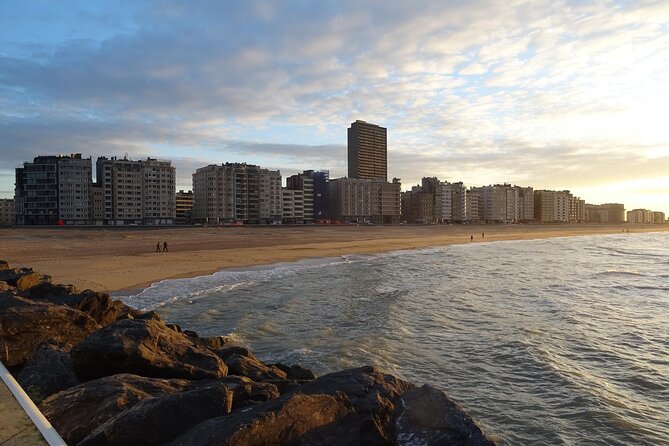
The meeting point is Ostend Station at Natiënkaai 1. This is a practical place to begin because the station is the terminus of railway line 50A and the main rail station on the Belgian coast. If you arrive by train, you can begin exploring without arranging a taxi or finding a separate meeting point.
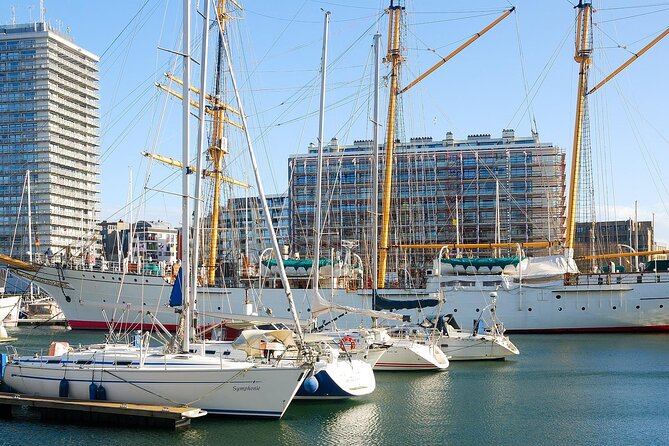
One of the first major sights is the Mercator, the protected sailing ship moored in the harbor between the station and the town hall. It is perhaps the best-known ship in Belgium, and its location gives the walk an immediate maritime character.
The Mercator is more than a photo stop. It helps explain Ostend as a port city, not just a beach resort. The ship’s position near the station also makes it an easy early landmark, especially if you are still getting your bearings.
The route returns to the meeting point at the end. The information does not specify how long you spend inside any attraction, so treat the ship as a stop on the walking route rather than assuming an admission visit is included.
Churches That Tell Ostend’s Story
The Church of Saint Peter and Saint Paul is Ostend’s main church, built in the Neo-Gothic style on the site of an earlier church. Its tall, formal design gives the walk a change of mood after the harbor and port surroundings.
The itinerary also includes the Capuchin Church, a small two-aisle Baroque church in the town center. The Capuchin monks worked among fishermen, and the building later became associated with fishermen and seamen. That detail gives the church a direct link to the people who shaped Ostend’s working waterfront.
The Heilig Hartkerk, or Sacred Heart Church, is another stop. It is a parish church on Heilig Hartplein in the Westerkwartier district. Unlike the more central churches, this stop takes you into a different part of Ostend and shows that the city’s story is not limited to the main promenade.
These church stops are useful because the game asks you to notice details you might otherwise pass by. You do not need a specialist interest in architecture to enjoy them, but the short facts help put the buildings in context.
James Ensor and Ostend’s Art Scene

Ostend is closely linked with James Ensor, and the route includes the renovated James Ensor House. If you want to understand why Ensor remains such an important part of Ostend’s identity, this is one of the most meaningful stops on the walk.
The experience does not promise a guided museum tour, and the included material is described as an online game and city walk. Still, the Ensor stop adds substance to the route. You are not simply moving from one attractive building to another. You are seeing how a particular artist is tied to the city.
The game format can work well here. A short question makes you pause and look at the place instead of walking straight past it. If you are interested in Ensor, you may want to allow extra personal time around the house, though admission details are not included in the activity information.
Public art continues at Zeeheldenplein, where red sculptures by Arne Quinze catch attention through their monumental form and strong color. The sculptures bring a modern note to a route that also includes historic churches, a sailing ship, and royal monuments.
Another art stop is a life-size work by Patrick Steen on the boulevard. It shows the fusion of two dancing people with the waves of the sea. This is the sort of public artwork that is easy to miss if you are focused only on major buildings, so the question-based walk earns its keep here.
A few more Ghent trips to weigh up
- Ghent: 40-Minute Historical Boat Tour of City Center
★ 4.3 · 430 reviews - Ghent: Guided City Tour with Food Tastings
★ 4.8 · 228 reviews - Ghent: City Highlights and Hidden Gems Guided Bike Tour
★ 4.7 · 196 reviews - Ghent: Guided City Tour with Chocolate Tastings
★ 4.8 · 36 reviews
Walking the Coast: Pier, Beach, and Promenade

The walk includes Ostend’s 300-meter pier, described as the longest pier on the coast from 2019. You can walk to its end for a view back toward the city skyline from the sea.
The pier adds a welcome change from street walking. It also brings practical considerations: wind, rain, and uneven comfort can affect how pleasant the walk feels. The activity is outdoors, so wear shoes suited to several hours on foot and check the weather before starting.
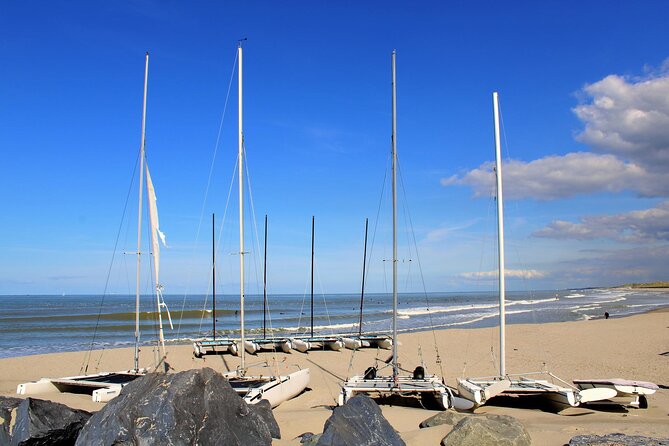
The beach is another major part of the route. Ostend’s white sandy beaches are used for sunbathing, walking, play, and water sports. You can expect this stop to feel less like a puzzle location and more like a chance to appreciate the seaside setting.
The beach and pier also make the activity easy to personalize. You might move quickly through the questions on a cold day, or pause longer when the weather is good. Since the hunt can be paused, you can stop for a snack or drink rather than treating the route as a race.
The Albert I promenade adds another coastal viewpoint. The route includes a statue on the dike there, so you get both the open sea and the built-up resort frontage that defines Ostend.
Kursaal, Leopold I, and the City’s Public Face
The Casino-Kursaal, also called Kursaal Oostende, is one of the city’s major architectural landmarks. Built in 1950 in white Portland stone, it reflects Ostend’s role as a seaside resort with a taste for large-scale entertainment buildings.
The experience also visits a bronze equestrian statue of King Leopold I. This gives the walk a royal and civic element, quite different from the fishing connections of the Capuchin Church or the artistic associations of Ensor and Quinze.
These stops help create a varied route. You are not solving the same type of question at every location. One answer may depend on architectural details, another on a statue, and another on the setting around the sea.
The route’s variety is one of its strongest features. I would choose it over a simple beach stroll if you want a fuller first look at Ostend, especially if you are traveling with children or friends who enjoy small challenges.
How the Game Works in Practice

The activity is played through your phone. The included product is an online game combined with a city walk, and it is offered in English. You need your own smartphone and mobile data, since those are not included.
The walk takes approximately 2 to 4 hours. That range is broad for a reason. A fast group that already knows Ostend may finish closer to the short end, while a first-time visitor who stops for photos, food, or beach time may take longer.
The questions are intended to be found at the locations rather than researched in advance. This keeps the activity focused on what you can see around you. Several questions are described as easy to follow, and the answers can generally be found at the spot.
There is one design issue to keep in mind. The questions may not always follow the walking route in a clear order, and the app’s map display can be confusing for some people. You may need to open Google Maps or your phone’s GPS to confirm where you are going.
I would allow a few minutes at the start to understand the interface. If the map does not appear immediately, check the app carefully or use your own navigation. This is a small nuisance, but it matters when you are trying to avoid retracing your steps.
The difficulty also appears to lean easy. That is good for families, casual groups, and people who want sightseeing rather than a hard puzzle. If you regularly play city treasure hunts or already know Ostend well, you may find the questions less demanding.
Price, Group Size, and Overall Value
At $37.33 per group of up to six, the pricing is strongest when you fill most of the places. Six people would pay about $6.22 each, before any currency conversion or booking charges. For two people, the per-person cost is higher, but you are still paying for a private activity rather than joining a large group.
The value depends on what you want. You are not paying for a live guide, transport, attraction admissions, or a meal. You are paying for a ready-made route, questions, and short pieces of information that save you from researching the city yourself.
For a family, this can be a sensible way to turn sightseeing into a shared activity. Children can search for answers instead of simply following adults from one monument to the next. For a group of friends, it gives you a loose plan without taking away the freedom to stop.
I would be less enthusiastic about the price for a solo visitor, since the cost is the same per group. A solo visitor who enjoys museums and independent reading may get more from choosing a few sights directly.
The experience has a 4.5 rating from 10 listed reviews, and the strongest pattern is clear: people like the unusual way of seeing the city, the easy-to-find questions, the chance to discover streets they might otherwise miss, and the ability to pause for food or drinks.
Phone Battery, Route Order, and Other Practical Points
Charge your phone fully before starting. One participant lost progress when the phone battery died and another family member logged in on a different device. The game did not simply continue from the same point, so a power bank is a smart item to pack.
Keep your group together when solving the questions. The game is designed for your private party, and sharing one active device may reduce confusion. If several people want to use their own phones, make sure you understand how the account and progress system works before leaving the station.
The route is suitable for most people, and service animals are allowed. It is near public transportation, thanks to the station start. The activity is described as a private tour, so only your group takes part.
Free cancellation is available if you cancel at least 24 hours before the scheduled start time. Changes or cancellations inside that window are not accepted for a refund, and the cut-off uses Ostend local time.
I would also plan around the weather. The pier, beach, boulevard, and outdoor sculptures are central parts of the route, so rain or strong wind can make the walk less enjoyable. There is no fixed schedule, which lets you choose a better time of day.
Who Should Book the Ostend Hunt?
I would recommend this activity to families who want sightseeing with a little structure, friends looking for a light team challenge, and first-time visitors who prefer to explore without a guide. It also suits anyone arriving by train and wanting a ready-to-use route from the station.
It is less suited to people who want a detailed historical tour led by an expert. The information is brief, and the questions are generally not difficult. You should also think twice if you dislike using a phone while walking or if you do not have reliable mobile data.
The best plan is to treat the hunt as a framework, not a race. Take the questions seriously enough to notice the city, but leave room for the beach, a café, the pier, and any building that catches your attention.
Should You Book It?
Book the Ostend e-Scavenger Hunt if you want a flexible, affordable group activity that covers far more than the beach. The Mercator, churches, Ensor House, public art, Kursaal, royal statue, pier, station, and promenade give you a broad introduction to the city in one walk.
The main reasons to hesitate are the app’s occasional confusion, the possibility of retracing your steps, and the need to protect your phone battery. With a power bank, your own map app, and a relaxed attitude toward the route, this is a practical way to see Ostend at your own pace.
FAQ
Where does the Ostend e-Scavenger Hunt start?
It starts at Ostend Station, at Natiënkaai 1, 8400 Oostende, Belgium.
Where does the activity finish?
The activity ends back at the meeting point at Ostend Station.
How long does the scavenger hunt take?
The estimated duration is approximately 2 to 4 hours.
How much does the activity cost?
The listed price is $37.33 per group for up to six people.
Is this a private activity?
Yes. Only your group participates in the activity.
Is a guide included?
No live guide is listed. The activity is a self-guided online game and city walk used on your phone.
What language is available?
The activity is offered in English.
Do I need my own smartphone and mobile data?
Yes. Use of a smartphone and data is not included, so you need to provide both.
Can I cancel for a full refund?
Yes, if you cancel at least 24 hours before the experience start time. Cancellations or changes made less than 24 hours before the start are not accepted for a refund.
Just added around Ghent
- Walking Food Tour in Ghent★ 5.0 · 13 reviews
- Historic Highlights, by a local guide★ 5.0 · 9 reviews
- Discover Mons while playing! Escape game – The alchemist★ 4.0 · 5 reviews
- Discover Ghent while playing! Escape game – The Walter case★ 4.5 · 4 reviews
- Ghent Walking Tour with Audioguide on Your Smartphone★ 4.5 · 13 reviews
- Discover Ghent with a self-guided Outside Escape city game tour!★ 4.0 · 10 reviews
- e-Scavenger hunt Kortrijk: Explore the city at your own pace★ 4.5 · 15 reviews
- Discover Ghent while playing! Escape game – The alchemist★ 4.0 · 4 reviews
Scavanger Hunts, compared.

e-Scavenger hunt Antwerp: Explore the city at your own pace
Read our review →
e-Scavenger hunt Bruges: Explore the city at your own pace
Read our review →
Bruges Scavenger Hunt and Highlights Self Guided Audio Tour
Read our review →
Beer Tasting and Scavenger Hunt in Brussels – About 3 Hours
Read our review →
e-Scavenger hunt Mechelen: Explore the city at your own pace
Read our review →
e-Scavenger hunt Hasselt: Explore the city at your own pace
Read our review →
e-Scavenger hunt Brussels: Explore the city at your own pace
Read our review →Browse the lists this tour appears in