
Reviewed · HISTORICAL TOURS
Historic Highlights, by a local guide
Ghent reveals itself best on foot, and this tour takes you from the old waterways to medieval streets, grand city palaces, and the Castle of the Counts. Jurgen, a local history professor, adds the stories behind the buildings, including Ghent’s origins, industrial past, and socialist movement.
I like the route’s range: you see major sights such as St. Bavo’s Cathedral and Gravensteen, but also quieter corners and local streets. I also like the personal format, which leaves room for questions and practical advice about restaurants and markets. The main drawback is that entrance fees are not included, and two hours gives you context rather than time to explore each interior.
In This Review
- Key things to know before you book
- Starting at Hagelandkaai and Ghent’s old water defenses
- Following the Leie and Schelde to Ghent’s beginnings
- St. Bavo’s Cathedral and the Van Eyck masterpiece
- Kouter and the city of the 18th and 19th centuries
- Hotel d’Hane Steenhuyse and an 18th-century city palace
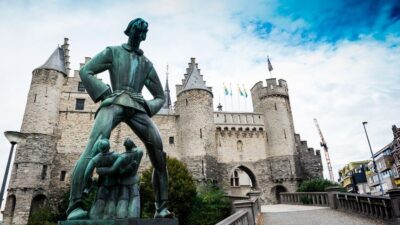
- Gravensteen, the Castle of the Counts
- Patershol, one of Ghent’s oldest quarters
- Finishing at Vrijdagmarkt and Ghent’s socialist past
- What Jurgen adds to the experience
- How the $40.33 price measures up
- Timing, walking, and practical details
- Who should book this Ghent walking tour?
- Should you book Historic Highlights?
- FAQ
- How long is the Historic Highlights tour?
- Where does the tour begin?
- Where does the tour end?
- What time does the tour start?
- Are attraction admission fees included?
- What is the cancellation policy?
Key things to know before you book
- A local history professor leads the walk: Jurgen brings academic knowledge and a clear affection for Ghent, with attention to the stories behind ordinary-looking buildings.
- The route links several eras: You move from Ghent’s early origins and medieval power to its 18th and 19th-century city life and later socialist history.
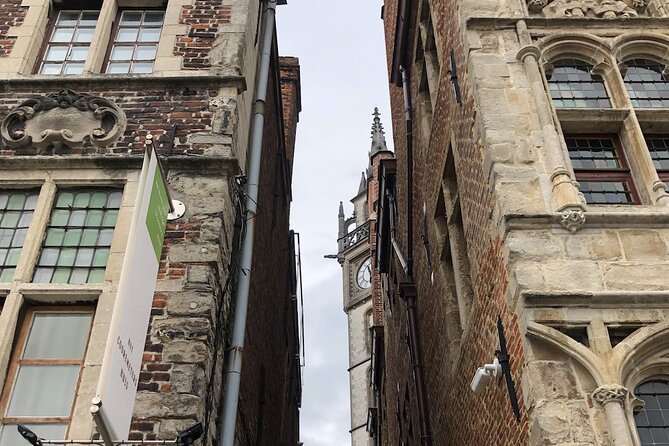
- Major landmarks are paired with lesser-seen streets: The walk includes St. Bavo’s Cathedral, Gravensteen, Patershol, and smaller corners around the old center.
- The tour starts by the water and ends near restaurants: Begin at Hagelandkaai and finish at Vrijdagmarkt, with the Patershol and Oudburg dining area along the way.
- Admission costs extra: Cathedral, palace, and castle visits are not included where an admission ticket is required.
- The price is reasonable for a private-style walk: At $40.33 per person, the value depends on whether you want a conversational guide rather than a large, fixed-script group tour.
Starting at Hagelandkaai and Ghent’s old water defenses

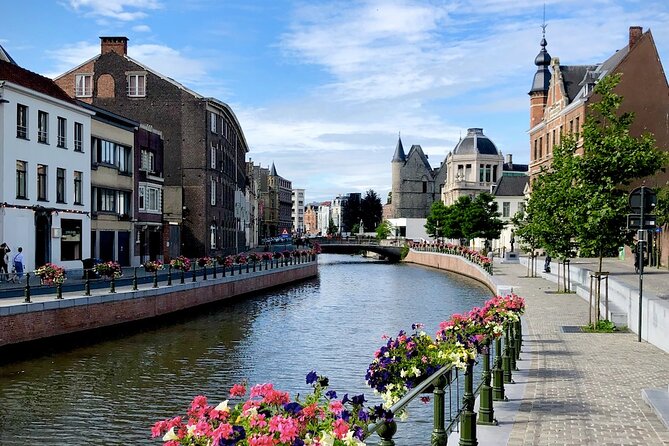
The tour begins at Hagelandkaai 53 at 3 p.m., beside the Napoleon De Pauw lock. This is not just a meeting point chosen for convenience. The guide uses the setting to explain how the area once related to the moat around the Spanish Castle in the 16th century.
That opening gives you an immediate sense of how much Ghent has changed. Waterways that now frame pleasant walks and urban buildings once formed part of the city’s defenses and working life. I like this kind of start because it sets up a useful habit for the rest of the walk: look at the water, streets, and buildings as pieces of a changing city rather than as isolated sights.
The first stop lasts about five minutes, so do not expect a full lesson on the lock or a visit inside a monument. It works as an introduction and a way to place Ghent’s later buildings in a wider setting.
A few more Ghent trips to weigh up
- Historical Walking Tour: Legends of Gent
★ 5.0 · 1,761 reviews - Ghent: 40-Minute Historical Boat Tour of City Center
★ 4.3 · 430 reviews - Private Historical Tour: The Best of Ghent
★ 5.0 · 115 reviews
Following the Leie and Schelde to Ghent’s beginnings
From Hagelandkaai, the walk continues toward Bisdomkaai after passing the old St. Bavo’s Abbey. The route reaches the meeting point of the Leie and Schelde, the waterways connected with Ghent’s beginnings.
This section takes roughly 10 minutes. It is short, but it gives the tour a strong sense of place. Ghent’s story is closely tied to water, trade, movement, and control of the city’s crossings. A guide who can connect those broad forces to the exact streets under your feet helps the city make more sense.
You should expect explanation rather than a long stop with formal displays. There is no admission charge for Bisdomkaai, and the riverside setting makes this one of the easier parts of the tour for taking photographs. The walk also helps you get your bearings before reaching the central monuments.
St. Bavo’s Cathedral and the Van Eyck masterpiece
St. Bavo’s Cathedral is one of the central stops, with about 10 minutes devoted to the building and its famous Lamb of God altarpiece by Van Eyck. The painting is one of Belgium’s major artistic treasures, and it gives the guide a chance to discuss Ghent’s religious, artistic, and civic importance.
The cathedral is listed as an optional paid visit, so the walking tour does not cover your admission. Ten minutes is enough to understand why the building matters and to receive useful orientation, but it is not enough for a full interior visit or a careful look at the altarpiece.
If the Lamb of God is high on your list, plan separate time to return. The cathedral offers a virtual tour of its interior, which is described as worth seeing. I would treat the walking tour as preparation: Jurgen can explain the setting and significance, then you can visit on your own when you are ready to spend more time inside.
Kouter and the city of the 18th and 19th centuries

The route then reaches Kouter, a broad square and surrounding area linked with Ghent’s 18th and 19th-century atmosphere. The stop takes about 10 minutes and shifts the focus away from medieval power toward the city’s later urban character.
This is useful because a first visit to Ghent can easily become too focused on castles, churches, and picturesque canals. Kouter helps fill in the period when Ghent was growing, changing, and developing a more modern civic identity.
You will not spend hours studying one building here. Instead, the guide uses the square and nearby streets to point out how the city’s style and social life evolved. I like that balance. It keeps the tour from becoming a march between postcard views and gives you a broader way to read Ghent.
Same old town, a completely different kind of day:
- Ghent: 50-Minute Medieval Center Guided Boat Trip
★ 4.5 · 5,637 reviews - Ghent: 40 Minute Medieval Center Guided Boat Tour
★ 4.4 · 884 reviews - Evening Tour of the Dark Side of Gent
★ 5.0 · 646 reviews - Ghent Bike Tour Off-the-beaten-track
★ 5.0 · 505 reviews
Hotel d’Hane Steenhuyse and an 18th-century city palace
Hotel d’Hane Steenhuyse offers a look at another side of Ghent: the polished world of 18th-century urban wealth. The former city palace is known for ornate ceilings, decorative details, and a garden described as a little-known secret.
The stop is planned for around 10 minutes. Admission is not included, so check the access arrangement if you want to see the interiors or garden beyond the tour’s presentation. The walk may introduce you to the building and its place in city life without giving you a long private-house visit.
This stop is valuable because it adds social detail. Ghent was not only a town of abbeys, merchants, and fortifications. It also had wealthy residents who built refined homes and shaped the city’s public and private spaces. The contrast with the castle later in the route is one of the walk’s strengths.
Gravensteen, the Castle of the Counts
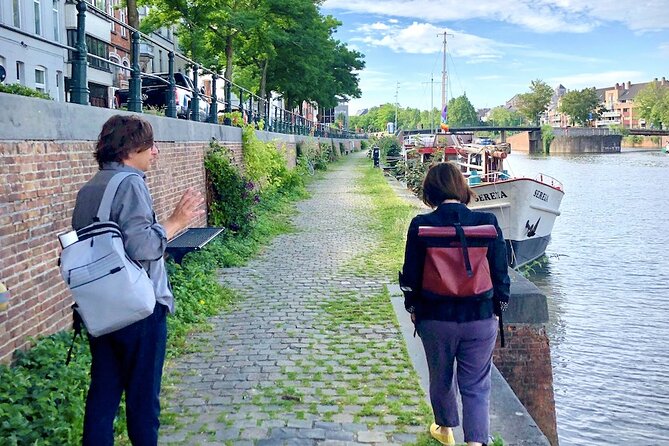
After several less-publicized attractions, the route arrives at Gravensteen, the Castle of the Counts. This is the tour’s strongest medieval landmark and one of Ghent’s most recognizable sights.
The planned stop lasts about 10 minutes. Admission is extra, so the walking tour gives you historical context rather than a full castle visit. That distinction matters. If you want to see the castle rooms, defenses, and exhibits in detail, set aside separate time and budget for entry.
Even a short explanation can make the castle more meaningful. Rather than seeing only a dramatic stone fortress, you can place it within the power struggles of Ghent and the Flemish counts. The stop also gives you a clear choice: continue with the group for the city’s streets and local stories, or return later for a longer indoor visit.
Patershol, one of Ghent’s oldest quarters
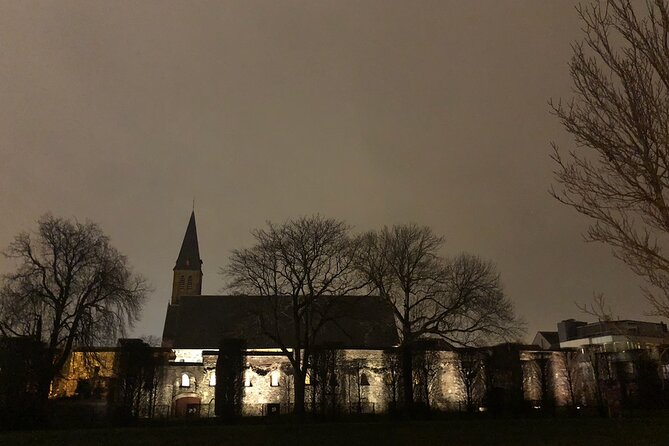
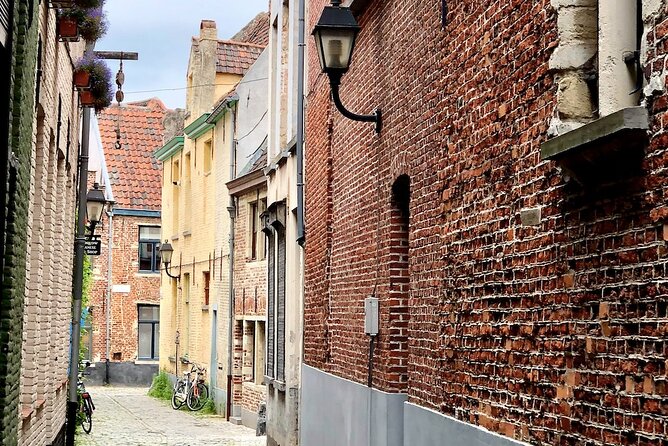
Patershol is scheduled for about 15 minutes and is one of the most appealing parts of the route for visitors who want more than the standard monument circuit. It is among the oldest sections of Ghent, with small streets and a strong sense of the city’s earlier layout.
This is where the walk’s local angle becomes especially useful. A guide can show you how the district fits into the larger city and point out streets you might otherwise pass without understanding. The area also contains many small restaurants, making it a practical place to linger after the tour.
One specific tip is connected with Enzo at Pizzeria Neapolis. Present one of the tour’s business cards there to receive 10 percent off your food. That offer is a small detail, but it adds real value if you plan to eat nearby. Confirm the offer when booking or before ordering, since restaurant arrangements can change.
Finishing at Vrijdagmarkt and Ghent’s socialist past
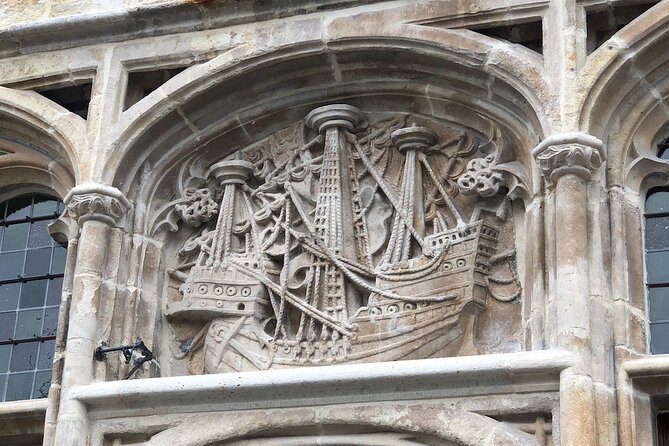
The tour ends at Vrijdagmarkt, with about 15 minutes devoted to the square and the socialist movement. This closing topic gives the walk a modern political edge and prevents the story from stopping in the Middle Ages.
Vrijdagmarkt is also a useful ending point. Restaurants and bars surround the square, and the route finishes at Oudburg 17. You can stop for a drink, continue exploring, or make your way toward another part of central Ghent from there.
I appreciate the way this ending broadens the meaning of the tour. Ghent is not simply a preserved medieval town. Its identity also comes from later struggles over work, politics, and public life. That makes the final stop more than a convenient place to say goodbye.
What Jurgen adds to the experience
The guide is the main reason to choose this walk over a basic sightseeing circuit. Jurgen is a history professor who grew up in Ghent, and the tour is built around his ability to explain both well-known landmarks and less obvious details.
You can expect room for questions. The guide has been described as thoughtful and attentive to the needs of different group members, which matters when one person wants dates and political context while another is more interested in architecture, food, or daily life.
The tone also appears to be flexible rather than stiff. The route includes humor, local gossip, and practical suggestions, including advice about restaurants and Sunday markets. That combination makes the walk useful for first-time visitors, but it can also suit people who have recently moved to Ghent and want to understand their new city.
The experience is conducted in a small-group or private-style format, with a maximum of 20 people. Some bookings may be much smaller. A group of three, for example, allows for a more conversational pace, but you should not assume every departure will be that intimate.
How the $40.33 price measures up
At $40.33 per person, this is not the cheapest way to see Ghent’s center. You can walk through the city on your own for free, and many exterior sights cost nothing. The price makes more sense if you want a local interpreter who can connect the landmarks and answer questions as you go.
The fee does not include admission to St. Bavo’s Cathedral, Hotel d’Hane Steenhuyse, or Gravensteen where tickets are required. That means you should add those costs only if you plan to enter. The tour itself remains focused on walking, explanation, and orientation.
For a private group, the value improves because you are paying for a more personal hour-by-hour experience rather than only access to a fixed route. For a larger group of 20, the value depends more on how much you enjoy listening and asking questions. Either way, the two-hour length is long enough to cover a lot of ground without taking over your day.
Timing, walking, and practical details
The tour starts at 3 p.m. and lasts about two hours. It begins at Hagelandkaai 53 and ends at Oudburg 17, so you do not return to the starting point. Keep that in mind when planning transport or arranging another activity.
The route passes several waterways, squares, historic streets, and major buildings. The exact walking distance is not provided, but this is a city walk with multiple stops, so comfortable shoes are sensible. The experience runs outdoors for much of its time, and one group completed it in pouring rain, so weather can affect your comfort even if it does not stop the tour.
The meeting point is near public transportation. Mobile ticketing is available, and confirmation is provided when you book. Service animals are allowed, and most people can participate. The maximum group size is 20.
Free cancellation is available up to 24 hours before the start time for a full refund. A cancellation made less than 24 hours before departure is not refundable, and changes inside that window are not accepted. The operator also requires a minimum number of participants and may offer another date or a full refund if that minimum is not reached.
Who should book this Ghent walking tour?
I would choose this tour if you want historical context with a local voice rather than a quick list of sights. It is especially well suited to a first visit, since it introduces the city’s main landmarks and leaves you with a clear sense of where to return later.
It also suits anyone who likes asking questions. Jurgen’s background as a professor and his interest in the stories behind buildings make the tour a good match for curious visitors who want more than dates and names.
The walk may be less suitable if you want long interior visits. The cathedral, palace, and castle each deserve more time than the tour can provide, and their admission costs are separate. In that case, use the walk as an orientation, then schedule those buildings for another part of your stay.
It is also not ideal for anyone who dislikes outdoor walking in uncertain weather. The tour continued through heavy rain for one group, but that does not mean the conditions will feel comfortable. Bring suitable clothing and think of the walk as a city experience rather than an indoor museum program.
Should you book Historic Highlights?
Book it if you want a friendly, personal introduction to Ghent led by someone who knows the city’s past and present. The strongest features are Jurgen’s local knowledge, his enthusiasm for the subject, the mix of famous sights and quieter streets, and the useful finish near Patershol and Vrijdagmarkt.
The tour offers good value for $40.33 when you would rather learn through conversation than explore alone. Just budget extra for any cathedral, palace, or castle admissions, and remember that two hours provides a well-planned overview rather than a full tour of every interior.
FAQ
How long is the Historic Highlights tour?
The walking tour lasts approximately two hours.
Where does the tour begin?
The tour begins at Hagelandkaai 53, 9000 Gent, Belgium.
Where does the tour end?
The tour ends at Oudburg 17, 9000 Gent, Belgium, near the Vrijdagmarkt and the restaurants and bars in that area.
What time does the tour start?
The scheduled start time is 3 p.m.
Are attraction admission fees included?
No. Admission is not included for St. Bavo’s Cathedral, Hotel d’Hane Steenhuyse, and Gravensteen where an entry ticket is required.
What is the cancellation policy?
You can cancel up to 24 hours before the experience starts for a full refund. Cancellations or changes made less than 24 hours before the start time are not accepted for a refund.
Just added around Ghent
- Walking Food Tour in Ghent★ 5.0 · 13 reviews
- Discover Mons while playing! Escape game – The alchemist★ 4.0 · 5 reviews
- Discover Ghent while playing! Escape game – The Walter case★ 4.5 · 4 reviews
- e-Scavenger hunt Ostend: Explore the city at your own pace★ 4.5 · 10 reviews
- Ghent Walking Tour with Audioguide on Your Smartphone★ 4.5 · 13 reviews
- Discover Ghent with a self-guided Outside Escape city game tour!★ 4.0 · 10 reviews
- e-Scavenger hunt Kortrijk: Explore the city at your own pace★ 4.5 · 15 reviews
- Discover Ghent while playing! Escape game – The alchemist★ 4.0 · 4 reviews
Historical Tours, compared.

Historical Walking Tour with Chocolate & Waffle Tasting
Read our review →THE Storytelling Tour of Bruges | First Day Must | History & Tips
Read our review →
Historical Tour with Chocolate & Waffle Tasting
Read our review →
Historical Walking Tour: The Story of Bruges – by Legends
Read our review →
Browse the lists this tour appears in