
Reviewed · DARK SIDE TOURS
Evening Tour of the Dark Side of Gent
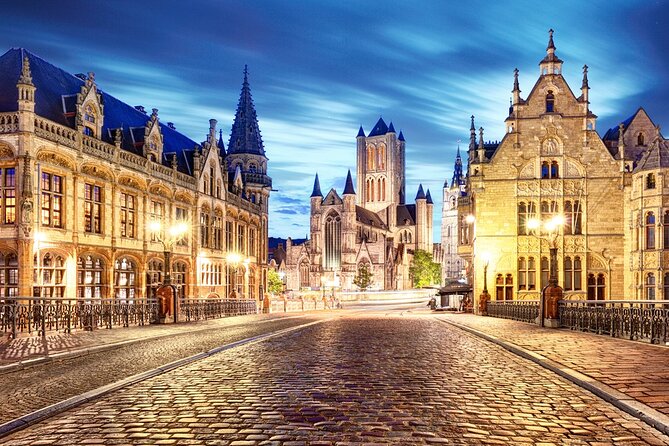
Ghent’s dark past is more than murder stories. On this evening walk, medieval power, torture, religious conflict, and local legends unfold beside some of the city’s prettiest views. You move from St Michael’s Bridge to the Castle of the Counts, Rabot Sluice, and the old Patershol quarter.
I like the strong mix of storytelling and scenery, especially the nighttime views from St Michael’s Bridge and the quieter streets beyond the main center. I also like the value: at the listed price of $3.62, you get nearly two hours with an English-speaking guide and no separate admission fees.
The main caution is that the dark material varies with the guide and may not always feel especially gruesome. A few tales lean toward legend, and the tour can be canceled if too few people sign up or if the weather turns bad.
In This Review
- Key points before you book
- Ghent after sunset: what this tour is really about
- St Michael’s Bridge and the three towers
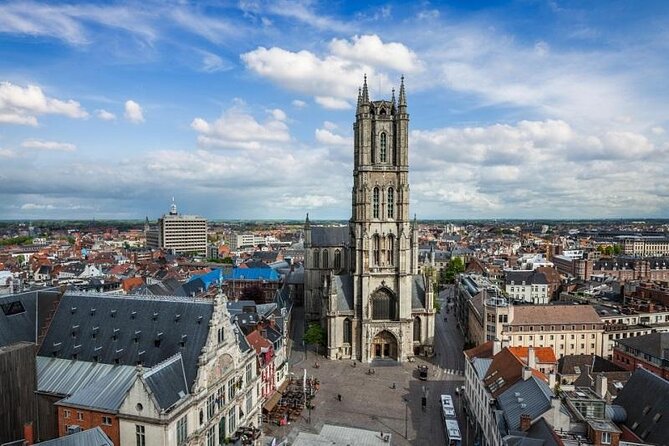
- The cathedral known as the Devil’s Tower
- Graslei and Korenlei, Ghent’s medieval harbor
- Appelbrugparkje and the father-and-son execution legend
- The Castle of the Counts and Ghent’s defensive past
- The Prince’s Court and a vanished palace
- Rabot Sluice and the last surviving defense tower
- Keizer Karel and the Bridge of Imperial Delights
- Religious wars and the cost of Calvinist rule
- Patershol and the city’s industrial revival
- Price, timing, and group size
- Who will enjoy the Dark Side of Ghent
- My verdict: a very good low-cost introduction
- FAQ
- Where does the Evening Tour of the Dark Side of Ghent start?
- Where does the tour end?
- How long does the tour last?
- What language is the tour offered in?
- How much does the tour cost?
- Is the tour suitable for most people?
- What happens if the weather is poor or too few people book?
Key points before you book
- Expect a 1-hour-45-minute walk: The route covers much of central Ghent, so wear comfortable shoes.
- Start with one of Ghent’s best views: St Michael’s Bridge gives you a clear look at the city’s famous three towers.
- The stories mix fact and folklore: You’ll hear about torture, executions, religious wars, and legends that may stretch credibility.
- Guides shape the experience: Kenny, Isabel, Ben, and Julian have all led memorable versions, with humor and lively delivery.
- The route goes beyond the postcard center: Rabot Sluice and Patershol add quieter areas that are easy to miss on a short city visit.
- Finish near food and drinks: The walk ends in Patershol, surrounded by cozy bars and restaurants.
Ghent after sunset: what this tour is really about
The title promises the darker side of Ghent, and there is plenty of blood, murder, punishment, and political cruelty. But this is also a compact introduction to how the city grew, made money, fought over religion, and eventually recovered from long periods of decline.
That broader approach is useful. If every stop were only a horror tale, the walk would become a string of grisly anecdotes. Instead, the guide connects the unsettling stories to Ghent’s medieval trade, defenses, rulers, and neighborhoods.
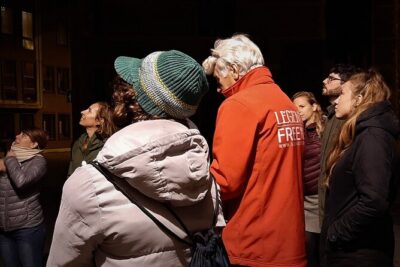
You should also know that dark does not always mean shocking. One version of the tour may focus more on grim history, while another may spend more time on legends, monuments, and city development. The guide’s personality matters a great deal. Kenny is repeatedly singled out for his humor, energy, and storytelling, while Isabel, Ben, and Julian are also named as engaging guides.
The tone is generally playful rather than solemn. You may hear about demented torture methods, then move straight into a joke or an explanation of a sculpture. That makes the experience accessible to families and casual sightseers, though anyone looking for a serious, academic treatment of Belgian history may find the style light.
More dark side tours in Ghent:
- Private Tour: The Dark Side of Gent
★ 5.0 · 73 reviews - Ghent: The Dark Side of Ghent Private Walking Tour
★ 4.9 · 19 reviews - Evening Tour: The Dark Side of Bruges
★ 5.0 · 956 reviews
St Michael’s Bridge and the three towers
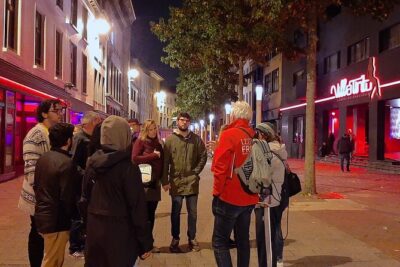
The walk begins at Hostel Uppelink on Sint-Michielsplein, close to St Michael’s Bridge. This is an excellent opening point because it gives you an immediate view of Ghent’s medieval core.
From the bridge, the guide introduces Ghent as a major trading center in the Middle Ages. You also get the classic view of the city’s three towers, an image that helps you understand the old center before the walk begins threading through individual streets and buildings.
This first stop lasts about 15 minutes. That is enough time to set the scene without lingering too long at a single viewpoint. At night, the towers and waterways take on a different mood, and the stop works well for photographs.
The practical point is simple: arrive ready to begin outside the hostel at St Michael’s Bridge. The starting address is specific, and meeting instructions matter here. Some people have missed the walk after going to the wrong place or arriving too late, so I would arrive early and confirm that you are at Sint-Michielsplein 21.
The cathedral known as the Devil’s Tower
One unnamed stop focuses on Ghent’s beautiful cathedral and the gruesome story behind its nickname, the Devil’s Tower. The details supplied for this part are brief, so the guide’s storytelling carries the moment.
This is a good example of how the walk uses famous buildings as entry points into less polished episodes from the past. You are not simply looking at a church facade. You are hearing how memory, fear, and local storytelling can give a landmark a second identity.
If you prefer strictly documented facts, listen carefully to how the guide separates history from legend. The tour openly includes mythology and colorful tales, and not every story should be treated as a court record.
Graslei and Korenlei, Ghent’s medieval harbor
The next main stop is Graslei and Korenlei, the old harbor area. Today, this is one of Ghent’s most attractive waterfront stretches, but the guide takes you back to its working past.
You hear about lucrative trade and Ghent’s role as an economic powerhouse in Europe. This stop gives the darker stories a needed economic backdrop. Wealth funded grand buildings and political influence, but it also produced rivalries, strict control, and conflict over who benefited from the city’s success.
The stop lasts about 10 minutes. That is enough to explain the harbor without turning the walk into a long architectural lecture. I especially like this part for first-time visitors because it links the postcard view to the city’s commercial roots.
At night, the waterfront is also one of the more photogenic parts of the walk. You can take pictures, but keep in mind that the group will continue on a schedule. This is a guided walk, not a free-form photography outing.
A few more Ghent trips to weigh up
- Evening Tour: The Dark Side of Brussels
★ 4.5 · 435 reviews - Evening Walking Tour: The Dark Side of Antwerp
★ 5.0 · 193 reviews - Bruges at Night: Murder, Mystery & Dark Stories Small Group Walk
★ 5.0 · 137 reviews - Brussels: Sightseeing Sunset Bus Tour
★ 3.8 · 70 reviews
Appelbrugparkje and the father-and-son execution legend
At Appelbrugparkje, the guide looks across toward the large Butchers’ Hall and tells the legend of a father and son sentenced to execution. A miraculous event supposedly saved them.
This is one of the tour’s clearest examples of folklore. The story is designed to make the setting memorable, and the bridge offers a strong visual pause. You are standing in a picturesque place while hearing about punishment and an unexpected rescue.
The contrast is part of the appeal. Ghent’s most charming corners often have stories that are far less charming. If you enjoy old legends, this should be a highlight. If you want every stop to feature verified crime or documented torture, you may find this section too fanciful.
The Castle of the Counts and Ghent’s defensive past
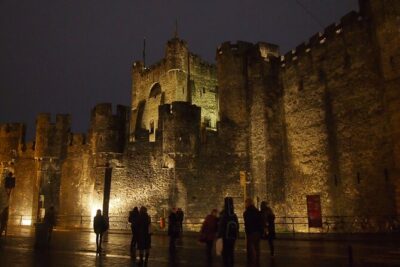
The Castle of the Counts is the biggest dramatic setting on the route. The fortification was built by Count Baldwin in the 9th century to protect local inhabitants from Viking raids, and the city began developing around it.
The guide explains how the castle shaped Ghent’s early growth. It is not just a dramatic medieval building dropped into the modern city. Its defensive role helps explain why this area mattered and why power gathered here.
The stop is planned for about 10 minutes. You should not expect a full interior visit or a castle tour. The value comes from standing outside the fortress while hearing about its role in defense, authority, and urban development.
This is also where the tour’s visual appeal is strongest. The castle gives you a memorable nighttime backdrop, and the guide’s dark stories gain force from the stone walls and narrow surroundings. Still, remember that all stops are exterior visits with free admission. The listed experience does not include entry to paid attractions.
The Prince’s Court and a vanished palace
Another stop takes you to what was once the enormous Prince’s Court. Much of the palace is gone, so you need to imagine the scale and importance of the site.
That kind of stop can be surprisingly effective on a walking tour. Instead of showing you a complete monument, the guide asks you to picture a lost center of power. The story becomes less about what remains and more about how cities erase, rebuild, and forget their own past.
The quality here depends on explanation. Without a strong guide, a vanished palace can feel like an empty patch of city. With a lively storyteller, it becomes a useful lesson in how Ghent changed over time.
Rabot Sluice and the last surviving defense tower
Rabot Sluice brings the walk slightly away from the most familiar center. Here, the guide points out the only remaining tower from Ghent’s medieval defense wall, which once stretched for 14 kilometers.
This is one of the route’s most useful stops for anyone who wants more than the standard central sights. The tower represents the scale of the old city and the effort required to defend it. It also shows how much of Ghent’s fortified boundary has disappeared.
The route’s movement toward Rabot Sluice is part of the experience. You are not simply being taken from one famous monument to another. You are seeing how the old center connects to less central areas, with the city’s development told through walls, waterways, and surviving fragments.
This is also a good point to remember the footwear advice. The pace is described as slow and mostly level, but the walk still lasts nearly two hours and covers a substantial distance. Comfortable shoes are a practical necessity, especially after a full day of sightseeing.
Keizer Karel and the Bridge of Imperial Delights
At the Keizer Karel stop, the guide takes you to the Bridge of Imperial Delights. Four sculptures line the bridge, showing legendary scenes from the life of Charles V.
This section adds political drama to the tour. Charles V was born in Ghent, and the sculptures give the guide a chance to explain how rulers are remembered through public art. The focus is not only on the emperor himself, but also on how a city presents its relationship with power.
The bridge is another strong photo stop. It is easy to pass by without understanding the sculptures, so having someone point out the figures and explain their stories adds real value.
The stop lasts about 10 minutes. That short format keeps the walk moving, but it also means the treatment will be selective. You will get memorable facts and legends rather than a full account of Charles V’s life.
Religious wars and the cost of Calvinist rule
The tour then turns to the Religious Wars and the effect of Calvinist rule on Ghent. This is one of the more serious historical sections because it deals with conflict over faith, government, and control of the city.
The dark side here is not a single crime. It is the damage caused when religious and political authority become tightly linked. The guide explains how these struggles affected Ghent and left a mark on its later story.
This section helps balance the more theatrical tales of executions and torture. It reminds you that the city’s troubled past was shaped not only by cruel individuals, but also by institutions, rulers, and competing beliefs.
Because the material can be complex, the guide’s clarity matters. A funny delivery can keep the walk lively, but the subject deserves attention. If you have only a loose understanding of the Reformation and religious conflict in the Low Countries, this part may leave you wanting to read more afterward.
Patershol and the city’s industrial revival
The walk ends in Patershol, whose name means Monk’s Hole. This picturesque medieval quarter provides a fitting final setting, but the subject shifts from medieval violence to the social impact of the Industrial Revolution.
You hear how industrial change affected local people and how it helped revive Ghent’s economy. That ending gives the tour a sense of movement through time. The city is not frozen in its medieval past, and its recovery required major economic and social change.
Patershol is also a practical place to finish. The area is in the city center and has many cozy bars and restaurants, so you can continue the evening without arranging another transfer. I would treat the end point as part of the tour’s value, especially if you want dinner or a drink afterward.
The quarter is picturesque, but do not expect the walk to end with a grand finale of horror. The final section is more about social history and urban revival than blood and punishment.
Price, timing, and group size
The listed cost is $3.62 per person, including all fees and taxes. For a 1-hour-45-minute guided walk through central Ghent, that is unusually inexpensive. At this price, the tour works well as a low-risk introduction to the city, especially on your first evening.
You should not judge the value by admission benefits because there are no paid entries included. The value is the guide’s time, route planning, storytelling, and the chance to notice monuments and streets you might otherwise pass.
The walk is offered in English and uses a mobile ticket. It is capped at 35 people, which is large enough to create a group feel but small enough to remain workable if the guide handles the crowd well.
The activity is booked about 14 days ahead on average. That does not mean you must reserve two weeks in advance, but it suggests that booking ahead is sensible during busy periods.
Free cancellation is available until 24 hours before the start time. After that point, the amount paid is not refunded, and changes are not accepted. The tour requires good weather, and it also requires a minimum number of participants. If the operator cancels for either reason, you are offered another date or experience, or a full refund.
Who will enjoy the Dark Side of Ghent
I would recommend this walk to you if you like history delivered through stories rather than dates and lists. It suits first-time visitors who want to understand the city’s medieval center while seeing it at night.
Families can enjoy it too. The humor and theatrical stories make the material easier for children to follow, though parents should be comfortable with references to murder, executions, torture, and tragedy.
It is also a good choice for solo visitors or couples who want a planned evening activity. You get a route, a guide, and a natural place to eat or have a drink at the end.
You may want to skip it if you dislike gruesome subjects, legends, or guides who use a playful tone. You should also choose another activity if you want a museum-style lecture, an interior castle visit, or a strictly factual account with little folklore.
The tour is generally suitable for most people, and the walking pace is described as slow and mostly level. Still, it is nearly two hours on foot, so mobility needs should be considered before booking. Service animals are allowed, and the starting point is near public transportation.
My verdict: a very good low-cost introduction
I would book the Dark Side of Ghent if I wanted a lively orientation to the city with a darker edge. Its strongest features are the nighttime setting, the range of neighborhoods, and guides who can make small monuments and old stories memorable.
The best guides, especially Kenny based on the repeated praise for his delivery, add jokes, audience interaction, and clear historical context. Isabel, Ben, and Julian are also named as strong guides, so the experience appears to depend less on one individual than on the provider’s general style.
Go in expecting a mixture of real history, local legend, political conflict, and morbid humor. Do not expect every story to be equally dark, and do not assume the tour replaces a formal history lesson.
For a few dollars, the risk is low. Arrive at the correct meeting point early, wear good shoes, bring a phone for the mobile ticket, and keep your evening free after the finish in Patershol. If that sounds like your kind of introduction to Ghent, this is an easy tour to recommend.
FAQ
Where does the Evening Tour of the Dark Side of Ghent start?
The tour starts at Hostel Uppelink, Sint-Michielsplein 21, 9000 Gent, Belgium, by St Michael’s Bridge.
Where does the tour end?
It ends in Patershol, in central Ghent. The area has many cozy bars and restaurants.
How long does the tour last?
The walk lasts approximately 1 hour and 45 minutes.
What language is the tour offered in?
The tour is offered in English.
How much does the tour cost?
The listed price is $3.62 per person, including all fees and taxes.
Is the tour suitable for most people?
Most people can participate. Service animals are allowed, and the experience is near public transportation. The walk is described as slow and mostly level, but comfortable shoes are recommended.
What happens if the weather is poor or too few people book?
The tour requires good weather and a minimum number of participants. If it is canceled for either reason, you are offered a different date or experience, or a full refund.
Just added around Ghent
- Walking Food Tour in Ghent★ 5.0 · 13 reviews
- Historic Highlights, by a local guide★ 5.0 · 9 reviews
- Discover Mons while playing! Escape game – The alchemist★ 4.0 · 5 reviews
- Discover Ghent while playing! Escape game – The Walter case★ 4.5 · 4 reviews
- Ghent Walking Tour with Audioguide on Your Smartphone★ 4.5 · 13 reviews
- Discover Ghent with a self-guided Outside Escape city game tour!★ 4.0 · 10 reviews
- e-Scavenger hunt Ostend: Explore the city at your own pace★ 4.5 · 10 reviews
- e-Scavenger hunt Kortrijk: Explore the city at your own pace★ 4.5 · 15 reviews
Dark Side Tours, compared.


Browse the lists this tour appears in