
Reviewed · DARK SIDE TOURS
Evening Tour: The Dark Side of Bruges
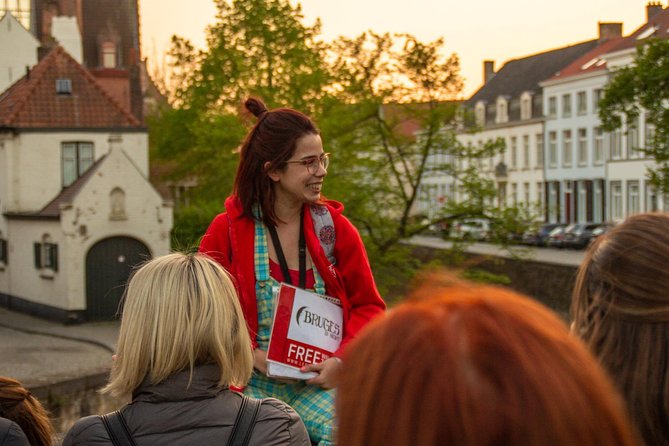
Bruges looks lovely by day, but after sunset its canals, old gates, and narrow lanes take on a different mood. This 90-minute walk moves beyond the postcard center into medieval trade quarters, superstition, local legends, and corners many visitors miss. The stories are sometimes spooky, sometimes funny, and often more historical than ghostly.
I like the route for two clear reasons: it gives you a better sense of Bruges than a quick loop around the Markt, and it ends with a useful social stop at the Bauhaus bar. Guides such as Martin, Louis, Patrick, Hilde, and Bram have been praised for humor, local pride, and lively storytelling.
The main caution is that the experience depends heavily on the individual guide. Some guides speak softly or are difficult to understand, and the walk can run longer than the advertised 90 minutes. Plan your dinner around it, wear good shoes, and do not count on finishing exactly on time.
In This Review
- Key points to know before booking
- Why Bruges feels different after sunset
- Starting at the Markt with Bruges in context
- Jan van Eyckplein and the old harbor
- The trading quarter near Choco-Story
- The Golden Hand Canal and its darker tale
- Vlissinghe and a glimpse of old pub life
- Adornes Domain and a church modeled on Jerusalem
- Windmills, the city gate, and the longest walk
- Finishing at the Bauhaus bar
- Price, timing, and overall value
- How the guides shape the experience
- Who should book this Bruges walk?
- Should you book The Dark Side of Bruges?
- FAQ
- Where does the tour start?
- Where does the tour end?
- How long does the tour last?
- Is the tour offered in English?
- Is a beer included?
- What places does the route visit?
- How many people can join?
- Can I cancel for a full refund?
Key points to know before booking
- Bruges after dark: See canals, squares, gates, and windmills when the daytime crowds have thinned.
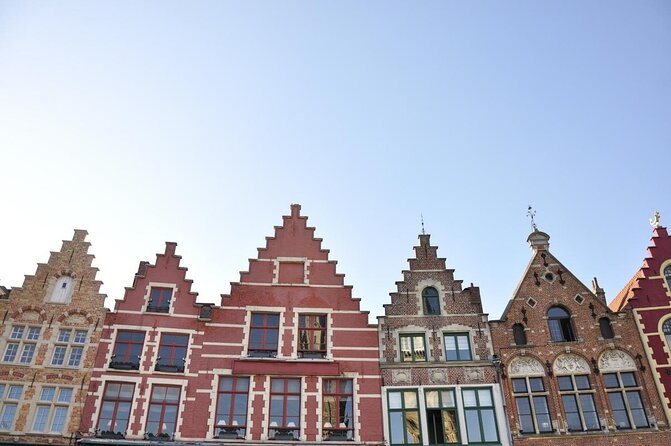
- More than ghost stories: Expect a mix of medieval commerce, local legends, superstition, tragedy, and city history.
- A route beyond the Markt: The walk reaches Jan van Eyckplein, Langerei, Adornes Domain, and Sint-Janshuismolen.
- Beer at the finish: The Bauhaus stop includes a buy-one-drink, get-one-free beer offer.
- Small-group promise: The experience is advertised for a maximum of six people, though group sizes may vary on some departures.
- Plan for extra time: Some walks have lasted closer to two hours, and the final stop is a 12-minute walk from the starting square.
Why Bruges feels different after sunset
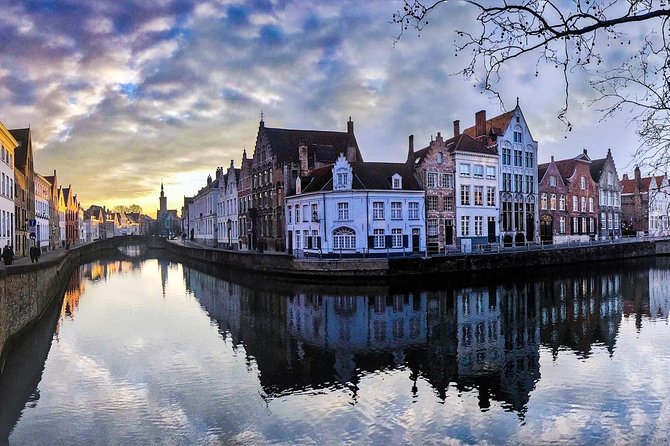
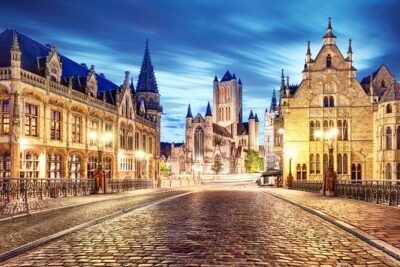
Bruges is easy to admire in daylight. Its Markt, stepped gables, canals, and stone bridges seem almost designed for a short visit. Yet the city can feel very polished and postcard-like if you only follow the central sightseeing loop.
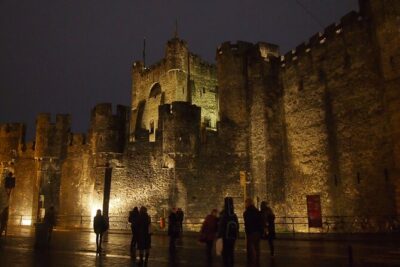
This evening walk offers a useful change of pace. You begin in the center, then move toward former harbor areas, old trading districts, a medieval gate, windmills, and a church tied to Jerusalem. The darkness is not used only for theatrical effect. It helps you notice quiet lanes, canal reflections, and the parts of Bruges that are easy to skip during a busy daytime schedule.
The title suggests a full ghost tour, but you should set your expectations carefully. The content can lean more toward the history of Bruges and its medieval trade than toward supernatural tales. You will hear legends and grim stories, but the emphasis varies with the guide.
That flexibility is part of the appeal. A strong guide can turn a building, square, or canal into a story about merchants, religious devotion, superstition, or tragedy. The best guides have included Martin, Louis, Patrick, Bram, Hilde, and Jonathan, each praised for different strengths such as humor, local detail, interactive questions, and clear storytelling.
More dark side tours in Bruges:
- Private Tour: The Dark Side of Bruges
★ 5.0 · 70 reviews - Bruges: 1.5-Hour Dark Side of Bruges Private Tour
★ 4.5 · 55 reviews - Night Tour: The Dark Side of Bruges – by Legends
★ 4.8 · 18 reviews
Starting at the Markt with Bruges in context
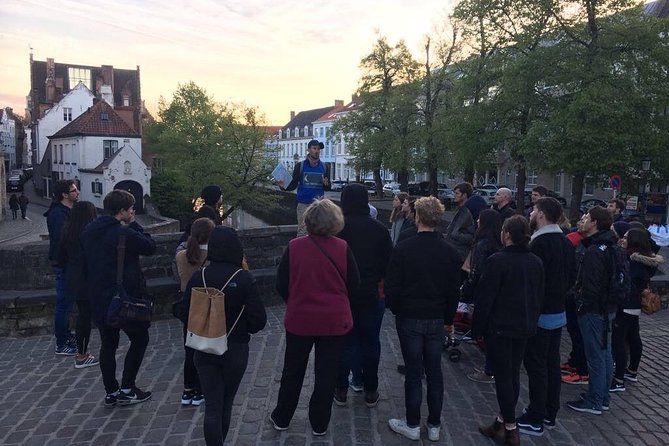
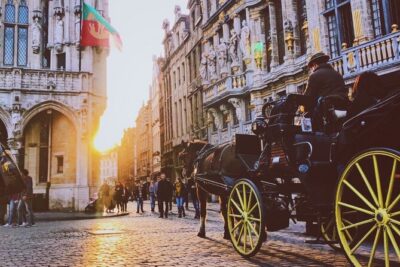
The meeting point is Pieter de Coninck en Jan BreydelMarkt, the main square in central Bruges. The first section lasts about 10 minutes and provides a historical introduction before the group sets off.
This is a sensible place to begin. If you are new to Bruges, the Markt gives you an immediate sense of the city’s scale and importance. It also helps you understand the difference between the grand civic center and the quieter quarters ahead.
The drawback is that you stand in one place at the start. If you have already spent a full day sightseeing, this opening may feel slow, especially in cold or wet weather. One useful tip is to eat before the walk if your dinner schedule is early, since the route can extend beyond the stated time.
The tour is offered in English. Several guides have handled mixed-language groups, but the clarity of the experience depends on voice, accent, and group size. Stay close to the guide at the beginning so you can hear the introduction and ask questions before the group spreads out.
Jan van Eyckplein and the old harbor
The next major stop is Jan van Eyckplein, a handsome square linked to the old harbor of medieval Bruges. The stop lasts about 10 minutes and shifts the focus from Bruges as a tourist center to Bruges as a commercial power.
This is one of the most useful parts of the route because it explains why the city became important in the first place. The old harbor story gives context to the canals, warehouses, trading houses, and grand buildings you see elsewhere in town.
You may find this section more factual than spooky. That is not a flaw if you want a stronger grasp of Bruges’ past, but it may disappoint you if you booked mainly for ghost tales. Some guides have focused heavily on international trade and the city’s former harbor, while others have added more folklore and local gossip.
The square also provides a welcome change from the packed center. You get room to examine the setting and notice how the city’s old commercial network extended beyond the Markt.
The trading quarter near Choco-Story
The walk continues toward the square beside Choco-Story, the chocolate museum. Here you hear about the Italian trading houses that once operated in the area and about one of the world’s early stock exchange markets, dating to the 13th century.
This stop adds a surprising layer to Bruges. The city’s beauty can distract you from the fact that it was once a serious center of international trade. The tales of merchants, money, and exchange help explain the size and design of the old buildings.
The stop is brief, around 10 minutes, so do not expect a detailed museum visit. You will see the exterior setting and hear the story rather than enter the chocolate museum. If you want to visit Choco-Story, plan that separately during opening hours.
I especially like this part for first-time visitors who have already seen the main monuments but still do not understand how Bruges grew wealthy. It also works well after a daytime boat ride, since the walk covers stories and streets that a canal cruise may not explain.
A few more Bruges trips to weigh up
- Bruges at Night: Murder, Mystery & Dark Stories Small Group Walk
★ 5.0 · 137 reviews - Evening Delights: Bruges Tour with Beer & Chocolate
★ 4.0 · 4 reviews - Evening Tour of the Dark Side of Gent
★ 5.0 · 646 reviews - Evening Tour: The Dark Side of Brussels
★ 4.5 · 435 reviews
The Golden Hand Canal and its darker tale
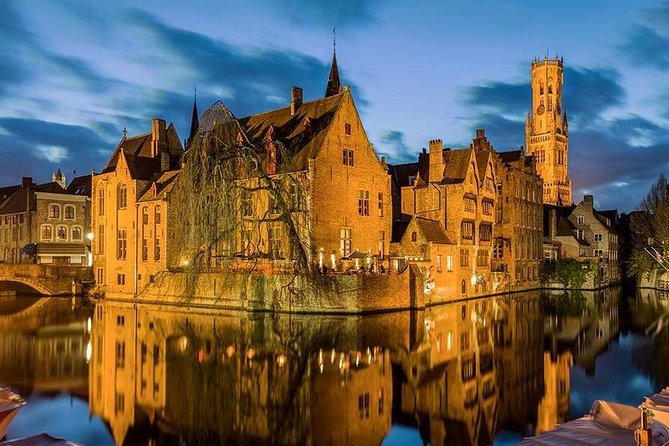
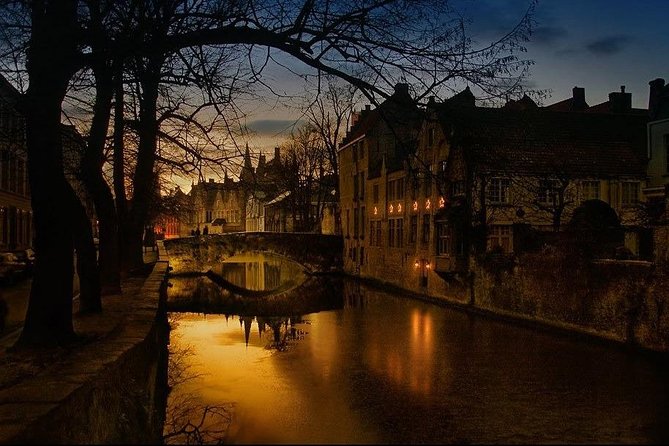
At Langerei, the guide explains how the picturesque Golden Hand Canal got its name. The story includes a devil, tragedy, and a healthy dose of superstition.
This is where the tour’s darker mood becomes clearer. Bruges’ canals are beautiful, but the old stories attached to them are not always gentle. The canal setting gives the tale a stronger atmosphere than it would have in a bright, crowded square.
Do not expect every story to be presented as proven fact. Legends are part of the experience, and a good guide makes the difference by showing where local belief ends and documented history begins. The most entertaining departures appear to balance both.
Langerei is also a good place for photographs, though nighttime conditions mean you may need to steady your phone or camera. Keep your attention on the guide rather than trying to capture every view. The main value here is the connection between the scenery and the story.
Vlissinghe and a glimpse of old pub life
The route pauses briefly near Vlissinghe, described as the oldest bar in Bruges and Belgium, with drinking on the site since 1515. You do not spend the entire evening inside, but you get a look at a place with a long link to everyday city life.
This stop is short, about five minutes, yet it helps bring the tour down from grand trade and church history to a more ordinary question: where did people gather for a drink? It also prepares you for the final bar stop at the Bauhaus.
If you want to visit Vlissinghe properly, treat this tour stop as an introduction rather than a pub visit. The itinerary does not promise a drink there. Save your appetite for the end, where the included offer applies.
Adornes Domain and a church modeled on Jerusalem
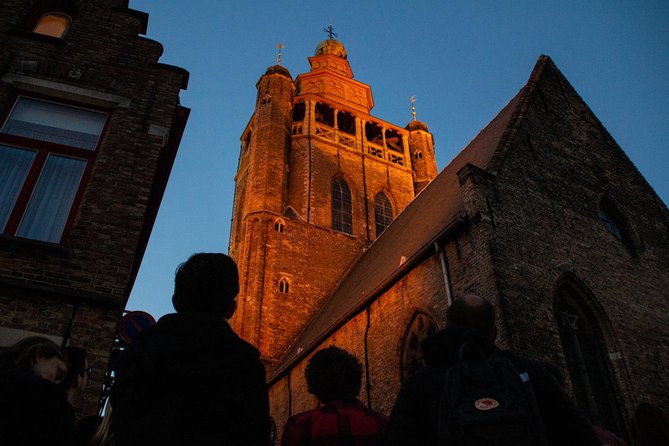
At Adornes Domain, you hear the legend of the iconic church built as a copy of the Church of the Holy Sepulchre in Jerusalem. The stop lasts around 10 minutes and adds a religious and personal side to Bruges’ past.
This is one of the route’s more unusual subjects. Many city walks cover commerce and architecture, but fewer explain the private devotion and travel connections behind a church modeled on a sacred site in Jerusalem.
The subject suits the evening well. A church tied to pilgrimage, memory, and legend feels more atmospheric after dark, especially when the guide tells the story with care rather than rushing through dates. If you are interested in architecture or religious history, this may be one of the strongest stops.
The tour generally remains outdoors, so keep in mind that you may not receive an interior visit. The value comes from the explanation and the setting.
Windmills, the city gate, and the longest walk
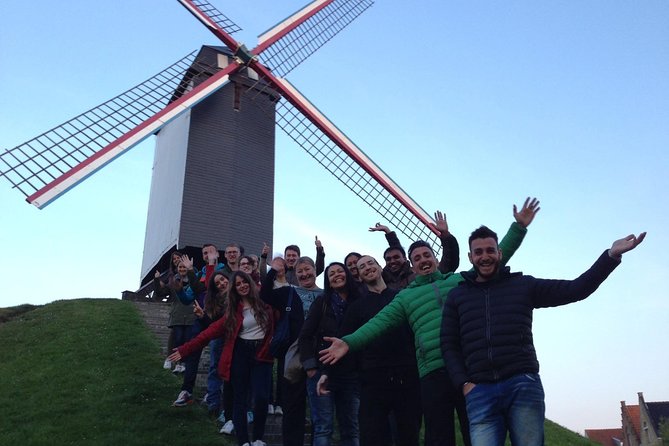
The route then heads toward Sint-Janshuismolen, where you can photograph Bruges’ windmills and see one of the remaining medieval city gates. This section takes you toward the edge of the historic center and gives you a broader view of the old city.
The windmills are a welcome change from the central squares. They show that Bruges is more than ornate façades and canals. The remaining gate also helps you picture the limits of the medieval city and the defenses that once controlled movement in and out.
This is likely the most physically demanding portion. The walk covers several parts of Bruges, and some departures have taken longer than expected. The route near the windmill may include steps without a handrail, so anyone with difficulty on uneven ground should consider that before booking.
Wear comfortable shoes and bring a warm layer. Evening wind can make the outskirts feel colder than the sheltered center. The reward is a set of views you might not reach on your own, along with a better sense of Bruges beyond its central attractions.
Finishing at the Bauhaus bar
The tour ends at the Bauhaus, at Langestraat 121, about a 12-minute walk from the starting point. The scheduled final stop lasts around 20 minutes and includes a complementary beer offer: buy one drink and receive one beer free.
This is a smart finish for a social evening. The bar gives you a chance to compare favorite stories, ask the guide for food suggestions, or continue the night in a relaxed setting. The offer is not the same as an unlimited included drink, so read it as a discount attached to the final stop.
The beer arrangement has not always been handled perfectly. One departure ended without the promised beer, so it is sensible to confirm the offer with the guide before the tour finishes. Also, if you need dinner immediately afterward, remember that you are ending away from the Markt.
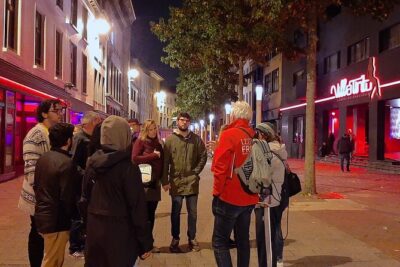
Several people have used the tour as a way to meet others, but the social side depends on the group and guide. The advertised maximum is six, which should allow for conversation and questions. At least some departures have been larger, so you may want to confirm the expected group size when booking if that matters to you.
Price, timing, and overall value
At $3.62 per person, this is an unusually low-cost way to spend an evening in Bruges. The price is closer to a tip-based walking tour than a standard paid sightseeing experience, so the value depends less on expensive admissions and more on the guide’s delivery.
There are no admission tickets included for the museums, church, or historic sites. That keeps the price low, but it also means you are paying for the walking route, the guide, the stories, and the bar offer rather than entry inside attractions.
The advertised duration is about 1 hour 30 minutes. In practice, the walk may run longer, with some departures lasting two hours or more. I would leave at least 30 extra minutes in your schedule, especially if you have a restaurant reservation or train to catch.
This tour is usually booked about 13 days ahead, so it is not something I would leave until the last minute during a busy visit. Confirmation arrives at booking, and free cancellation is available until 24 hours before the start time. Bad weather or an insufficient number of bookings can lead to a cancellation, with another date or a full refund offered.
The walk requires reasonable mobility. Most people can take part, service animals are allowed, and the start is near public transportation. Still, the distance, evening cold, steps, and uneven areas near the windmill deserve attention.
How the guides shape the experience
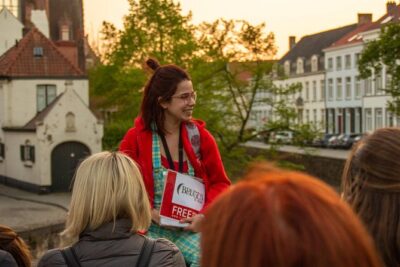
The strongest praise has gone to guides who mix facts with humor and local affection. Martin has been noted for clever stories, Louis for his warmth and sense of place, Patrick for clear explanations and a lively pace, and Bram for bringing local color into the history.
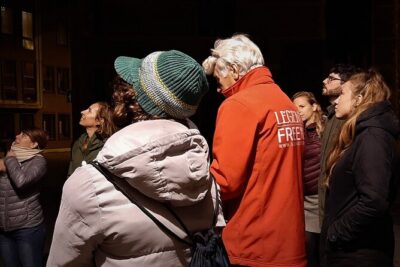
Hilde has handled multilingual explanations well, while Jonathan has used humor and interactive questions to keep the group involved. These details matter because the walk includes long stretches outdoors. A dry list of dates would make the evening feel much longer, while a guide who asks questions and points out small details can make the same route memorable.
The weak point is also guide-related. Quiet delivery, a strong accent, or unclear explanations can make it hard to follow, especially in a larger group. If you cannot hear, move closer and say so early. A small group should help, but it does not remove the need for clear speaking.
Who should book this Bruges walk?
I would choose this experience if you have already seen the Markt and main canals and want a different route. It is also a good first evening activity because it gives you orientation, local stories, and practical ideas for the rest of your stay.
It suits people who enjoy:
- Medieval trade and city history
- Legends, superstition, and ghostly themes
- Evening photography and quiet canals
- Local pubs and informal conversation
- Walking beyond the center
- Guides who tell stories with humor
I would think twice if you want a tightly timed tour, a full ghost investigation, or indoor visits to major attractions. It is also not ideal if cold weather, steps, or a longer walk would be difficult for you.
Should you book The Dark Side of Bruges?
Book it if you want an inexpensive evening introduction to Bruges that reaches beyond the postcard center. The old harbor, Golden Hand Canal, Adornes Domain, windmills, and medieval gate give the walk real range, while the Bauhaus stop adds a social finish.
Go in expecting a mix of history and folklore, not nonstop scares. Confirm the group size and beer arrangement if those points matter, and keep your evening open beyond the stated 90 minutes. With a strong guide, this can be one of the best-value ways to get your bearings and see Bruges from a quieter, more local angle.
FAQ
Where does the tour start?
It starts at Pieter de Coninck en Jan BreydelMarkt, 8000 Brugge, Belgium.
Where does the tour end?
The tour ends at the Bauhaus bar at Langestraat 121, 8000 Brugge, Belgium. This is about a 12-minute walk from the starting point.
How long does the tour last?
The scheduled duration is approximately 1 hour 30 minutes. Some departures have lasted longer, so allow extra time afterward.
Is the tour offered in English?
Yes. The experience is offered in English and uses a mobile ticket.
Is a beer included?
The final stop at the Bauhaus includes a buy-one-drink, get-one-free beer offer. The offer should be confirmed with the guide before the tour ends.
What places does the route visit?
The route includes the historic center, Markt, Jan van Eyckplein, the area near Choco-Story, Langerei, Vlissinghe, Adornes Domain, Sint-Janshuismolen, and the Bauhaus bar.
How many people can join?
The experience is advertised for a maximum of six people, although some departures may have larger groups.
Can I cancel for a full refund?
Yes. You can cancel at least 24 hours before the start time for a full refund. Poor weather or too few bookings can also lead to a different date or a full refund.
Just added around Bruges
- 2-Hour Private Walking Tour of Bruges★ 5.0 · 13 reviews
- The Waffles ‘n Coffee Breakfast in Bruges Centre★ 4.5 · 9 reviews
- Explore the Instaworthy Spots of Bruges with a Local★ 5.0 · 3 reviews
- Photo Tour “Jan van Eyck”★ 4.0 · 7 reviews
- 6 Hour Bruges Shore Excursion from Zeebrugge Cruise Port★ 4.5 · 23 reviews
- Ticket Expo Body Worlds in Bruges, Belgium★ 4.5 · 11 reviews
- Bruges Walking Tour with Audioguide on Your Smartphone★ 4.5 · 14 reviews
- Discover the secrets of Bruges by playing!★ 4.5 · 7 reviews
Dark Side Tours, compared.

Browse the lists this tour appears in