
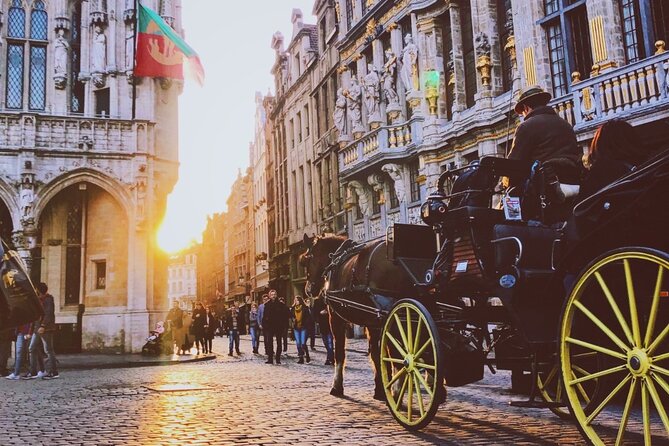
Reviewed · DARK SIDE TOURS
Evening Tour: The Dark Side of Brussels
Brussels after sunset takes on a different mood, and this walking tour uses the city’s churches, squares, courts, and old streets to tell its less polished stories. Expect tales of punishment, murder, suicide, politics, and strange local legends, mixed with a useful introduction to Brussels landmarks.
I like two things here. First, the route gives you a broad walk through central Brussels rather than keeping you in one small area. Second, the best guides turn ordinary buildings into story settings, with guides such as Rahim, Sebastian, David, Ann Marie, and Ian praised for humor, warmth, and clear storytelling. The main drawback is simple: the tour is not always as dark as the title suggests.
In This Review
- Key points before you book
- What the Dark Side of Brussels really means
- Starting at Grand Place and the Grand Sablon
- Place Saint-Jean and Tour Anneessens
- Rue de Rollebeek and Notre Dame du Sablon
- The Palace of Justice and Brussels from above
- Petit Sablon and its medieval guild statues
- Place du Jeu de Balle and the Marolles
- Ending at Kapellekerk
- Price, tipping, and the real value
- Group size, pace, and guide quality
- Who should book this evening walk?
- Should you book The Dark Side of Brussels?
- FAQ
- Where does the tour start?
- Where does the tour end?
- How long does the tour last?
- Is the tour conducted in English?
- How many people can join?
- Can I cancel for a refund?
Key points before you book
- The dark side means unpleasant history: Expect stories about crime, punishment, political power, and grim events, not a tour of Brussels nightlife.
- The route covers a lot of ground: You walk from Grand Place through the Sablon, Marolles, and around the Palace of Justice before ending at Kapellekerk.
- Guides shape the experience: Rahim, Sebastian, David, Ann Marie, Ian, and others have been praised for making the walk funny and engaging.
- The price is unusually low: The listed cost is $3.62 per group of up to six, but tipping your guide is an important part of the arrangement.
- Allow more than two hours door to door: The advertised time is about two hours, and the route includes hills and sustained walking.
- Meet carefully at Grand Place: The starting square can be crowded, so make sure you know the meeting point in front of City Hall.
What the Dark Side of Brussels really means

The title can lead you in the wrong direction. This is not mainly a ghost walk, a crime tour, or a tour of seedy bars. It is closer to an evening history walk focused on the troubling, odd, or less flattering side of Brussels.
You might hear about torture, murder, suicide, punishment, political structures, and the forces that shaped the city. The stories are set against churches, courthouses, squares, and old streets. That gives the tour a useful balance: you see major sights, but you hear details that a standard daytime sightseeing walk may skip.
I would book this if you enjoy history with a darker edge and want to see Brussels after the daytime crowds thin out. If you are expecting frightening stories at every stop, you may find the subject matter too mild. Several parts are simply city history told at night.
The tone also depends heavily on the guide. Rahim has been praised for energy, humor, and a real desire to teach. Sebastian is noted for being funny and well informed. David received praise for projecting his voice and managing a fairly large group. Ann Marie is described as a strong storyteller who welcomed questions.
Those names may not be the guide assigned to your departure, so treat them as examples of the style you might receive, not a guarantee. The strongest experience comes when the guide adds context rather than reciting a list of dates.
More dark side tours in Brussels:
- Private Tour: The Dark Side of Brussels
★ 5.0 · 20 reviews - Brussels: 2-Hour Dark Side of Brussels Private Tour
★ 4.8 · 11 reviews - Evening Tour: The Dark Side of Bruges
★ 5.0 · 956 reviews
Starting at Grand Place and the Grand Sablon
The official meeting point is Grand Place, Grote Markt, in central Brussels. The route information begins at Place du Grand Sablon, so listen carefully for instructions at the start. Grand Place can be crowded, especially near City Hall, and one person missed the guide after arriving early and searching for more than 25 minutes.
That is a practical warning. Arrive early, locate the front of City Hall, and keep an eye out for a guide or group rather than waiting at a random corner of the square. If you are using the metro, allow extra time. One account specifically warns that reaching the starting point can take longer than expected.
The first stop, Place du Grand Sablon, introduces a district known for elegant buildings, cafés, shops, and market life. The description gives you about 10 minutes here. It is a good opening setting because Sablon looks polished today, while the tour can point toward the older and less comfortable stories beneath that surface.
You may also encounter references to the Grand Marché and its food, crafts, and local character. Do not expect a full market visit or a shopping stop. The value is in using the area as a starting point for Brussels society, architecture, and past events.
Place Saint-Jean and Tour Anneessens
Place Saint-Jean is a small historic square with cafés and the Church of St. John the Baptist. The planned stop lasts about 10 minutes, giving the guide time to connect the setting with the city’s religious and civic past.
This is one of the quieter pauses on the route. You get a moment to look up at the architecture and listen without the scale of Grand Place around you. The square also helps break up the walking, which matters because the full route is more strenuous than a casual stroll through one neighborhood.
Tour Anneessens follows, with another 10-minute stop. The district brings together old buildings, busy streets, markets, and a mixed community. Here, the tour shifts away from postcard Brussels and toward the city as a lived-in place.
The stop may feel less impressive if you are looking only for major monuments. Its value is the contrast. You see how the city changes from grand civic spaces to ordinary streets, and the guide can explain how political and social forces affected different parts of Brussels.
The route is not guaranteed to unfold in exactly the same way every time. The guide may adjust the walk to the group, timing, or conditions. That flexibility can produce a more natural evening, but it can also frustrate you if you expect every listed stop to receive equal attention.
Rue de Rollebeek and Notre Dame du Sablon
Rue de Rollebeek provides a compact dose of old Brussels character. Cobblestones, cafés, and small shops make it an attractive walking street, and the planned visit lasts around 10 minutes.
This stop is less about a single grim event and more about atmosphere and urban change. The street helps you see how historic corners of Brussels function today. It is also a pleasant link between the Sablon sights, though the dark-history content may be lighter here.
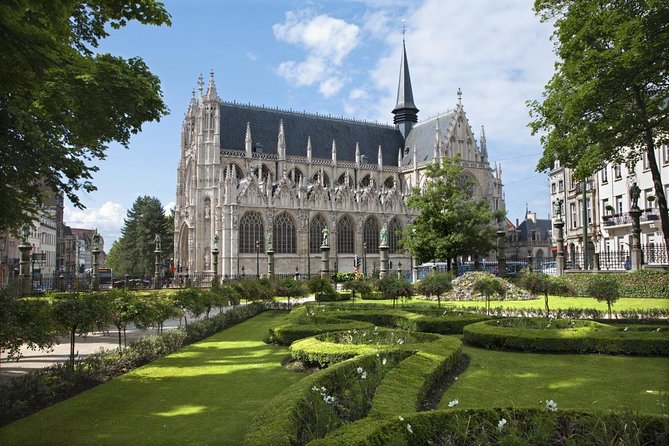
Notre Dame du Sablon is one of the visual highlights. This Gothic church is known for detailed stonework and stained glass, and it gives the guide a strong setting for discussing religion, civic identity, and older Brussels traditions.
You should not expect a long interior visit or a formal church tour. The supplied schedule gives the stop about 10 minutes, so the focus is likely on the building and the story attached to it. Still, this is an important part of the experience because the evening light and quieter streets can give the church a different feel from a daytime visit.
If you have already taken a conventional Brussels walking tour, some locations may look familiar. The difference is the angle. The guide uses the same streets to tell different stories, often focusing on details you would not notice while rushing between the main sights.
A few more Brussels trips to weigh up
- Brussels: Sightseeing Sunset Bus Tour
★ 3.8 · 70 reviews - Brussels: Private Beers, Bars, and Live Music Tour by Night
★ 5.0 · 6 reviews - Evening Tour of the Dark Side of Gent
★ 5.0 · 646 reviews - Evening Walking Tour: The Dark Side of Antwerp
★ 5.0 · 193 reviews
The Palace of Justice and Brussels from above
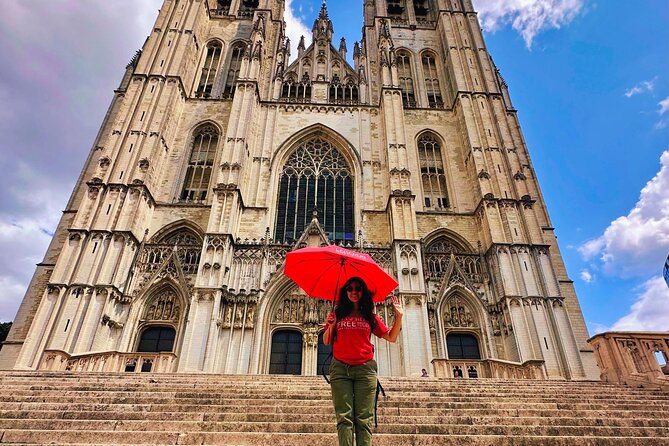
The Palace of Justice is the route’s most imposing building. It is a huge courthouse on a hill, with grand neoclassical architecture and wide views over Brussels.
The building gives the tour a natural place to discuss law, authority, punishment, and the city’s political structure. That makes it one of the stops most closely tied to the tour’s darker theme. The subject is not just crime in the abstract. It is also about who had the power to judge, punish, and control.
The hill matters. The walk is manageable for most people, but this is not a flat route. One assessment calls it a little more strenuous than the description suggests, though still doable if you are in reasonable walking shape.
At the Palace of Justice, take a moment to look back over the city. The view adds a welcome visual reward after the uphill stretch. It also gives you geographic context, helping you understand how the Sablon and Marolles areas fit together.
A large group can make this stop harder. The maximum is 35 people, and a crowd gathered around a guide may struggle with sound near traffic or open public spaces. David was specifically praised for speaking clearly enough for a sizeable group, but not every guide may project in the same way. Stay close and ask the guide to repeat anything you miss.
Petit Sablon and its medieval guild statues
Petit Sablon is a formal garden square surrounded by 48 small bronze statues representing medieval guilds. The gardens offer one of the route’s calmest settings, with carefully arranged paths, greenery, and decorative details.
This stop is useful because it shows Brussels at its most composed. The darker stories gain force when placed beside beauty and civic pride. A city’s past is rarely only glorious or only grim, and this square makes that contrast clear.
The planned visit lasts about 10 minutes. You will have time to inspect the statues and hear the explanation, but not necessarily enough time for a detailed study of every figure. If you are interested in medieval trade and guild life, note the square for a return visit during daylight.
The guide may also use Petit Sablon to connect the city’s monuments with its power structures. Several strong accounts describe the tour as covering political conditions and the chain of events behind major episodes, not just repeating isolated anecdotes. That wider context is one of the better reasons to choose this walk.
Place du Jeu de Balle and the Marolles
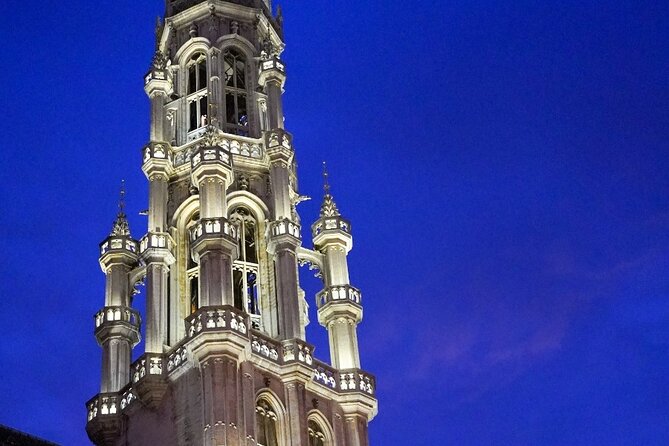
The route then moves toward Place du Jeu de Balle in the Marolles. This square is famous for its daily flea market, where you can find old photographs, second-hand clothing, furniture, and assorted objects.
The character of the Marolles is different from the formal Sablon. The square feels more local and less polished, and the surrounding neighborhood gives the tour a stronger sense of everyday Brussels. Even if the flea market is not active during your evening walk, the setting remains useful.
This is also where the walking tour feels most like a neighborhood walk rather than a monument circuit. You are seeing a part of Brussels associated with working-class life, second-hand goods, and a distinct local identity.
Do not expect a shopping session. The tour gives this stop about 10 minutes, and its purpose is to frame the neighborhood and its stories. If the guide is good, the area becomes more than a pretty backdrop. It becomes a way to understand how Brussels has changed and how different social groups have shared the city.
The route can feel long by this point. Wear comfortable shoes and avoid treating this as a quick after-dinner activity. The walk may last 1.5 to more than two hours depending on the guide and pace, and one guide continued well beyond two hours.
Ending at Kapellekerk
The final stop is Église Notre-Dame de la Chapelle, also called Kapellekerk, in the Marolles. The church is Gothic, and its origins reach back to a chapel founded here in 1134.
The scheduled stop is short, around five minutes, so think of it as a final setting rather than a full church visit. It is a fitting end because the route finishes in a neighborhood with a strong local character, away from the grand opening scene at Grand Place.
The official end point is Brux.-Chap or Brus.-Kap at Rue des Ursulines. This is not the same place as the starting point, so plan your next move before the tour begins. The end is near public transportation, which helps if you are returning to a hotel or continuing elsewhere in Brussels.
One practical point: if you have a train to catch, do not schedule it too tightly after the walk. A person who needed to reach Brussels Midi missed part of the group while trying to manage a fixed departure. The tour is walking-based, and the guide may run over the stated time.
Price, tipping, and the real value
The listed price is $3.62 per group of up to six people. That is closer to a booking fee than the full value of a conventional paid tour.
The guide’s income depends on tips, so bring euros and budget for a tip that reflects the length and quality of the walk. The low booking price can be excellent value if you want an affordable introduction to Brussels, but it should not be treated as a reason to skip the tip.
For a couple or small group, the price is particularly attractive. You can cover a large section of central Brussels, hear local stories, and get your bearings for only a small upfront cost. The tradeoff is less certainty about the exact route, guide, and depth of presentation than you might get from a high-priced private tour.
The experience requires a minimum number of participants, and the provider may cancel if that number is not reached. The official terms provide a different date or experience, or a full refund, if the activity is canceled for that reason. Ask about the minimum if your date is important.
Group size, pace, and guide quality
The maximum group size is 35. That is large enough to affect the experience, especially in noisy streets or at popular squares.
I would stay near the guide, particularly if you have trouble hearing. One guide was described as too quiet, while David was praised for managing a group and making sure people could hear. This difference shows why the guide matters so much here.
The strongest guides add personality. Rahim has been praised for enthusiasm and humor. Sebastian combines jokes with solid background information. Ann Marie invites questions, and Ian has been described as making the tour both clear and interesting.
The presentation can sometimes feel rehearsed. That is not always a bad thing, since a practiced guide can keep the evening moving, but you may prefer a more spontaneous style. Ask questions when there is a natural pause. The better guides use questions to add context rather than rushing through the route.
Most people can take part, service animals are allowed, and the tour is near public transportation. Still, the distance and hill near the Palace of Justice make comfortable shoes essential. This is not a good choice if you want a short, stationary activity.
Who should book this evening walk?
I would choose this tour for:
- First-time visitors who want a broad orientation to central Brussels
- People who enjoy unusual facts and difficult chapters of city history
- Solo visitors who want an easy group activity
- Small groups seeking a very low-cost evening plan
- Repeat visitors who have already seen the main sights by day
- Walkers comfortable with hills and a route lasting about two hours
I would look elsewhere if you want a tightly scripted ghost tour, a food experience, or a detailed architectural lecture at every stop. The title promises more darkness than the actual walk always delivers.
You should also be comfortable with some uncertainty. The exact route may shift, the guide’s voice and style can vary, and the activity depends on reaching a minimum group size. Those are reasonable tradeoffs for the price, but they are worth knowing before you reserve.
Should you book The Dark Side of Brussels?
Book it if you want an inexpensive evening walk with grim stories, political context, and a useful tour of several Brussels neighborhoods. The strongest guides make the experience funny, personal, and far more interesting than a list of monuments.
Skip it if the word dark makes you expect frightening tales from start to finish. This is best understood as a night history walk with an unsettling angle. Bring good shoes, arrive early at Grand Place, stay close to the guide, and plan to tip in euros if the experience earns it.
The tour is recommended by 93 percent of bookers and carries a 4.7 rating from 435 reviews, which fits the overall picture: usually a strong value, occasionally uneven, and highly dependent on the person leading the walk.
FAQ
Where does the tour start?
The meeting point is Grand Place, also called Grote Markt, in Brussels. The guide is expected near City Hall, so arrive early and check that area carefully.
Where does the tour end?
The walk ends at Kapellekerk, or Église Notre-Dame de la Chapelle, on Rue des Ursulines in the Marolles neighborhood. The end point is near public transportation.
How long does the tour last?
The advertised duration is approximately two hours. The actual walk may be shorter or longer depending on the guide and group.
Is the tour conducted in English?
Yes. The experience is offered in English and includes a professional guide.
How many people can join?
The maximum group size is 35 travelers. The experience also requires a minimum number of participants and may be canceled if that minimum is not met.
Can I cancel for a refund?
You can cancel at least 24 hours before the local start time for a full refund. Cancellations or changes made less than 24 hours before the start time are not accepted for a refund.
Just added around Brussels
- Standard vehicle from Brussels airport to city of Antwerp★ 5.0 · 4 reviews
- Private transfer from BRU Airport to Brussels city with luxury limousine 3 pax★ 4.5 · 8 reviews
- Luxury vehicle from Brussels airport to the city of Brussels★ 4.0 · 5 reviews
- Transfer Brussels Airport –> City MB E Class 1-3 PAX (ONE WAY)★ 5.0 · 6 reviews
- PRIVATE MPV TRANSFER FROM/TO BRUSSELS AIRPORT (Max 6 pax) ONE-WAY★ 5.0 · 4 reviews
- Transfer Brussels Airport (BRU) –> City Center 7 PAX (ONE WAY)★ 5.0 · 7 reviews
- Transfer Brussels Airport –> Brussels MB V Class 7 PAX (ONE WAY)★ 5.0 · 4 reviews
- Brussels: City Walk with Audioguide in 7 Languages on your Phone★ 3.5 · 4 reviews
Dark Side Tours, compared.

Browse the lists this tour appears in