
Reviewed · DARK SIDE TOURS
Brussels: 2-Hour Dark Side of Brussels Private Tour
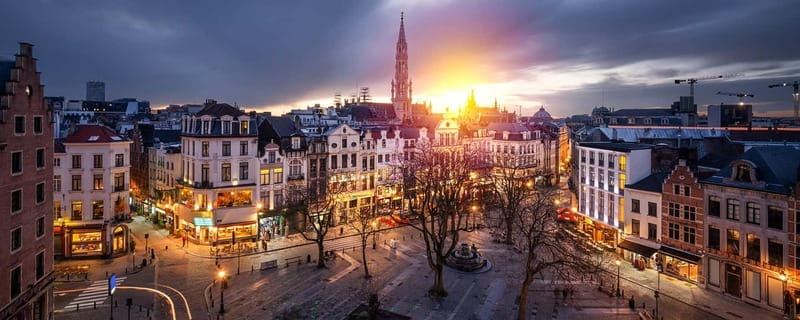
Brussels looks polished by day, but this private evening walk takes you behind the chocolate shops and ornate facades. You’ll hear grim stories of revolts, executions, torture, and forgotten heroes while moving from Grand Place toward Sablon and the city’s old chapel quarter. I like the lantern-lit mood and the fact that a private guide can adjust the pace, especially on the hills.
I also like the route’s mix of famous sights and quieter corners, including Saint John Square, Anneessens Tower, and Rue de Rollebeek. The main drawback is physical: you cover a lot of ground in two hours, with several uphill sections, and the tour runs rain or shine.
In This Review
- Key points at a glance
- Why Brussels feels different after sunset
- Starting at Grand Place 8
- Sablon, Saint John Square, and the old streets
- Anneessens Tower and the Comic Wall
- The Church of Our Blessed Lady of the Sablon
- The Palace of Justice viewpoint
- Place du Jeu de Balle and Notre-Dame de la Chapelle
- The guides and the value of a private format
- Is $199 good value for two people?
- What to bring and how to prepare
- Who will enjoy this Brussels walk most?
- Should you book the Dark Side of Brussels tour?
- FAQ
- How long is the Dark Side of Brussels tour?
- Where does the tour begin?
- Where does the tour finish?
- Which languages are available?
- Is the tour private?
- What should I bring?
Key points at a glance
- A private two-hour walk for up to two people, with the guide’s attention focused on your questions and pace.
- A darker look at Grand Place, where elegant architecture provides the setting for stories of violence and political struggle.
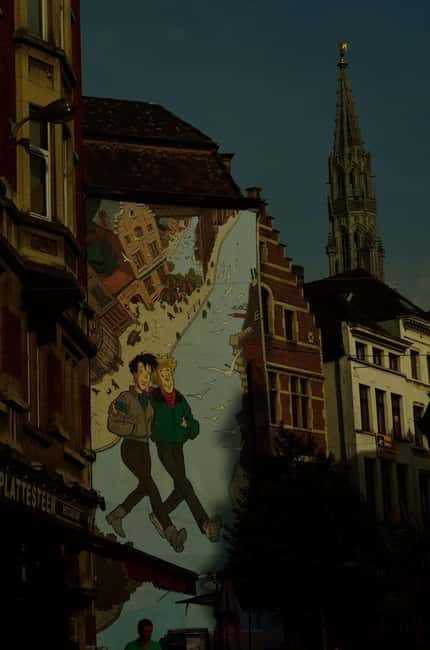
- Anneessens Tower and the Comic Wall add lesser-seen stops to a route that is more than a standard old-town stroll.
- Sablon and the Palace of Justice bring both mystery and a strong city view near the end of the walk.
- English, Dutch, and French are available, with guides such as Dan, Rahain, and Sebastián leading tours.
- Hills and changing weather matter, so wear comfortable shoes and bring protection from rain.
Why Brussels feels different after sunset
The appeal here is not haunted-house theatrics. It is the contrast between the city you see on a postcard and the harsher story beneath it.
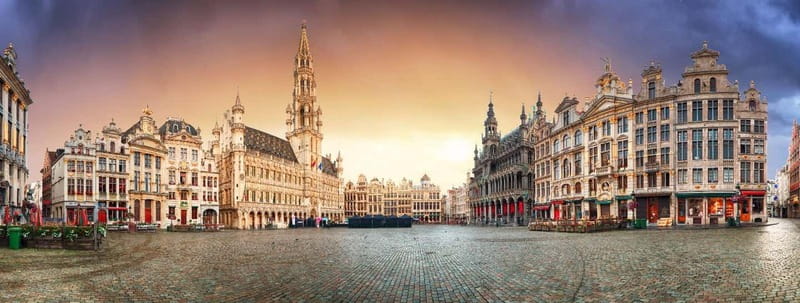
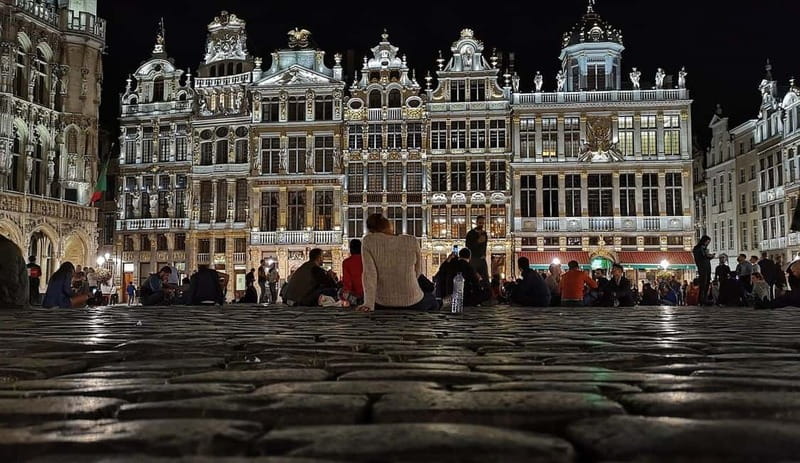
Grand Place is one of Europe’s great squares, lined with decorated guildhalls and the city hall. On this walk, you do not simply admire the stonework. You hear about the conflicts, punishments, and public events that shaped Brussels, giving the square a more serious edge.
The evening setting helps. Lantern light and quieter streets make it easier to focus on a guide’s voice. You are still in the center of Brussels, but the mood changes as the tour leaves the most crowded routes and heads toward smaller squares, old streets, and religious buildings.
The stories include revolts, executions, torture methods, and people who have largely disappeared from the usual city narrative. That material will suit you if you enjoy social history and unsettling details. If you prefer a light introduction to Brussels, the subject matter may feel heavy.
More dark side tours in Brussels:
- Evening Tour: The Dark Side of Brussels
★ 4.5 · 435 reviews - Private Tour: The Dark Side of Brussels
★ 5.0 · 20 reviews - Evening Tour: The Dark Side of Bruges
★ 5.0 · 956 reviews
Starting at Grand Place 8
The meeting point is in front of the city hall on Grand Place. Look for the red umbrella. This is a useful landmark in a crowded square, and arriving a few minutes early gives you time to find the guide before the walk begins.
The first stop is Grand Place itself, with about 10 minutes set aside for the introduction. That may sound brief, but it works as a scene setter rather than a full architectural lecture. You get the basic context, then the focus shifts to the darker events connected with the square and its surrounding streets.
Because this is a private group of up to two people, you can ask for more detail if a particular subject catches your interest. The guide can also spend less time on material you already know and more time on Brussels’ lesser-known episodes.
Sablon, Saint John Square, and the old streets
The route includes Place du Grand Sablon, Place Saint-Jean, and Rue de Rollebeek. Each stop receives roughly 10 minutes of guided explanation, so expect a sequence of short talks rather than one long presentation in a single location.
Grand Sablon gives the tour a change of setting. Its handsome surroundings can seem refined and calm, which makes the darker stories feel sharper by contrast. The guide connects the area to the city’s past while keeping the walk moving.
Place Saint-Jean is one of the less obvious stops for someone visiting Brussels for the first time. It helps show how the city’s past is spread beyond the main square. I like this part of the route because you are not simply ticking off monuments. You are using small public spaces as clues to how Brussels developed and how power was displayed.
Rue de Rollebeek adds an old-street atmosphere. Streets like this are useful on a history walk because they narrow your attention. Instead of looking at a broad plaza filled with people and shops, you can focus on the guide’s story and the details around you.
Anneessens Tower and the Comic Wall
Anneessens Tower is one of the tour’s more distinctive stops. The tower offers a direct link to Brussels’ defensive past and gives the guide a setting for stories of revolt, authority, and punishment.
The name may be familiar to people who have studied Brussels, but it is not always part of a first-time sightseeing route. That makes it a good fit if you have already seen Grand Place and want something less predictable.
The Comic Wall provides a striking change of tone. Brussels is closely associated with comic art, and the wall is a reminder that the city’s public character is not only medieval, political, or religious. On a dark-history walk, this stop helps prevent the mood from becoming relentlessly grim.
The route’s contrast between comic art and stories of bloodshed is one of its clever touches. You get a broader sense of Brussels rather than a narrow parade of horror tales. The guide can move between the city’s playful image and its troubled past without treating either side as the whole story.
A few more Brussels trips to weigh up
- Brussels: 2 hours Private Walking Tour of the Comics Walls
★ 4.8 · 13 reviews - Brussels: 2-Hour Walking Tour of the Historic Center with a Local Guide
★ 4.8 · 8 reviews - 2 Hour Beer Tasting with Local Beer Sommelier in Brussels
★ 5.0 · 3 reviews - Guided Bike Tour: 2 Hours Highlights of Antwerp
★ 5.0 · 347 reviews
The Church of Our Blessed Lady of the Sablon
The Church of Our Blessed Lady of the Sablon is another major stop, with around 10 minutes of commentary. The building brings religious history into a tour that otherwise focuses strongly on politics, punishment, and public conflict.
The church’s atmosphere is especially suited to an evening walk. Even without an extended interior visit, the setting encourages questions about belief, ceremony, fear, and the way religious institutions shaped city life.
You should think of this as a guided exterior stop unless your guide tells you otherwise. The activity information does not promise an interior tour, admission, or extended time inside the church.
The Sablon section also includes Place du Petit Sablon later in the route. That small square offers another pause amid the uphill walking and gives the guide room to connect architecture, public memory, and the city’s past.
The Palace of Justice viewpoint
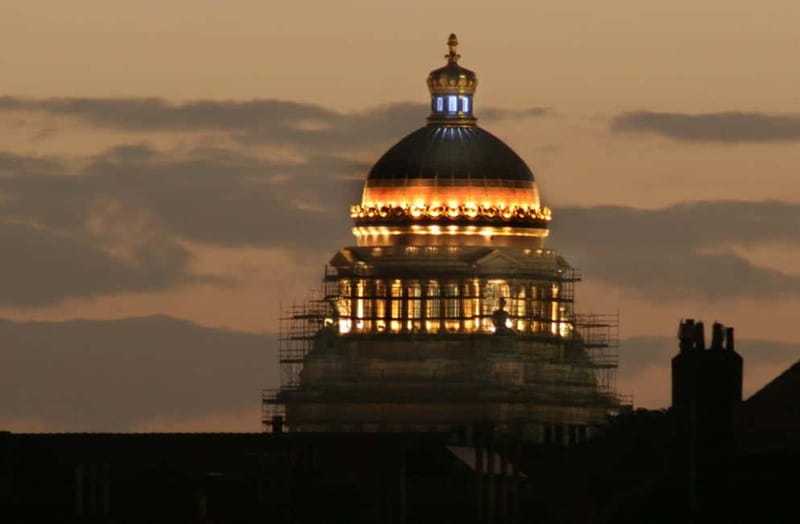
The Palace of Justice is one of the tour’s strongest closing locations. The building is imposing, and the area provides one of the better views across Brussels.
That final view gives the walk a useful pause after the darker stories. You have spent the tour hearing about violence and hardship, then you look out across the capital and see how the old city fits together.
The Palace of Justice is also an effective place to consider the theme of the tour. Brussels’ past was shaped not only by rulers and grand buildings, but also by law, punishment, revolt, and the people caught in those systems.
The route then continues toward Place du Jeu de Balle and Notre-Dame de la Chapelle. The supplied route places the final stop at the Church of Our Lady of the Chapel, while the meeting information says the activity ends back at the meeting point. Confirm the exact finishing arrangement when you book, especially if you have a dinner reservation or need to meet a taxi.
Place du Jeu de Balle and Notre-Dame de la Chapelle
Place du Jeu de Balle gives the walk another neighborhood setting. It is a practical reminder that Brussels is not just its ceremonial center. The square belongs to the city’s everyday fabric, and it helps the route finish away from the grandest tourist scenery.
The final church stop, Notre-Dame de la Chapelle, adds another layer of religious and historical context. The walk’s sequence from Grand Place to Sablon and the chapel quarter feels more like a connected city story than a collection of unrelated sights.
This last section also means you should expect steady walking. The tour lists about 10 minutes at Place du Jeu de Balle and five minutes at Notre-Dame de la Chapelle, but the time between stops is part of the experience. Comfortable shoes are essential.
The guides and the value of a private format
The guide makes or breaks a storytelling tour, and the named guides associated with this experience include Dan, Rahain, and Sebastián. Their styles may differ, but the strongest qualities reported across the bookings are clear explanations, warm conversation, humor, and the ability to give context to both famous and lesser-known places.
Dan is described as personable and good at connecting major sights with details you would likely miss on your own. Rahain is associated with strong banter and an engaging presentation of Brussels’ grim past. Sebastián is noted for balancing somber material with humor, which matters on a tour that deals with executions and torture.
A private format gives you more control than a large group walk. If someone in your party has a bad knee, the guide can slow down and allow breaks. One booking included a mother with a knee problem who managed the hills comfortably because the group could set its own pace.
That does not make the route flat. You should still be prepared for several inclines. The private setup helps with timing, but it cannot remove the physical demands of walking through the upper parts of Brussels.
Is $199 good value for two people?
The price is $199 per group of up to two people, not $199 per person. For a couple or two friends, that works out to $99.50 each. It is not the cheapest way to see Brussels, but the price becomes easier to justify if you want a private guide and a focused subject rather than a general group tour.
The value comes from three things: personal attention, route flexibility, and the quality of the storytelling. You are paying for a guide who can answer questions, adjust the pace, and shape the discussion around your interests.
The two-hour duration is also useful. It is long enough to cover a wide section of central Brussels without taking over an entire evening. You can book dinner afterward, though you should allow extra time if your group walks slowly or stops often.
Food and drinks are not included. That is not a serious concern for this type of activity, but plan a café stop or dinner separately. The tour is about stories and streets, not tastings.
What to bring and how to prepare
Wear comfortable shoes. This is the single most practical tip, since the route includes many stops and uphill sections.
Bring a raincoat or umbrella as well. The walk operates rain or shine, and Brussels weather can change quickly. The lantern-lit mood may be appealing in damp weather, but you will enjoy it more if you are dry and warm.
Choose clothing that suits an evening outdoors. The route does not promise long indoor visits, so assume you will spend most of the two hours outside.
You can book with a live guide in English, Dutch, or French. The activity is wheelchair accessible, though anyone using a wheelchair should still consider the route’s hills and ask the provider about the exact path before booking.
Cancellation is free up to 24 hours before the start for a full refund. You can also reserve now and pay later, which is useful when your Brussels schedule is still shifting.
Who will enjoy this Brussels walk most?
I would choose this tour if you have already seen the main landmarks and want a second look at the city. It is also a good first-night option if you like learning the story behind a place instead of simply photographing it.
History-minded visitors will get the most from the themes of revolt, law, punishment, religious power, and forgotten figures. The tour also suits couples and small groups who prefer conversation over a fixed script.
It may not be ideal for young children or anyone who dislikes grim subject matter. The stories involve executions and torture, and the evening setting adds atmosphere rather than softening the content.
If you have limited mobility, the private format is helpful because you can slow down. Still, the hills are real, so ask about the route before committing if walking uphill is difficult.
Should you book the Dark Side of Brussels tour?
Book it if you want Brussels to feel less polished and more human. The route gives you the grand architecture, but it also points to conflict, punishment, belief, and ordinary streets that many city tours skip.
I especially like the combination of Grand Place, Anneessens Tower, the Comic Wall, Sablon, and the Palace of Justice. You get recognizable sights, quieter corners, a strong viewpoint, and a subject that goes beyond the usual chocolate-and-beer introduction.
Skip it if you want a relaxed sightseeing loop with little walking or cheerful stories throughout. The hills, weather, and grim material require some preparation.
For most couples or pairs who enjoy unusual city history, $199 is a fair price for two hours of private guiding. Take comfortable shoes, arrive at Grand Place by the city hall, look for the red umbrella, and be ready to see Brussels in a more complicated light.
FAQ
How long is the Dark Side of Brussels tour?
The tour lasts two hours. Starting times vary, so check availability when booking.
Where does the tour begin?
It begins at Grand Place 8, in front of the city hall on Brussels’ main square. Look for the red umbrella.
Where does the tour finish?
The route includes Notre-Dame de la Chapelle as its final listed stop. The meeting information says the activity ends back at the meeting point, so confirm the exact finish with the provider if your onward plans are time-sensitive.
Which languages are available?
The live guide can conduct the tour in English, Dutch, or French.
Is the tour private?
Yes. It is a private group experience for up to two people.
What should I bring?
Bring comfortable shoes. The walk takes place rain or shine, so rain protection is also sensible.
Just added around Brussels
- Standard vehicle from Brussels airport to city of Antwerp★ 5.0 · 4 reviews
- Private transfer from BRU Airport to Brussels city with luxury limousine 3 pax★ 4.5 · 8 reviews
- Luxury vehicle from Brussels airport to the city of Brussels★ 4.0 · 5 reviews
- Transfer Brussels Airport –> City MB E Class 1-3 PAX (ONE WAY)★ 5.0 · 6 reviews
- PRIVATE MPV TRANSFER FROM/TO BRUSSELS AIRPORT (Max 6 pax) ONE-WAY★ 5.0 · 4 reviews
- Transfer Brussels Airport (BRU) –> City Center 7 PAX (ONE WAY)★ 5.0 · 7 reviews
- Transfer Brussels Airport –> Brussels MB V Class 7 PAX (ONE WAY)★ 5.0 · 4 reviews
- Brussels: City Walk with Audioguide in 7 Languages on your Phone★ 3.5 · 4 reviews
Dark Side Tours, compared.
Browse the lists this tour appears in