
Reviewed · BELGIUM
Mons : The Van Gogh House
The most striking thing here is that Van Gogh’s artistic life began before the famous sunflowers and starry nights. In Cuesmes, you see the place where his work as a preacher began to change into a life devoted to drawing and painting. I like the authentic setting and the way the visit links his early ideas to the working-class Borinage around Mons. The garden, renovated pavilion, and small house also make the visit easy to follow.
The main caution is size. This is a modest memorial house, not a large museum, and there are no original Van Gogh masterpieces on display. You should also expect a self-guided visit rather than a personal tour. The audio presentation adds useful context, but one recent visitor found the film too long, while another felt the house offered too little information.
In This Review
- Key points to know before you go
- Why Cuesmes matters in Van Gogh’s story
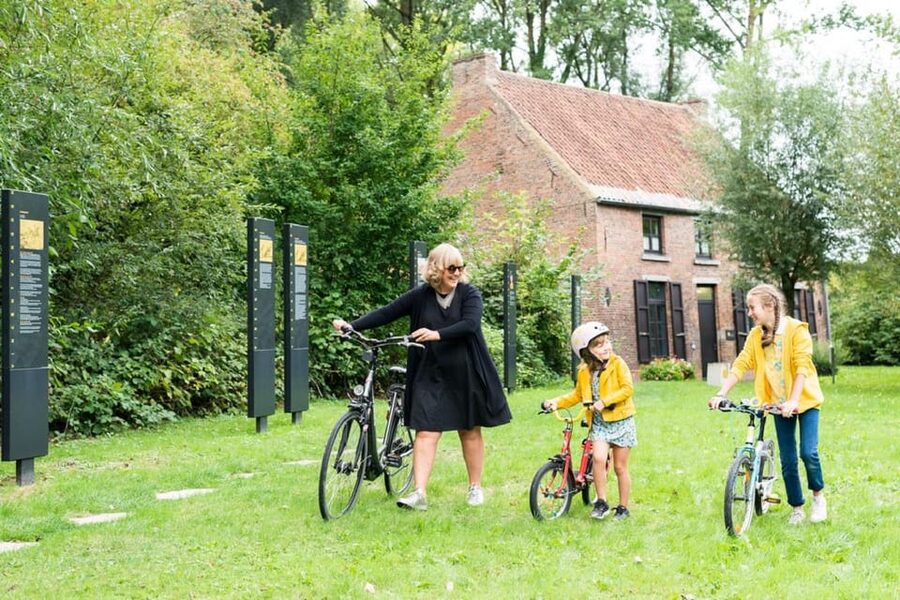
- Starting in the garden and renovated pavilion
- Inside Van Gogh’s small former home
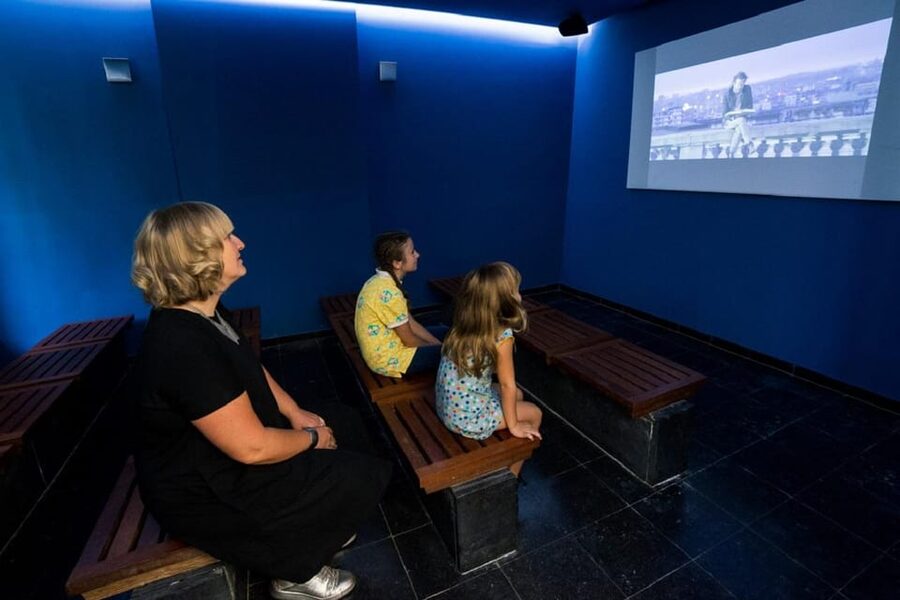
- The audio presentation and the Borinage story
- What the $5 price really gives you
- Timing, transport, and arrival advice
- Who will get the most from this visit
- How to make the visit more rewarding
- Should you book the Van Gogh House?
- FAQ
- Where is the Van Gogh House located?
- How much does admission cost?
- How long is the Van Gogh House experience?
- Is the visit guided?
- What languages are available?
- How do I get to the site?
- Is the Van Gogh House wheelchair accessible?
- Can I cancel my booking?
Key points to know before you go
- Van Gogh lived here from 1879 to 1880, during the period when he was still working as a preacher.
- Cuesmes places you in the Borinage, a coal-mining area whose rural and working-class setting shaped his early artistic outlook.
- The route begins in the garden, continues through a renovated pavilion, and ends inside the small house.
- An audio installation supplies the historical context, but the visit is not led by a guide.
- The entry price is $5 per person, making this an inexpensive stop for Van Gogh fans already visiting Mons.
- You need to arrive in your selected time slot and travel to the site independently by car or public transport.
Why Cuesmes matters in Van Gogh’s story
Many people meet Van Gogh through his later paintings. Cuesmes takes you back to a less polished, more uncertain period, before the fame, bold colors, and recognizable style. From 1879 to 1880, Vincent van Gogh lived and worked in the Borinage while serving as a preacher.
That background matters. He was not yet the artist most people picture today. His attention was turning toward ordinary people, hard work, poverty, faith, and the countryside around him. The Borinage gave him subjects and feelings that remained important throughout his life.
I like this place because it shows that Van Gogh did not suddenly appear as a fully formed painter. His artistic direction grew out of close contact with the people and places around him. The house is small, but that is part of the point. You are visiting a starting place, not a grand shrine to a finished career.
Cuesmes also offers a different side of Belgium. This is Wallonia, in the Mons region, with a strong connection to working-class life and industrial history. The setting helps explain why Van Gogh’s early interests were so far removed from the elegant galleries and bright Provençal scenes associated with his later years.
Other Belgium days worth putting on the list:
- Brussels: Atomium Entry Ticket with Design Museum Ticket
★ 4.4 · 9,254 reviews - From Brussels: Guided Day Trip to Bruges and Ghent
★ 4.6 · 8,353 reviews - From Brussels: Bruges & Ghent Day Tour – 2 Fairytale Cities
★ 4.7 · 8,242 reviews
Starting in the garden and renovated pavilion
The visit begins outside, in the garden. This opening gives you a little breathing room before entering the house and helps frame the site as a place of memory rather than a conventional art museum.
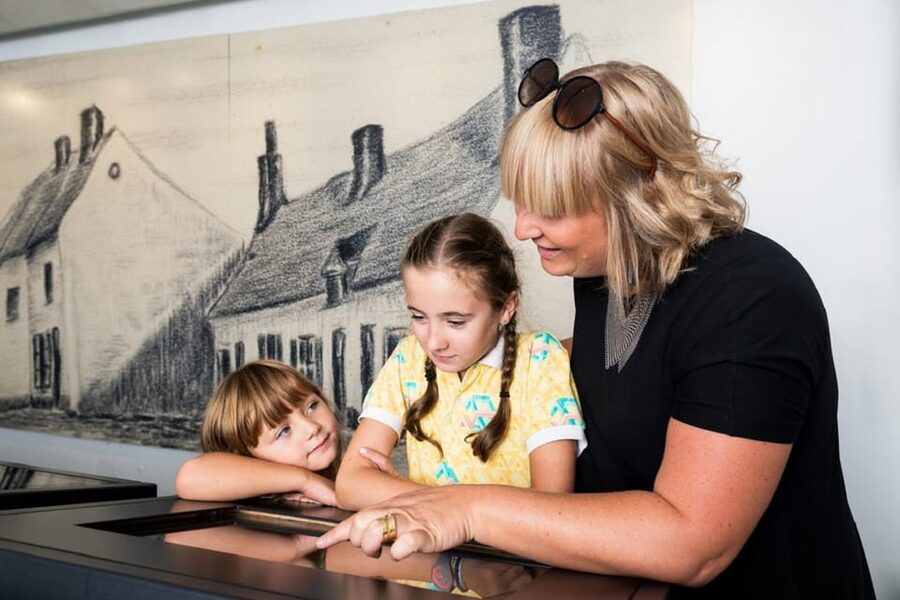
From the garden, you continue into a renovated pavilion. The pavilion provides the modern part of the presentation and acts as an introduction to Van Gogh’s time in the Borinage. Expect a more designed, contemporary setting here, with the old house itself providing the emotional center of the visit.
The route is simple, which is useful. You do not need to work out where to go or choose between several galleries. You move from the garden to the pavilion, then into the house. If you are visiting with children or students, this straightforward layout should be easy to manage.
The pavilion is also where the site can give you information that the small house alone cannot provide. A preserved room can show atmosphere, but it cannot explain every stage of Van Gogh’s life. The modern presentation helps connect the physical place with the wider story of his early work.
One point to keep in mind is that the experience depends on how much context you want. If you already know Van Gogh’s biography, you may move through the introductory material quickly. If you know only the famous paintings, give yourself time to understand why the Borinage was such an important turning point.
Inside Van Gogh’s small former home
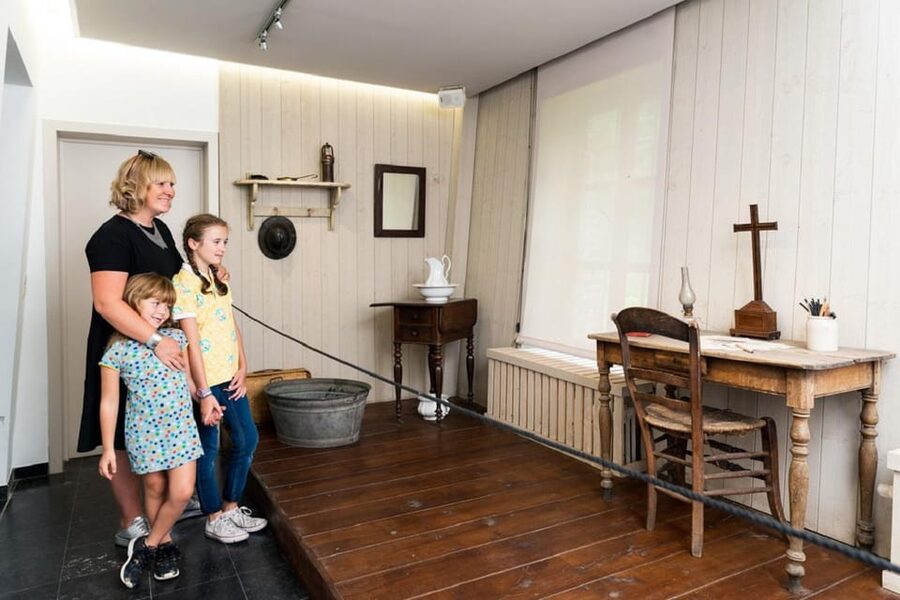
The house is the heart of the visit. It is modest and has been modernized, so you should not expect an untouched interior or a large collection of personal belongings. What you receive instead is a sense of scale and place.
The limited size can work in the house’s favor. Van Gogh’s early years were not lived in grand surroundings. A small home makes the story feel grounded. You can picture the young preacher and future artist in a plain environment, surrounded by the realities of the Borinage.
Still, this is where expectations matter most. One recent visitor called the house extremely restricted and felt there was not enough information. That criticism is fair if you are expecting a major museum with many objects, paintings, and detailed displays.
I would treat the house as one part of a short historical visit rather than the entire attraction. Its value lies in authenticity and atmosphere. You are standing in the place connected with Van Gogh’s early development, but the house itself cannot tell the whole story without the pavilion and audio presentation.
The site works best for people who enjoy biographical places. If you need to see original art, this is not the right substitute for a museum. If you want to understand where Van Gogh lived before his public career took shape, the small scale becomes an advantage.
The audio presentation and the Borinage story
An audio installation concludes the visit. Its purpose is to place Van Gogh and his work within the history of the Borinage, rather than leaving you with only a room and a name.
That wider setting is valuable. Van Gogh’s early artistic interests were tied to people who worked hard and lived simply. The surrounding countryside and working-class world stayed with him as he developed his style. The audio component helps explain those links.
The pacing may not suit everyone. A recent visitor found the film interesting but too long. That is a useful warning if you are planning a tightly timed day in Mons. Allow enough time to listen, but do not assume the visit will feel like a fast ten-minute stop.
Because there is no guided tour included, the audio presentation carries much of the explanatory work. You will not have a guide beside you to answer questions or adjust the discussion to your interests. On the other hand, you can take in the material at your own speed within the site’s visiting arrangements.
The host or welcome staff can assist in Dutch, English, or French. That makes the visit practical for international visitors, though the attraction itself remains self-guided. If language access is important to you, confirm how the audio content is provided when you arrive.
Same old town, a completely different kind of day:
- Ghent: 50-Minute Medieval Center Guided Boat Trip
★ 4.5 · 5,637 reviews - Choco-Story Brussels: Chocolate Museum Entrance with Tasting
★ 4.3 · 4,883 reviews - Bruges and Ghent – Belgium’s Fairytale Cities – from Brussels
★ 4.0 · 4,809 reviews - Bruges: Small Group Boat Cruise and Guided Walking Tour
★ 4.8 · 4,102 reviews
What the $5 price really gives you
At $5 per person, the Van Gogh House is inexpensive by museum standards. The ticket includes entry to the site, including the garden, renovated pavilion, house, and audio presentation.
The value depends on your reason for going. For a serious Van Gogh enthusiast, the chance to visit an authentic place tied to his early life makes the price easy to justify. You are paying for context and a physical connection, not for a large collection.
For a casual visitor, the calculation is different. The house is small, the visit is not guided, and the amount of material may feel limited if you expect a full museum experience. Pairing it with other sights in Mons or the surrounding area makes more sense than traveling a long way for this stop alone.
The $5 admission also makes it a low-risk addition to a Wallonia itinerary. You do not need to give up a large part of your budget, and the visit can add depth to what you already know about Van Gogh. Just keep the attraction in proportion: it is a focused memorial site, not a full-day museum.
The booking terms add flexibility. You can cancel up to 24 hours ahead for a full refund, and the reserve-now, pay-later option lets you hold a place without paying immediately. These details matter if your Mons plans are still shifting.
Timing, transport, and arrival advice
The ticket is valid for one day, but the selected time slot still matters. You should present yourself during the period you booked rather than treating the ticket as an open admission pass at any hour.
You arrange your own transport. The site can be reached by private transport or public transport, but you should check bus timetables before setting out. This is especially important because a missed connection could make a short museum visit awkwardly difficult.
You will receive an entry ticket by email to show at the museum reception. Save it where you can find it quickly. One visitor had a frustrating forty-five-minute wait while staff tried to locate tickets on the booking company’s computer, even though admission was eventually allowed with the visitor’s own tickets.
That experience points to a sensible habit: have the email ticket open on your phone and keep a downloaded copy if possible. It is not a reason to avoid the site, but it can prevent a needless delay at the desk.
The attraction is wheelchair accessible. Food and drinks are not included, so plan refreshments separately. Since the visit itself is focused and the house is small, you can fit it into a wider day around Mons rather than building your entire schedule around it.
Who will get the most from this visit
I would recommend the Van Gogh House most strongly to people who already have an interest in the artist’s life and want to see his early setting. It is also a good choice for visitors exploring Mons who enjoy small historical sites with a direct connection to a major figure.
Students may find it useful because the story links religion, social conditions, rural life, and artistic development. The site’s staff can provide support in Dutch, English, or French, and one recent booking described the welcome as clear, patient, and especially helpful with students.
Families can also make it work, provided you explain that this is a short memorial visit rather than an interactive museum. The garden and simple route may help younger children stay oriented, but the audio section could feel long to some.
I would be more cautious if you are seeking original Van Gogh paintings or a large number of exhibits. Nothing in the experience suggests a collection of major artworks. You come for the place and the story.
It is also less suited to anyone who dislikes audio presentations or wants a live guide. The absence of a guided tour means you will need to follow the displays and listening material on your own.
How to make the visit more rewarding
Before you arrive, think about Van Gogh as a young man still searching for his direction. That small change in viewpoint will make the house more meaningful. Instead of asking where the famous painter’s masterpieces are, ask what he was seeing and learning at this stage.
Pay attention to the relationship between the house and the Borinage. The visit is not only about a building. It is about the people, work, countryside, and social conditions that influenced Van Gogh’s early imagination.
Do not rush straight through the audio presentation, but be realistic about your attention span. If the film feels long, the useful information is still in its effort to connect the artist with the local setting. The strongest experience comes from combining the audio context with the physical rooms.
If you are visiting Mons with a group, allow time for everyone to find their tickets at reception and enter during the chosen slot. Have the booking email ready, and check public transport before leaving. These are small steps, but they can protect a short visit from turning into a frustrating one.
Should you book the Van Gogh House?
Book it if you value authentic places connected to an artist’s early life, especially if you are already visiting Mons or the Borinage. At $5, it is a reasonable, focused stop, and the combination of garden, pavilion, house, and audio presentation gives you more than a quick look at an old building.
Skip it if you expect original paintings, extensive rooms, or a personal guide. The house is small, the information may feel limited, and the audio section may take longer than you expect.
My call: Van Gogh enthusiasts and students of his early life should make the visit. Casual art fans should book only if it fits easily into their Mons plans and they are happy with a quiet, compact memorial rather than a major museum.
FAQ
Where is the Van Gogh House located?
The Van Gogh House is in Cuesmes, a small municipality within the Mons region of Wallonia, Belgium.
How much does admission cost?
Admission costs $5 per person.
How long is the Van Gogh House experience?
The ticket is valid for one day, but the information provided does not state a fixed number of hours for the visit. You should check the available starting times when booking.
Is the visit guided?
No. A guided tour is not included. The visit includes a modern presentation and an audio installation.
What languages are available?
The host or greeter languages are Dutch, English, and French.
How do I get to the site?
You must reach the site using your own transport or public transport. Check bus timetables in advance.
Is the Van Gogh House wheelchair accessible?
Yes, the site is wheelchair accessible.
Can I cancel my booking?
Yes. You can cancel up to 24 hours in advance for a full refund. A reserve-now, pay-later option is also available.
Just added around Belgium
- Standard vehicle from Brussels airport to city of Antwerp★ 5.0 · 4 reviews
- Visit of Bruges in 1 day private tour from Paris★ 5.0 · 3 reviews
- Private transfer from BRU Airport to Brussels city with luxury limousine 3 pax★ 4.5 · 8 reviews
- Luxury vehicle from Brussels airport to the city of Brussels★ 4.0 · 5 reviews
- Transfer Brussels Airport –> City MB E Class 1-3 PAX (ONE WAY)★ 5.0 · 6 reviews
- PRIVATE MPV TRANSFER FROM/TO BRUSSELS AIRPORT (Max 6 pax) ONE-WAY★ 5.0 · 4 reviews
- Transfer Brussels Airport (BRU) –> City Center 7 PAX (ONE WAY)★ 5.0 · 7 reviews
- Transfer Brussels Airport –> Brussels MB V Class 7 PAX (ONE WAY)★ 5.0 · 4 reviews