
Reviewed · BRUSSELS TOURS
Architecture Tour of Brussels
Brussels makes more sense when you look up. This two-hour architecture walk links the city’s grandest square, covered shopping arcade, royal theatre, old river route, churches, and hilltop viewpoints in one compact route. An architect guide explains not only what you are seeing, but why the buildings look the way they do.
I like the close look at Grand Place facades, where medieval market buildings gave way to Gothic and Baroque design. I also like the final stop at Mont des Arts, where you can frame Brussels City Hall and the Royal Palace in one broad view. The main consideration is the evening start at 8:00 pm, which may limit interior access and can make reading architectural details harder in low light.
In This Review
- Key points before you book
- Why an architect-led walk changes Brussels
- Grand Place: Brussels begins with a market
- Galeries Royales Saint-Hubert: shopping under glass
- La Monnaie and Place De Brouckere: theatre, revolt, and water
- La Bourse: following the city’s financial center
- Manneken Pis: a small statue with a large reputation
- Jacques Brel and the road toward Sablon
- BOZAR: a short look at Brussels’ art center
- Mont des Arts: the best place to finish
- What $30.10 really buys you
- Timing, meeting point, and walking comfort
- Who will get the most from this walk
- Should you book the Architecture Tour of Brussels?
- FAQ
- How long does the Architecture Tour of Brussels last?
- What time does the tour start?
- Where does the tour meet?
- Where does the tour finish?
- Is transportation included?
- Is the tour offered in English?
- What is included in the price?
- How many people can join the tour?
- Can I cancel for a full refund?
Key points before you book
- An architect leads the walk: Expect attention to facades, city planning, building styles, and the way Brussels changed over time.
- Ten central stops fit into about two hours: The route covers many major sights without transport between them.
- Grand Place gets the attention it deserves: You examine the square as both a market site and a showcase of Gothic and Baroque buildings.
- The tour ends with a strong photo stop: Mont des Arts offers views toward the City Hall tower and the Royal Palace.
- The group is limited to 18 people: That is small enough for questions, though the experience still depends on the day’s attendance.
- The price is modest for a guided city orientation: At $30.10 per person, you are paying mainly for interpretation rather than admissions or transport.
Why an architect-led walk changes Brussels
A standard sightseeing stroll can show you Brussels landmarks. An architect-led walk helps you read them. That difference matters in a city where medieval, Gothic, Baroque, neoclassical, and modern buildings often appear within a few minutes of one another.
Your guide draws attention to details you might otherwise pass without noticing: the shape of a facade, the purpose of a public square, the route of a former waterway, or the way a church helped define a neighborhood. The focus is not just on dates and names. It is on how the city grew and how each building fits into that growth.
The tour is conducted in English and uses a mobile ticket. It is designed as a group outing, with a maximum of 18 people. That gives the walk a social side, and the compact group should make it easier to hear the guide and ask questions.
The tone can also be flexible. Gamaal, one of the named guides associated with the experience, is described as adapting explanations to the interests of the group. That is especially useful if you care more about churches, urban planning, royal buildings, art, or local stories than a fixed speech allows.
Other Brussels days worth putting on the list:
- Brussels: Atomium Entry Ticket with Design Museum Ticket
★ 4.4 · 9,254 reviews - From Brussels: Guided Day Trip to Bruges and Ghent
★ 4.6 · 8,353 reviews - From Brussels: Bruges & Ghent Day Tour – 2 Fairytale Cities
★ 4.7 · 8,242 reviews
Grand Place: Brussels begins with a market
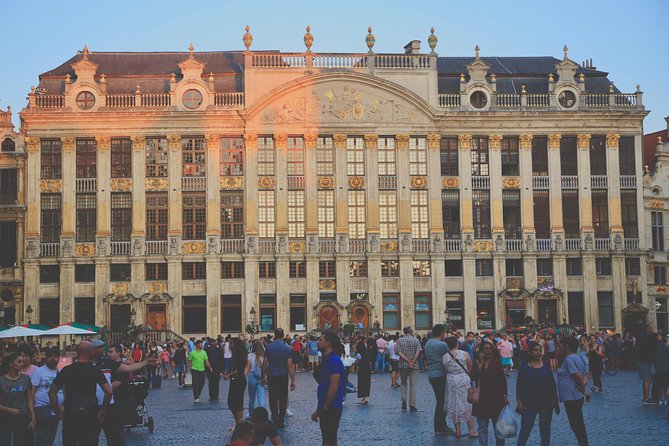
The walk starts at Godiva Grand Place, at Grand Place 21/22. This is an excellent meeting point because Grand Place is the city’s visual anchor and one of Belgium’s most visited places.
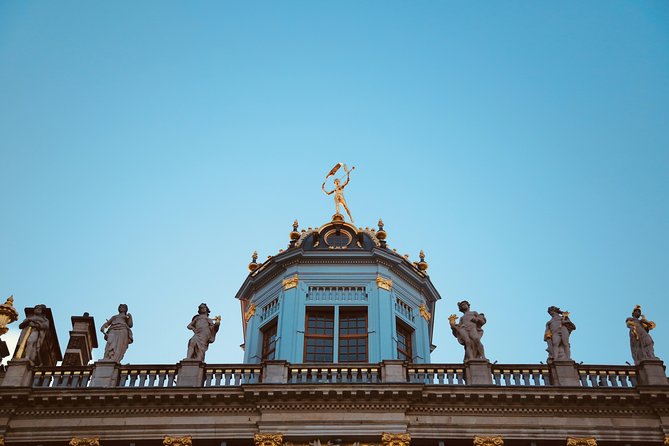
The square began as a market surrounded by wooden houses. Over time, those early structures were replaced by the ornate stone buildings you see now. The guide uses the facades to explain the shift toward Gothic and Baroque architecture, while also bringing in the public figures who lived or worked around the square.
Plan to spend about 20 minutes here. That is long enough for a useful introduction, but not enough to examine every facade in detail. If you want extensive photography, arrive early and take your own pictures before the group moves on.
The best part is the comparison. Grand Place is not one single architectural statement. It is a collection of buildings shaped by different periods and purposes. Listen for the links between commerce, civic pride, political power, and reconstruction. Those themes return throughout the walk.
Galeries Royales Saint-Hubert: shopping under glass
From Grand Place, the group reaches the Galeries Royales Saint-Hubert, described as the world’s first shopping mall. It dates from the same period as the Belgian state and reflects the confidence of a young country eager to present itself as modern and prosperous.
You spend about 20 minutes here, learning how one architect’s idea became a real building through persistence and a wide network of contacts. That human story gives the arcade more meaning than a quick photo stop would.
The covered passage is also tied to Brussels café and literary life. The guide points out cafés where famous authors spent time and wrote. You can enjoy the polished arcades, storefronts, and glass roof while considering how this was once a new kind of public space, not simply an attractive place to shop.
The limitation is simple: this is a pass-by stop, not a shopping break. If you want to browse stores or stop for coffee, save that for later. The group needs to keep moving.
La Monnaie and Place De Brouckere: theatre, revolt, and water
The 10-minute stop at La Monnaie introduces Brussels’ royal theatre. The building’s story connects to the nearby shopping streets and to the revolution that took place in this part of the city.
That combination makes La Monnaie more than a performance venue. It shows how culture, commerce, and politics can share the same few blocks. A theatre can be a place for music and drama, but it can also become part of the public life of a capital.
At Place De Brouckere, the guide discusses the former De Brouckere palace and an old river route that once ran inside the city. The waterway became part of Brussels’ defense system, giving the city a practical backbone as well as a source of movement and trade.
Again, the stop lasts about 10 minutes. You will not get a full engineering history of Brussels’ waterways, but you should come away with a clearer sense that the city was shaped by water, walls, and defensive needs, not just by handsome squares.
Same old town, a completely different kind of day:
- Choco-Story Brussels: Chocolate Museum Entrance with Tasting
★ 4.3 · 4,883 reviews - Bruges and Ghent – Belgium’s Fairytale Cities – from Brussels
★ 4.0 · 4,809 reviews - Brussels: Hop-On Hop-Off Bus Tour
★ 4.0 · 4,016 reviews - Brussels: Entry Ticket to Mini-Europe
★ 4.5 · 2,870 reviews
La Bourse: following the city’s financial center
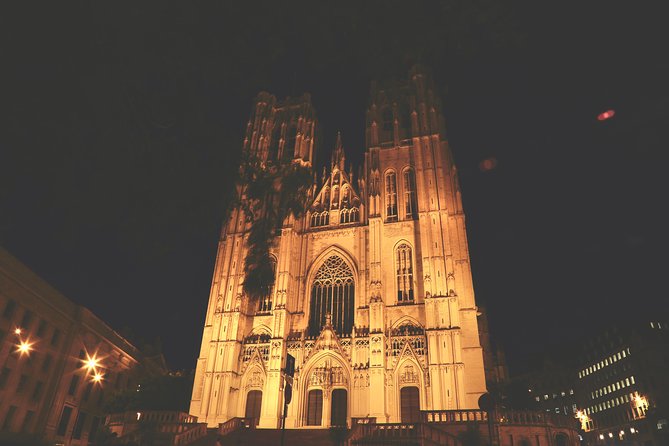
The next stop focuses on La Bourse de Bruxelles, or the Brussels Stock Exchange. The guide traces its development from Bruges to Grand Place and then to its present square.
That movement tells a larger story about the changing importance of Belgian cities and the growth of Brussels as a financial and political center. The building itself has also taken on a new cultural role as a site connected with Brussels’ art scene.
You have about 10 minutes here. The stop is short, so the value comes from the explanation rather than a long look inside. It is a useful pause between the older market center and the later royal and cultural districts.
Manneken Pis: a small statue with a large reputation
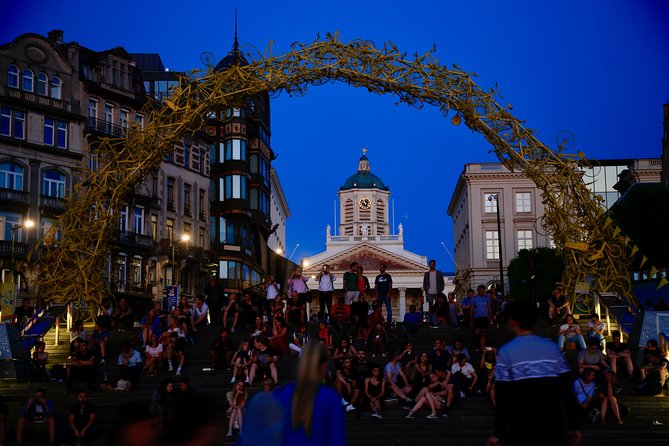
Manneken Pis is one of Brussels’ most famous sights, and the guide handles it with a welcome dose of humor. The statue is small, so many people expect more than the physical object can deliver. Calling it a possible disappointment is fair, especially when you arrive expecting a major monument.
Its appeal lies in the stories. The guide covers four famous explanations for the boy’s presence, then discusses the statue’s wardrobe of more than 1,200 uniforms. The group also climbs the hill toward the wardrobe museum.
The stop lasts about 15 minutes. That gives you time to see the statue, hear the legends, and understand how a modest fountain figure became a city symbol. You should not expect a long museum visit during this walk. The focus is on the statue’s stories and place in Brussels culture.
This is one of the tour’s more useful lessons: a landmark does not need to be grand to matter. Manneken Pis works because the city has embraced its oddness, turned it into tradition, and given it an unusually elaborate public life.
Jacques Brel and the road toward Sablon
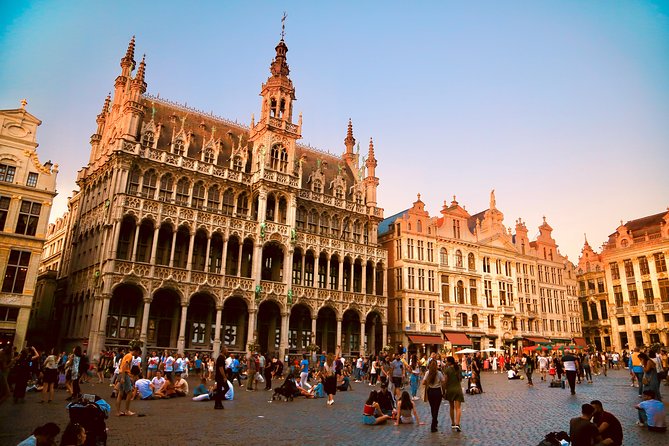
The Jacques Brel statue receives a brief five-minute stop. The guide asks why Brussels has a sculpture of the famous singer-songwriter, opening a small discussion about identity, language, and the city’s cultural figures.
Because the stop is short, do not expect a full biography or a music-focused presentation. Think of it as a cultural marker along the route. It connects architecture with the people who help give a city its voice.
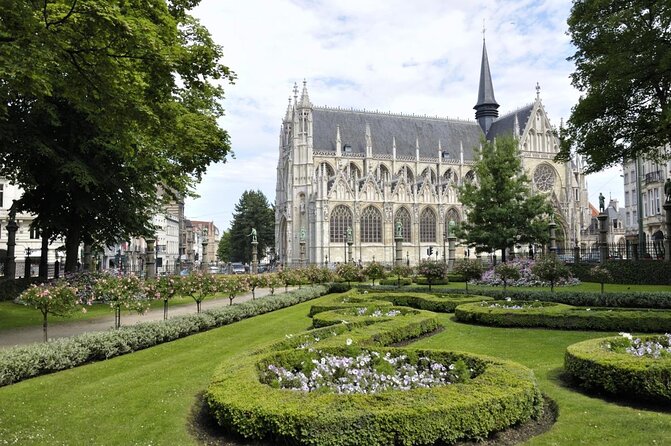
The walk then continues to Notre Dame des Victoires au Sablon, where you spend about 15 minutes. This is one of the stronger church stops, with attention to the building and to the surrounding Sablon area.
Chocolate also enters the story here. That pairing is very Brussels: a major church, a refined neighborhood, and one of Belgium’s best-known foods. The guide links the church with the local chocolate tradition rather than treating the building as an isolated monument.
BOZAR: a short look at Brussels’ art center
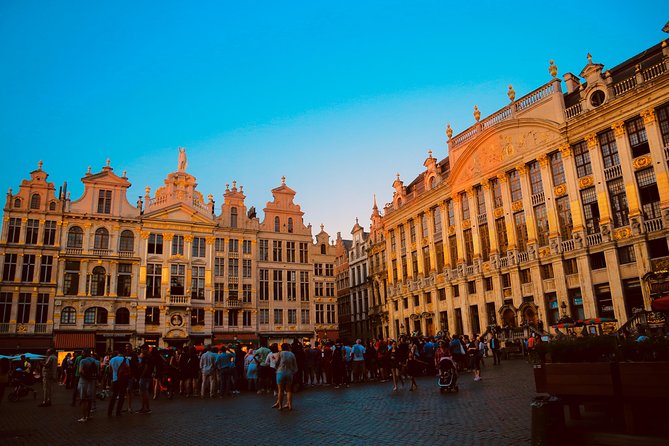
The BOZAR Centre for Fine Arts gets only five minutes, but the guide uses the stop to raise a question: what lies behind its large walls?
This is more of a visual introduction than a full museum visit. You will not be touring the exhibitions as part of the walk, and no admission is included. Still, the stop helps place BOZAR within Brussels’ cultural district and gives you a reason to return if its programming interests you.
The brief timing also keeps the tour moving. With ten stops in two hours, every location serves as one piece of a larger picture rather than a complete museum or monument visit.
Mont des Arts: the best place to finish
Mont des Arts is the final major stop and lasts about 20 minutes. It is the natural payoff for a city walk because the elevated viewpoint lets you look back across the old city.
The City Hall tower is the main focus for photographs, with the Royal Palace visible at the other end of the view. You can see the classic Brussels panorama of the historic center and former walls while the guide explains how the city’s major landmarks relate to one another.
This is the point where earlier explanations begin to connect. Grand Place represented the old market center. La Monnaie and La Bourse showed political and commercial growth. Sablon and BOZAR added religious and cultural layers. From Mont des Arts, you get a chance to place those districts within one city view.
The evening timing may work well here. At 8:00 pm, the walk can have a pleasant late-day atmosphere, depending on the season. Still, sunset conditions vary, so you should not book this solely for a guaranteed sunset photograph.
What $30.10 really buys you
At $30.10 per person, the price is reasonable if you want interpretation and orientation rather than paid entry. All listed stops are viewed from the outside, admissions are free, and transport is not included.
You are paying for a professional local guide, route planning, historical context, and the ability to ask questions. That is good value if you are new to Brussels or if buildings interest you more after someone explains their purpose and design.
The price is less compelling if you only want a quick list of landmarks. You can walk through much of central Brussels independently. The advantage here is the connection between the stops, especially the links between architecture, politics, commerce, defense, music, and food.
The group cap of 18 helps protect that value. It is not a private tour by default, but it is smaller than a large coach group. Some outings may feel almost private if few people book, though you should not count on that.
Timing, meeting point, and walking comfort
The meeting point is Godiva Grand Place, Grand Place 21/22, with an 8:00 pm start. The activity ends back at the meeting point, so you do not need to arrange a separate return transfer.
Transport is not included, and the route is on foot. The stops are in central Brussels, near public transportation, but the tour itself does not provide rides between them. Wear comfortable shoes, since the route includes a climb toward the Manneken Pis wardrobe museum and continues uphill toward Sablon and Mont des Arts.
Most people can take part, according to the supplied participation information. If you have concerns about walking or hills, ask before booking because the experience is a continuous city walk rather than a seated sightseeing tour.
Bring your phone for the mobile ticket and a camera for Mont des Arts. A small notebook can also be useful if you want to remember building names or architectural terms.
Who will get the most from this walk
I would choose this tour for a first or second evening in Brussels. It gives you a map in your head, points out places worth returning to, and explains why the center looks like a collection of different cities joined together.
It is also a good fit if you like churches, public buildings, city planning, or stories about how ordinary streets gained importance. The guides have been praised for clear explanations, humor, useful recommendations, and adapting the walk to the group’s interests.
Families and mixed-age groups may enjoy the variety. A theatre, a former river route, a tiny statue, a famous singer, chocolate, and a major viewpoint create enough changes of subject to keep the walk from feeling like a list of dates.
You may want a different experience if your main goal is extensive interior access. The schedule allows only short stops at La Monnaie, La Bourse, BOZAR, and the Jacques Brel statue. This is an outdoor overview with expert commentary, not a museum or palace tour.
Free cancellation is available up to 24 hours before the 8:00 pm start. Confirmation is issued within 48 hours, subject to availability, and the activity requires a minimum number of participants.
Should you book the Architecture Tour of Brussels?
Book it if you want a compact, well-explained introduction to central Brussels and enjoy learning how buildings connect to city life. The route covers many important sights, the price is fair, and Mont des Arts gives the evening a strong finish.
Skip it if you prefer to explore slowly, shop inside the Galeries Royales, or spend serious time in museums and churches. For most first-time visitors who want more than quick snapshots, this is a sensible way to get your bearings and find the places you will want to revisit on your own.
FAQ
How long does the Architecture Tour of Brussels last?
The tour lasts approximately two hours.
What time does the tour start?
The start time is 8:00 pm.
Where does the tour meet?
The meeting point is Godiva Grand Place, Grand Place 21/22, 1000 Bruxelles, Belgium.
Where does the tour finish?
The activity ends back at the meeting point.
Is transportation included?
No. Transport is not included. The experience is a walking tour.
Is the tour offered in English?
Yes. The tour is offered in English.
What is included in the price?
A professional local guide is included.
How many people can join the tour?
The group has a maximum of 18 people.
Can I cancel for a full refund?
Yes. You can cancel up to 24 hours before the experience start time for a full refund. Cancellations or changes made less than 24 hours before the start are not accepted for a refund.
Just added around Brussels
- Standard vehicle from Brussels airport to city of Antwerp★ 5.0 · 4 reviews
- Private transfer from BRU Airport to Brussels city with luxury limousine 3 pax★ 4.5 · 8 reviews
- Luxury vehicle from Brussels airport to the city of Brussels★ 4.0 · 5 reviews
- Transfer Brussels Airport –> City MB E Class 1-3 PAX (ONE WAY)★ 5.0 · 6 reviews
- PRIVATE MPV TRANSFER FROM/TO BRUSSELS AIRPORT (Max 6 pax) ONE-WAY★ 5.0 · 4 reviews
- Transfer Brussels Airport (BRU) –> City Center 7 PAX (ONE WAY)★ 5.0 · 7 reviews
- Transfer Brussels Airport –> Brussels MB V Class 7 PAX (ONE WAY)★ 5.0 · 4 reviews
- Brussels: City Walk with Audioguide in 7 Languages on your Phone★ 3.5 · 4 reviews
Brussels Tours, compared.
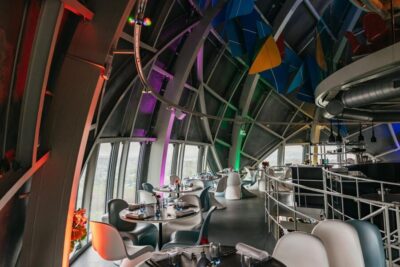
Atomium Entry Ticket with Design Museum Ticket
Read our review →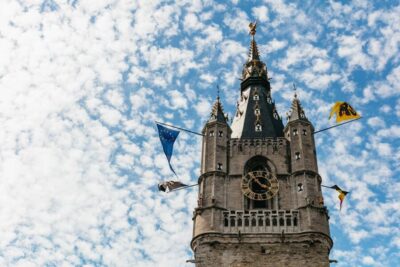
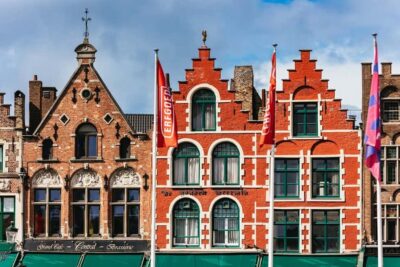
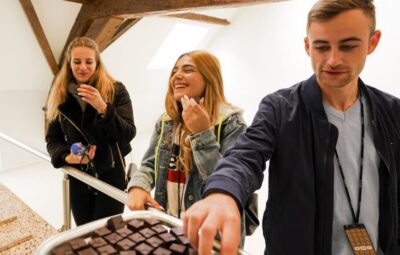
Choco-Story Brussels: Chocolate Museum Entrance with Tasting
Read our review →
Bruges and Ghent – Belgium’s Fairytale Cities – from Brussels
Read our review →

Belgian Chocolate Making Workshop with Tastings
Read our review →
Browse the lists this tour appears in