Reviewed · BELGIAN CHOCOLATE TASTINGS
Brussels: Belgian Chocolate Making Workshop with Tastings
The most unusual part of this Brussels workshop comes before the sweets: you handle a fresh cacao pod, taste its beans, try the fruity mucilage, and sample cacao liquor, which is pure chocolate mass with no alcohol. Then you work with Belgian-made chocolate to create mendiants, truffles, and a personalized bar. Patricia, one of the workshop’s especially engaging chocolatiers, mixes clear instruction with a dry, playful sense of humor.
I like two things here. First, the bean-to-bar lesson gives your chocolate a real connection to the farms and machinery behind it. Second, everything you make goes home with you, along with tastings and a 20% discount in the company’s shops. The main drawback is the strict start time: arrive at the ticket office at least 15 minutes early, since late arrivals are not admitted.
In This Review
- Key points to know before booking
- Why this workshop is more than a chocolate tasting
- Starting at Place de la Justice 5
- Inside the 150-square-metre training centre
- Tasting cacao before making chocolate
- Making your personalized chocolate bar
- Mendiants, truffles, and a box of your own work
- Seeing the bean-to-bar machinery
- The guide can make or break the session
- Price, timing, and practical value
- Who should book, and who should think twice
- Should you book this Brussels chocolate class?
- FAQ
- Where does the chocolate workshop begin?
- How early should I arrive?
- What do I make during the workshop?
- Is the workshop taught in English?
- Can I attend if I am vegan or lactose intolerant?
- Is an apron included?
Key points to know before booking
- Fresh cacao is part of the lesson: Handle a cacao pod, taste a fresh bean, sample mucilage, and try alcohol-free cacao liquor.
- You make three kinds of chocolate: Prepare a topped bar, decorated chocolate pieces known as mendiants, and truffles.
- The chocolate is made from traceable cacao: The workshop uses organic cacao from small farmers, including premium cacao from Haiti’s Grand Anse region.
- The class is taught in English: Chocolatiers such as Patricia lead the demonstrations and explain the bean-to-bar process.
- Your ticket begins at Place de la Justice 5: Check in there, then walk about 200 meters to the training centre.
- Plan for a cool, tidy workroom: The air-conditioned space requires a hairnet, and long hair must be tied back.
Why this workshop is more than a chocolate tasting
Brussels has no shortage of chocolate shops, but shopping only shows you the finished product. This 90-minute session lets you see what happens before the praline reaches the display case.
The Belgian Chocolate Makers describe themselves as a true artisan producer rather than part of an industrial group. Their workshop uses chocolate made from premium cacao and does not use industrial chocolate for the hands-on work. The supply chain is presented as fully traceable, with cacao sourced from small farmers and produced without deforestation or child labor.
That information matters because it gives the tasting a useful frame. You are not simply given a square of dark chocolate and told to admire it. You learn that taste begins with the cacao’s origin, then changes through fermentation, roasting, grinding, and the blending of cocoa mass with other ingredients.
The company says its cacao comes from Haiti, including Grand Anse. You also compare cacao from different countries, which helps you notice that chocolate is not one single flavor. The differences may be subtle at first, especially if you usually eat chocolate as a quick snack, but the tasting encourages you to slow down and pay attention.
More Belgian Chocolate Tastings in Brussels
- Choco-Story Brussels: Chocolate Museum Entrance with Tasting
★ 4.3 · 4,883 reviews - Hungry Mary’s Famous Beer and Chocolate Tour in Brussels
★ 5.0 · 2,258 reviews - Brussels: 2.5-Hour Chocolate Museum Visit with Workshop
★ 4.6 · 1,263 reviews
Starting at Place de la Justice 5
Your meeting point is the Belgian Chocolate Makers ticket office at Place de la Justice 5, close to Brussels Central Station and Mont des Arts. This is not the actual workshop room, so do not walk straight past the ticket office looking for a kitchen.
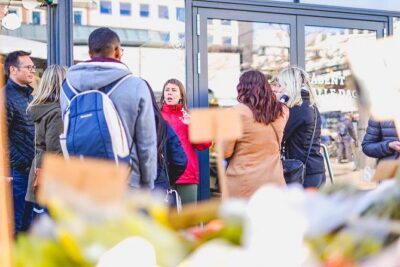
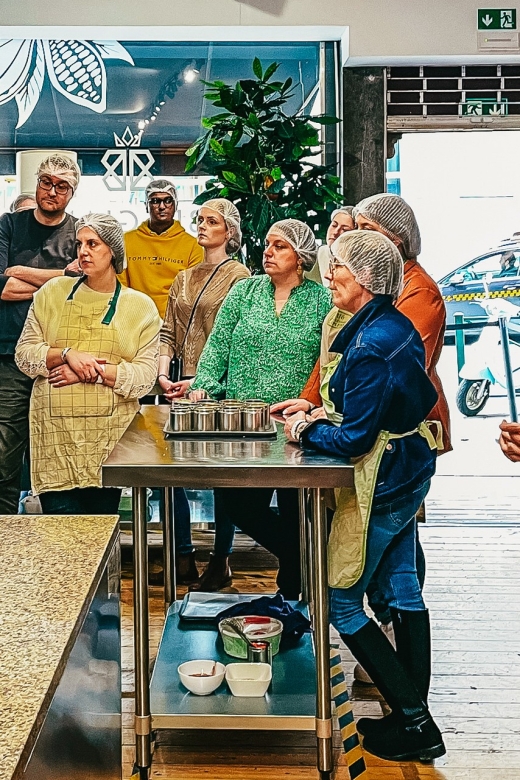
Arrive at least 15 minutes before your chosen session at 11 a.m., 2 p.m., or 5 p.m. Staff check your ticket, give you a hairnet and wristband, and lead the group on foot to the training centre, about 200 meters away.
This small transfer is easy once you know about it. It can feel confusing if you expect the class to begin at the booking desk, so build in time to queue and listen for instructions. One practical point is non-negotiable: the checking closes when the activity starts. You will not be admitted late, regardless of the reason.
Leave large bags and luggage elsewhere. Pets, smoking, outside food, and drinks are not allowed. Tie back long hair before you arrive, or be ready to do so at the desk.
Inside the 150-square-metre training centre
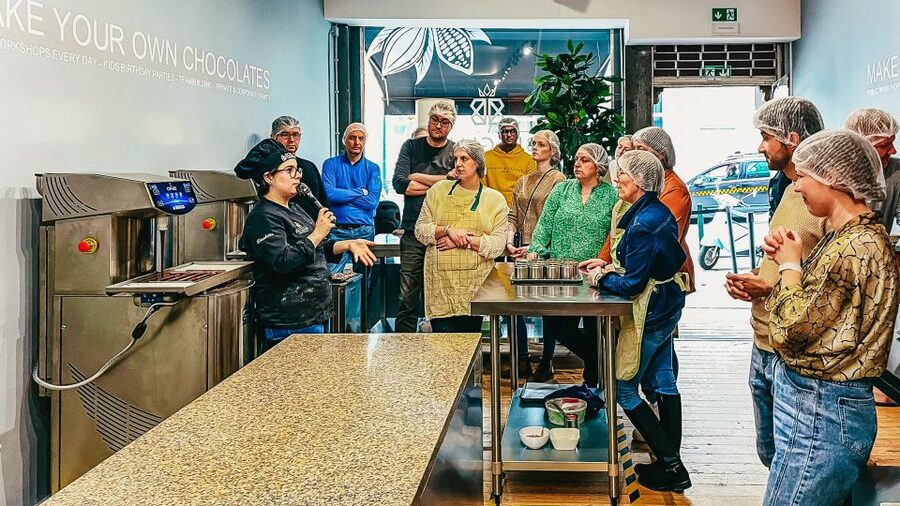
The workshop takes place in a new, well-equipped 150-square-metre training centre. It can accommodate up to 60 people, though the size of your particular group may vary. Some sessions feel small and personal, while the facility can also handle larger parties.
The room is fully air-conditioned. That is useful for chocolate work, since warm chocolate can quickly become difficult to handle, but you may find the room chilly. Bring a light layer, especially during winter or if you are sensitive to cool indoor spaces.
You wear a hairnet during the class. Water dispensers and an accessible toilet are available. The setting is practical rather than theatrical, which suits the subject: you are here to work with chocolate, not simply pose beside it.
The staff are trained artisan chocolate makers certified by the Belgian federal government. The class is conducted in English, and the teaching style appears to depend partly on the individual chocolatier. Patricia is repeatedly singled out for being funny, patient, direct, and clear, with a style that can be a little strict in a schoolteacher way. That structure helps keep a chocolate class from turning into a free-for-all.
Tasting cacao before making chocolate
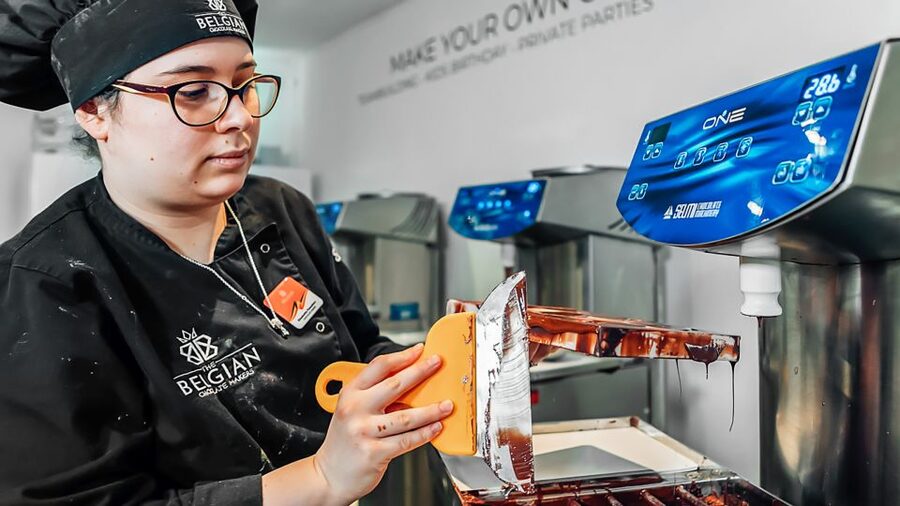
The tasting begins with the raw material. You handle a fresh cacao pod and taste the beans inside. Expect the bean to be very bitter. It is not like eating a piece of finished chocolate, and that contrast is the point.
You also taste the mucilage, the pale fruit pulp or juice surrounding the beans. This is one of the most memorable parts of the session because it shows that the cacao pod has a fruit quality that disappears during chocolate production.
Next comes cacao liquor. Despite the name, it contains no alcohol. It is the ground cacao mass used in chocolate making, and tasting it in this plain form makes the later additions of sugar and other ingredients easier to understand.
The session includes several chocolate tastings, including premium cacao from different origins and chocolate produced with Haitian cacao. You can compare dark and milk chocolate, and the instructor explains why white, milk, and dark chocolate taste and behave differently.
This portion is brief enough to leave time for the practical work, but it gives the class some substance. If you only want to decorate sweets, you may find the explanations more detailed than necessary. If you want to understand what makes Belgian chocolate different from a mass-produced bar, the tasting is a useful foundation.
More Chocolate Making Workshops in Brussels
- Brussels: 2.5-Hour Belgian Chocolate Making Workshop
★ 4.8 · 933 reviews - 1.5h Belgian Chocolate Workshop in Brussels (bean to bar)
★ 4.5 · 462 reviews - Brussels: Chocolate Truffle & Belgian Hot Chocolate Workshop
★ 4.7 · 367 reviews - Brussels: Chocolate Workshop and Guided Walking Tour
★ 4.7 · 225 reviews
Making your personalized chocolate bar
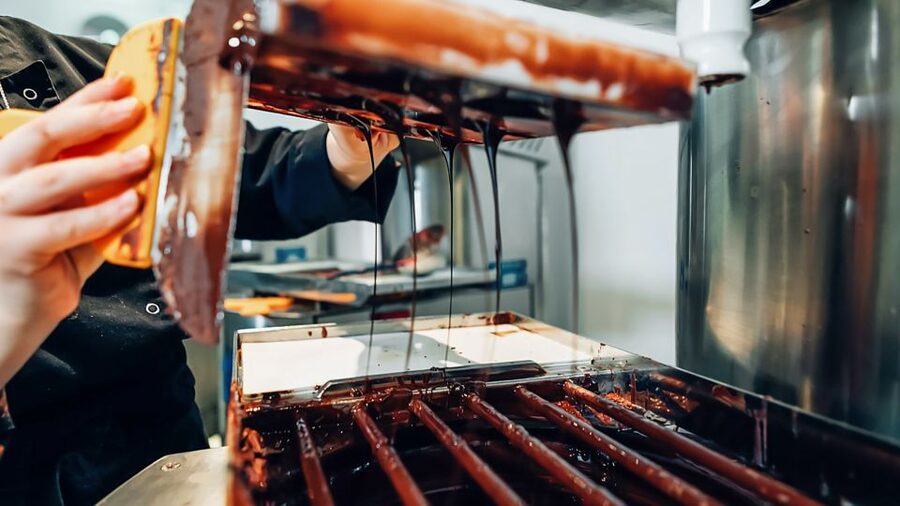
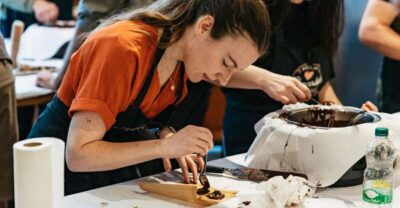
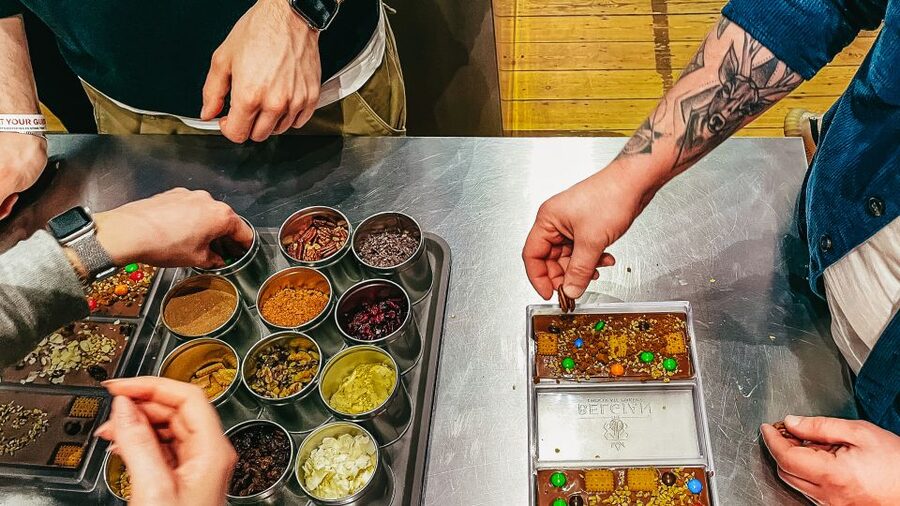
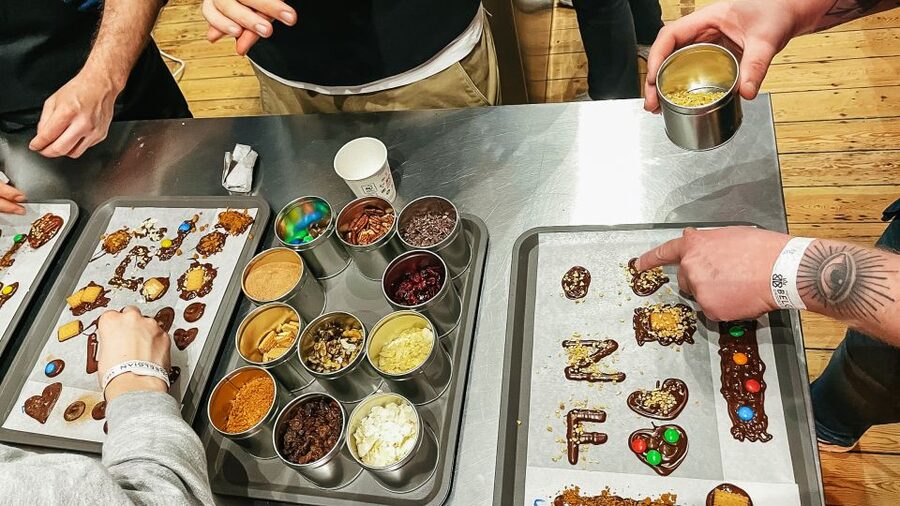
The first major hands-on project is your own chocolate bar. You choose toppings and decorations, then work with milk or dark chocolate. The finished bar is personalized rather than factory-perfect, so your design may look a little uneven. That is part of the fun.
The process gives you a simple lesson in control. You see how the chocolate is placed, spread, and decorated, and you learn why timing matters. The chocolatier demonstrates each step before you try it, which is helpful if you have never worked with tempered chocolate.
You can take the bar home at the end. That makes the activity more satisfying than a demonstration where the instructor produces everything and you leave with only a sample.
The workshop uses dark and milk chocolate. If you are vegan or lactose intolerant, the stated option is dark chocolate only, but the activity information also lists lactose intolerance among conditions for which the experience is not suitable. Contact the staff at check-in before beginning rather than relying on an assumption about ingredients.
Mendiants, truffles, and a box of your own work

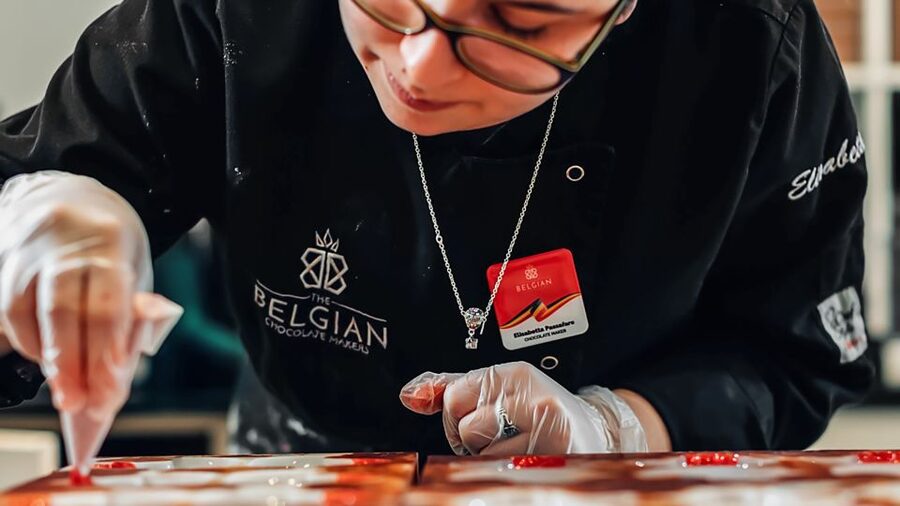
After the bar, you prepare mendiants. These are small chocolate rounds topped with ingredients such as nuts or other decorations. The toppings contain nuts, so this is not a safe choice for people with nut allergies.
The final project is truffles. You shape the chocolate and finish the pieces with coatings such as cocoa powder or coconut. The work is simple enough for beginners, but it still feels hands-on because you are shaping and decorating the sweets yourself.
The exact number can vary with the session, but the practical descriptions indicate a personal bar, several decorated chocolate pieces, and about five truffles per person. Everything you produce is packed for you to take home.
That take-home box is a major part of the value. You get an edible souvenir that connects directly to your time in Brussels, and it is more personal than a standard box purchased in a shop. Pack it carefully in your day bag, particularly if you are visiting during warm weather.
The class also includes a hot chocolate in winter or a chocolate granita in summer. Some sessions include water and a soft drink as well. A Champagne glass and embroidered logo apron belong to a VIP upgrade, not the standard ticket. An apron is not included in the regular price, so dress in clothes you do not mind getting a little messy.
Seeing the bean-to-bar machinery
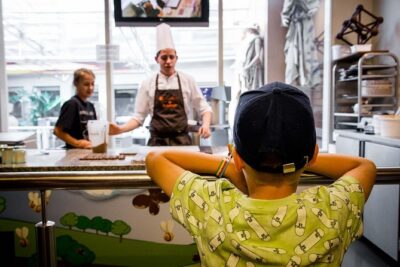
After the making session, you visit the bean-to-bar machinery and hear how the cacao changes from bean to chocolate. The explanation covers the main stages used to produce chocolate, from the raw cacao through processing and refinement.
This is a worthwhile ending because it ties the workshop together. You have tasted the bean, cacao liquor, and finished chocolate, then made your own sweets. Seeing the equipment gives you a clearer sense of the work that sits between those stages.
A laboratory visit is listed with the VIP upgrade. The standard experience includes a visit to the bean-to-bar machinery after the workshop, while the more detailed laboratory access is reserved for that upgrade. Check the exact option when booking if the production area is your main reason for going.
You also receive 20% off the company’s chocolate collection in its shops. This can be useful if you want to buy boxed chocolates or gifts after the class, though remember that the discount only helps if you were planning to shop.
The guide can make or break the session
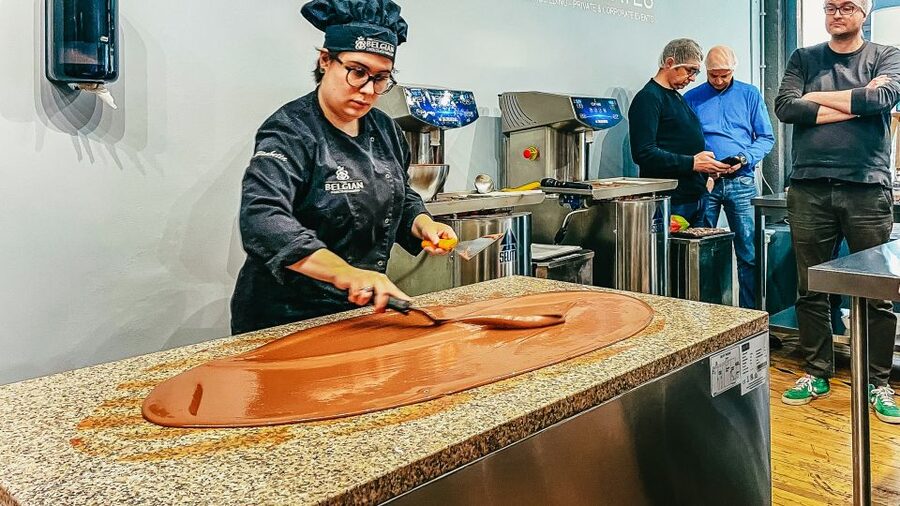
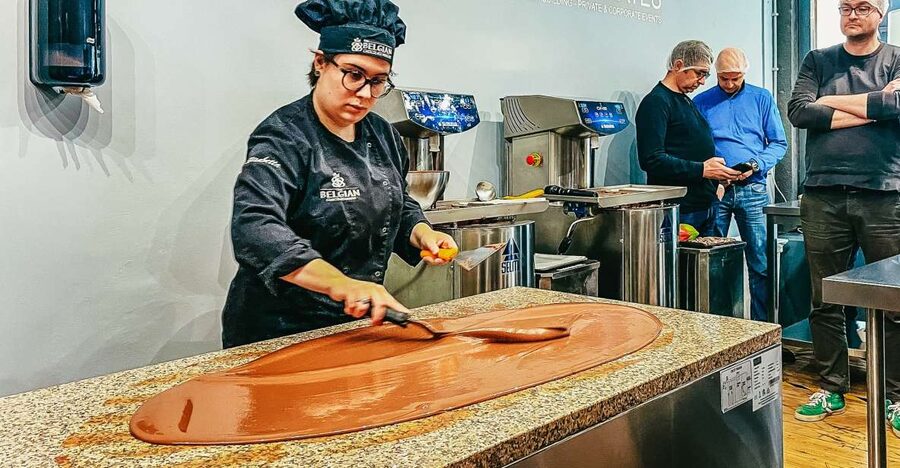
The strongest element of this experience is the chocolatier leading it. Patricia receives particular praise for combining facts with humor, and several descriptions of the session point to her ability to keep people involved while still enforcing hygiene and quality-control rules.
That balance is important. A chocolate workshop needs enough discipline to keep the room clean and the chocolate usable, but a stiff lecture would take the fun out of it. Patricia’s style appears lively and direct. You may hear a few jokes, but you will also get clear instructions and a steady pace.
The class is suitable for solo visitors, couples, families, and groups. You do not need to arrive with a large party to enjoy it. Sharing a workstation with a partner can be convenient, while solo participants can work alongside other people in the group.
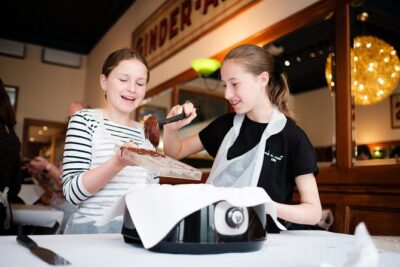
Families have a good reason to consider it, especially with children old enough to follow instructions. The minimum age is six, and several family sessions have included children around 10 years old. Unaccompanied minors are not allowed.
Price, timing, and practical value
At $82 per person, this is not the cheapest chocolate stop in Brussels. You are paying for instruction, tastings, premium cacao, several handmade items, a take-home box, and access to an artisan production setting rather than simply buying a bar from a shop.
I think the price is fair if you care about making the chocolate yourself and will use the 20% shop discount. It is less appealing if your main goal is only to eat Belgian chocolate, since Brussels gives you many ways to do that for less.
The 90-minute length works well for a city break. It is long enough for the cacao lesson and three projects without taking half your day. Some people may experience the whole outing as longer because of check-in, the walk to the workshop, and the transition between demonstrations.
The three daily start times make it easy to fit around sightseeing. The 11 a.m. session can lead into lunch, the 2 p.m. slot provides a warm afternoon break, and the 5 p.m. class works well after central Brussels sights. A winter afternoon session is especially practical when the weather is cold.
The booking terms are flexible: you can cancel up to 24 hours ahead for a full refund, and a reserve-now, pay-later option is available. That is useful when your Brussels schedule is still changing.
Who should book, and who should think twice
I would choose this workshop if you want a structured activity rather than another museum or shop visit. It suits chocolate fans, curious food lovers, families with children over six, couples, and solo visitors who enjoy learning by doing.
You should also consider it if ethical sourcing matters to you. The company presents its cacao as traceable, sourced from small farmers, and produced without deforestation or child labor. Those claims are part of the workshop’s explanation and give the tasting a wider food-production context.
This is not a good match for people with food allergies, gluten intolerance, or lactose intolerance according to the stated restrictions. The workshop also uses nut toppings. Tell staff about any intolerance or allergy at check-in, but do not assume they can adapt the class safely.
The room is wheelchair accessible, though one description of the route notes stairs near the workshop. Since the meeting point and training centre are separate, contact the provider ahead of time if you need step-free access throughout the full route.
Should you book this Brussels chocolate class?
Book it if you want to make your own souvenirs, taste cacao in forms you are unlikely to encounter in a chocolate shop, and hear a real chocolatier explain the bean-to-bar process. Patricia’s lively teaching style can turn a technical subject into a good hour and a half, and the amount of chocolate you take home helps justify the cost.
Skip it if you only want a quick tasting, have serious food restrictions, or dislike fixed schedules. Arrive early, bring a light layer, leave your luggage behind, and remember that the standard ticket does not include an apron or Champagne.
For most chocolate lovers, this is a useful and enjoyable Brussels break, with enough real production detail to make it more than a decorating class.
FAQ
Where does the chocolate workshop begin?
Check in at The Belgian Chocolate Makers ticket office at Place de la Justice 5, near Brussels Central Station and Mont des Arts. Staff then lead you on foot about 200 meters to the training centre.
How early should I arrive?
Arrive at least 15 minutes before the activity begins. The ticket check closes when the workshop starts, and late arrivals are not accepted.
What do I make during the workshop?
You make a personalized chocolate bar, mendiants, and truffles. Everything you make is yours to take home in a box.
Is the workshop taught in English?
Yes. The activity is conducted in English, with a chocolatier explaining the cacao and bean-to-bar process.
Can I attend if I am vegan or lactose intolerant?
The workshop offers dark chocolate for vegan or lactose-intolerant participants, but the stated information also lists lactose intolerance among conditions for which the activity is not suitable. Ask the staff about ingredients before the class begins.
Is an apron included?
An apron is not included with the standard booking. An embroidered apron is part of the VIP upgrade.
More Workshops in Brussels
- Brussels: Waffle Making Workshop – All You Can Eat
★ 4.6 · 615 reviews - 2.5h Belgian Chocolate Pralines Workshop in Brussels
★ 5.0 · 406 reviews - Brussels: Belgian Waffle Making Workshop with Beer Tasting
★ 4.9 · 308 reviews - Brussels Waffle Workshop
★ 4.5 · 176 reviews
More Dessert Tours in Brussels
- Brussels: Historical Walking Tour with Chocolate & Waffle Tasting
★ 5.0 · 1,165 reviews - Brussels Chocolate Walking Tour and Workshop
★ 4.5 · 885 reviews - Brussels: Historical Tour with Chocolate & Waffle Tasting
★ 4.8 · 642 reviews - Brussels Chocolate Tasting Tour
★ 5.0 · 568 reviews
Just added around Brussels
- Standard vehicle from Brussels airport to city of Antwerp★ 5.0 · 4 reviews
- Private transfer from BRU Airport to Brussels city with luxury limousine 3 pax★ 4.5 · 8 reviews
- Luxury vehicle from Brussels airport to the city of Brussels★ 4.0 · 5 reviews
- Transfer Brussels Airport –> City MB E Class 1-3 PAX (ONE WAY)★ 5.0 · 6 reviews
- PRIVATE MPV TRANSFER FROM/TO BRUSSELS AIRPORT (Max 6 pax) ONE-WAY★ 5.0 · 4 reviews
- Transfer Brussels Airport (BRU) –> City Center 7 PAX (ONE WAY)★ 5.0 · 7 reviews
- Transfer Brussels Airport –> Brussels MB V Class 7 PAX (ONE WAY)★ 5.0 · 4 reviews
- Brussels: City Walk with Audioguide in 7 Languages on your Phone★ 3.5 · 4 reviews
Belgian Chocolate Tastings, compared.
Choco-Story Brussels: Chocolate Museum Entrance with Tasting
Read our review →
Choco-Story Chocolate Museum Guided Tour w/Tastings
Read our review →
2.5-Hour Chocolate Museum Visit with Workshop
Read our review →