
Reviewed · TICKETS
Bruges: Musea Sculpta | Monumental Sculptures Entry ticket
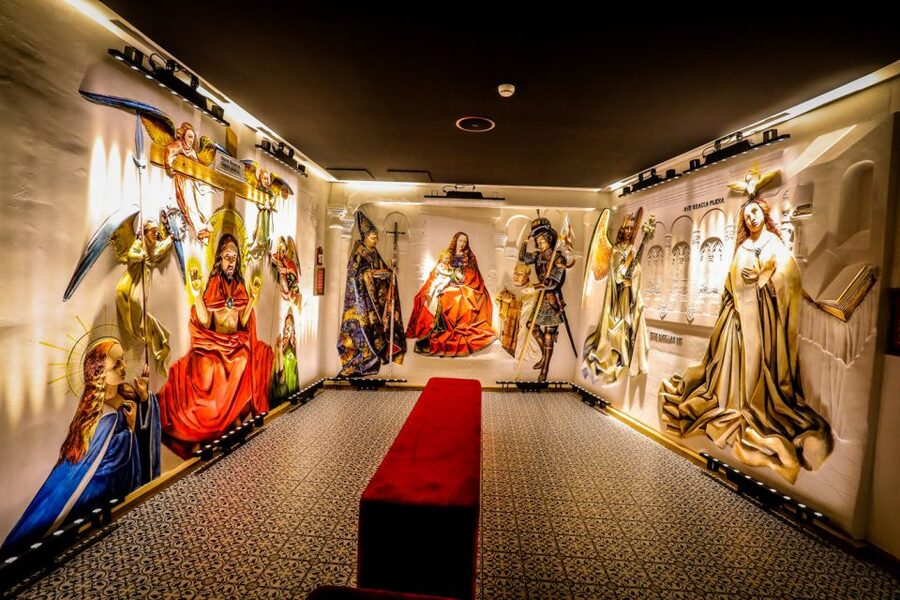
Musea Sculpta takes famous Flemish paintings and turns selected details into monumental wall sculptures. In a 265-metre gallery, you can meet Bosch’s Garden of Earthly Delights, Memling’s Last Judgement, and the van Eyck brothers’ Adoration of the Mystic Lamb in a form that lets you study the figures, creatures, and symbols from a new angle.
I like the excellent audio guide, which helps explain the beliefs and small details behind each scene, and I like the relaxed pace. You can stop on the sofas in every room, then rest in a courtyard garden with one of the museum’s nicest views.
The main caution is subject matter. These works focus heavily on Jesus, Christian stories, and medieval religious ideas, so anyone expecting a broad survey of Flemish art may find the museum narrower than expected. There are also fewer traditional reading panels than you might want.
In This Review
- Key points at a glance
- Entering De Pelikaan in central Bruges
- Why plaster changes the way you see the paintings
- Bosch’s strange and memorable Garden of Earthly Delights
- Memling’s Last Judgement in three dimensions
- The Adoration of the Mystic Lamb up close
- What the 265-metre route feels like
- The audio guide does the heavy lifting
- A courtyard pause with a view
- Is the $11 ticket good value?
- Access, timing, and practical points
- Who will enjoy Musea Sculpta most?
- Should you book this Bruges museum?
- FAQ
- Where is Musea Sculpta located?
- What artworks can I see at Musea Sculpta?
- What are the sculptures made from?
- How long is the museum gallery?
- Is an audio guide included?
- Is Musea Sculpta wheelchair accessible?
- Can I relax during the visit?
- What time should I arrive?
- Can I cancel the booking?
Key points at a glance
- Three major paintings in relief: See selected sections of works by Bosch, Memling, and the van Eyck brothers recreated in gypsum.
- 22 tons of gypsum: International sculptors from several countries made the 700 square metres of monumental sculpture.
- A 265-metre gallery: The long indoor route gives you plenty of time to examine details without rushing.
- Strong audio commentary: Choose English, Dutch, French, Spanish, or German for background on the paintings and medieval beliefs.
- A proper pause in the courtyard: Sofas, Wi-Fi, and a relaxing garden make this more than a quick walk-through.
- Easy historic-town location: Look for the large white building, brown gate, and pelican statue on the roof.
Entering De Pelikaan in central Bruges
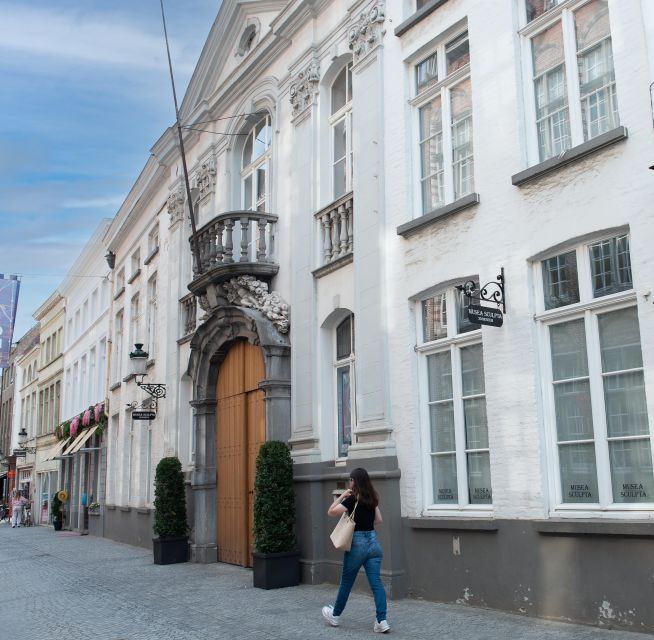
Musea Sculpta occupies the historic townhouse called De Pelikaan. The easiest way to recognize it is by the large white building, brown gate, and pelican statue perched on the roof.
You enter through an impressive gatehouse dating from 1703. That entrance sets the tone: this is not a modern black-box gallery hidden behind a plain facade. The old building and the unusual sculptures inside make the arrival part of the experience.
The museum is in Bruges, in Flanders, so it fits neatly into a day spent walking the historic center. You do not need to plan a separate full-day outing around it. The ticket is valid for one day, and you can check the available starting times when booking.
The host or greeter speaks Dutch or English. Once inside, the audio guide supplies the main interpretation in English, Dutch, French, Spanish, or German. That distinction matters if you prefer personal conversation: this is primarily a self-guided museum visit, not a long tour led by a named art historian.
A few more Bruges trips to weigh up
- Bruges: Frietmuseum Entry Ticket
★ 4.2 · 652 reviews - Bruges: Historium Bruges Story and VR Ticket
★ 4.5 · 595 reviews - Historium Story + VR Ticket
★ 4.5 · 369 reviews
Why plaster changes the way you see the paintings
A painting gives you color, paint handling, and a flat image. Musea Sculpta replaces that familiar surface with raised forms in gypsum. Figures, animals, objects, and architectural details come forward from the wall, creating a large-scale version of selected scenes.
That change is the museum’s main idea, and it is more useful than it may sound. Many Flemish paintings reward close looking, but their details can be hard to notice in a reproduction or crowded museum setting. Here, a tiny character or creature is made much larger, so you can inspect it as a physical form.
The scale also makes the work feel playful. A detail that might be easy to miss in the original becomes something you can actively search for. The audio guide points out small elements and explains what they meant in the religious culture of the period.
The sculpture itself is the focus, not a faithful replacement for seeing the original paintings. You will not get the full color, surface, or exact museum setting of Bosch, Memling, or the van Eycks. Think of Musea Sculpta as a fresh reading of selected details rather than a substitute for the originals.
Bosch’s strange and memorable Garden of Earthly Delights
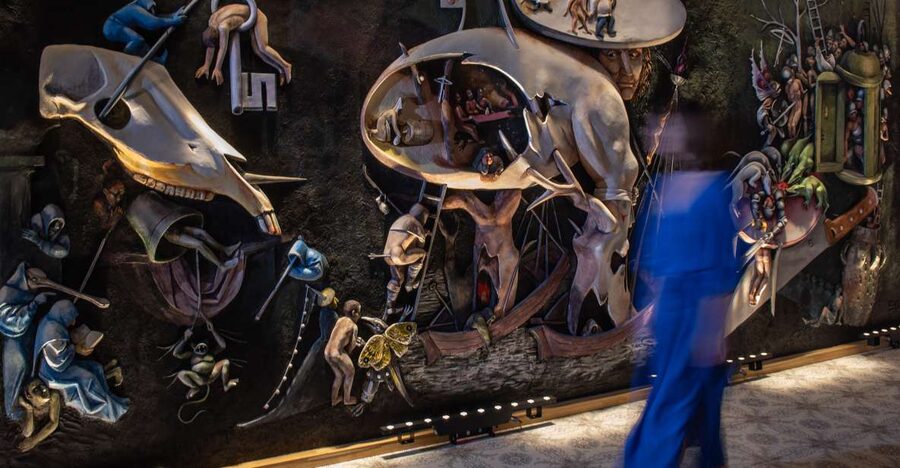
Jheronimus Bosch’s Garden of Earthly Delights is a natural centerpiece. The painting is famous for its strange creatures, crowded scenes, and unsettling mix of pleasure, sin, fantasy, and punishment. In relief, those odd figures become easier to isolate.
The audio guide helps you look beyond the general strangeness. It points to details and gives background on the beliefs of the time, which is important because Bosch’s imagery can otherwise feel like a collection of random medieval oddities.
You may enjoy the simple task of spotting specific creatures. One detail singled out in the commentary is a unicorn, a small reminder that the museum rewards patient looking. The point is not just to recognize the famous painting. It is to notice how much visual information Bosch packed into each section.
This room should suit you if you enjoy art that raises questions rather than offering a single easy message. It may be less satisfying if you want a clear wall text explaining every symbol. The audio guide carries much of that burden, so remember to use it.
Memling’s Last Judgement in three dimensions
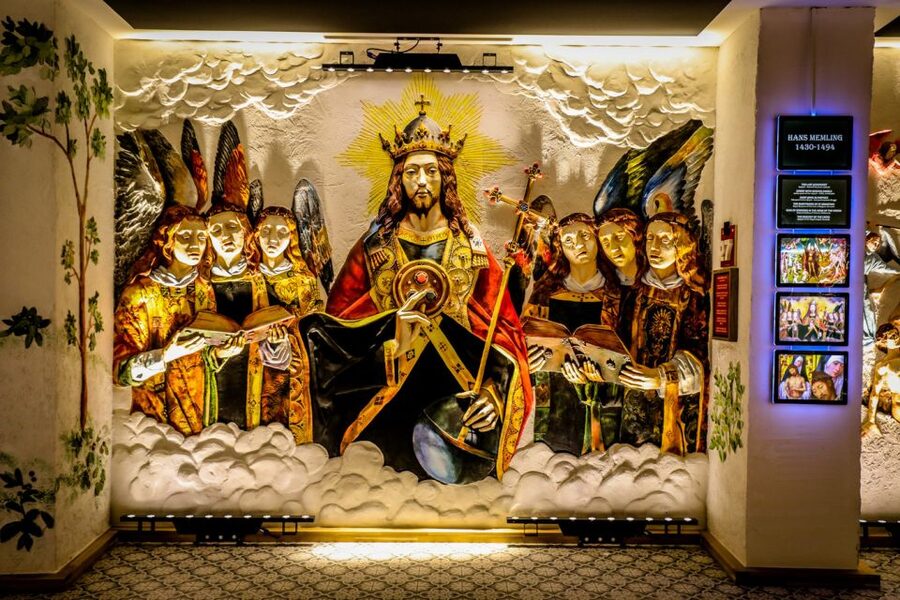
Hans Memling’s Last Judgement brings a more direct religious message. The subject is the final judgment of souls, a theme that shaped much medieval and Northern European art. The relief format gives the figures a strong physical presence and makes the arrangement easier to follow section by section.
You can use the audio guide to understand the religious ideas behind the scene rather than simply looking at a crowd of carved forms. That context is valuable because modern viewers may not share the visual references or church teaching that would have been familiar to people in Memling’s time.
This is also where the museum’s focus becomes clearest. Christian subjects are not a small part of the visit. They are the backbone of the collection. If you enjoy medieval religious art, that focus gives the experience a clear purpose. If you prefer portraits, landscapes, or secular scenes, you may find the range limited.
The sculptures are not presented as a rapid sequence of unrelated attractions. The gallery encourages you to move slowly, listen, and compare how the same kind of image works as paint and as relief.
Same old town, a completely different kind of day:
- Bruges: Small Group Boat Cruise and Guided Walking Tour
★ 4.8 · 4,102 reviews - Bruges: Walking Tour, Canal Boat Trip w/Beer Tasting Option
★ 4.4 · 2,759 reviews - Historical Walking Tour: Legends of Bruges
★ 5.0 · 2,541 reviews - Bruges: Choco-Story Chocolate Museum Guided Tour w/Tastings
★ 4.2 · 1,379 reviews
The Adoration of the Mystic Lamb up close
The van Eyck brothers’ Adoration of the Mystic Lamb is one of the key works associated with Bruges and Flemish painting. At Musea Sculpta, you can see selected portions recreated in relief for the first time in this form.
The subject is full of religious symbols and figures, and the audio guide helps you understand what you are seeing. You may find the relief especially useful here because the composition contains many small elements that can blend together when viewed as a distant panel or printed image.
The museum does not turn you into an expert in one visit, nor does it provide every detail of the original work. What it does give you is a different way to examine the composition. The raised surface makes you look at bodies, objects, and gestures as separate physical forms.
If you are visiting Bruges because of the van Eycks, this stop gives you an extra layer of context. It should be treated as an interpretive experience alongside the city’s other art sites, not as the only place to see the painting.
What the 265-metre route feels like
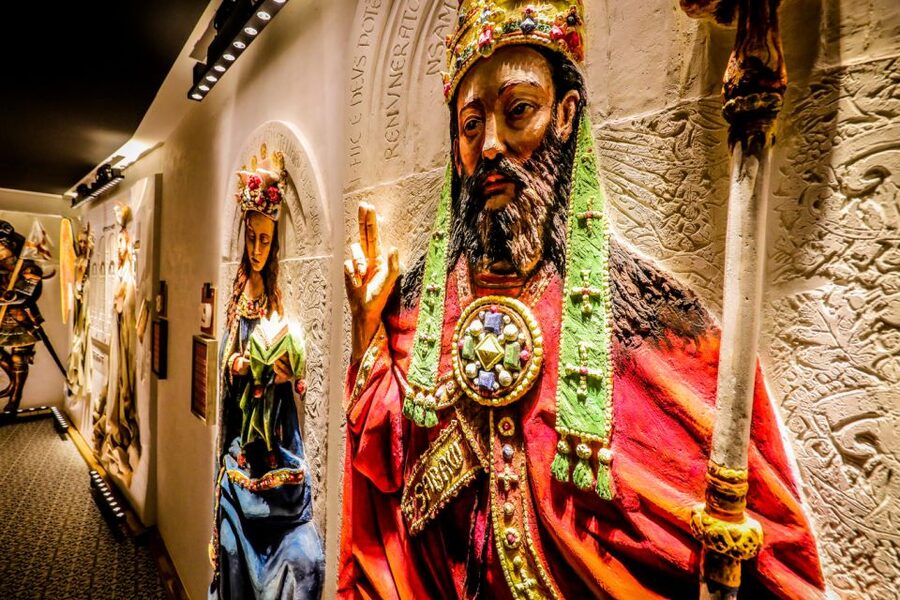
The gallery stretches for 265 metres, with about 700 square metres of monumental gypsum sculpture. The figures and scenes were made using 22 tons of gypsum by artists from America, Belgium, Germany, Italy, Ukraine, Poland, Russia, and Spain.
Those figures give you a sense of the physical labor behind the project. This is not a few framed plaster studies placed in a side room. The museum is built around a long sequence of large reliefs, with enough scale to make familiar paintings feel new.
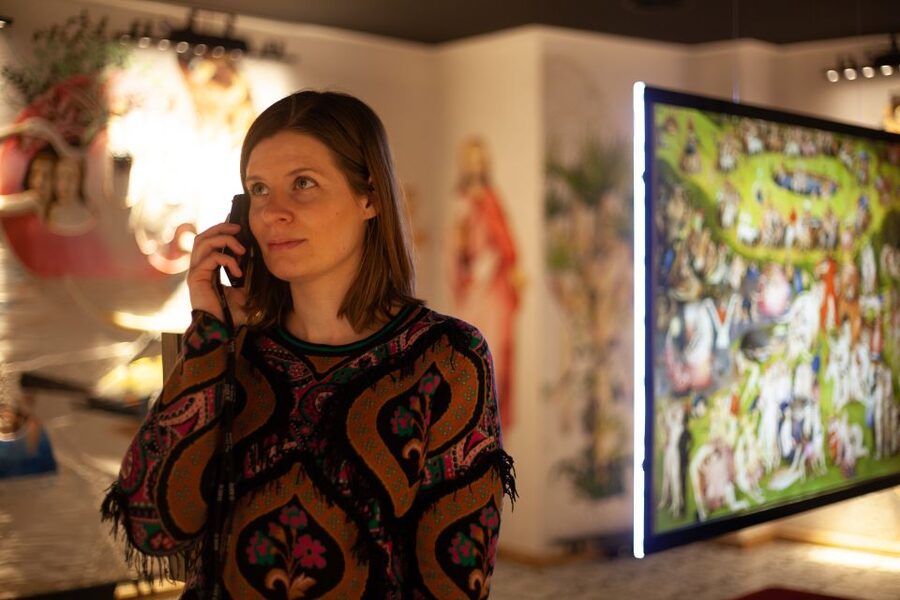
The route is self-paced. You can pause the audio, study a section, sit down, and continue when ready. Sofas are available in every room, which is a practical advantage for anyone who likes to take time with art or needs regular rests.
A one-day ticket gives you flexibility, but the visit itself is best approached as a focused museum stop. The information provided does not promise a fixed tour length, so allow enough time to listen and look instead of trying to squeeze it between several tightly scheduled activities.
The audio guide does the heavy lifting
The audio guide is central to the experience. Without it, the sculptures may still be visually striking, but you would lose much of the explanation about the paintings, symbols, and beliefs of the period.
I would choose the language you understand best and listen at an unhurried pace. The available languages are English, Dutch, French, Spanish, and German. The guide is particularly helpful for Bosch, where the strange figures can invite guesswork, and for the religious works, where historical context shapes the meaning.
Do not expect a personal guide named in advance. The host or greeter languages are Dutch and English, while the main interpretation comes through the recorded guide.
The museum has fewer traditional reading boards than some art museums. If you prefer to read long labels and build your own interpretation from written material, that may be a drawback. If you like having information delivered as you move from room to room, the audio format works well.
A courtyard pause with a view
The courtyard garden gives the visit a welcome change of pace. You can sit, relax, have a drink, and look out from what the museum describes as one of its nicest views.
That pause matters because the subject matter can be intense. Bosch’s strange visions, Memling’s judgment scene, and the van Eycks’ religious imagery demand concentration. A quiet outdoor break lets you reset before continuing or finish the visit without feeling pushed out.
The garden is included with admission, as are the sofas in each room and Wi-Fi. These are small comforts, but they make the museum more workable for a mixed group. One person can take in every audio stop while another takes a break.
The garden should not be the only reason you book. It is an added benefit, not the central attraction. The sculptures and audio experience justify the visit, while the courtyard makes the pace more comfortable.
Is the $11 ticket good value?
At $11 per person, Musea Sculpta is priced as an affordable cultural stop rather than a major all-day attraction. The value comes from the unusual format. You are not paying simply to see reproductions on a wall. You are seeing a large-scale, labor-intensive interpretation made from 22 tons of gypsum.
The ticket also includes the audio guide, courtyard garden, seating, and Wi-Fi. For an art-focused visitor, that combination gives you more than a quick photo opportunity. You can spend time with three important works and receive background that helps make their details understandable.
The value is more limited if you want a large collection covering many periods and artists. The museum is focused on the Flemish primitives and on three principal works. Its Christian themes are strong, and one of the main works is filled with religious imagery.
I would call the price fair for a curious visitor who wants something different from a standard painting gallery. It is especially sensible if you enjoy unusual presentation methods, sculpture, or art that rewards close observation.
Access, timing, and practical points
Musea Sculpta is wheelchair accessible. The supplied information does not describe every doorway, restroom, or surface, so visitors with very specific mobility needs may want to confirm those details before booking.
You should arrive before 5 p.m. The ticket is valid for one day, but starting times depend on availability. Check the schedule before setting your Bruges walking plan.
Pets are not allowed. The activity includes free cancellation up to 24 hours in advance for a full refund, and you can reserve now and pay later if that option is offered during booking.
The location is easy to identify from the exterior clues: a large white building, brown gate, and pelican statue on the roof. Enter through the gatehouse from 1703 rather than searching for a modern museum entrance.
Who will enjoy Musea Sculpta most?
I would recommend this museum to you if you enjoy:
- Flemish painting and medieval religious art
- Bosch’s unusual creatures and symbolic scenes
- Sculpture, relief work, and unusual museum displays
- Audio-guided visits at your own speed
- A quiet cultural stop with seating and an outdoor garden
- An accessible attraction in Bruges
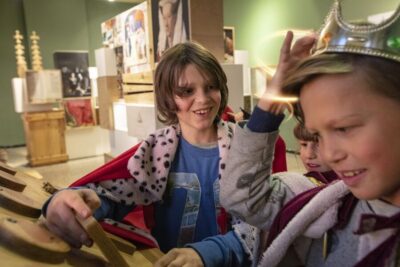
Families and mixed-interest groups may also find the large figures easier to engage with than a room of small, distant paintings. The hunt for details, including the unicorn, gives younger visitors something specific to look for.
You may want to skip it if you are looking for a broad collection, extensive written labels, or a museum centered on secular art. The strong Christian content is not a minor feature. It shapes much of what you see and hear.
Should you book this Bruges museum?
Book Musea Sculpta if you want an unusual, reasonably priced way to look at Flemish masterpieces. The reliefs make small details easier to notice, and the audio guide adds the historical and religious background that the sculptures alone cannot provide.
I would plan it as a relaxed addition to your Bruges day, not as a replacement for seeing the original paintings. Give yourself time to listen, use the sofas, and take a break in the courtyard. If you are comfortable with a museum devoted largely to Christian imagery, the visit offers a memorable change from ordinary gallery walls. If you want variety above all else, spend your $11 elsewhere.
FAQ
Where is Musea Sculpta located?
Musea Sculpta is located in the historic townhouse De Pelikaan in Bruges, Flanders, Belgium. Look for a large white building with a brown gate and a pelican statue on the roof.
What artworks can I see at Musea Sculpta?
You can see relief recreations of selected sections from Jheronimus Bosch’s Garden of Earthly Delights, Hans Memling’s Last Judgement, and the van Eyck brothers’ Adoration of the Mystic Lamb.
What are the sculptures made from?
The monumental wall sculptures are made from gypsum. The project used 22 tons of gypsum and covers about 700 square metres.
How long is the museum gallery?
The gallery is 265 metres long. The ticket is valid for one day, and you can check available starting times when booking.
Is an audio guide included?
Yes. An audio guide is included with admission and is available in English, Dutch, French, Spanish, and German.
Is Musea Sculpta wheelchair accessible?
Yes. Musea Sculpta is wheelchair accessible.
Can I relax during the visit?
Yes. Sofas are available in every room, and the museum has a courtyard garden where you can take a break, relax, and have a drink.
What time should I arrive?
You should arrive before 5 p.m. Check the available starting times when booking.
Can I cancel the booking?
You can cancel up to 24 hours in advance for a full refund. A reserve now and pay later option is also available.
Just added around Bruges
- 2-Hour Private Walking Tour of Bruges★ 5.0 · 13 reviews
- The Waffles ‘n Coffee Breakfast in Bruges Centre★ 4.5 · 9 reviews
- Explore the Instaworthy Spots of Bruges with a Local★ 5.0 · 3 reviews
- 6 Hour Bruges Shore Excursion from Zeebrugge Cruise Port★ 4.5 · 23 reviews
- Ticket Expo Body Worlds in Bruges, Belgium★ 4.5 · 11 reviews
- Photo Tour “Jan van Eyck”★ 4.0 · 7 reviews
- Bruges Walking Tour with Audioguide on Your Smartphone★ 4.5 · 14 reviews
- Discover the secrets of Bruges by playing!★ 4.5 · 7 reviews
Tickets, compared.
Atomium Entry Ticket with Design Museum Ticket
Read our review →

Browse the lists this tour appears in