
Reviewed · WALKING TOURS
Bruges Walking Tour
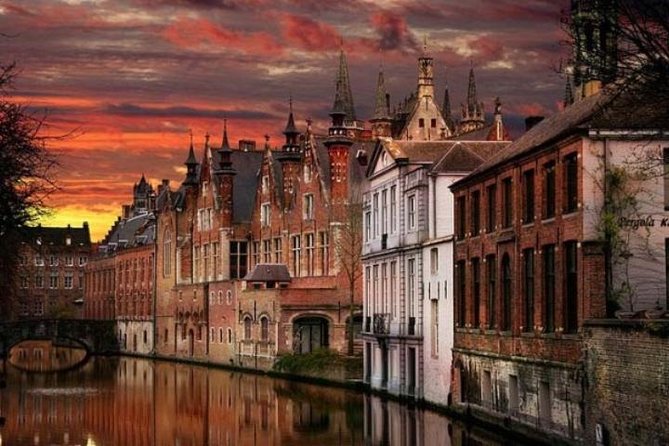
Bruges reveals itself best on foot, and this tour gives you a useful first sweep of the old center, from romantic Minnewater Lake to the grand Markt. Along the way, you get medieval legends, chocolate advice, beer history, and clear pointers on where to eat and shop.
I like the stop at Chocolalino, where you taste artisan chocolate and learn how to spot handmade pieces. I also like the guides’ storytelling. Maria, Julian, Diego, Louis, Angie, Bruno, and others have been praised for bringing the city’s buildings and odd little tales to life.
The main drawback is the meeting point. You begin at Bruges railway station, about a mile from the main sights, so the tour includes extra walking before reaching the old center. Some groups also found guides hard to hear in rain or crowded streets, and the pace can feel brisk.
In This Review
- Key points to know before you book
- Starting at Minnewater instead of the postcard center
- Minnewater Lake and the Begijnhof
- Chocolate at Chocolalino
- Walplein and the story of Bruges beer
- Medieval houses on Rue de l’Étuve
- Saint John’s Hospital and the Church of Our Lady
- Gruuthuse and the Boniface Bridge
- Rozenhoedkaai and Tanners Square
- Burg Square and the Markt finale
- Guide style, pace, and hearing the stories
- Is $26.43 a fair price?
- Who should book this Bruges walk?
- My verdict on the Bruges Walking Tour
- FAQ
- Where does the Bruges walking tour start?
- Where does the tour end?
- How long does the walking tour last?
- What language is the tour offered in?
- What is included in the price?
- Are meals and drinks included?
- Is chocolate tasting included?
- Do I need to bring headphones?
- How many people can join the tour?
- Can I cancel for a full refund?
Key points to know before you book
- A station-to-center route: The tour starts at Carrefour Express Bruges Station and ends at Markt, making the walk useful for first-time orientation but adding distance.
- Chocolate with practical advice: At Chocolalino, you taste artisan chocolate and learn how handmade sweets differ from industrial products.
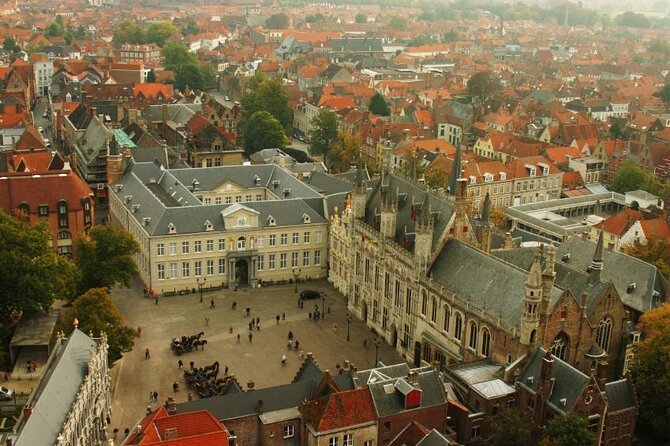
- A full old-town sweep: The route includes Minnewater, the Begijnhof, Walplein, Saint John’s Hospital, Burg Square, Rozenhoedkaai, and the Markt.
- Stories matter here: Guides use legends, local history, humor, and practical food and shopping tips rather than simply naming buildings.
- Headsets may be used: Bruges tourist rules sometimes require radios and headphones. Bring your own headphones or pay €1 for a pair.
- Good value at $26.43: For a roughly two-hour English tour, the price is fair if you want an overview before exploring alone.
Starting at Minnewater instead of the postcard center
The meeting point is Carrefour Express Bruges Station on Hendrik Brugmansstraat, beside the railway station. This is easy to locate if you arrive by train, but it is not the old-town heart most people picture when booking a Bruges walk.
That location shapes the experience. You do not begin beside the Markt or Rozenhoedkaai. Instead, you walk toward the historic center, with Minnewater Lake as the first planned sight. The approach gives you time to settle into the city, but it also means more pavement under your feet.
If you have limited mobility, an injury, or a tight schedule, note this extra distance before booking. The full route covers a lot of ground, and one person described it plainly as a lot of walking. Comfortable shoes are a must.
The tour is listed at about two hours, though the provider notes that it often runs closer to two and a half hours depending on the guide and group. The group limit is stated as 24 people. Still, some past bookings raised concerns about larger-than-expected groups, so do not assume an intimate walk every time.
A few more Bruges trips to weigh up
- Bruges: Small Group Boat Cruise and Guided Walking Tour
★ 4.8 · 4,102 reviews - Bruges: Walking Tour, Canal Boat Trip w/Beer Tasting Option
★ 4.4 · 2,759 reviews - Historical Walking Tour: Legends of Bruges
★ 5.0 · 2,541 reviews
Minnewater Lake and the Begijnhof
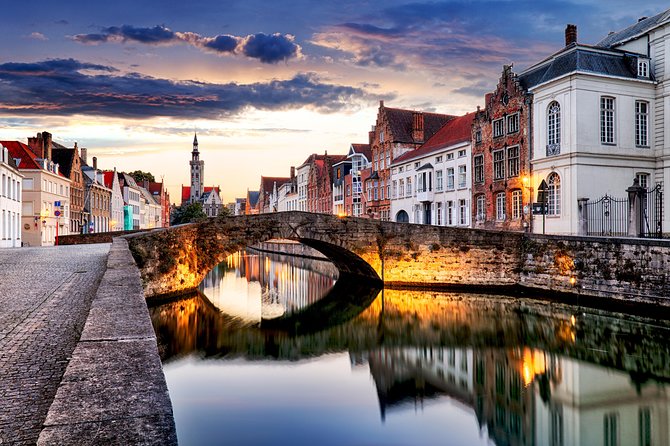
Minnewater Lake, often called the Lake of Love, is a gentle opening. The water, bridge, and surrounding scenery give your guide a pleasing backdrop for Bruges’ early story and the romantic legend tied to the lake.
The stop itself is short, about five minutes, so think of it as an introduction rather than a long pause. You will have a chance for photos, but the real value is getting a first sense of Bruges as a city of canals, bridges, stories, and carefully preserved streets.
From there, the route reaches the Begijnhof, founded in 1245. This quiet enclosure recalls the beguines, a remarkable community of women who lived a religious life without joining a traditional convent.
The guide’s explanation helps you read the place as more than a pretty courtyard. Allow about ten minutes here. The setting is calmer than the major squares, and the contrast is useful: Bruges was not only a city of merchants and grand civic buildings, but also a place shaped by working and religious communities.
Chocolate at Chocolalino
The chocolate stop at Chocolalino lasts about seven minutes, but it adds something that many city walks miss: a taste of local craft tied to a practical buying lesson.
You sample artisan chocolates in one of the few certified artisan shops mentioned for the tour. Your guide explains how to tell handmade chocolate from industrial chocolate, then offers advice on which shops are worth considering later. Tour members also receive exclusive discounts in chocolate shops around Bruges.
This is not a full food tour, and food and drinks beyond the included tasting are not covered. Still, the stop has real value if you plan to buy chocolate. Bruges has plenty of attractive chocolate counters, and a quick explanation about production can help you avoid choosing only by packaging or window display.
I would pay attention to the guide’s shopping tips and save your purchases for after the walk. The tour ends at Markt, where you receive more advice about traditional chocolate shops.
Walplein and the story of Bruges beer
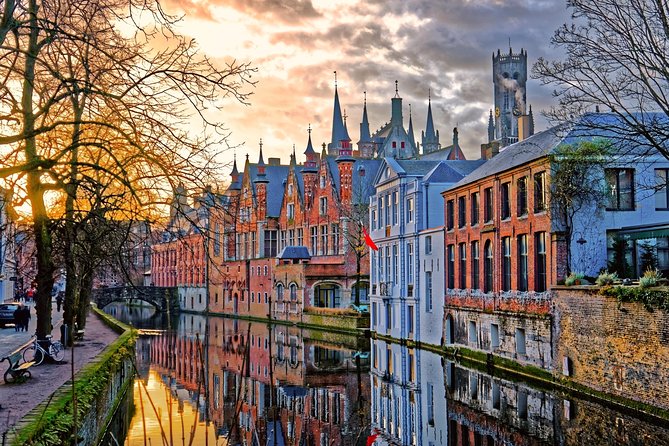
Walplein brings beer into the picture. The square provides a place for your guide to explain how beer fits into Bruges’ past and local culture.
Again, the formal stop is short, around five minutes. Do not expect a brewery visit or a tasting, since neither is included. Instead, treat this as useful background for later drinks. The guide can point you toward places to eat and drink, but your own meal and beer are extra.
The value here comes from linking the streets and buildings to daily life. A walking tour works best when it explains not just what a place looks like, but how people used it. Walplein gives the route that wider angle before it moves back to architecture.
Same old town, a completely different kind of day:
- Bruges: Choco-Story Chocolate Museum Guided Tour w/Tastings
★ 4.2 · 1,379 reviews - From Bruges: Great War Flanders Fields Minibus Tour w/ Lunch
★ 4.9 · 1,257 reviews - Bruges: Guided Rickshaw Tour
★ 4.9 · 1,199 reviews - Round-Trip Shuttle Service from Zeebrugge to Bruges
★ 4.0 · 1,143 reviews
Medieval houses on Rue de l’Étuve
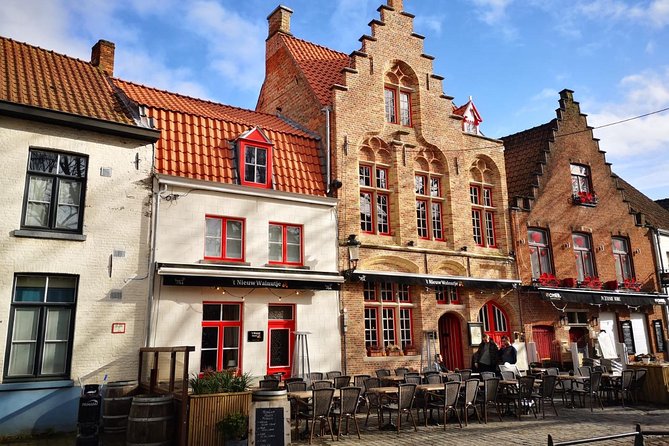
On Rue de l’Étuve, your guide shows you how to identify original medieval houses. This is one of the most useful skills on the walk.
Bruges can feel like a picture book, but a quick glance does not always tell you which buildings retain medieval features and which have been altered or rebuilt. A guide can point out details you might otherwise pass without noticing.
The stop takes about five minutes, so keep your eyes up and your camera ready. You are not touring the interiors. The lesson is about reading the street itself, which makes independent wandering afterward more rewarding.
The route also includes a small bridge for photographs. It is a brief pause, but Bruges is full of these compact views where water, old façades, and narrow passages come together. Your guide may keep the group moving, so take your photo promptly.
Saint John’s Hospital and the Church of Our Lady
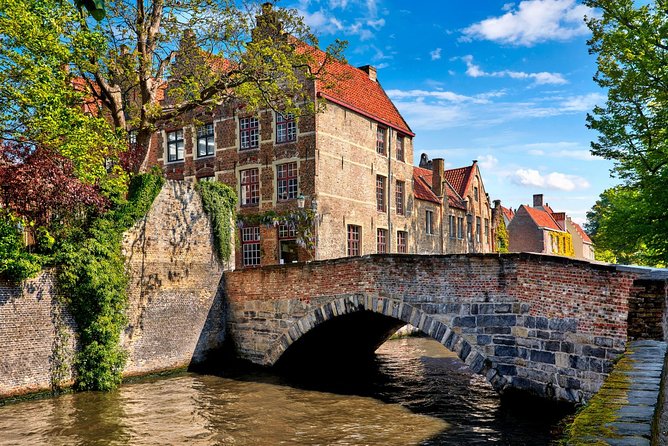
At Old Saint John’s Hospital, the guide explains how health care worked in medieval Bruges. The stop lasts around eight minutes and gives you a glimpse into the city’s social structure, not just its grand architecture.
The hospital is an important reminder that Bruges was a working city with systems for illness, poverty, and care. You hear about the medieval health system from outside, so this portion is more of an orientation than a museum visit.
The next stop is the Church of Our Lady, or Onze-Lieve-Vrouwekerk. From outside, the guide discusses the church and the white marble Madonna and Child by Michelangelo inside.
That distinction matters. The tour does not include an interior visit or admission to see the sculpture directly. You receive context from the street, then you can decide if you want to return independently. If Michelangelo’s work is high on your list, leave time after the walk to visit the church on your own.
Gruuthuse and the Boniface Bridge
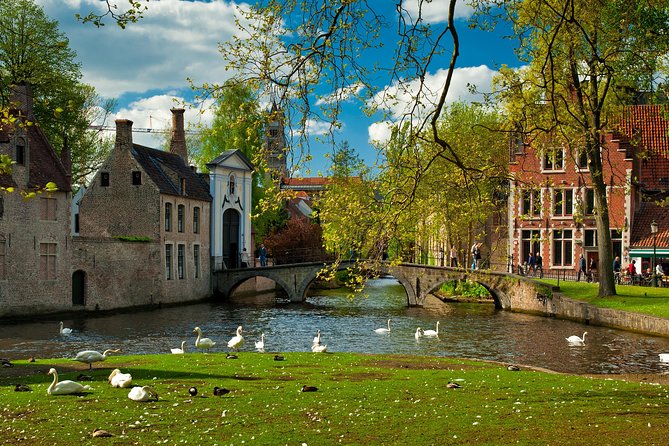
In front of the Gruuthusemuseum, the guide introduces the powerful Gruuthuse family and their role in Bruges between the seventeenth and eighteenth centuries. The stop lasts about five minutes.
The museum itself is not included, but the explanation gives you a reason to consider it later. The building and family story add a more personal layer to Bruges’ wealth. Instead of hearing only about anonymous merchants, you get a sense of how a leading family shaped the city.
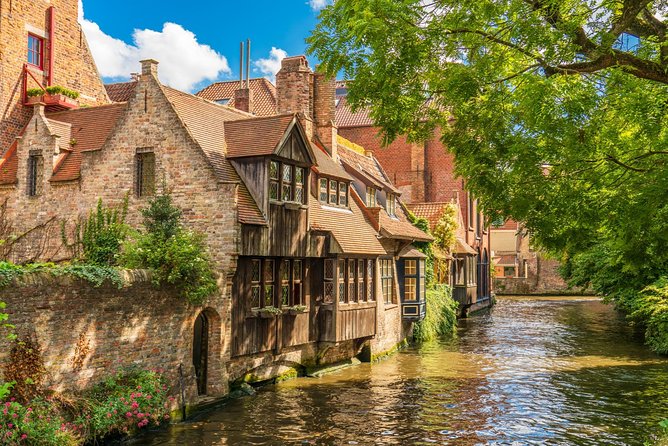
Boniface Bridge is one of the prettiest photo stops. Your guide tells the legend associated with it, then gives you time to take pictures. This is a place where the route’s mix of fact and folklore works well.
The bridge stop is brief, and it can be crowded. If you want a clean photograph, be ready when the group arrives. You may want to return later when you can wait for a quieter moment.
Rozenhoedkaai and Tanners Square
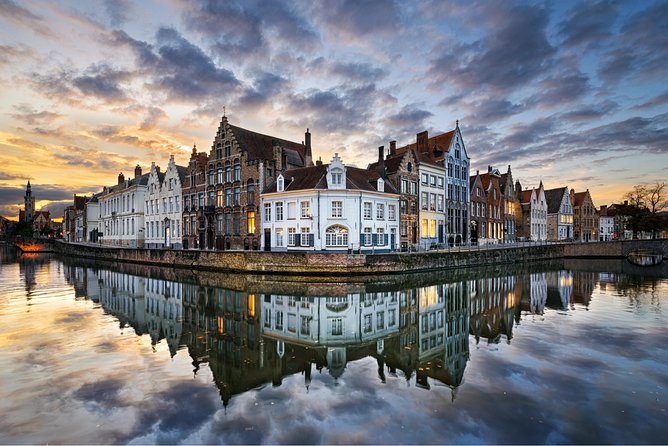
Quai du Rosaire, also called Rozenhoedkaai, is Bruges’ most photographed view. The name is often translated as the Pier of the Roses, and the guide explains the history connected with the spot.
This is the classic Bruges scene: water, old façades, and a narrow canal-side view that looks especially good in photographs. You receive time for pictures, but do not expect to linger for long. The tour has several more stops ahead.
Huidenvettersplein, or Tanners Square, shifts the focus from beauty to trade. Here, you learn how tanners worked in medieval Bruges. The square helps explain the smell, mess, and labor behind the polished medieval center.
That balance is one of the tour’s strengths. Bruges can seem almost too perfect, but its prosperity depended on practical trades. Tanners, brewers, merchants, hospital workers, and craftspeople all belonged to the city’s story.
Burg Square and the Markt finale
Burg Square is the civic centerpiece of the walk. The Gothic Town Hall, Old Court House, and Basilica of the Holy Blood face the square, giving your guide plenty to explain.
You spend about ten minutes here. The buildings represent different parts of Bruges’ public life: local government, justice, and religious devotion. Even if you later explore the interiors, hearing the basic story first helps you understand why this compact square matters.
The final stop is the Markt, or Grote Markt, with about 15 minutes devoted to the square. Your guide explains the buildings around it and offers advice on restaurants and shops selling traditional chocolate.
Ending here makes practical sense. You are left in the center, surrounded by places to continue your day. It also means you can use the food tips immediately, though you should treat them as suggestions rather than part of the tour price.
The Markt is also where the walk feels most complete. You have moved from the quieter southern side of Bruges through bridges, hospitals, churches, squares, canals, and trade streets. For a first visit, that broad route helps you decide where to spend your remaining time.
Guide style, pace, and hearing the stories
The strongest part of this experience is the guide-led storytelling. Maria has been singled out for warmth, humor, and practical lunch advice. Julian has been praised for passion and clear recommendations, while Diego, Louis, Angie, Bruno, Piet, Jamal, and others have also led well-received walks.
You should expect a guide who mixes dates and timelines with legends and jokes. That approach suits Bruges. The city can be read as a sequence of façades, but its stories make the route stick in your memory.
The main concern is sound. Busy streets, rain, and large groups can make it hard to hear. Bruges sometimes requires tour groups to use radios and headphones, and the equipment may not always feel consistent from one group to another.
Bring your own headphones if possible. If you do not have any, the provider offers them for €1. Stay close to the guide, especially when crossing busy streets or moving through crowded squares. A bright hat or clear meeting signal would help, but you should not rely on one being provided.
Some guides have walked quickly, while others have set a comfortable pace with time for photographs. Your experience may depend heavily on the individual guide, the weather, and the size of the group.
Is $26.43 a fair price?
At $26.43 per person, this is a reasonable price for an English guided introduction to Bruges. You are paying for a professional guide, a city walk, local tips, and the chocolate tasting. There are no separate admission charges at the listed stops because the tour views most sights from outside.
The price works best if you value orientation. In two to two and a half hours, you see much of the central sightseeing area without spending your first hours guessing which streets lead where. You also get restaurant and shopping suggestions that can save you from choosing a restaurant only because it sits beside the Markt.
It is less attractive if you want long interior visits, a meal, beer tasting, or detailed museum time. Those are not included. You will need to return to the Church of Our Lady, museums, or other sites independently if you want to go inside.
Compared with a private tour, the cost is low. Compared with walking alone, it buys you context, access to a guide’s local recommendations, and a useful route. For a first visit, that is solid value.
Who should book this Bruges walk?
I would choose this tour if you have one day in Bruges and want a clear overview before exploring alone. It also suits people who enjoy history with humor rather than a formal lecture.
It is a good match for:
- First-time visitors who want to see the main old-town sights
- People arriving by train who do not mind beginning at the station
- Food-focused visitors who want chocolate and restaurant suggestions
- Cruise or short-stay visitors seeking a broad introduction
- Independent explorers who want a map in their heads before wandering
Think twice if you dislike group walks, have difficulty covering long distances, or need guaranteed quiet conditions. The route is outdoors, the pace can vary, and the sound system may be important on crowded or rainy days.
Free cancellation is available up to 24 hours before the start time. Changes or cancellations inside that window are not refunded. The tour can also be changed or refunded if poor weather or an insufficient number of bookings causes the operator to cancel.
My verdict on the Bruges Walking Tour
Book it if you want the main sights, a few good legends, chocolate guidance, and a fast sense of how Bruges fits together. The guides are the reason to go, especially when you get someone like Maria, Julian, Diego, Louis, or Bruno, who can mix facts, humor, and useful advice.
Before paying, accept two conditions: the station meeting point adds walking, and a large group or noisy street can affect how well you hear. Bring comfortable shoes and headphones, stay near the guide, and plan extra time afterward for church interiors, museums, a boat ride, or a relaxed meal.
For $26.43, this is a sensible first look at Bruges, not a complete city experience. It gives you the framework. You decide how much longer to stay with the details.
FAQ
Where does the Bruges walking tour start?
It starts at Carrefour Express Bruges Station, Hendrik Brugmansstraat 6/0002, 8000 Brugge, Belgium.
Where does the tour end?
The tour ends at Markt, also called Grote Markt or Market Square, in central Bruges.
How long does the walking tour last?
It is described as lasting about two hours, though the provider notes that it may run closer to two and a half hours depending on the guide and group.
What language is the tour offered in?
The tour is offered in English.
What is included in the price?
The price includes a professional English-speaking guide, city tips, and the guided walking tour. The chocolate stop includes a tasting.
Are meals and drinks included?
No. Food and drinks are not included, but the guide can suggest places to eat and drink.
Is chocolate tasting included?
Yes. The route includes a tasting at Chocolalino, an artisan chocolate shop. You also receive advice on telling handmade chocolate from industrial chocolate.
Do I need to bring headphones?
Bruges tourist rules sometimes require radios with headphones. You can use your own headphones, or obtain a pair from the provider for €1.
How many people can join the tour?
The stated maximum is 24 people. Some past bookings raised concerns about larger groups, so group size may not always feel consistent.
Can I cancel for a full refund?
Yes, if you cancel at least 24 hours before the experience start time. Cancellations or changes made less than 24 hours before the start are not refunded.
Just added around Bruges
- 2-Hour Private Walking Tour of Bruges★ 5.0 · 13 reviews
- The Waffles ‘n Coffee Breakfast in Bruges Centre★ 4.5 · 9 reviews
- Explore the Instaworthy Spots of Bruges with a Local★ 5.0 · 3 reviews
- Photo Tour “Jan van Eyck”★ 4.0 · 7 reviews
- 6 Hour Bruges Shore Excursion from Zeebrugge Cruise Port★ 4.5 · 23 reviews
- Ticket Expo Body Worlds in Bruges, Belgium★ 4.5 · 11 reviews
- Bruges Walking Tour with Audioguide on Your Smartphone★ 4.5 · 14 reviews
- Discover the secrets of Bruges by playing!★ 4.5 · 7 reviews
Walking Tours, compared.
Walking Tour, Canal Boat Trip w/Beer Tasting Option
Read our review →

Historical Walking Tour with Chocolate & Waffle Tasting
Read our review →
Brussels Walking and Tasting Tour (Beers,Chocolates&Fries/Waffle)
Read our review →
Browse the lists this tour appears in