
Reviewed · BRUSSELS TOURS
Brussels, 1000 Years of Struggles
The Marolles is not just Brussels’ old working-class quarter. It is a neighborhood shaped by people pushing back, from the 1969 Battle of the Marolles to the strange-sounding Mattress War of 1989. This two-hour walk turns those conflicts into street-level stories, with stops at known sites and small alleys you could easily miss on your own.
I like the tour’s focus on ordinary people and social change, rather than another pass through Brussels’ grand buildings. I also like its playful tone, which keeps a serious subject from becoming a lecture. The main point to check is the price: the advertised rate is about $3.53, but one booking experience reported an extra payment at the end, so bring cash and ask about the arrangement before you start.
In This Review
- Key points about the Marolles struggle walk
- Why the Marolles tells Brussels’ story from the ground up
- The 1969 Battle of the Marolles
- The Mattress War of 1989
- Alleys, dead ends, and the parts you might miss
- A playful guide makes serious history easier to follow
- What the social history adds to a Brussels visit
- Is $3.53 a good value?
- Who will enjoy this two-hour walk?
- Practical details before you book
- Should you book Brussels, 1000 Years of Struggles?
- FAQ
- Where does the tour take place?
- How long does the tour last?
- What languages are available?
- What historical events are covered?
- Does the tour include a guide?
- Are food, drinks, or pickup included?
- Can I cancel the booking?
Key points about the Marolles struggle walk
- The 1969 Battle of the Marolles explains how residents fought to protect their neighborhood from major redevelopment.
- The 1989 Mattress War adds a memorable and unusual chapter to the district’s protest history.
- Small alleys and dead ends are part of the route, not just the main streets and landmarks.
- Simon has led at least one French-language tour, bringing an energetic and story-driven approach.
- English and French tours are available, with a walking time of about two hours.
- The low advertised price needs clarification, since an extra payment may be expected after the walk.
Why the Marolles tells Brussels’ story from the ground up
The Marolles gives you a different Brussels from the one found around the Grand Place. Here, the focus is on residents, housing, neighborhood identity, and the pressure that comes when city plans threaten an established community.
The name of the tour points to a thousand years of struggles, but you should not expect a full thousand-year chronology. The route uses older and more recent conflicts as a way to explain how the Marolles changed and why local resistance still matters.
That approach suits you if you like city history with a human scale. You are not simply looking at a building and memorizing its date. You are hearing why a street, block, or district became a point of tension.
I also appreciate the humor. Social movements, evictions, and gentrification can make for a heavy afternoon, but a playful guide can help you stay alert and remember the details. The experience aims to make the Marolles feel like a place where people made choices, argued, organized, and sometimes won.
Other Brussels days worth putting on the list:
- Brussels: Atomium Entry Ticket with Design Museum Ticket
★ 4.4 · 9,254 reviews - From Brussels: Guided Day Trip to Bruges and Ghent
★ 4.6 · 8,353 reviews - From Brussels: Bruges & Ghent Day Tour – 2 Fairytale Cities
★ 4.7 · 8,242 reviews
The 1969 Battle of the Marolles
The 1969 Battle of the Marolles is the main historical episode named for this experience. It centers on a neighborhood threatened by redevelopment and gives the tour its clearest example of residents resisting a plan imposed from outside.
The important value here is context. If you walked through the Marolles alone, you might see an older quarter with a mix of streets, shops, and lanes. A guide connects those physical surroundings to the question of who gets to decide what happens to a neighborhood.
You can expect the guide to use the district itself as evidence. The tour passes important places connected with the area’s story, then moves through less familiar passages. That makes the 1969 conflict easier to picture, even though the available details do not specify every stop or surviving structure.
Do not book this expecting a museum-style presentation with displays or indoor exhibits. The experience is a walking tour, and its strength depends on the guide’s storytelling and your attention to the streets around you.
The Mattress War of 1989
The Mattress War is the tour’s most memorable title. Even without knowing the full story in advance, the name suggests the kind of local tale that sticks in your mind long after the walk ends.
Its value is not only the odd name. This episode shows that neighborhood struggles can take unexpected forms. A city’s social history is not always made up of official meetings and famous leaders. It can also involve practical objects, public actions, and residents finding creative ways to make their position visible.
The tour presents this event alongside the 1969 Battle of the Marolles, so you get a sense of change over time. The two episodes belong to different moments, but both help explain the Marolles as a place where residents have pushed back against forces reshaping their homes.
I would pay close attention to the guide’s explanation of what changed between these struggles. The supplied information links the experience to gentrification, described as a social and economic shift caused by wealthier residents moving into a district. That is especially useful because it moves the tour beyond old conflicts and toward a question you can still see in many European cities.
Alleys, dead ends, and the parts you might miss
The route crosses some of the Marolles’ better-known places, but it also seeks out lesser-known alleys and dead ends. That detail matters. A walk limited to major streets can explain a neighborhood from a distance. Small side passages can make it feel more personal and enclosed.
You should expect the route to change pace as it moves between recognizable sites and quieter corners. The guide can use those contrasts to show how the district is put together, and why a redevelopment plan might affect more than a single building.
The information provided does not name each alley or promise specific monuments, so I would not plan your day around a fixed list of photo stops. Think of the route as a guided introduction to the Marolles rather than a checklist of attractions.
This is also why the two-hour length works well. You have enough time for several stories without turning the walk into an all-day history course. At the same time, two hours is not long enough to cover every period or social issue in Brussels. The focus stays on the Marolles and its conflicts.
Same old town, a completely different kind of day:
- Choco-Story Brussels: Chocolate Museum Entrance with Tasting
★ 4.3 · 4,883 reviews - Bruges and Ghent – Belgium’s Fairytale Cities – from Brussels
★ 4.0 · 4,809 reviews - Brussels: Hop-On Hop-Off Bus Tour
★ 4.0 · 4,016 reviews - Brussels: Entry Ticket to Mini-Europe
★ 4.5 · 2,870 reviews
A playful guide makes serious history easier to follow
The experience is designed to be funny and interactive. That can make a real difference on a tour about protests and social tension. A dry presentation might give you dates but lose the human details. A livelier guide can help you connect the story to the place beneath your feet.
Simon led the French-language visit described in the supplied information, and the account specifically points to his passion and engaging style. If you choose French, Simon may be the guide you meet, though guide assignments can change.
English and French are the stated tour languages. If you are comfortable in either, choose the one in which you can follow quick jokes, historical detail, and local references without strain. Since the tour is built around anecdotes, missing a sentence here and there could mean missing the point of a story.
The word interactive does not come with a detailed format, so do not assume a formal role-playing activity or a set of games. It more likely means questions, discussion, and direct engagement with the streets and stories. You will get the most from it if you take part instead of treating the guide as background audio.
What the social history adds to a Brussels visit
Many first visits to Brussels center on architecture, chocolate, beer, and major civic sights. Those are worthwhile, but they do not fully explain how the city works.
This tour adds the question of power. Who lives in a neighborhood? Who profits when property values rise? What happens when a city plan treats homes as obstacles? Those questions give the Marolles a place in the wider story of urban change.
I find that especially useful for anyone interested in gentrification. The tour does not present the term as an abstract economic idea. It ties the change to a real district and to the conflicts that helped shape its identity.
That does not mean the walk will settle every argument. A two-hour tour cannot give equal space to every side of a long social dispute. You should treat it as a focused interpretation of the Marolles, not a complete political history of Brussels.
Still, it can sharpen what you notice afterward. You may look at a renovated building, a busy street, or an older lane and think about the people who lived there before the area became fashionable. That is a useful result for a short city walk.
Is $3.53 a good value?
At about $3.53 per person, the advertised rate is unusually low for a guided two-hour walk. If that is the full amount, it offers an inexpensive way to get local context that would be hard to assemble from a guidebook alone.
But you should check the payment terms carefully. A verified booking experience in French reported that the guide required an additional payment at the end, on top of the roughly $3 price. The person had not expected this and did not have cash available.
I would bring cash and ask before the tour begins what the final cost will be. This is not a minor detail when you are comparing it with other paid walks. The low headline price may reflect a pay-what-you-want or tip-based arrangement, but the supplied information does not state the exact extra amount or whether it applies to every departure.
Even with an additional payment, the tour can still be good value if the guide delivers strong local stories and takes you to corners you would not find alone. Just make the decision with the real cost in mind, not only the $3.53 figure.
Food, drinks, and pickup are not included. Plan to meet the guide in the Marolles, with the exact meeting point depending on the option you book. Since no pickup is provided, allow time to reach the starting place and confirm it before setting out.
Who will enjoy this two-hour walk?
I would choose this experience if you like:
- Social history more than formal art or architecture tours
- Neighborhood change, housing issues, and gentrification
- Local anecdotes and unusual protest stories
- Walking through side streets instead of staying on major routes
- A guide who uses humor and audience interaction
- A short activity that fits around other Brussels plans
It may not suit you if you want a full introduction to Brussels, a detailed architectural tour, or a route with every stop listed in advance. The experience is narrow by design. Its subject is the Marolles and its struggles.
Families and casual sightseers could enjoy the Mattress War story and the lighter tone, but the tour’s main themes are social conflict and urban change. If those topics do not interest you, the anecdotes may not carry the full two hours.
The walk is also a better fit early in your visit than at the very end. Take it while you still have time to return to the district or explore Brussels with its stories in mind. The tour can give later sightseeing more meaning.
Practical details before you book
The activity lasts two hours, and starting times vary, so check availability for the date you want. English and French are offered, and the experience includes a live guide rather than a recorded commentary.
The meeting point may change according to the option booked. Read that information closely, since pickup is not included and arriving at the wrong part of the Marolles could cause needless stress.
You can cancel up to 24 hours before the tour for a full refund, and the reserve-now, pay-later option lets you hold a place without paying immediately. Those terms are useful if your Brussels schedule is still shifting.
The public rating is 4.4 from four reviews. That is a positive signal, but it is a small sample, so I would put more weight on the clear strengths of the format: a focused route, unusual local stories, and an energetic approach.
Should you book Brussels, 1000 Years of Struggles?
Book it if you want to understand the Marolles through its people and protests, not just its appearance. The 1969 Battle of the Marolles, the 1989 Mattress War, and the discussion of gentrification give the walk a clear purpose.
I especially like the mix of major neighborhood sites with alleys and dead ends. That combination can show you both the public face of the district and the smaller spaces that make its story feel local.
Before paying, confirm the total price and bring cash because an extra payment may be expected at the end. If you are comfortable with that uncertainty and enjoy social history told with humor, this is a smart, low-cost addition to a Brussels visit. If you want a broad city overview or a tightly itemized sightseeing route, choose a different tour.
FAQ
Where does the tour take place?
The tour takes place in the Marolles district of Brussels, in the Brussels Capital Region of Belgium.
How long does the tour last?
The guided walking tour lasts two hours.
What languages are available?
The tour is offered in English and French.
What historical events are covered?
The tour focuses on social struggles in the Marolles, including the 1969 Battle of the Marolles and the 1989 Mattress War.
Does the tour include a guide?
Yes. A live guided tour is included. Simon led the French-language visit described in the supplied information.
Are food, drinks, or pickup included?
No. Food, drinks, and pickup are not included.
Can I cancel the booking?
Yes. You can cancel up to 24 hours in advance for a full refund. You can also reserve now and pay later, according to the booking terms.
Just added around Brussels
- Standard vehicle from Brussels airport to city of Antwerp★ 5.0 · 4 reviews
- Private transfer from BRU Airport to Brussels city with luxury limousine 3 pax★ 4.5 · 8 reviews
- Luxury vehicle from Brussels airport to the city of Brussels★ 4.0 · 5 reviews
- Transfer Brussels Airport –> City MB E Class 1-3 PAX (ONE WAY)★ 5.0 · 6 reviews
- PRIVATE MPV TRANSFER FROM/TO BRUSSELS AIRPORT (Max 6 pax) ONE-WAY★ 5.0 · 4 reviews
- Transfer Brussels Airport (BRU) –> City Center 7 PAX (ONE WAY)★ 5.0 · 7 reviews
- Transfer Brussels Airport –> Brussels MB V Class 7 PAX (ONE WAY)★ 5.0 · 4 reviews
- Brussels: City Walk with Audioguide in 7 Languages on your Phone★ 3.5 · 4 reviews
Brussels Tours, compared.

Atomium Entry Ticket with Design Museum Ticket
Read our review →

Choco-Story Brussels: Chocolate Museum Entrance with Tasting
Read our review →
Bruges and Ghent – Belgium’s Fairytale Cities – from Brussels
Read our review →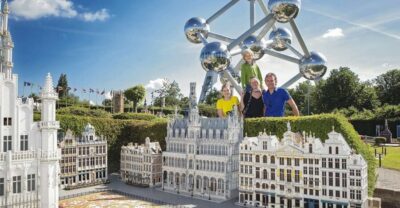

Belgian Chocolate Making Workshop with Tastings
Read our review →
Browse the lists this tour appears in