
Reviewed · GUIDED
Brussels: Fall and Rise of Art-Nouveau Guided Tour
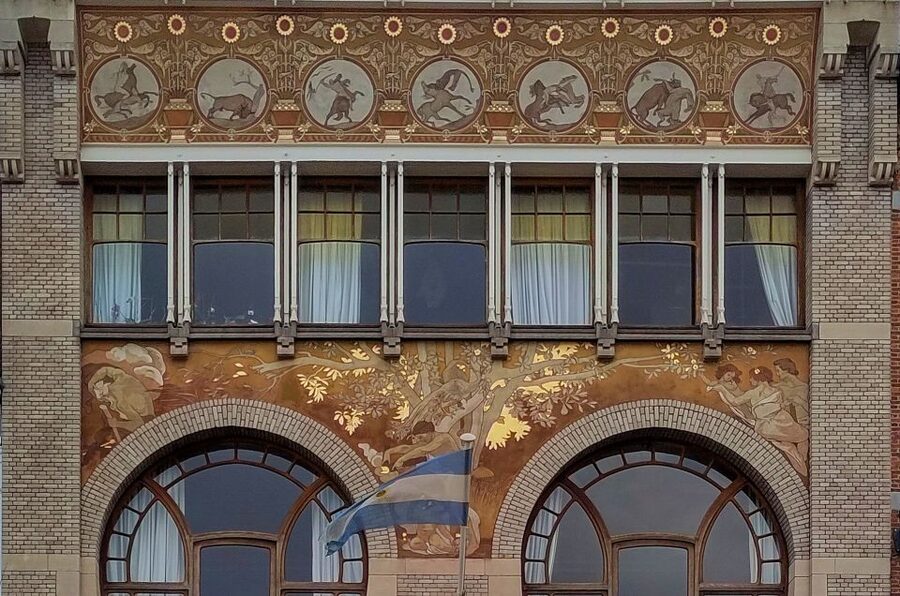
Brussels’ Art Nouveau is best read from the pavement, one façade at a time. This 150-minute walk through Saint-Gilles and Ixelles explains the design tricks behind the curved lines, decorated walls, and unusual finishes, then connects them to the work of architects such as Victor Horta. Sgraffito is a particular highlight, since it is easy to miss without a guide.
I like the manageable three-kilometer route and the focus on details rather than a rushed parade of famous buildings. I also like that the tour includes the remains of Horta’s Maison du Peuple, giving you a glimpse of a lost landmark rather than only polished façades. The main consideration is language: this is a Spanish-language tour, and rain can make a long outdoor walk less comfortable.
In This Review
- Key points at a glance
- Why Saint-Gilles and Ixelles are the right places for Art Nouveau
- Meeting at Horta Metro station
- Learning to read an Art Nouveau façade
- Sgraffito, fresco, and the details most people miss
- Following the route through Saint-Gilles and Ixelles
- Victor Horta’s Maison du Peuple remains
- What the guide adds to the experience
- Is $17 a fair price for 150 minutes?
- Who should book this Brussels walk?
- Should you book the Fall and Rise of Art Nouveau tour?
- FAQ
- Where does the Art Nouveau tour meet?
- How long does the tour last?
- How far do you walk?
- Which areas of Brussels does the tour visit?
- What language is the tour conducted in?
- Is the tour wheelchair accessible?
- What should I bring if it rains?
- Can I cancel the tour and receive a refund?
Key points at a glance
- A three-kilometer Art Nouveau route: Walk through the Saint-Gilles and Ixelles areas, two Brussels communes with many late nineteenth-century buildings.
- Sgraffito explained on the street: Learn how this layered, scratched wall decoration differs from fresco painting.
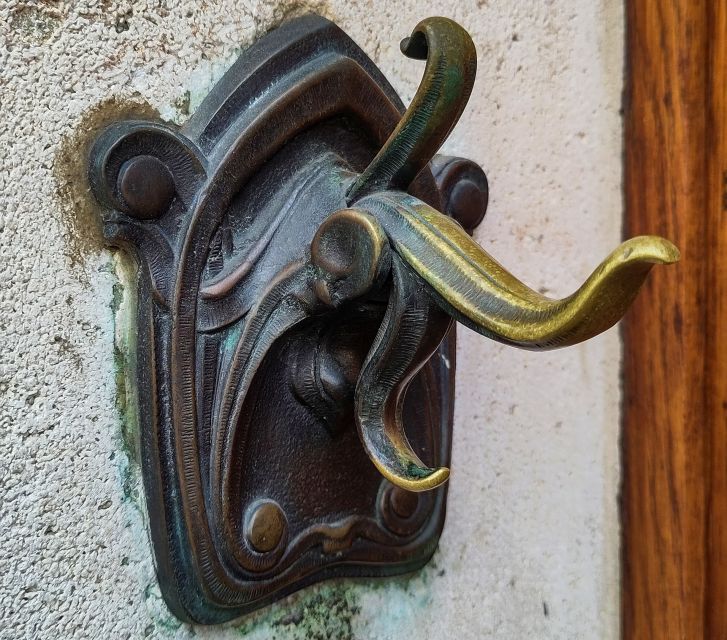
- Victor Horta’s Maison du Peuple: See the historical remains of a building linked to one of Belgium’s most important Art Nouveau architects.
- A Spanish-speaking guide: The tour is conducted in Spanish, with Samuel named as a guide on one departure. The guide may vary.
- Useful visual material: Additional audiovisual information helps make architectural details easier to follow.
- Good value at $17: For 150 minutes of guided walking, the price is modest, provided you are happy to walk outdoors in changing weather.
Why Saint-Gilles and Ixelles are the right places for Art Nouveau
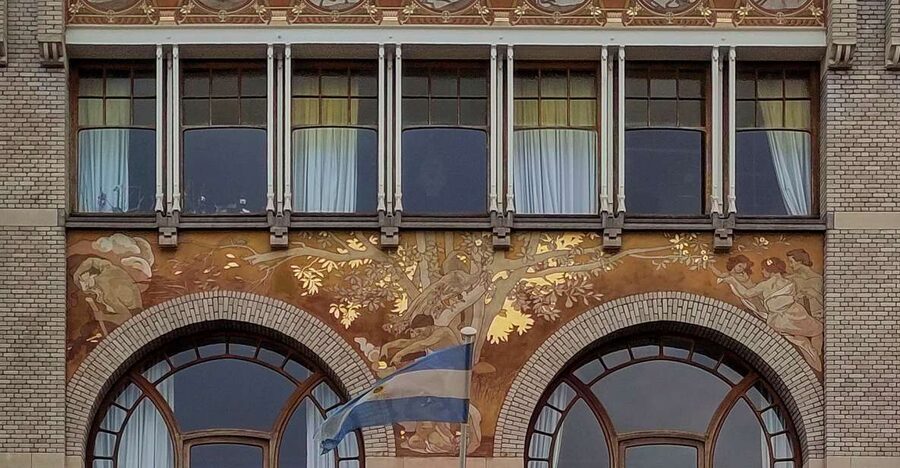
Brussels has 19 communes, or municipal areas, and Saint-Gilles and Ixelles contain some of the city’s strongest Art Nouveau material. These districts are especially useful for a walking tour because the architecture is spread along ordinary urban streets, not gathered into one enclosed museum.
That setting matters. You are not only looking at a single grand building. You are seeing how Art Nouveau entered the daily city: doorways, upper-floor windows, balconies, façades, decorative panels, and complete houses designed as a single work.
I find this kind of route more revealing than a short photo stop. You can compare one façade with the next and begin to notice the choices that define the period. The guide’s job is to point out what your eye might otherwise skip, especially decoration placed high above street level.
The walk takes you around the outskirts of Brussels rather than through the busiest central sights. That means the experience is focused and local in character, but it also means you should not book it expecting a general introduction to all of Brussels. This is an architecture walk first.
A few more Brussels trips to weigh up
- From Brussels: Guided Day Trip to Bruges and Ghent
★ 4.6 · 8,353 reviews - From Brussels: Full-Day Antwerp and Ghent Guided Tour
★ 4.6 · 1,019 reviews - Brussels 3-Hour Guided Art Nouveau Tour
★ 4.0 · 282 reviews
Meeting at Horta Metro station
The meeting point is next to Horta Metro station, served by lines 3 and 4, on Chaussée de Waterloo near number 187. Look for a guide wearing a Curiositas Mundus badge.
This is a practical starting point because you can reach it by metro, and the meeting instructions give you a specific street and number rather than only a neighborhood name. Still, allow enough time to locate the exact spot. A busy street and a large station area are not ideal places for a last-minute search.
The tour provider also asks you to join its Curiositas Mundus Telegram channel for extra content during the walk. If you use Telegram, this may add useful visual or background material. It is not the central reason to book, but it can help you keep track of details after the tour.
The guide speaks Spanish. That is important to settle before booking. If you understand Spanish comfortably, the tour should give you a more natural chance to ask questions and follow architectural explanations. If you do not, the language will be a clear barrier.
One past departure identified the guide as Samuel. His approach, as reflected in the available feedback, included clear explanations, patience with questions, and strong knowledge of Art Nouveau. Because guide assignments can change, treat Samuel’s name as useful background, not a guarantee that he will lead your departure.
Learning to read an Art Nouveau façade
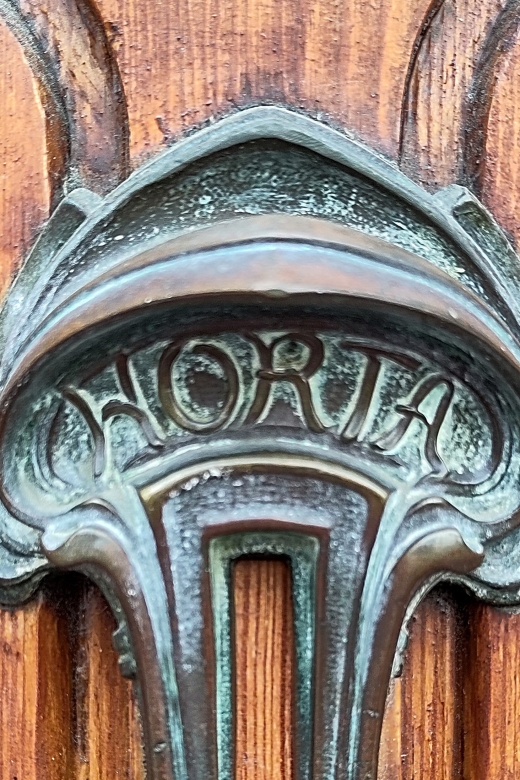
The first useful shift on this walk is learning that Art Nouveau is not just a collection of pretty curves. The style brought design into many parts of a building, joining architecture with decoration.
Your guide introduces the techniques used most often in Art Nouveau. The value is practical: once you understand what to look for, the streets become easier to read. A line around a doorway, a colored wall panel, or a repeated plant form can stop looking like random ornament.
The tour is especially well suited to people who enjoy close observation. You will spend time looking at façades rather than entering interiors, so expect the quality of the explanation to shape much of the experience. The guide’s words give purpose to the walk, while the buildings provide the examples.
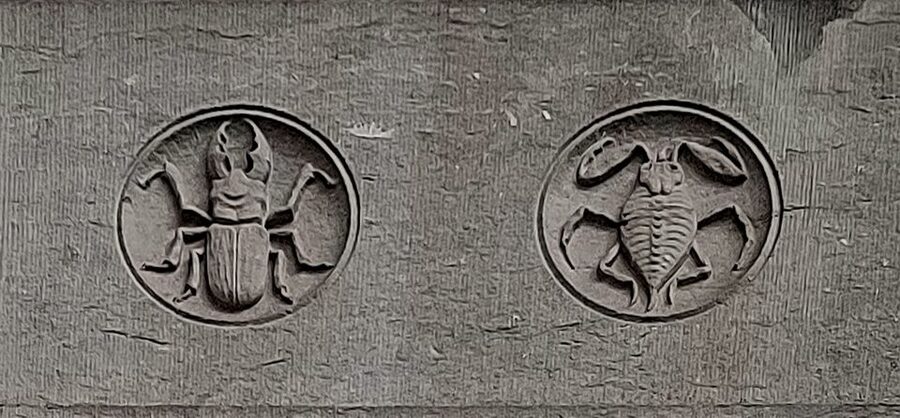
The visual material included with the tour should help when a feature is difficult to see from street level. Art Nouveau details can sit several floors above you, and a small image or comparison can make the design clearer than a quick glance upward.
Do not expect every building to be presented as a major monument. Part of the pleasure here is seeing how the style appears across a neighborhood. Some stops may be striking at first glance, while others become interesting only after the guide explains the materials or design method.
Sgraffito, fresco, and the details most people miss
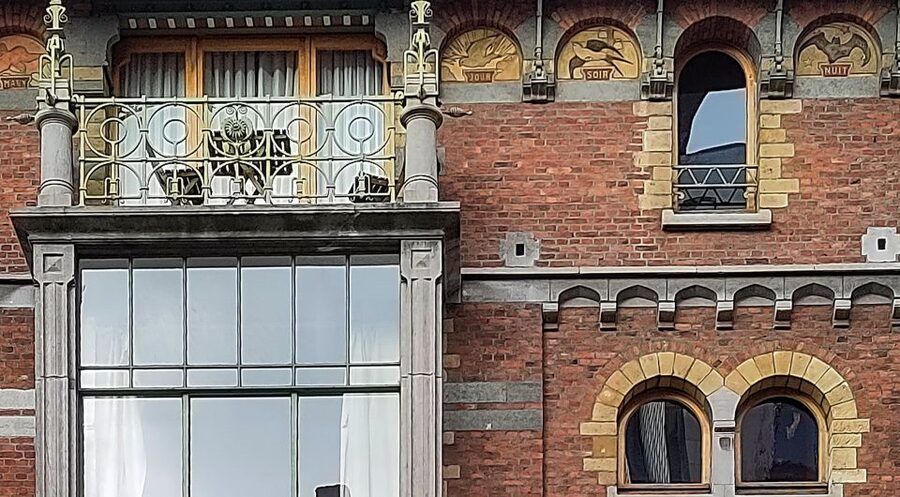
Sgraffito is one of the tour’s most specific subjects. In simple terms, it uses layers of plaster or finish in different colors. The surface is scratched through to reveal the layer below, creating a design.
A fresco works differently. Pigment is applied to wet plaster and becomes part of the plaster as it dries. Sgraffito depends on cutting through surface layers, while fresco depends on painting into wet plaster. Seeing these methods discussed alongside actual façades gives you a useful way to tell them apart.
This is exactly the kind of detail that can turn a routine architecture walk into a lesson you remember. You do not need a background in art. You only need to know where to look and what the surface is doing.
Bring your patience for looking upward. The tour’s subject is built into walls and façades, and the best details may not be at eye level. Comfortable shoes also make sense because the route covers about three kilometers over two and a half hours.
The guide also places Art Nouveau in its late nineteenth-century setting and introduces the question of what is considered the style’s first house. The supplied information does not identify that building by name, so you should expect the guide to handle the historical explanation in person rather than arrive with a fixed list of answers from this review.
Same old town, a completely different kind of day:
- Brussels: Atomium Entry Ticket with Design Museum Ticket
★ 4.4 · 9,254 reviews - From Brussels: Bruges & Ghent Day Tour – 2 Fairytale Cities
★ 4.7 · 8,242 reviews - Choco-Story Brussels: Chocolate Museum Entrance with Tasting
★ 4.3 · 4,883 reviews - Bruges and Ghent – Belgium’s Fairytale Cities – from Brussels
★ 4.0 · 4,809 reviews
Following the route through Saint-Gilles and Ixelles
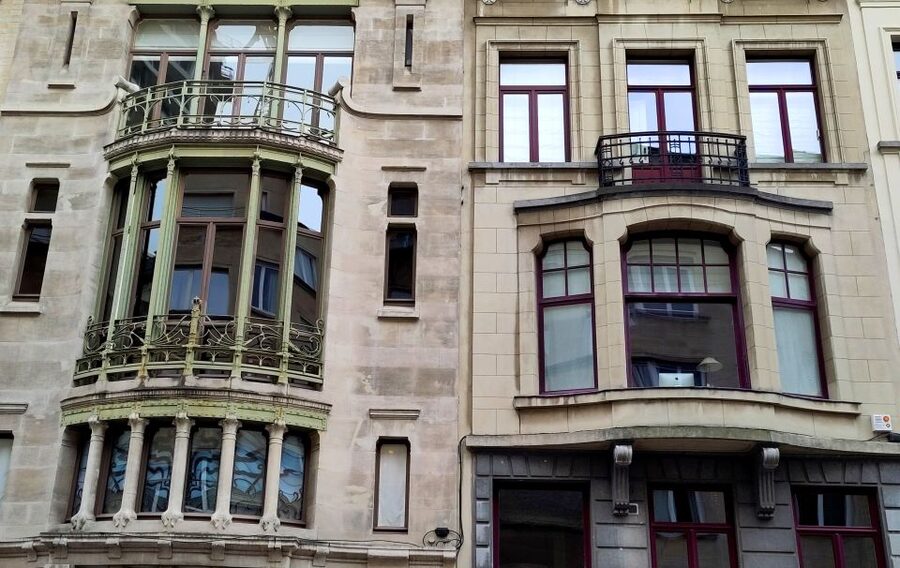
The route links the outskirts of Brussels with some of the capital’s most attractive streets. That combination is useful because it gives you a sense of place while keeping the focus on architecture.
Saint-Gilles and Ixelles are not presented as isolated stops. You move through them on foot, seeing how streets, houses, and decorative choices work together. The walking distance is moderate, but 150 minutes is long enough for the pace to feel unhurried if the group pauses often for explanations.
The route’s main strength is comparison. A single building can impress you, but several buildings let you notice patterns. You can begin to distinguish repeated techniques from the personal style of individual architects.
The main drawback is that the experience is entirely outdoors. Brussels weather can change quickly, and the tour specifically advises you to bring an umbrella, raincoat, or poncho. Wet streets may also make it harder to stop comfortably while looking at upper façades.
I would choose this walk on a dry morning or afternoon and keep a waterproof layer in your day bag. The tour remains possible in rain, but your attention will be split between architectural details and staying dry.
Victor Horta’s Maison du Peuple remains
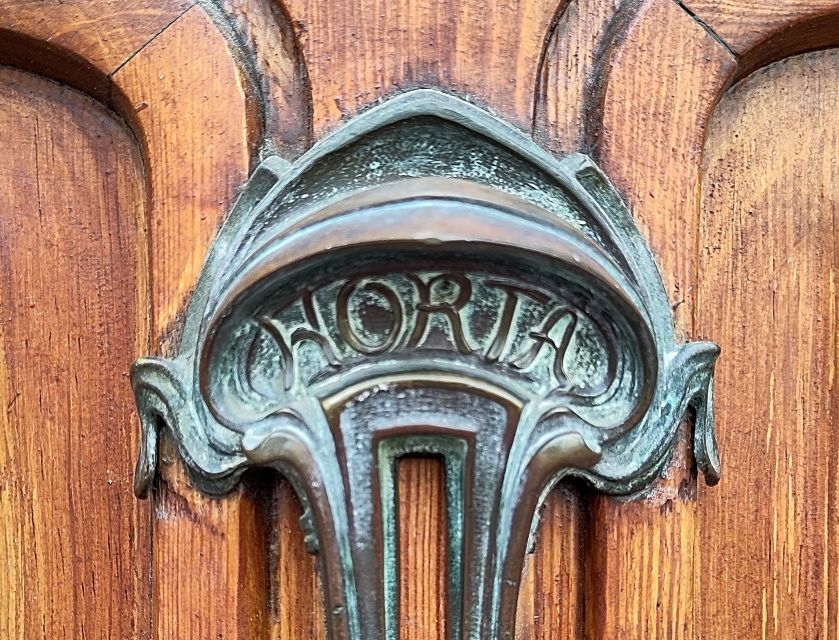
The stop connected with Victor Horta’s Maison du Peuple gives the walk a useful sense of loss. You are not simply viewing a perfectly preserved building. You are seeing historical remains and learning about a major work that no longer survives in its original complete form.
Horta is central to Brussels Art Nouveau, so this part of the route helps connect small decorative details with a larger architectural vision. The Maison du Peuple also gives the guide a chance to discuss how buildings change over time and how a city can remember work that has been altered or removed.
Do not picture this as a full museum visit or a grand interior tour. The information provided describes historical remains, and the activity is a walking tour. The interest lies in understanding what was there and why it matters, not in exploring a preserved building from room to room.
For me, this is one of the stronger reasons to choose this particular route. It adds context to the façades you see elsewhere. Art Nouveau is not only about surviving beauty. It is also about what Brussels kept, changed, or lost.
What the guide adds to the experience
A guided architecture walk succeeds or fails on explanation. Here, the available comments point to three useful qualities: dedication, clear teaching, and readiness to answer questions.
One Spanish-speaking guide, Samuel, was specifically praised for explaining Art Nouveau in a clear way while using different façades as examples. That is the right method for this subject. You hear an idea, then see it immediately on a building in front of you.
Another departure was described as pleasant and informative, with the guide taking the group to several buildings. A separate comment praised the guide’s command of Art Nouveau. These points suggest that the strongest part of the experience is not simply the route, but the way the guide turns the route into a lesson.
You should still keep your expectations sensible. A 150-minute walking tour cannot cover every important Art Nouveau building in Brussels. Its value comes from a carefully chosen three-kilometer sample and a guide who helps you understand what you are seeing.
The additional audiovisual information is a useful bonus. It can provide comparisons or background that a street façade alone cannot show. I would pay attention to it rather than treat it as filler, particularly during explanations of techniques and historical changes.
Is $17 a fair price for 150 minutes?
At $17 per person, this is a reasonably priced specialist tour. You are paying for two and a half hours with a live Spanish-speaking guide, a planned route, architectural explanations, and audiovisual material.
The price works best if Art Nouveau is a real interest for you. If you only want a quick look at Brussels’ famous buildings, you may find the walk too focused. You are giving up time that could be spent on central sights, museums, or food stops.
For anyone who wants to understand the city’s architecture, the calculation is better. A guide can help you see techniques that would otherwise pass unnoticed, and the route covers several streets rather than one isolated structure.
The tour also offers reserve-now, pay-later booking and free cancellation up to 24 hours before the start for a full refund. Those terms reduce the risk when your schedule is still changing, but check the exact availability and starting time before confirming.
The activity is wheelchair accessible. Since the route covers approximately three kilometers, you may still want to consider your own comfort with that distance and with outdoor walking between stops.
Who should book this Brussels walk?
I would recommend it first to Spanish-speaking visitors who enjoy architecture, design, or city history. It also suits repeat visitors who have already seen Brussels’ central landmarks and want a more specialized way to spend an afternoon.
It is a good choice for curious first-time visitors too, especially if you like learning how buildings are made. The route can give you a stronger visual vocabulary for the rest of your time in Belgium.
Families with older children may find the techniques engaging, since sgraffito offers a concrete question with a visible answer. Very young children may find a long façade-focused walk less rewarding, though the supplied information does not specify a minimum age.
You should think twice if you dislike walking, need frequent indoor breaks, or cannot follow Spanish. You should also pack for rain. This is not a flexible indoor activity that can ignore the weather.
Should you book the Fall and Rise of Art Nouveau tour?
Book it if you want a focused introduction to Brussels Art Nouveau, prefer seeing buildings in their neighborhoods, and can follow Spanish. The combination of Saint-Gilles and Ixelles, the explanation of sgraffito, and the look at Horta’s Maison du Peuple remains gives the walk a clear purpose.
The $17 price is fair for 150 minutes, especially if the guide is as clear and open to questions as Samuel was on one departure. Just remember that this is an outdoor architecture lesson, not a general Brussels highlights tour or an interior visit.
Bring rain gear, wear comfortable shoes, and arrive at Horta Metro station with enough time to find the Curiositas Mundus badge. If those conditions suit your plans, this is a smart, modestly priced way to see Brussels through its façades.
FAQ
Where does the Art Nouveau tour meet?
The meeting point is next to Horta Metro station, served by lines 3 and 4, on Chaussée de Waterloo near number 187. The guide will wear a Curiositas Mundus badge.
How long does the tour last?
The tour lasts 150 minutes, or two and a half hours.
How far do you walk?
The route covers approximately three kilometers through the outskirts of Brussels.
Which areas of Brussels does the tour visit?
The walk focuses on Saint-Gilles and Ixelles, two of the Brussels communes known for Art Nouveau houses and architecture.
What language is the tour conducted in?
The live tour guide speaks Spanish.
Is the tour wheelchair accessible?
Yes, the activity is described as wheelchair accessible.
What should I bring if it rains?
Bring an umbrella, raincoat, or poncho. The tour takes place outdoors, so rain gear is useful even if the forecast looks uncertain.
Can I cancel the tour and receive a refund?
You can cancel up to 24 hours in advance for a full refund. The activity also offers a reserve-now, pay-later option.
Just added around Brussels
- Standard vehicle from Brussels airport to city of Antwerp★ 5.0 · 4 reviews
- Private transfer from BRU Airport to Brussels city with luxury limousine 3 pax★ 4.5 · 8 reviews
- Luxury vehicle from Brussels airport to the city of Brussels★ 4.0 · 5 reviews
- Transfer Brussels Airport –> City MB E Class 1-3 PAX (ONE WAY)★ 5.0 · 6 reviews
- Transfer Brussels Airport (BRU) –> City Center 7 PAX (ONE WAY)★ 5.0 · 7 reviews
- PRIVATE MPV TRANSFER FROM/TO BRUSSELS AIRPORT (Max 6 pax) ONE-WAY★ 5.0 · 4 reviews
- Transfer Brussels Airport –> Brussels MB V Class 7 PAX (ONE WAY)★ 5.0 · 4 reviews
- Brussels: City Walk with Audioguide in 7 Languages on your Phone★ 3.5 · 4 reviews
Guided, compared.

Choco-Story Chocolate Museum Guided Tour w/Tastings
Read our review →

Browse the lists this tour appears in