
Reviewed · GUIDED
Guided tour: Brussels Crime Scenes
Brussels, Scene of Crimes turns familiar streets into evidence in a citywide case file. Over about two hours, you cross Grand Place and follow stories of passion, murder, theft, police work, social customs, and an old devil legend. The tone is serious and faithful to the facts, not a cheap scare show.
I like the way the guide adds social history to each crime, showing how Brussels society and policing changed over time. I also like the compact route: five central stops, free admission at each, and an ending at Place Saint-Géry where you can continue exploring or stop for a drink.
The main consideration is the subject matter. Some cases are violent and unsettling, and the tour may feel more like a historical lecture with a walk than a theatrical performance. One person specifically wished for costumes and more audience participation, so book this for facts and atmosphere rather than staged drama.
In This Review
- Key points at a glance
- Why Brussels crime stories make a useful city walk
- Starting on Rue de l’Etuve and crossing Grand Place
- Rue de l’Amigo and the hotel with a darker past
- Le Coin du Diable and the line between legend and fact
- Place Saint-Géry and a case that shocked Brussels
- Place du Jardin aux Fleurs and an unusual motive
- A guide-led tour with a serious, fact-based tone
- What $23.26 gets you
- Who should book this Brussels walking tour
- Should you book Brussels, Scene of Crimes?
- FAQ
- How long does Brussels, Scene of Crimes last?
- How much does the tour cost?
- Where does the tour start?
- Where does the tour end?
- What places are covered during the walk?
- Is admission to the crime-scene locations included?
- Is coffee or tea included?
- How large is the group?
- Can I cancel for a full refund?
Key points at a glance

- Five crime-focused stops: The route covers Rue de l’Amigo, Le Coin du Diable, Place Saint-Géry, and Place du Jardin aux Fleurs.
- A walk through changing Brussels society: The stories explain customs, police work, and public attitudes in the 19th and 20th centuries.
- A 17th-century legend included: Le Coin du Diable adds folklore to the otherwise fact-based cases.
- Central start and finish: Begin at Rue de l’Etuve 1 and finish in the center of Place Saint-Géry.
- A small maximum group: The tour accepts up to 25 people, a useful limit for listening on narrow city streets.
- Good value for a short city activity: At $23.26 per person, the price covers the full walking tour and all fees.
Why Brussels crime stories make a useful city walk
The best part of this experience is not simply hearing who committed a crime or who suffered from one. The stories act as windows onto Brussels at different moments in time. You learn how people lived, what shocked the public, how police dealt with cases, and what local customs shaped the events.
That wider frame gives the walk more substance than a string of grisly tales. A crime of passion, for example, can reveal attitudes toward marriage, honor, jealousy, and reputation. A notorious theft can tell you what people valued and how vulnerable city life could be.
The tour is also a good match for the way Brussels is built. The central streets hold several layers of history close together. You do not spend two hours commuting between distant neighborhoods. Instead, you move through recognizable squares and lanes, then see them differently once you know what happened there.
I would not choose this as a gentle introduction for young children or anyone who dislikes stories of violence. The wording is respectful, but the subject matter includes bloody and disturbing cases. For adults interested in true crime, urban history, or the less polished side of European capitals, the focus should feel purposeful rather than sensational.
A few more Brussels trips to weigh up
- From Brussels: Guided Day Trip to Bruges and Ghent
★ 4.6 · 8,353 reviews - From Brussels: Full-Day Antwerp and Ghent Guided Tour
★ 4.6 · 1,019 reviews - Brussels 3-Hour Guided Art Nouveau Tour
★ 4.0 · 282 reviews
Starting on Rue de l’Etuve and crossing Grand Place
The meeting point is Rue de l’Etuve 1, in central Brussels. From there, the route crosses Grand Place before reaching the first detailed stops. This is practical for a first or second day in the city because you begin in an area many people already plan to visit.
Grand Place provides a striking opening contrast. Its grand architecture and polished public spaces can make Brussels feel ceremonial and safe. A crime-focused walk asks you to look again at that center, not as a postcard backdrop but as a place where ordinary life, power, business, and danger once met.
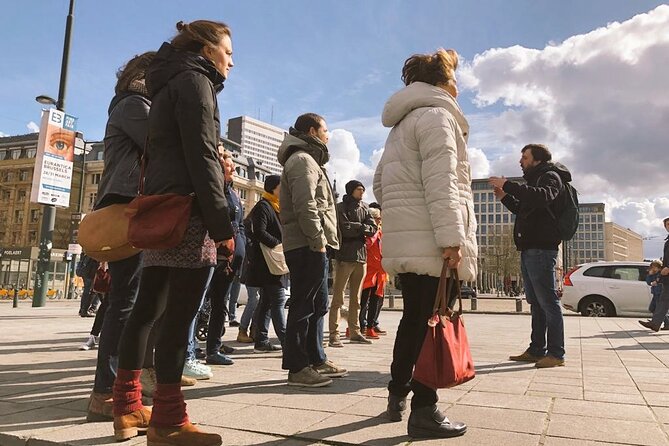
The route is on foot, so wear shoes you can use comfortably for two hours. No separate entrance tickets are needed at the listed stops. You are paying for the guide’s storytelling and historical interpretation, not admission to a museum or a private crime site.
The group limit is 25 people. That is not an intimate private walk, but it is a reasonable size for a central-city tour. You should still stay close to the guide and expect some street noise, especially in busy parts of the center.
Rue de l’Amigo and the hotel with a darker past
The first two stops are both on Rue de l’Amigo, but they deal with different stories. The opening tale concerns a luxury hotel that has welcomed prestigious visitors, though its past was not always so polished. The setting lets the guide contrast the image of an elegant hotel with the less respectable events connected to it.
This kind of location works well because you can stand in the actual urban setting rather than hearing about a case in a distant classroom. The street becomes part of the explanation. The hotel’s public image, its visitors, and its earlier reputation help show how buildings can change meaning as a city changes.
The first stop lasts about 10 minutes. That short length keeps the opening brisk and gives you an early sense of the guide’s approach. You should expect context and narration rather than an extended building visit, since admission is not included or required.
The second Rue de l’Amigo stop lasts about 15 minutes and focuses on a famous crime of passion at the Hotel À la Ville de Courtrai, located at the corner of the street. This is one of the more personal and emotionally charged cases on the route.
A crime of passion can easily be presented as melodrama. The value here comes from placing it in its period and explaining what the event meant to the people of Brussels at the time. Pay attention to the social details around the case, since those are likely to tell you as much about the era as the crime itself.
Le Coin du Diable and the line between legend and fact
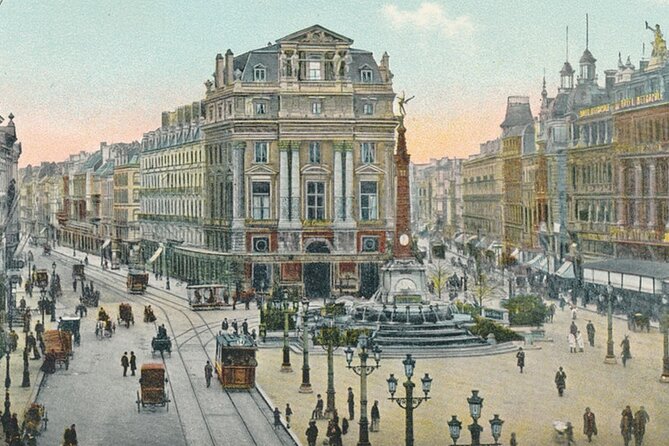
Le Coin du Diable brings a different mood. This stop covers a famous legend dating from the 17th century, so it is not the same kind of documented modern case as the stories connected with the police and criminal investigations.
That change is useful. The tour is not limited to court-style crime accounts. It also shows how fear, rumor, and local folklore helped shape the way people understood particular places. A devil legend adds atmosphere without pretending that every tale has the same factual status.
The stop lasts about 15 minutes. You can expect the guide to explain the story and its place in Brussels culture, rather than treating it as proof of anything supernatural. If you prefer strictly documented cases, this will be the least direct match for your interests. If you enjoy the way legends attach themselves to old streets, it gives the walk some welcome variety.
I especially like the contrast between the factual promise of the tour and this older legend. The experience remains respectful, but it acknowledges that a city’s dark past includes both records and stories passed down through generations.
Same old town, a completely different kind of day:
- Brussels: Atomium Entry Ticket with Design Museum Ticket
★ 4.4 · 9,254 reviews - From Brussels: Bruges & Ghent Day Tour – 2 Fairytale Cities
★ 4.7 · 8,242 reviews - Choco-Story Brussels: Chocolate Museum Entrance with Tasting
★ 4.3 · 4,883 reviews - Bruges and Ghent – Belgium’s Fairytale Cities – from Brussels
★ 4.0 · 4,809 reviews
Place Saint-Géry and a case that shocked Brussels
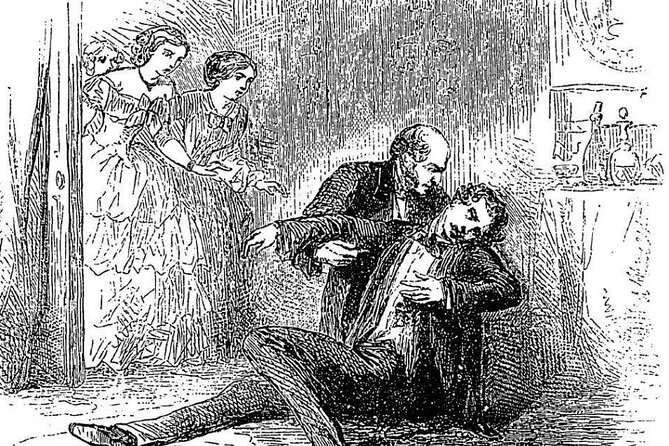
The stop at Place Saint-Géry covers a particularly cruel crime that left three people dead and fascinated Brussels in the middle of the 19th century. At roughly 15 minutes, it is long enough for the guide to explain the event and its public impact without allowing one grim case to swallow the whole walk.
This is where the tour’s focus on society becomes most useful. The important question is not only what happened, but why the case held the city’s attention. Public fascination can reveal how newspapers, gossip, fear, and ideas about justice worked in that period.
Place Saint-Géry also serves as the end point, so the story gives the tour a natural closing point. You finish in the center of the square at Pl. Saint-Géry 1. This makes it easy to continue your evening nearby, although the tour does not include coffee or tea.
The subject here is severe. The tour description makes clear that some stories are violent and bloody. I would avoid scheduling this immediately before a family meal or a relaxed sightseeing activity if you know that crime stories affect your mood.
Place du Jardin aux Fleurs and an unusual motive
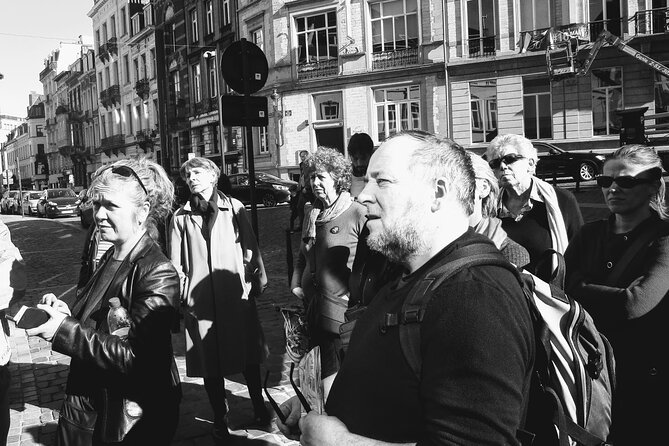
The final listed crime stop is Place du Jardin aux Fleurs. The case centers on a villainous act carried out for an unusual kind of loot. That unusual motive helps prevent the tour from becoming a repetitive sequence of murders.
A good crime walk needs changes in pace and motive. You hear about passion, legend, multiple deaths, and then a crime driven by an unexpected prize. The variety keeps your attention and gives the guide room to discuss different parts of Brussels society.
The supplied route information does not give the precise identity of the stolen object or the full details of the case. That is useful to remember when booking: the walk promises the story on site, not a printed case file in advance. You will get more from it if you enjoy following a narrative as it unfolds.
Because this is still a walking tour through public streets, do not expect exhibits, crime-scene photographs, or a museum display. The setting and the guide’s explanation carry the experience.
A guide-led tour with a serious, fact-based tone
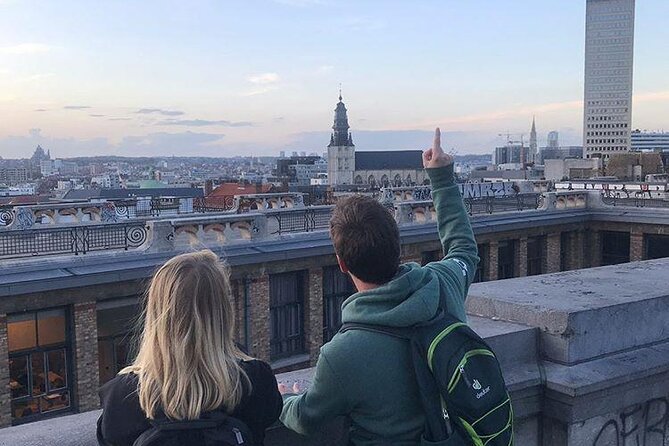
The guide is the main reason to book this experience. The route itself is short and easy to follow, but the value comes from connecting each location to the people, police, customs, and public reactions of its period.
The guide is described as professional, friendly, and able to hold attention. One especially useful feature is the added historical context around the crime scenes. You are not simply given a list of dates and victims. The narration explains the world in which each event took place.
The approach is also careful. The tour is described as respectful toward the people involved and faithful to the facts. That matters in true-crime tourism, where graphic details can sometimes replace thought. Here, the darker material is meant to teach you about Brussels as well as unsettle you.
Still, do not expect theatrical interaction. A suggestion was made for costumes, audience participation, and more staging. If you want actors, props, or a dramatic reenactment, this walk may feel restrained. If you prefer a guide who explains events without turning them into a show, that restraint is a strength.
What $23.26 gets you
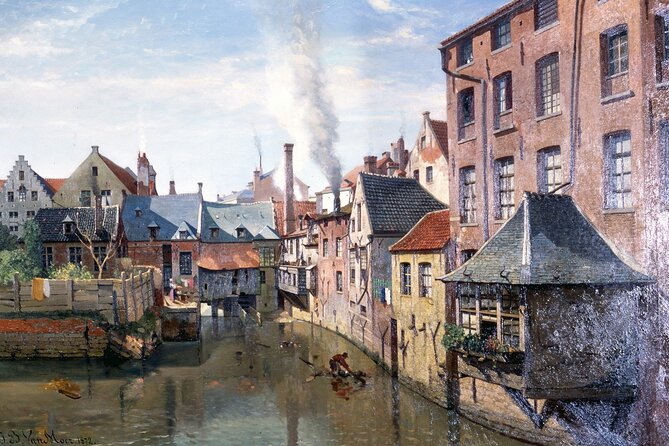
At $23.26 per person, I consider this a fair price for a two-hour guided walk in central Brussels. The fee includes all taxes and tour costs. There are no paid admissions at the stops, so you do not need to budget for extra entry tickets during the route.
The value depends on your interest. If you already know Brussels well and want a new way to read its streets, the stories add a fresh layer to familiar sights. If you are looking for major interiors, art, or formal historical exhibits, your money may be better spent on a museum ticket.
The tour is booked an average of 12 days ahead, which suggests that planning early is sensible if your dates are fixed. Confirmation arrives at booking, and the mobile ticket keeps the process simple. You should still arrive at the stated meeting point with enough time to locate Rue de l’Etuve 1.
Free cancellation is available until 24 hours before the start time for a full refund. Cancellations or changes made inside that 24-hour window are not accepted for a refund, with cut-off times based on local Brussels time.
Who should book this Brussels walking tour
I would recommend it to adults who enjoy:
- True crime presented with historical context
- Short walking tours in central Brussels
- Stories about police work and social customs
- Local legends alongside documented cases
- A guide-led activity that does not require museum admission
- A small-to-moderate group rather than a private tour
It can also suit repeat visitors who have already seen Grand Place and want a different way to understand the center. The walk uses well-known places but gives them a less comfortable, more human meaning.
I would hesitate if you want a light sightseeing stroll. The material includes violent and bloody events, and the tone is deliberately unsettling. I would also think twice if you need a highly theatrical experience, since the available description points to storytelling and context rather than costumes or audience games.
Most people can participate, the route is near public transportation, and service animals are allowed. The provider lists a maximum of 25 people. Specific details about step-free access are not provided, so contact Brussels By Foot before booking if you need that information.
Should you book Brussels, Scene of Crimes?
Book this tour if you want to see central Brussels through its crimes, legends, and changing social rules. The $23.26 price is reasonable for two hours of guided storytelling, and the route makes efficient use of places you may already visit, from Grand Place to Saint-Géry.
Skip it if you dislike violent subject matter or want a playful, staged performance. The strongest reason to go is the guide’s historical explanation, especially the way each case connects to Brussels society and policing. You finish with a darker but more layered understanding of the city center.
FAQ
How long does Brussels, Scene of Crimes last?
The walking tour lasts approximately two hours.
How much does the tour cost?
The listed price is $23.26 per person.
Where does the tour start?
It starts at Rue de l’Etuve 1, 1000 Bruxelles, Belgium.
Where does the tour end?
It ends at Pl. Saint-Géry 1, 1000 Bruxelles, Belgium, in the center of Place Saint-Géry.
What places are covered during the walk?
The route crosses Grand Place and includes stops on Rue de l’Amigo, Le Coin du Diable, Place Saint-Géry, and Place du Jardin aux Fleurs.
Is admission to the crime-scene locations included?
The listed stops have free admission, and all fees and taxes are included in the tour price.
Is coffee or tea included?
No. Coffee and tea are not included.
How large is the group?
The tour has a maximum of 25 people.
Can I cancel for a full refund?
Yes. You can cancel at least 24 hours before the experience start time for a full refund. Changes or cancellations made less than 24 hours before the start time are not accepted for a refund.
Just added around Brussels
- Standard vehicle from Brussels airport to city of Antwerp★ 5.0 · 4 reviews
- Private transfer from BRU Airport to Brussels city with luxury limousine 3 pax★ 4.5 · 8 reviews
- Luxury vehicle from Brussels airport to the city of Brussels★ 4.0 · 5 reviews
- Transfer Brussels Airport –> City MB E Class 1-3 PAX (ONE WAY)★ 5.0 · 6 reviews
- PRIVATE MPV TRANSFER FROM/TO BRUSSELS AIRPORT (Max 6 pax) ONE-WAY★ 5.0 · 4 reviews
- Transfer Brussels Airport (BRU) –> City Center 7 PAX (ONE WAY)★ 5.0 · 7 reviews
- Transfer Brussels Airport –> Brussels MB V Class 7 PAX (ONE WAY)★ 5.0 · 4 reviews
- Brussels: City Walk with Audioguide in 7 Languages on your Phone★ 3.5 · 4 reviews
Guided, compared.

Choco-Story Chocolate Museum Guided Tour w/Tastings
Read our review →

Browse the lists this tour appears in