
Reviewed · PRIVATE
Private Tour – Bruges and Ghent, our fairytale cities
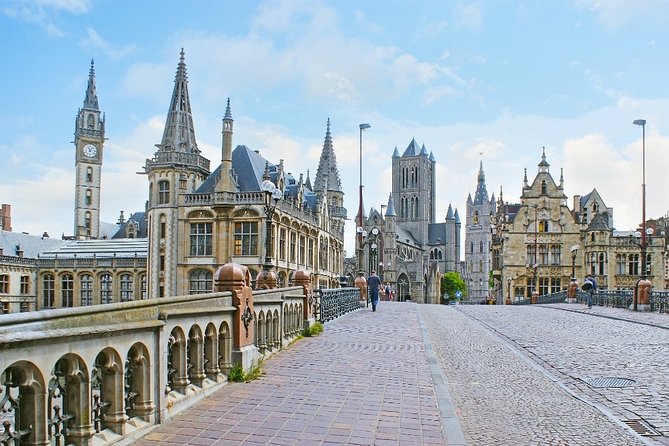
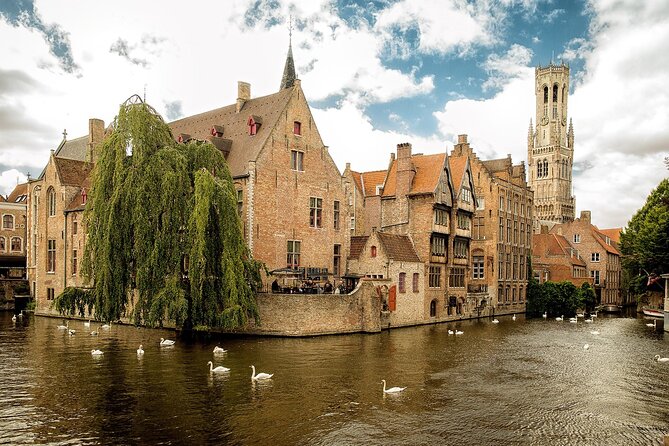
Ghent and Bruges give you two very different versions of medieval Belgium in one long day. Ghent feels youthful and lived-in, with a university crowd, grand quays, and a castle in the middle of town. Bruges is more polished and romantic, with canals, brick lanes, and soaring church towers.
I like the convenience of one air-conditioned coach from Brussels and the chance to have a guide such as Andrea or Stephan explain what you are seeing in English, French, or Spanish. I also like the built-in free time for lunch and shopping. The catch is the schedule: 10 hours and 30 minutes is a full day, and Bruges can feel crowded, especially when you are trying to enjoy it at a relaxed pace.
In This Review
- Key points to know before booking
- Why combining Ghent and Bruges works
- Ghent begins with towers and riverfront views
- Saint Bavo’s Cathedral and the Ghent Altarpiece
- Ghent’s churches and a taste of city life
- Bruges begins with relics, brickwork, and tall towers
- Burg Square shows Bruges at its grandest
- Minnewater Lake and the Beguinage
- Free time and the optional canal ride
- Transport, language, and the practical details
- Who will get the most from this day?
- Should you book the Ghent and Bruges tour?
- FAQ
- Where does the tour begin?
- How long does the tour last?
- Is transportation included?
- Which languages are available?
- Is this a private tour?
- Is the Bruges canal cruise included?
- Is lunch included?
- Can I stay in Bruges after the tour?
- Can I bring luggage?
- What should I bring?
Key points to know before booking
- Two medieval cities in one day: Ghent supplies grand civic buildings and a youthful pub scene, while Bruges brings canals, squares, and romantic corners.
- Andrea and Stephan have received especially warm praise: Their friendly, clear guiding helped make the long day feel easy and engaging.
- The optional Bruges canal cruise costs extra: It lasts about 30 minutes and can only be arranged with your guide on the day.
- The $57 price covers the guide and air-conditioned transport: Food, drinks, and the canal ride are not included.
- You need comfortable shoes and moderate fitness: The program includes many walking stops across historic centers.
- Confirm the transport setup if group size matters: The activity is described as private, yet one account describes a private coach carrying everyone on the excursion.
Why combining Ghent and Bruges works
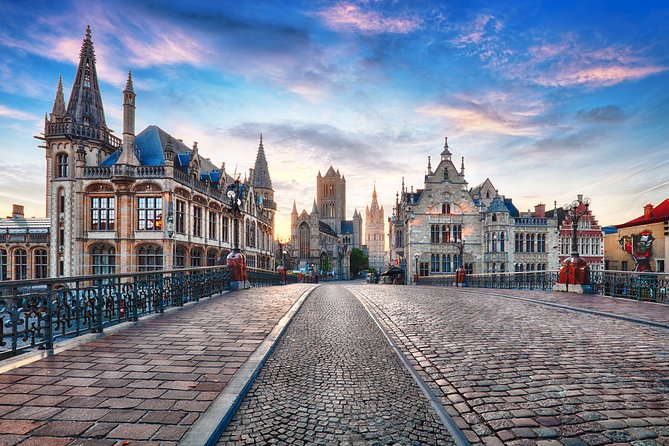
If you have only one free day from Brussels, this outing solves a real planning problem. Ghent and Bruges are close enough to visit together, but each has enough sights to fill a day on its own. Seeing both means you trade some lingering time for a useful first look at two of Belgium’s best-known historic cities.
The contrast is the main reward. Ghent has a stronger working-city feel. Its central streets are packed with medieval buildings, but the university gives the city a younger edge. Bruges is smaller in feel and more decorative, with canals, bridges, and carefully preserved squares.
The tour begins at 9:00 a.m. and lasts about 10 hours and 30 minutes. That includes transport from Brussels, guided sightseeing, free time, and movement between the two cities. You should expect a busy day rather than a slow, café-filled wander.
At $57, the value is quite good if you want transport and a guide without arranging trains, city maps, and timing yourself. The price is less attractive if you prefer to set your own pace or want long museum visits. The admission fees shown for the major stops are free, but the canal cruise, lunch, and drinks cost extra.
A few more Brussels trips to weigh up
- Brussels Highlights & Hidden Gems Private Tour with a Local Guide
★ 5.0 · 251 reviews - Brussels: Belgian Beer Tasting and Course at a Private Bar
★ 4.6 · 219 reviews - Brussels PRIVATE TOUR With Locals: Highlights & Hidden Gems
★ 5.0 · 177 reviews
Ghent begins with towers and riverfront views
Ghent’s Belfry is a useful first landmark. At 91 meters, it is one of three medieval towers that define the old city center. The other two belong to Saint Bavo’s Cathedral and Saint Nicholas’ Church, so you get an immediate sense of how heavily the city’s skyline is shaped by medieval religious and civic power.
The stop is primarily about orientation and exterior views. If you want to go inside or climb a tower, ask your guide how much time is available. A packed day does not leave much room for adding extra visits on your own.
From there, the route reaches Graslei and Korenlei, two historic quays along the Leie River. This is one of Ghent’s most memorable urban scenes. Medieval façades line the water, and the quays give you a natural place to pause for photographs.
I find this stop especially useful because it shows Ghent as a trading city rather than simply a collection of old churches. The river, warehouses, and tall façades explain why this part of town feels grand and practical at the same time. Keep your camera ready, but also listen for the guide’s explanation of the buildings. The view makes more sense when you know what the quays were used for.
Saint Bavo’s Cathedral and the Ghent Altarpiece
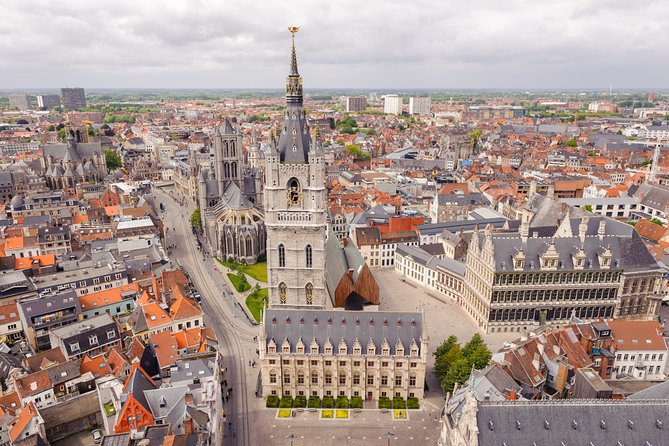
Saint Bavo’s Cathedral rises 89 meters and serves as the seat of the Diocese of Ghent. It is also home to the famous Ghent Altarpiece, one of the city’s most important works of art.
The scheduled stop gives you a chance to see the cathedral and understand its role in Ghent. Admission is listed as free, but access to the Mystic Lamb, the better-known name for the altarpiece, is not possible on Sundays. If that artwork is a major reason for your visit, avoid Sunday or confirm the arrangements before you book.
This is one place where the guide’s timing matters. You may have enough time to appreciate the building and its major details, but not enough for a long, quiet art visit. I would treat the cathedral as an important introduction rather than assume it replaces a dedicated museum tour.
Next comes Gravensteen, the Castle of the Counts. The current castle dates to 1180 and later served as a court, prison, mint, and cotton factory. That unusual sequence gives the building more character than a simple castle label suggests.
Even from the outside, its fortified form is hard to miss. Ask your guide how the castle fits into Ghent’s political story, and check whether there is time for an interior visit. The tour information lists the stop without a separate admission charge, so you should not assume that a full castle tour is included.
Ghent’s churches and a taste of city life
Saint Nicholas’ Church is one of Ghent’s oldest major landmarks. Construction began in the early 13th century, replacing an earlier Romanesque church. Its location near the Belfry makes it part of the city’s defining trio of towers.
The scheduled visit is about 10 minutes, which is enough for a quick look and some photographs. It is not enough for a detailed architectural study. That is a recurring theme on this tour: you see many important places, but the guide must keep the group moving.
Ghent’s university and pub scene give it a different mood from Bruges. The tour does not promise a night out, but it does give you a brief look at a city that is more than a preserved medieval showpiece. If you enjoy places where old buildings and present-day life share the same streets, Ghent may be your favorite half of the day.
Same old town, a completely different kind of day:
- Brussels: Atomium Entry Ticket with Design Museum Ticket
★ 4.4 · 9,254 reviews - From Brussels: Guided Day Trip to Bruges and Ghent
★ 4.6 · 8,353 reviews - From Brussels: Bruges & Ghent Day Tour – 2 Fairytale Cities
★ 4.7 · 8,242 reviews - Choco-Story Brussels: Chocolate Museum Entrance with Tasting
★ 4.3 · 4,883 reviews
Bruges begins with relics, brickwork, and tall towers
In Bruges, the Basilica of the Holy Blood is a compact but important stop. It houses a venerated relic said to be the Holy Blood, brought from the Holy Land by Thierry of Alsace. The visit lasts about 10 minutes, so you will need to move efficiently.
The basilica sits in the Burg area, one of Bruges’ main civic centers. Its religious importance is a useful counterpoint to the grand town hall nearby. As with the other stops, the listed admission is free, but the short schedule means you should not expect an extended interior visit.
The Church of Our Lady is given about 15 minutes. Its tower reaches 115.6 meters, making it the tallest structure in Bruges and the second-tallest brickwork tower in the world. That is a remarkable detail to keep in mind as you look down the surrounding streets.
The church dates mainly from the 13th, 14th, and 15th centuries. Even if you only have time for a brief stop, the scale of the tower helps explain Bruges’ distinctive skyline. You may find the interior more rewarding if the guide points out what is worth your limited time.
Burg Square shows Bruges at its grandest
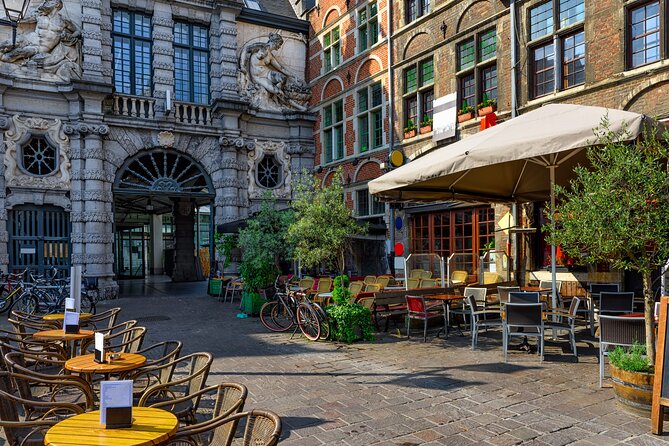
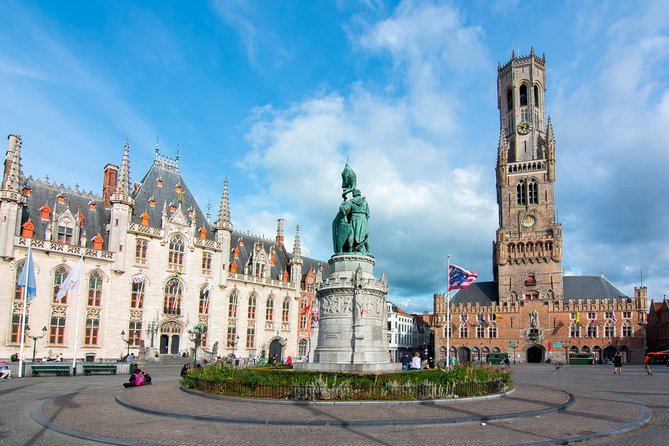
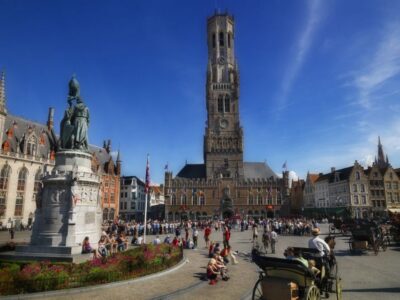
Burg Square is the political center of Bruges and one of the city’s best places for comparing architectural styles. The square occupies the site of the former fortified castle, and the buildings around it reflect the city’s long civic and religious role.
The Bruges City Hall is one of the oldest city halls in the Netherlands region. The tour allows about 10 minutes at the city hall and 20 minutes at Burg Square, giving you more time here than at several of the churches.
This is a good place to slow down for a moment and look upward. Bruges can become a blur of pointed gables and souvenir shops if you hurry. A guide can help you separate the political buildings from the religious ones and explain why the square mattered.
Bruges is also the part of the day most likely to feel crowded. One account specifically found the city too busy to enjoy as much as hoped. That is useful advice, not a reason to skip it. Come prepared for foot traffic, especially around the most famous squares, and use the quieter stops to catch your breath.
Minnewater Lake and the Beguinage
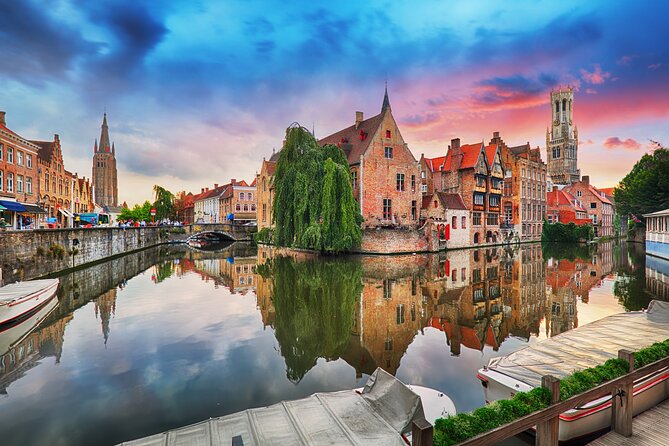
Minnewater Lake, known as the Lake of Love, brings a softer mood to the Bruges visit. The Lovers’ Bridge and the water make this one of the city’s most romantic settings. The stop lasts about 15 minutes, so you will have time for photographs and a short pause rather than a long walk around the area.
The Princely Beguinage Ten Wijngaarde offers a different kind of quiet. It is the only preserved beguinage in Bruges. Beguines no longer live there, and since 1927 it has functioned as a Benedictine convent founded by Canon Hoornaert.
The beguinage is valuable because it shows a less theatrical side of Bruges. The city is famous for grand squares and canals, but enclosed religious communities reveal how ordinary spiritual and communal life once fit into the urban fabric. The scheduled visit is about 10 minutes, so listen closely and avoid treating it as only a photo stop.
Free time and the optional canal ride
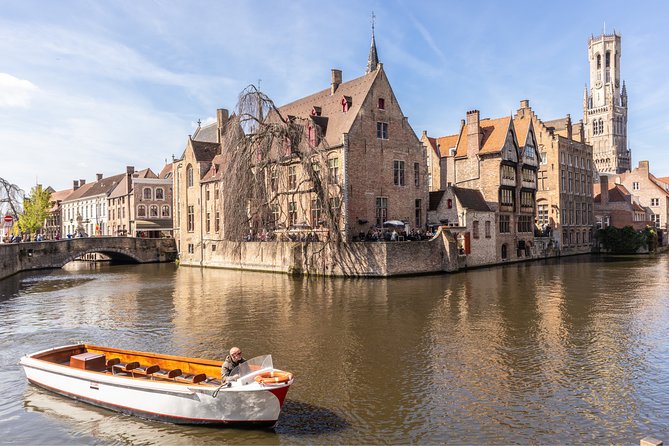
The historic center of Bruges includes time for an optional canal tour. The ride lasts about 30 minutes and is not included in the $57 price. You can arrange it only with your guide on the day of the tour, not in advance.
That limitation is worth knowing. If you have your heart set on the cruise, bring cash and ask early in the day how it will fit the schedule. The tour information advises carrying cash, and the canal ticket is an extra cost.
I think the canal ride is a sensible add-on if you want to see Bruges from its waterways rather than only from the streets. It also gives your feet a break. Still, it reduces the time available for shopping, lunch, or independent wandering, so choose based on what matters most to you.
Free time is included on the excursion, and it can be used for lunch, drinks, shopping, or additional sightseeing. Food and drinks are not included. The exact amount of free time can vary, so ask Andrea, Stephan, or your assigned guide for the plan that day.
Transport, language, and the practical details
The tour uses an air-conditioned vehicle, described in the practical information as a large tourism coach. You can bring luggage aboard, which helps if Bruges is your final stop, but staying in Bruges after the tour must be discussed and confirmed with the guide on the day.
Hotel pickup is not offered. Your voucher gives the meeting point, and the start time is 9:00 a.m. If you are late, the company can wait five minutes if you notify them in advance by calling +32 2 513 77 44. That is not much grace, so arrive early.
Guiding is available in English, French, or Spanish. Andrea is specifically praised for making the day pleasant and giving useful suggestions about where to eat and what to see. Stephan is also singled out for guiding the group well in French. If language choice matters, select it during booking and confirm it before departure.
The physical demands are moderate but real. You will walk through historic centers, stand at multiple stops, and move at a group pace. Comfortable shoes are essential. The operator does not recommend the tour for people with disabilities or for those who have difficulty walking.
Rain does not automatically cancel the outing. Tours are canceled only in extreme conditions such as heavy storms or floods, so bring a raincoat, poncho, or umbrella after checking the forecast.
The activity is labeled private, meaning only your group is supposed to participate. At the same time, one description of the day refers to a private bus carrying everyone on the tour. If you need a fully exclusive vehicle and guide, ask Brussels City Tours, also known as Keolis Travel, to clarify exactly what private means for your booking.
Who will get the most from this day?
This is a strong choice for you if you are staying in Brussels and want an efficient first look at Ghent and Bruges without handling Belgian transport on your own. It suits couples drawn to Minnewater Lake and the canals, families who prefer a guide and coach, and first-time visitors who want the major sights explained in a chosen language.
It is also useful if you value free time but do not want to spend hours researching restaurants, routes, and train connections. The guide can point you toward lunch and shopping, and you still have some space to choose your own priorities.
You should think twice if you want detailed museum time, long church visits, or a slow photographic walk. The day covers a lot of ground, and Bruges may feel rushed when crowds are heavy. Visitors with limited mobility should also choose another format, since the walking demands are not minor.
Free cancellation is available if you cancel at least 24 hours before the local start time. Cancellations within 24 hours are not refunded, and late changes are not accepted.
Should you book the Ghent and Bruges tour?
Book it if your priority is seeing both cities from Brussels in one organized day. The $57 cost is sensible for transport, a multilingual guide, and a full schedule of major sights, especially when you value advice from guides such as Andrea or Stephan.
Go in with realistic expectations. This is an overview tour, not a leisurely stay in either city. Wear good shoes, carry some cash, plan to buy your own lunch, and decide in advance if the extra canal ride is worth giving up some free time.
If you can spare separate days for Ghent and Bruges, that will give you a better chance to explore each city at its own pace. If you have only one day, this outing makes the trade-off clear: less freedom, but far less planning and a very efficient introduction to two remarkable Belgian cities.
FAQ
Where does the tour begin?
The excursion begins at 9:00 a.m. The meeting point is listed on your voucher. Hotel pickup is not offered.
How long does the tour last?
The experience lasts approximately 10 hours and 30 minutes.
Is transportation included?
Yes. Transportation in an air-conditioned vehicle is included, along with a professional multilingual guide.
Which languages are available?
The tour can be conducted in English, French, or Spanish. Choose your preferred language when booking.
Is this a private tour?
The activity is described as private, with only your group participating. However, the practical information also refers to large tourism coaches, so confirm the exact vehicle arrangement if exclusivity is important to you.
Is the Bruges canal cruise included?
No. The optional canal tour lasts about 30 minutes and costs extra. It can only be booked with your guide on the day of the excursion.
Is lunch included?
No. Food and drinks are not included. You will have free time during the day to arrange your own meal.
Can I stay in Bruges after the tour?
This is possible most of the time, but you must discuss it with your guide and receive confirmation on the day of the tour.
Can I bring luggage?
Yes. Luggage can be carried on the large tourism coaches.
What should I bring?
Bring comfortable walking shoes, weather-appropriate clothing, and cash. An umbrella, raincoat, or poncho is useful if rain is expected. An ID is also advised, although there are no border controls once you are inside the Schengen Area.
Just added around Brussels
- Standard vehicle from Brussels airport to city of Antwerp★ 5.0 · 4 reviews
- Private transfer from BRU Airport to Brussels city with luxury limousine 3 pax★ 4.5 · 8 reviews
- Luxury vehicle from Brussels airport to the city of Brussels★ 4.0 · 5 reviews
- Transfer Brussels Airport –> City MB E Class 1-3 PAX (ONE WAY)★ 5.0 · 6 reviews
- PRIVATE MPV TRANSFER FROM/TO BRUSSELS AIRPORT (Max 6 pax) ONE-WAY★ 5.0 · 4 reviews
- Transfer Brussels Airport (BRU) –> City Center 7 PAX (ONE WAY)★ 5.0 · 7 reviews
- Transfer Brussels Airport –> Brussels MB V Class 7 PAX (ONE WAY)★ 5.0 · 4 reviews
- Brussels: City Walk with Audioguide in 7 Languages on your Phone★ 3.5 · 4 reviews
Private, compared.
Private Historical Tour: The Highlights of Bruges
Read our review →
Brussels Highlights & Hidden Gems Private Tour with a Local Guide
Read our review →
Belgian Beer Tasting and Course at a Private Bar
Read our review →
Highlights & Hidden Gems With Locals: Best of Bruges Private Tour
Read our review →
The 10 Tastings of Bruges With Locals: Private Food Tour
Read our review →
From Bruges to Damme: Private Electric Scooter tour
Read our review →Browse the lists this tour appears in