
Reviewed · HISTORICAL TOURS
Private tour: Highlights & History of Antwerp
Antwerp reveals itself quickly on this private two-hour walk, from the grand guild houses of Grote Markt to the tiny medieval passage called Vlaeykensgang. In between, you get Rubens, printing, fashion, trade, church art, and a few good city legends, all on foot.
I like the private format because your guide can adjust the pace and follow your interests. I also like the way the route mixes famous sights with smaller discoveries, especially the old alley and the Plantin-Moretus Museum garden. The main consideration is pace: ten stops in roughly two hours gives you a lively introduction, not a slow museum visit.
In This Review
- Key points to know before you book
- Starting in Antwerp’s Grote Markt
- Hendrik Conscience Square and Carolus Borromeus Church
- The Bourse and Antwerp’s trading power
- Rubenshuis and the painter behind the city’s fame
- Antwerp’s fashion quarter near MoMu
- Plantin-Moretus Museum and the story of printing
- Vlaeykensgang, Antwerp’s quiet medieval turn
- Nello, Patrasche, and a local story
- Finishing at the Cathedral of Our Lady
- What the private format adds
- Is $105.86 per person a fair price?
- Who will get the most from this walk?
- Weather, timing, and cancellation
- Should you book Highlights and History of Antwerp?
- FAQ
- How long does the private Antwerp walking tour last?
- What sights are included?
- Is this a private tour?
- Is the tour offered in English?
- Where does the tour start and finish?
- Are admissions included?
Key points to know before you book
- Grote Markt to the Cathedral: The route links Antwerp’s major central sights in a logical walk, so you can get your bearings without a map in hand.
- A private English-speaking guide: Only your group takes part, with guides including Luc, Johan, Edna, Flip, Arie, Gaston, Els, Grace, and Lizbeth.
- Rubens appears throughout: Carolus Borromeus Church, Rubenshuis, and the Cathedral of Our Lady connect the city to its most famous painter.
- A tucked-away medieval alley: Vlaeykensgang is easy to miss alone and adds a quieter, more intimate side of Antwerp.
- Useful first-day advice: Guides finish with suggestions for food, drinks, shopping, and further things to do.
- A fast, central overview: At $105.86 per person, the value is strongest for couples or small groups who want personal attention and a focused introduction.
Starting in Antwerp’s Grote Markt
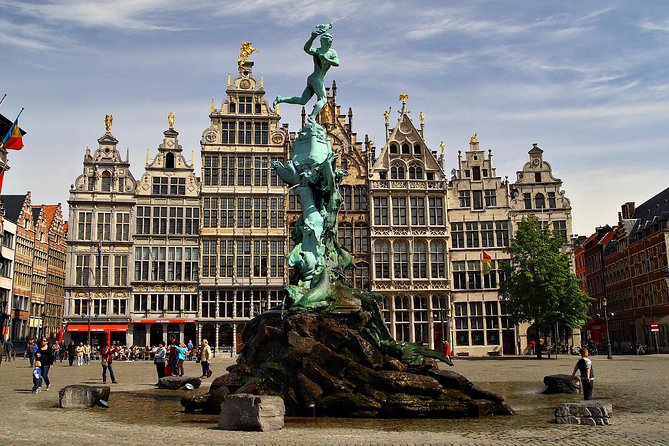
The meeting point is at Grote Markt 1, right in the center of Antwerp. This is the right place to begin because the square gives you the city in one glance: medieval guild houses, the City Hall, and the Brabo Fountain gathered around a handsome open space.
Your guide uses the square to explain Antwerp’s early power and the stories attached to its monuments. The Brabo Fountain is more than decoration, and the guild houses are more than pretty façades. This opening helps you read the city instead of simply photographing it.
Allow a few minutes to find the meeting point and look around before the walk starts. The tour ends at the Cathedral of Our Lady, so the route carries you from Antwerp’s civic heart to its great religious monument.
A few more Antwerp trips to weigh up
- Historical Walking Tour: Legends of Antwerp
★ 5.0 · 1,837 reviews - Antwerp: Historical Walking Tour in the Old City
★ 4.8 · 373 reviews - Historical Walking Tour in Antwerp Old City
★ 5.0 · 277 reviews
Hendrik Conscience Square and Carolus Borromeus Church
The short stop at Hendrik Conscience Square shifts the mood. Named for the Flemish writer, the square contains the old city library and an impressive Baroque church. It is a compact stop, but it helps connect Antwerp’s buildings with its literary and intellectual life.
Next comes Carolus Borromeus Church, one of the major art stops. This 17th-century Baroque church is closely tied to Peter Paul Rubens, whose work influenced its paintings, interior, and exterior decoration.
The visit inside is included during opening hours. That qualification matters. Church access can change with services or schedules, so you should not treat the ten-minute stop as a guaranteed full interior visit at every hour. Still, when the doors are open, this is one of the strongest parts of the walk for anyone interested in Baroque art.
The short time here works best as an introduction. If you want to study every painting or architectural detail, you will need to return independently.
The Bourse and Antwerp’s trading power
Handelsbeurs Antwerpen, the Bourse of Antwerp, brings a different story. Instead of focusing on church art or painters, the guide explains how Antwerp became an international trading center during the 16th century.
The building is described as the world’s first Wall Street, a useful phrase for understanding its importance in the city’s commercial story. Antwerp was not simply a port to pass through. It was a place where merchants, money, goods, and information met.
The monument is included during opening hours. As with the church, the timing of your visit can affect access. The ten-minute stop gives you context and a look at the building, but not a long architectural study.
I appreciate this change of subject. A city tour can become a parade of façades, but the Bourse explains why Antwerp mattered in Europe. It also makes the later stops feel connected: trade helped support art, printing, architecture, and fashion.
Rubenshuis and the painter behind the city’s fame
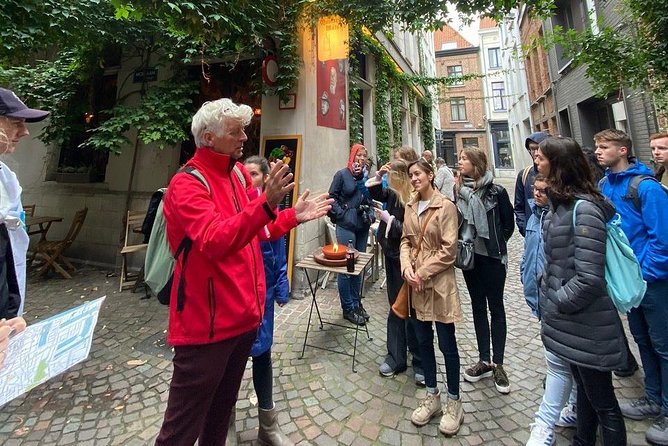
Rubenshuis is the former home and workshop of Peter Paul Rubens. The guide shares details about his life and the reasons behind his success, giving you a personal link to the painter rather than only a list of famous works.
The outside portion is included in the walking route, but admission to the house is not included. That distinction is important if Rubens is a main reason for your visit. You may want to plan a separate visit, depending on your interests and the time available during your stay.
The tour’s Rubens focus continues at Carolus Borromeus Church and finishes inside the Cathedral area. That makes the walk useful even if you do not enter Rubenshuis. You get a broader picture of the artist’s place in Antwerp, rather than seeing one museum in isolation.
The route does not turn into a dedicated Rubens tour. It gives you the essentials while also covering the city’s trade, printing, fashion, and medieval streets.
Same old town, a completely different kind of day:
- Antwerp: City Highlights Walking Tour
★ 4.7 · 816 reviews - Antwerp: City Highlights Guided Bike Tour
★ 4.7 · 529 reviews - Guided Bike Tour: 2 Hours Highlights of Antwerp
★ 5.0 · 347 reviews - Antwerp: City Brewery De Koninck Interactive Tour
★ 4.6 · 258 reviews
Antwerp’s fashion quarter near MoMu
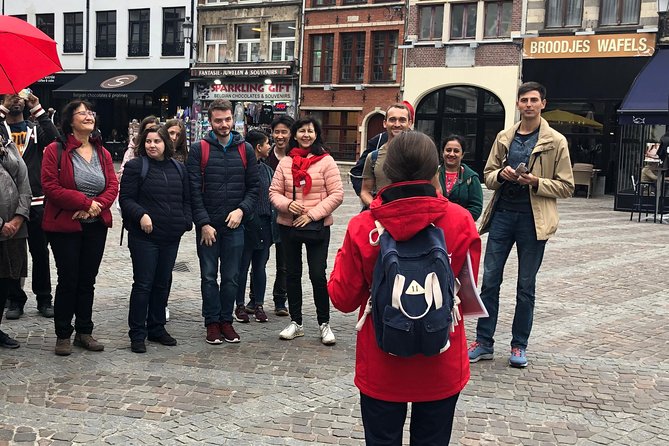
Antwerp is one of Europe’s leading fashion centers, and the stop near MoMu, the Fashion Museum Antwerp, explains why. The guide points out the designer quarter and gives advice on fashion shopping.
This is a brief pass-through rather than a museum visit. Admission to MoMu is not included, so you should return on your own if you want exhibitions or more time with the museum.
For shoppers, this may be one of the most practical parts of the route. For visitors focused only on medieval buildings and paintings, it may feel less essential. That is where the private format helps. Guides such as Flip have adjusted the emphasis to suit interests including history and photography, and you can ask for more or less attention to the fashion side.
The stop also keeps Antwerp from being presented as only an old European city. Its modern creative identity is part of the picture.
Plantin-Moretus Museum and the story of printing
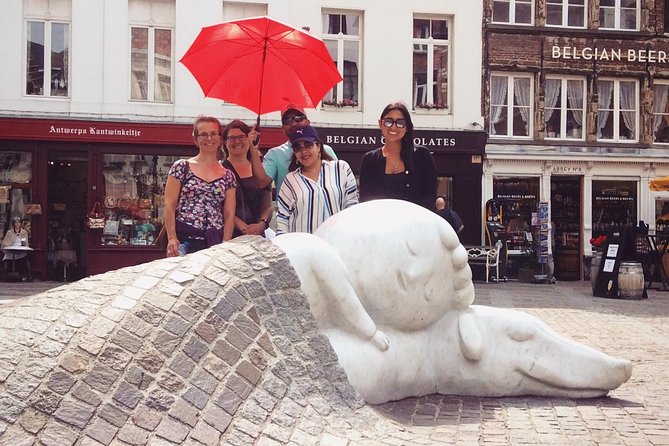
Museum Plantin-Moretus is one of the most rewarding stops for anyone who likes books, ideas, or the way information moves through a society. The museum brings Antwerp’s centuries-old printing story to life and was the first museum placed on the UNESCO World Heritage list.
The tour includes a visit to the historical garden in the usual arrangement. The garden offers a welcome change after several urban squares and monumental interiors, while the guide explains why the museum matters.
This stop is especially useful because it adds a subject many visitors might overlook. Antwerp’s importance was not built only on paintings and commerce. Printing helped spread religious, political, scientific, and literary ideas across Europe.
Ten minutes is enough to understand the place and decide if you want to return. If you do, set aside much longer than the tour stop. The walking tour can point you toward the museum, but it cannot replace a proper visit.
Vlaeykensgang, Antwerp’s quiet medieval turn
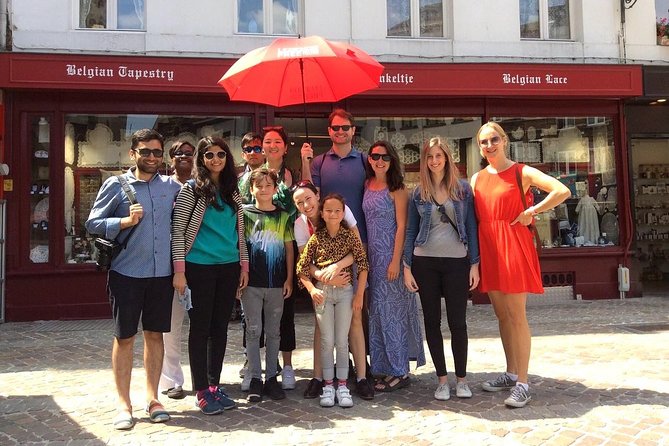
Vlaeykensgang is the route’s best small-scale surprise. This preserved medieval street is a narrow, secret-feeling alley that is not easy to locate on your own.
After the large Grote Markt and the grand Cathedral, the passage offers a close look at Antwerp’s older urban fabric. You move from public monuments into a space that feels more private and enclosed.
The guide’s navigation matters here. You might walk straight past the entrance without realizing it is there. A guide also gives the alley a story, rather than leaving you with a quick photograph and no sense of its place in the city.
The stop is listed as one of the most photographed places in Antwerp, but its appeal is not only visual. It shows how much of the medieval city survives in small corners rather than in the grandest squares.
Nello, Patrasche, and a local story
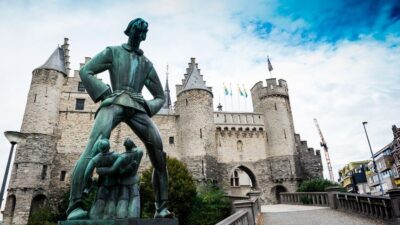
The Nello and Patrasche statue is a short stop with an unusual audience. The story has drawn many Asian visitors to Antwerp, yet many local people are not familiar with it.
Your guide explains the tale, giving the statue a cultural meaning that is easy to miss. This is a good example of how a walking tour can add a layer that a standard list of sights may leave out.
Do not expect a long visit here. It lasts about five minutes, but the story gives you another way to think about Antwerp’s international appeal. Not every important connection is tied to a church, museum, or trading hall.
Finishing at the Cathedral of Our Lady
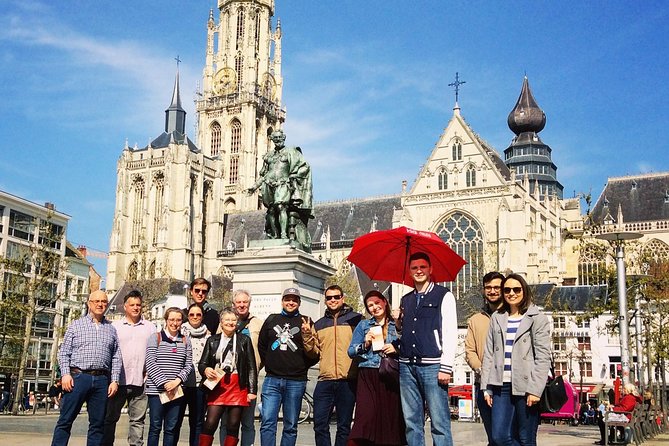
The tour ends at Handschoenmarkt, in front of the Cathedral of Our Lady. The cathedral receives about 15 minutes, with attention to its construction, history, and curious details.
This is also where the Rubens thread comes together. Several tour participants especially valued seeing Rubens paintings in the Cathedral, and guides such as Johan have made that art a central part of the experience. Admission is listed as free for the tour, though the visit still depends on opening conditions and access at the time.
Ending here is practical. The Cathedral is one of Antwerp’s essential landmarks, and you are already in a good position to continue exploring the old center. Your guide also offers recommendations for the rest of your stay, including places to eat, drink, shop, and visit.
Several guides have helped with practical planning after the walk. Arie, for example, has recommended a tucked-away restaurant and helped arrange a good table. Luc has offered suggestions for meals and activities, while other guides have tailored stops for photography or personal interests.
What the private format adds
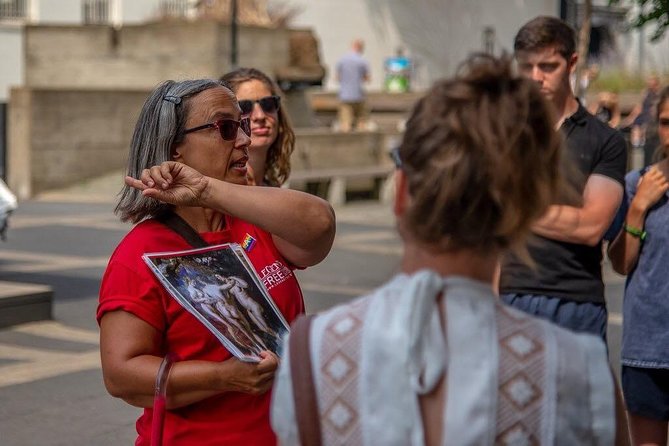
The strongest feature is the one-on-one attention. You do not share the walk with a large public group, so the guide can answer questions, adjust the pace, and change the emphasis when appropriate.
That does not mean every guide will deliver the same experience. The tour uses several guides, and the quality of communication and storytelling can vary. The public rating is 4.9 from 299 ratings, with 98 percent recommending the experience, but one poor rating specifically raised concerns about difficult English and an unwanted full walking tour. You should book this knowing that the guide assignment matters.
The best reports describe guides who make the history easy to follow and add humor. Luc D. has been praised for bringing buildings to life, using quizzes, and sharing his affection for Antwerp. Johan is noted for enthusiasm, languages, and Rubens knowledge. Edna is described as energetic and engaging, while Flip has adapted the route for history and photography.
One guide also accommodated a train delay, and another met a group at the train station after arranging the start there. Those examples suggest useful flexibility, but you should request any unusual meeting arrangement in advance rather than assume it is automatic.
Is $105.86 per person a fair price?
At $105.86 per person, this is not the cheapest way to see Antwerp. The price makes more sense for a private group that values direct conversation, a flexible pace, and an efficient first look at the center.
For two people, the cost buys a personal guide for about two hours. For a larger group, group discounts can improve the per-person value. The tour is also sold with optional hotel pickup, though one booking issue involved a hotel outside the downtown area. If pickup matters to you, confirm that your location qualifies before the day of the tour.
The route covers a lot in a short time. You see ten sites, but many stops last only five or ten minutes. That is excellent for orientation and poor for lingering. I would use this walk early in an Antwerp visit, then return to the Cathedral, Rubenshuis, Plantin-Moretus, or the Bourse according to your interests.
The tour is also commonly booked well ahead, on average 56 days in advance. That suggests planning ahead is wise if you need a particular time slot or are visiting on a tight schedule.
Who will get the most from this walk?
I would choose this tour if you are visiting Antwerp for the first time, have only a short stay, or want a local guide to connect art, trade, religion, and daily city life.
It suits:
- Couples and families who want a private pace
- History and architecture enthusiasts
- Visitors who want Rubens explained in context
- Photographers who want help finding strong viewpoints
- Shoppers curious about Antwerp’s designer quarter
- People arriving by train who want a compact central introduction
It is less suitable if you want long museum visits, a slow photographic walk, or a tour focused only on Rubens. It is also not the right choice if you thought you were booking a vehicle tour or a short drive between sights. This is a walking tour, and comfortable shoes are a sensible choice.
The activity is offered in English, and most people can take part. Service animals are allowed, and the route is near public transportation. The supplied details do not promise a fully step-free route, so you should ask before booking if that is important for your group.
Weather, timing, and cancellation
The experience requires good weather. If poor weather forces cancellation, you are offered another date or a full refund.
You can cancel for a full refund up to 24 hours before the start time. Changes or cancellations inside that 24-hour window are not accepted for a refund, and the cut-off uses Antwerp’s local time.
Confirmation normally arrives when you book. If you book within five days of travel, confirmation can take up to 48 hours and remains subject to availability.
Should you book Highlights and History of Antwerp?
Book it if you want a smart first look at central Antwerp with a private guide who can answer questions and point out places you might miss alone. The best reasons are the mix of major sights, the Rubens connection, the Bourse, Plantin-Moretus, and Vlaeykensgang, plus the final advice for planning the rest of your visit.
Skip it if your priority is extended time inside museums or a slow, specialist art tour. At two hours, this is an introduction. Used that way, the $105.86 price can be fair, especially for a small group that wants personal attention and a clear route through Antwerp’s old center.
FAQ
How long does the private Antwerp walking tour last?
The tour lasts approximately two hours.
What sights are included?
The route includes Grote Markt, Hendrik Conscience Square, Carolus Borromeus Church, Handelsbeurs Antwerpen, Rubenshuis, the MoMu fashion quarter, Museum Plantin-Moretus, Vlaeykensgang, the Nello and Patrasche statue, and the Cathedral of Our Lady.
Is this a private tour?
Yes. Only your group participates.
Is the tour offered in English?
Yes. The experience is offered in English.
Where does the tour start and finish?
It starts at Legends Walking Tours of Antwerp, Grote Markt 1, 2000 Antwerpen. It ends at Handschoenmarkt, in front of the Cathedral of Our Lady. You can add a note requesting a different end point.
Are admissions included?
Admission is listed as free for Grote Markt, Hendrik Conscience Square, Carolus Borromeus Church, Handelsbeurs Antwerpen, Museum Plantin-Moretus, Vlaeykensgang, the Nello and Patrasche statue, and the Cathedral of Our Lady. Admission to Rubenshuis and MoMu is not included. Visits inside some monuments depend on opening hours.
Just added around Antwerp
- Discover Antwerp while playing! Escape game – The alchemist★ 4.5 · 4 reviews
- Antwerp Private Custom Walking Tour With A Guide (Private Tour)★ 4.5 · 12 reviews
- Discover Antwerp with this Outside Escape city game tour!★ 5.0 · 4 reviews
- Private Tour in Antwerp, Belgium with a Local Guide★ 5.0 · 11 reviews
- Landed On Time 60 min. Max 1 Person★ 4.0 · 5 reviews
- Guided E-kickscooter tour: The big five of Antwerp★ 5.0 · 3 reviews
- Exciting Murder Mystery – Interactive city walk in Antwerp★ 3.5 · 12 reviews
- Antwerp Pub Crawl★ 5.0 · 8 reviews
Historical Tours, compared.

Historical Walking Tour with Chocolate & Waffle Tasting
Read our review →THE Storytelling Tour of Bruges | First Day Must | History & Tips
Read our review →
Historical Tour with Chocolate & Waffle Tasting
Read our review →
Historical Walking Tour: The Story of Bruges – by Legends
Read our review →
Browse the lists this tour appears in