
Reviewed · HISTORICAL TOURS
Brussels: BELvue Belgium History Museum Entry Ticket
Belgium’s story is told here through seven clear themes, not a long parade of kings and dates. At BELvue, you move from democracy and prosperity to migration, language, social security, and Europe, with videos, charts, news clips, posters, and personal testimony to keep the subject tied to modern life. I like that the museum asks how Belgium works today, not just how it was formed.
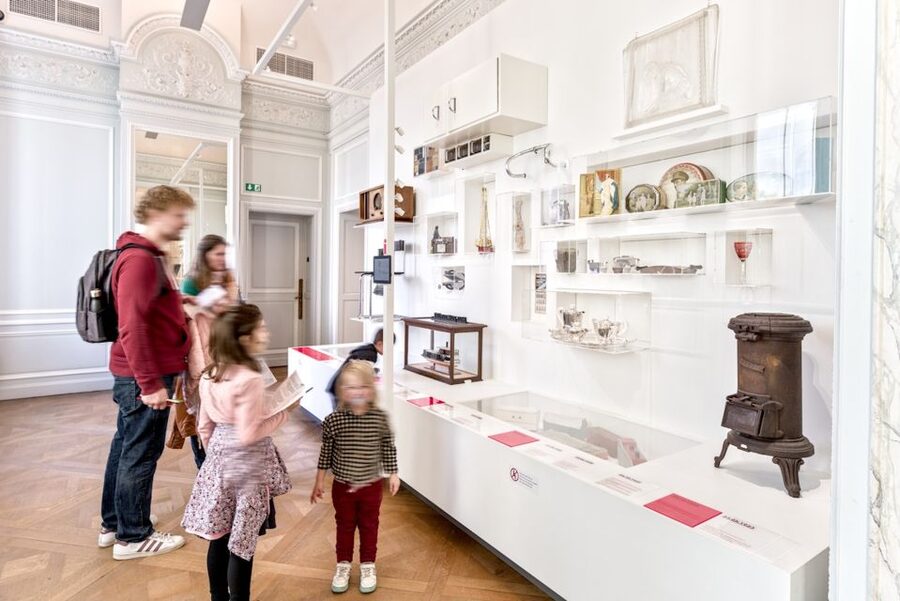
I also like the 200-object gallery, where ordinary things carry much of the appeal. A coffee filter, an electric fryer, Val Saint-Lambert crystal, and a football signed by the Red Devils give the country a human scale. The main drawback is that the museum can feel visually busy, and the material may take longer to sort through than the one-day ticket suggests.
In This Review
- Key points
- Start beside the Royal Palace
- Seven rooms explain a complicated country
- News clips and charts keep the displays current
- The gallery turns national identity into everyday things
- Use the audio guide for structure, not speed
- How long the visit may take
- Accessibility and practical limits
- Who will get the most from BELvue?
- Is the $11 ticket a good buy?
- Should you book BELvue Museum?
- FAQ
- Where is BELvue Museum located?
- How much does entry to BELvue Museum cost?
- How long is the ticket valid?
- Is an audio guide included?
- Is the museum wheelchair accessible?
- Are pets allowed inside?
- Can I cancel or pay later?
Key points
- Seven rooms, seven themes: Follow Belgium through democracy, prosperity, solidarity, pluralism, migration, language, and Europe.
- A modern look at national life: Videos, graphs, news clips, posters, and testimony explain topics such as spoken languages and social security.
- Over 200 Belgian objects: See familiar household items, crystal, and a signed Red Devils football.
- Audio guide on your phone: Listen in Dutch, English, French, German, or Italian.
- Easy central location: The entrance is beside the Royal Palace in Brussels.
- Flexible and family-friendly: Visit alone, with a group, or with children, and stay within the museum for the day’s validity.
Start beside the Royal Palace
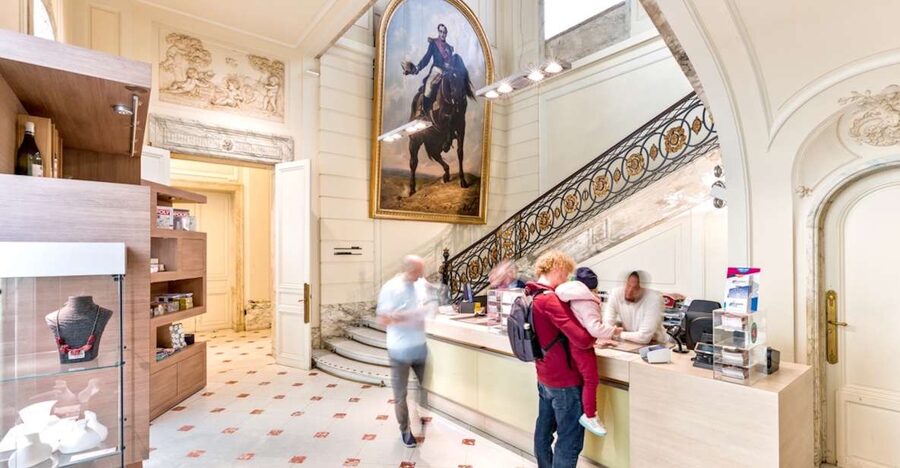
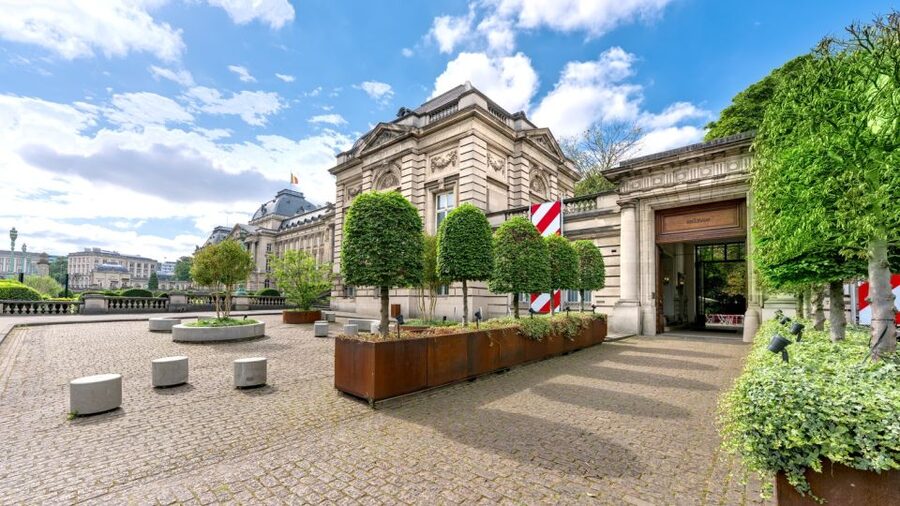
BELvue Museum sits next to the Royal Palace, making it easy to add to a day in central Brussels. The location matters because you can pair a visit to Belgium’s royal setting with an exhibition about the country’s citizens, institutions, and daily life.
Your ticket is valid for one day, so you are not locked into a short timed tour. The available starting times depend on the date, but the experience itself is designed for an independent visit rather than a fixed group walk. There is no hotel pickup, drop-off, or live guide. You arrive at the museum entrance beside the palace and explore at your own pace.
At $11 per person, the price is modest for a central Brussels museum. The value is strongest if you want context for the rest of your time in Belgium. This is not simply a royal collection or a display of old objects. It gives you terms and themes that help explain the country you are seeing outside the museum, from its several languages to its social structure and place in Europe.
A few more Brussels trips to weigh up
- Brussels: Atomium Entry Ticket with Design Museum Ticket
★ 4.4 · 9,254 reviews - Choco-Story Brussels: Chocolate Museum Entrance with Tasting
★ 4.3 · 4,883 reviews - Brussels: 2.5-Hour Chocolate Museum Visit with Workshop
★ 4.6 · 1,263 reviews
Seven rooms explain a complicated country
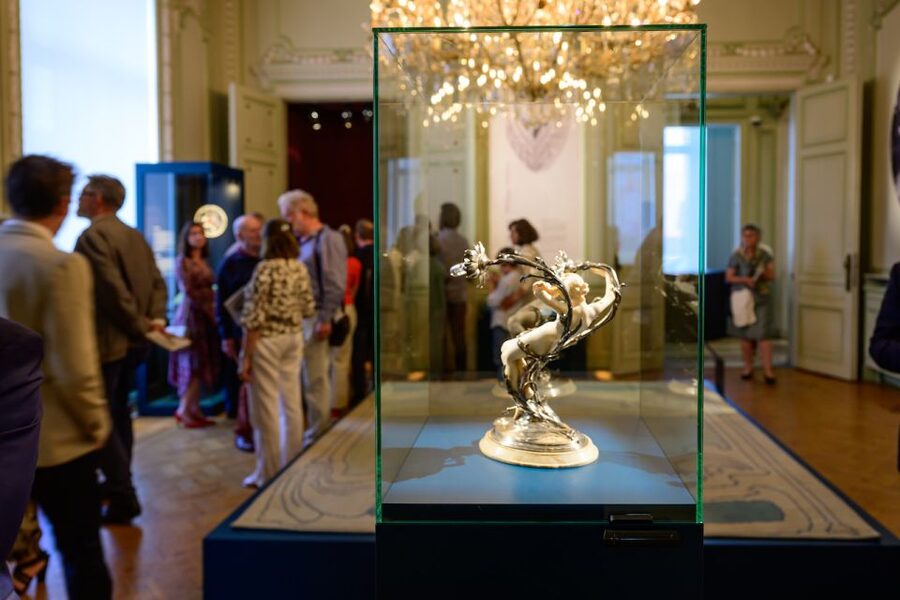
The museum organizes the visit around seven subjects: democracy, prosperity, solidarity, pluralism, migration, language, and Europe. That structure is useful because Belgium can be confusing at first glance. It has different language communities, a layered political system, and a society shaped by movement across borders.
The democracy section gives you a way to think about how the country is governed. Instead of relying only on dates and official portraits, the museum uses visual material to connect political ideas with public life. News clips and posters help show how national debates reach ordinary people.
Prosperity shifts the focus toward work, consumption, and the objects people use. This is where the museum’s approach feels especially approachable. A familiar household item can say as much about changing lifestyles as a formal document. You do not need a strong interest in political history to find an entry point.
Solidarity takes you toward social security and the systems that support people. Videos and explanatory displays help make an abstract subject more concrete. If you have wondered how Belgium’s social model fits into its national identity, this section gives you a place to begin.
Pluralism recognizes that Belgium is not one single cultural block. The idea is important for first-time visitors, since the country’s identity includes different communities and viewpoints. The displays are intended to show how those differences exist within one state, rather than treating Belgium as a simple, uniform story.
Migration adds another essential layer. Belgium’s society has been shaped by people moving into and through the country, and the museum places that subject alongside the other themes rather than treating it as an afterthought. You can expect videos, testimony, and visual material that connect movement between countries with everyday society.
Language is one of the most useful rooms for a visitor. Belgium’s spoken languages are not just a side note. They help explain regional identity, public life, and the way the country is organized. The museum uses video material to address the subject directly, which is more helpful than leaving you with a map and a few labels.
The Europe section widens the frame. Belgium’s story is also tied to its role in Europe, and this room helps connect national identity with the wider continent. The seven themes work best together, since each one adds another piece to the same question: how does this small country function?
News clips and charts keep the displays current
BELvue does not depend only on glass cases and dates. You will encounter news clips, posters, charts, and graphs, along with contemporary testimony. These formats give the museum a more immediate feel and help you compare official information with personal experience.
That approach is useful when a subject is hard to picture. Social security can seem dry on a label, while a video or chart gives it shape. Language can seem like a technical issue, while spoken testimony shows why it affects daily life and identity.
The mix also gives you different ways to learn. I would use the audio guide for the sections where you want more explanation, then pause to look closely at the visual displays. If you prefer to read and form your own view, you can spend more time with the posters and graphs. Children may respond better to the videos and objects than to long blocks of text.
There is a tradeoff. The amount of material can feel dense. One French-speaking visitor who is not usually drawn to history museums found the subject worthwhile but felt there was a lot happening at once, with no obvious place for the eye to settle. That is fair advice. You should not expect a sparse, minimalist display.
Give yourself permission to move slowly in some rooms and more quickly in others. You do not need to absorb every chart to benefit from the visit. A focused hour can introduce the main ideas, while a longer stay works for anyone who enjoys comparing sources and following several themes in detail.
The gallery turns national identity into everyday things
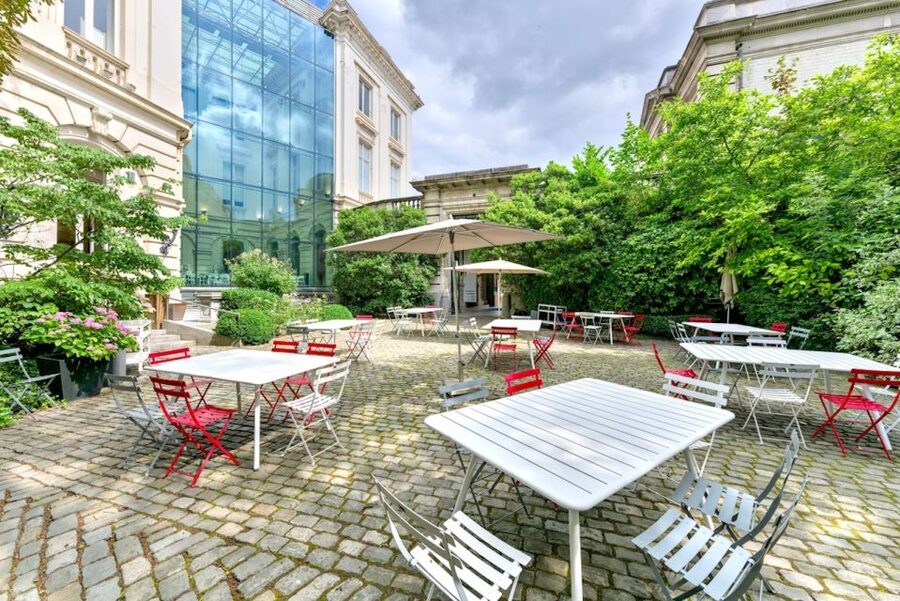
The gallery of more than 200 objects is one of the museum’s most memorable features. It presents the material memory of Belgium through things people recognize, use, collect, or associate with the country.
A coffee filter and an electric fryer may sound like minor objects, but that is exactly the point. National identity is not made only from monuments and famous people. It also appears in kitchens, homes, shops, hobbies, and habits. These objects give the museum a lighter, more personal counterpoint to the sections on politics and society.
Val Saint-Lambert crystal vases bring in Belgian design and craft. You can look at them as decorative pieces, but they also point toward the country’s industrial and artistic traditions. The display lets you see Belgium through manufactured goods as well as public institutions.
Football fans have their own reason to linger. A ball signed by the Red Devils connects the collection with one of Belgium’s strongest popular passions. It is a small object with an easy story, and it helps break up the more serious material.
I would save time for this gallery rather than treating it as a quick exit display. The objects are not just extras after the seven themes. They show how the larger ideas of prosperity, identity, and society can appear in ordinary life. Families may find this section easier to discuss together because each person can choose an object that catches the eye.
Same old town, a completely different kind of day:
- From Brussels: Guided Day Trip to Bruges and Ghent
★ 4.6 · 8,353 reviews - From Brussels: Bruges & Ghent Day Tour – 2 Fairytale Cities
★ 4.7 · 8,242 reviews - Bruges and Ghent – Belgium’s Fairytale Cities – from Brussels
★ 4.0 · 4,809 reviews - Brussels: Hop-On Hop-Off Bus Tour
★ 4.0 · 4,016 reviews
Use the audio guide for structure, not speed
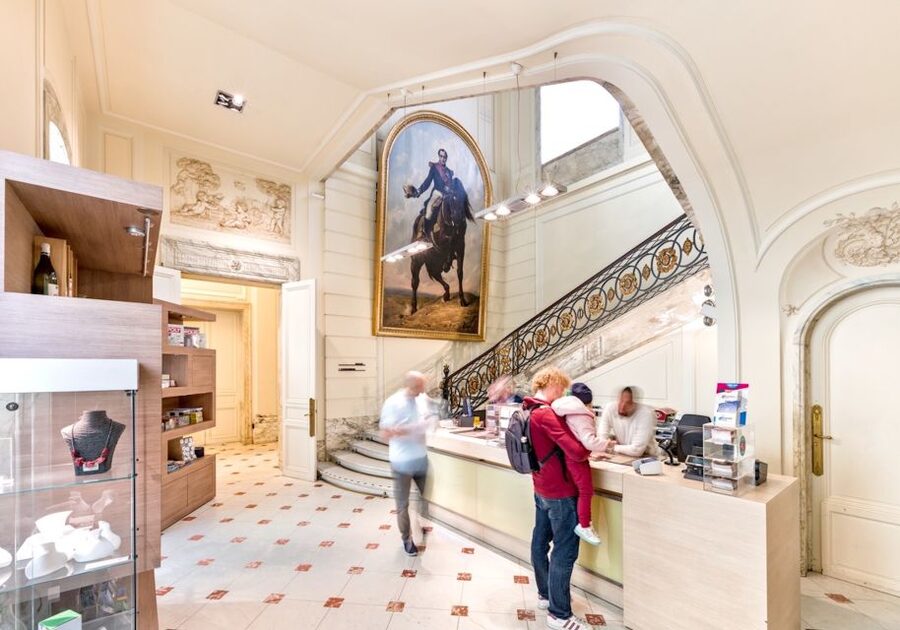
The free downloadable audio guide works on your own mobile phone. It is available in Dutch, English, French, German, and Italian. Since there is no live guide included, the audio commentary gives you the main spoken support for the visit.
Bring a charged phone and be ready to use your own device. The audio guide is most useful when you want help linking the rooms together, especially if you are not familiar with Belgian politics or social structure. It can also keep the visit moving for a group with different levels of interest.
I would not listen to every section automatically. Start with the introduction, then choose the themes that matter most to you. Someone interested in public policy may spend longer with solidarity and democracy. A family may prefer prosperity, migration, and the object gallery. A visitor trying to understand Brussels may want extra time in language and Europe.
You can visit alone, with a group, or with children. The lack of a fixed guide gives you freedom, but it also means you need to set your own rhythm. If you prefer someone to lead you from room to room and answer questions in person, this ticket will not provide that service.
How long the visit may take
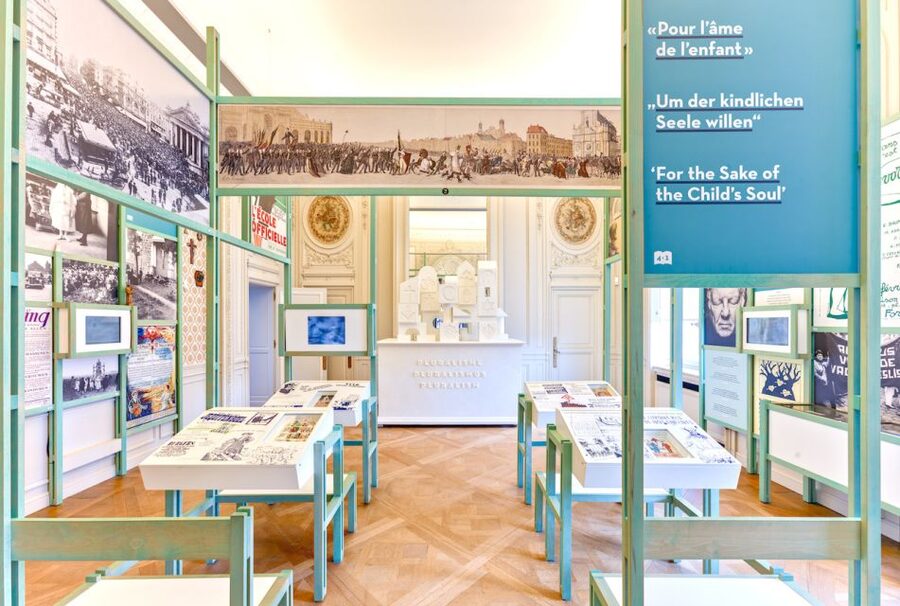
The ticket is valid for one day, rather than for a specific short time inside the museum. That helps if you are building a busy Brussels schedule or want to take the exhibition at a relaxed pace.
The supplied duration is one day, but that does not mean you need to spend an entire day inside. The museum’s seven rooms and object gallery can support a shorter visit, while readers who enjoy social history may want much longer. The amount of visual information is a reason to avoid squeezing this into a rushed gap between other sights.
A useful plan is to begin with the seven themes, take a short pause if needed, then give the object gallery your remaining attention. If you are visiting with children, you can treat the objects as a series of small discoveries instead of asking them to follow every political explanation.
The one-day validity also gives you flexibility, but the information provided does not specify re-entry rules. Check the conditions for your chosen date if you expect to leave and return.
Accessibility and practical limits
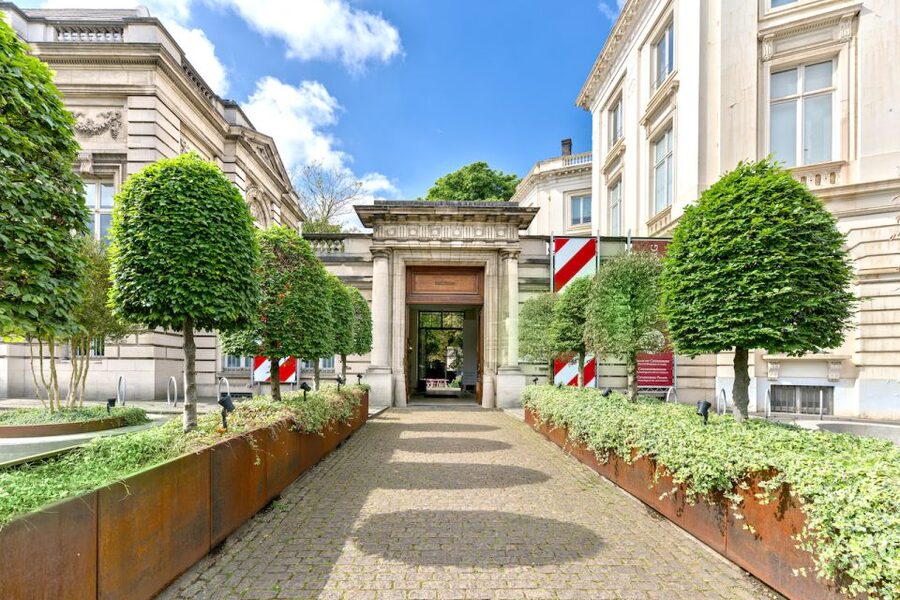
BELvue Museum is wheelchair accessible. If you plan to arrive with a wheelchair, contact the museum in advance so staff can make the right preparations. That is worth doing rather than relying on last-minute arrangements.
Pets are not allowed, although assistance dogs are permitted. There is no hotel transportation, so you make your own way to the entrance beside the Royal Palace.
Cancellation is free up to 24 hours before the visit for a full refund. You can also reserve now and pay later, which is useful if your Brussels plans are still shifting. Check availability for the starting times on your chosen date.
Who will get the most from BELvue?
I would recommend this museum if you want more than royal buildings, chocolate shops, and postcard views. It gives you a grounded introduction to Belgium’s political structure, languages, social policies, and place in Europe.
It is also a good choice if you usually find history museums too formal. The household objects, football, videos, and contemporary testimony provide several ways into the subject. You can focus on the displays that feel familiar and skip the sections that become too technical.
Families can make good use of the flexible format. Children may not follow every discussion of democracy or social security, but the objects and videos give them concrete things to spot. Groups should agree on a meeting point or pace, since an independent museum visit can scatter people.
I would be more cautious if you want a short, visually simple exhibition or a personal guide. The material is broad, and one section can lead to another. The museum rewards curiosity, but it does not always tell you where to look first.
Is the $11 ticket a good buy?
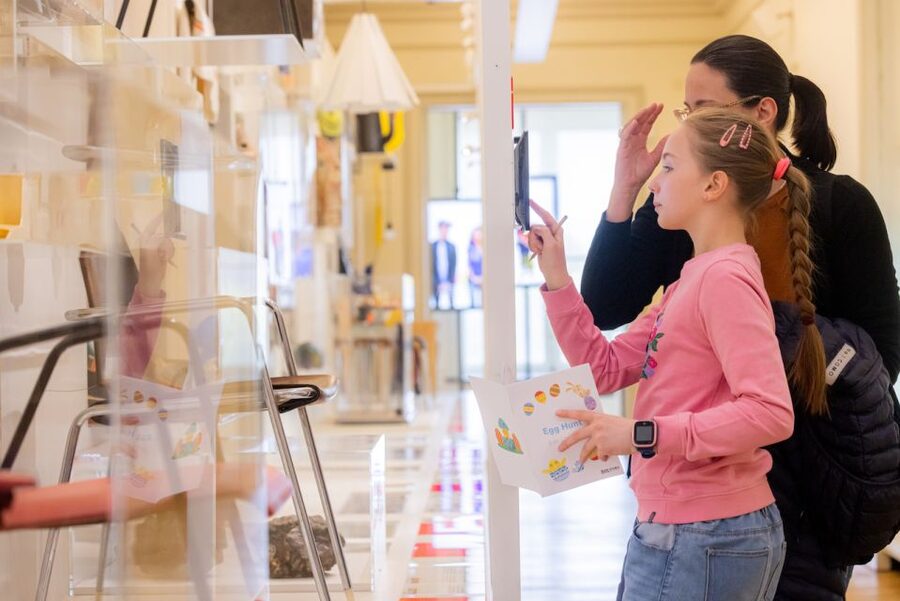
At $11, BELvue offers solid value, especially for a central Brussels attraction with a multilingual audio guide and a full day of ticket validity. The price is low enough to make sense as a practical addition to a palace, museum, or old-town itinerary.
The real value depends on your interests. You are paying for interpretation as much as for objects. If you want to understand why language, migration, social security, and Europe matter to Belgium, the ticket gives you useful context. If you only want famous paintings or grand historic rooms, this may not be the right museum.
The 4.6 rating from 27 bookings suggests a generally strong experience, but the individual scores also show the main limitation: the exhibition can feel long and crowded with information. Plan to choose your priorities instead of trying to memorize everything.
Should you book BELvue Museum?
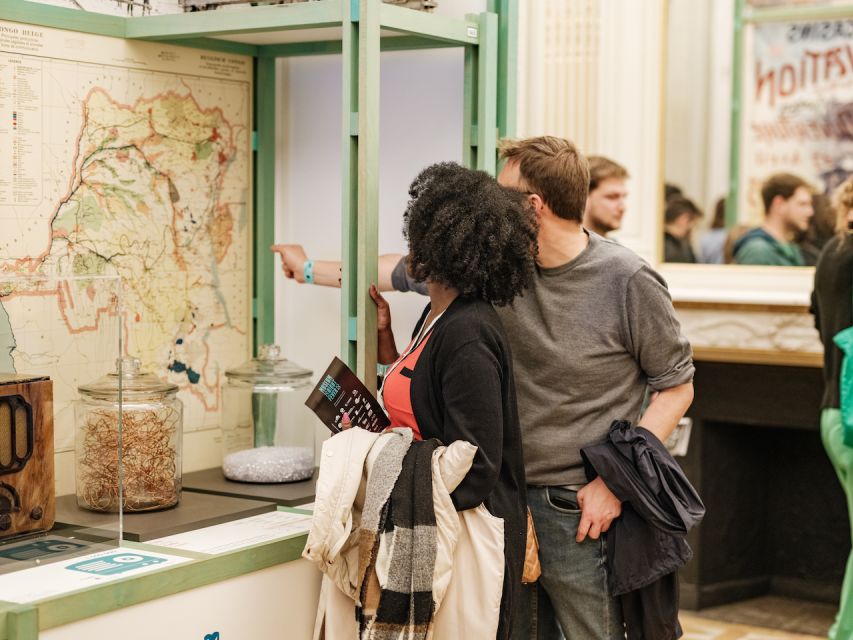
Book it if you want a clear introduction to Belgium as a modern society, not just a collection of royal buildings and old stories. The seven themes, contemporary media, and everyday objects make the country easier to understand, and the $11 cost keeps the risk low.
Skip it if you need a live guide, a tightly timed tour, or a very quiet display with only a few objects. For everyone else, especially independent visitors, families, and football or social-history fans, BELvue is a sensible Brussels stop beside the Royal Palace.
FAQ
Where is BELvue Museum located?
The entrance is next to the Royal Palace in Brussels, in the Brussels Capital Region.
How much does entry to BELvue Museum cost?
The listed price is $11 per person.
How long is the ticket valid?
The ticket is valid for one day. Check availability for the starting times on your chosen date.
Is an audio guide included?
Yes. A free downloadable audio guide is included for use on your own mobile phone. It is available in Dutch, English, French, German, and Italian.
Is the museum wheelchair accessible?
Yes, the museum is wheelchair accessible. If you are visiting with a wheelchair, contact the museum in advance so staff can make the right preparations.
Are pets allowed inside?
Pets are not allowed. Assistance dogs are permitted.
Can I cancel or pay later?
You can cancel up to 24 hours in advance for a full refund. You can also reserve your place and pay later, with no payment required today.
Just added around Brussels
- Standard vehicle from Brussels airport to city of Antwerp★ 5.0 · 4 reviews
- Private transfer from BRU Airport to Brussels city with luxury limousine 3 pax★ 4.5 · 8 reviews
- Luxury vehicle from Brussels airport to the city of Brussels★ 4.0 · 5 reviews
- Transfer Brussels Airport –> City MB E Class 1-3 PAX (ONE WAY)★ 5.0 · 6 reviews
- PRIVATE MPV TRANSFER FROM/TO BRUSSELS AIRPORT (Max 6 pax) ONE-WAY★ 5.0 · 4 reviews
- Transfer Brussels Airport (BRU) –> City Center 7 PAX (ONE WAY)★ 5.0 · 7 reviews
- Transfer Brussels Airport –> Brussels MB V Class 7 PAX (ONE WAY)★ 5.0 · 4 reviews
- Brussels: City Walk with Audioguide in 7 Languages on your Phone★ 3.5 · 4 reviews
Historical Tours, compared.

Historical Walking Tour with Chocolate & Waffle Tasting
Read our review →THE Storytelling Tour of Bruges | First Day Must | History & Tips
Read our review →
Historical Tour with Chocolate & Waffle Tasting
Read our review →
Historical Walking Tour: The Story of Bruges – by Legends
Read our review →
Browse the lists this tour appears in