
Reviewed · WALKING TOURS
Brussels Walking Tour with Guide plus PDF
Brussels packs grand squares, cheeky statues, royal churches, comic-book art, chocolate shops, and railway history into a compact center. This 2.5-hour walking tour gives you a useful first look without asking you to pay museum admission along the way.
I like the route’s variety, especially the shift from Grand Place and Manneken Pis to the quieter Sablon district. I also like the practical touch of a Brussels and Belgium PDF, plus local food advice from guides such as David and Tom. The main consideration is pace: twelve stops in 150 minutes leaves limited time at each one.
In This Review
- Key points to know before you book
- Grand Place gives you the right opening view
- Small stories around Everard t’Serclaes and Hotel Amigo
- Tintin and Manneken Pis bring Brussels down to earth
- Notre-Dame du Sablon is the walk’s main interior visit
- Square du Petit Sablon adds political history
- Koningsplein links museums, monarchy, and public space
- Mont des Arts offers a built-in photo pause
- Brussels Central Station turns transport into part of the tour
- The cathedral gets an exterior explanation only
- The Royal Galleries finish the walk with chocolate
- What the guides add to a low-cost walk
- Is $3.62 good value for 150 minutes?
- Who will get the most from this Brussels walk?
- Should you book this guided Brussels route?
- FAQ
- How long does the Brussels walking tour last?
- What language is the tour offered in?
- Where does the tour start?
- Where does the tour end?
- What is included in the tour?
- Are tips included in the price?
- How large can the group be?
Key points to know before you book
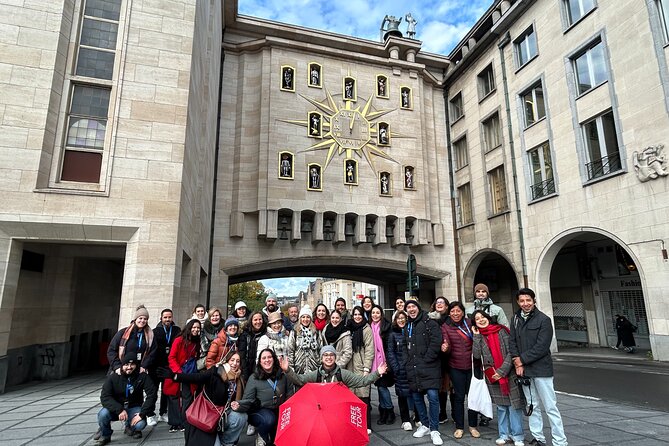
- A full central Brussels route: You walk from Grand Place to the Royal Galleries, passing major sights, churches, monuments, and viewpoints.
- Guides add personality: David is noted for lively explanations, history, legends, and food tips, while Tom brings local anecdotes and stories connected with Brussels.
- Only one interior visit is included: You enter Notre-Dame du Sablon, while the cathedral is explained from outside.
- A very low listed price: The displayed cost is $3.62 per person, with guide tips of €10 to €25 not included.
- English and mobile-friendly: The tour is offered in English and uses a mobile ticket, with a maximum group size of 25.
- A useful first-day choice: The route covers enough of central Brussels to help you decide where to return for more time.
Grand Place gives you the right opening view
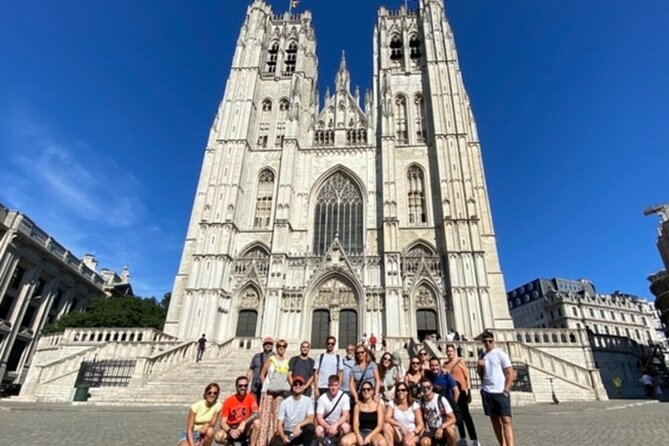
The walk begins at Grand Place, the square that quickly tells you why Brussels deserves more than a quick stop between trains. You get about 20 minutes of exterior explanation here, with no admission charge.
This is not a museum visit, so the value comes from the guide’s ability to point out what you might miss while looking at the ornate facades. The square can feel visually overwhelming at first. A guide gives you a way to sort the buildings, stories, and symbols into something you can remember.
I like starting here because the square is easy to find and close to many other sights. It also gives the tour a strong sense of place right away. You are not beginning in an anonymous meeting room or on the edge of town.
The limitation is simple: 20 minutes is enough for orientation, not detailed architecture. If Grand Place is one of your main reasons for visiting Brussels, return later when you can look up and study the buildings at your own speed.
A few more Brussels trips to weigh up
- Brussels: Historical Walking Tour with Chocolate & Waffle Tasting
★ 5.0 · 1,165 reviews - Brussels Walking and Tasting Tour (Beers,Chocolates&Fries/Waffle)
★ 5.0 · 929 reviews - Brussels Chocolate Walking Tour and Workshop
★ 4.5 · 885 reviews
Small stories around Everard t’Serclaes and Hotel Amigo
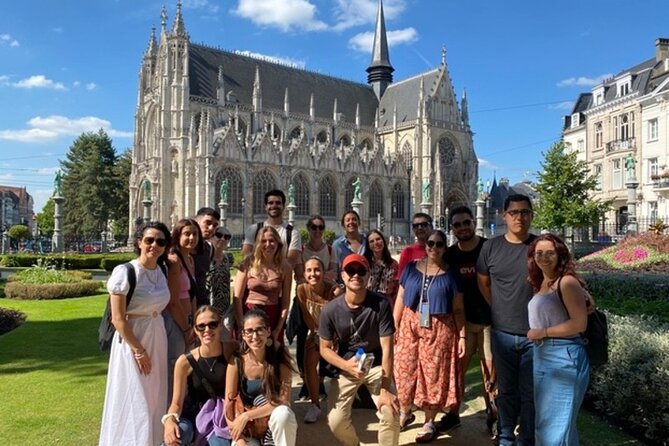
The next stop is the Monument a Everard t’Serclaes, with around five minutes devoted to the statue. That is a short pause, but it adds the kind of detail that can make a city walk more memorable than a list of famous buildings.
The route then moves to Hotel Amigo for an explanation of the origin of its name. You do not enter the hotel as part of the tour. Instead, the guide uses the location to connect a present-day luxury property with an older Brussels story.
These stops show one of the tour’s strengths: it does not only chase the biggest monuments. Brief explanations at street level help you notice how history appears in ordinary parts of the center. You get context without giving up much walking time.
Still, five minutes can feel quick if the guide is handling questions or the group gathers slowly. Think of these as story stops, not full visits.
Tintin and Manneken Pis bring Brussels down to earth
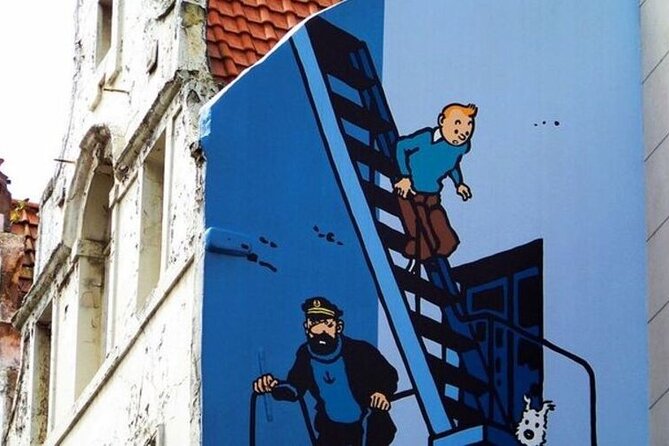
The Tintin mural takes about five minutes. Brussels has a strong comic tradition, and this stop adds a modern, playful note after the formal architecture of Grand Place.
The mural is an exterior sight, so you will not need a ticket or a long indoor visit. The guide’s role is to explain why comic art fits so closely into the city’s public identity. This is a good moment for a photograph, although the schedule does not promise a long photo break.
Then comes Manneken Pis, the small statue known for its unmistakable pose. The tour allows about 15 minutes here, which is enough to hear the story, take a look, and understand why such a tiny figure became one of Brussels’ best-known symbols.
I like this pairing because it avoids making Brussels feel too formal. You get medieval and civic history, then a mural and a famously silly statue. That mix reflects the city better than a route made only of palaces and churches.
Do not expect Manneken Pis to be large. Its fame is much bigger than its physical size. The tour helps make the stop worthwhile by supplying the explanation, but the statue itself will take only a moment to see.
Notre-Dame du Sablon is the walk’s main interior visit
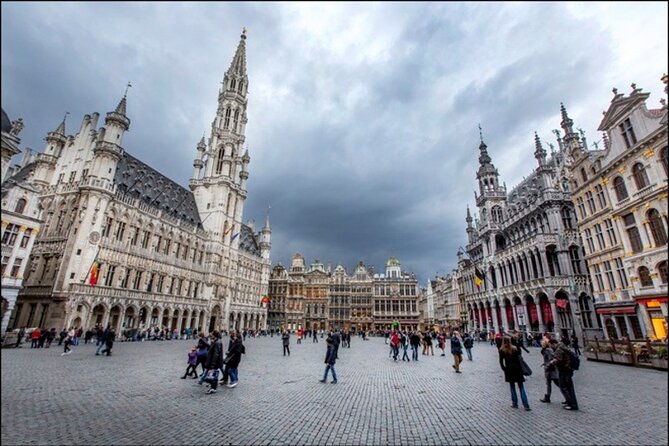
At Église Notre-Dame des Victoires au Sablon, you receive a free interior visit lasting about 15 minutes. This is the one stop where you are specifically taken inside rather than hearing an exterior explanation.
That difference matters. Churches can be difficult to understand from the pavement, and a short interior visit gives you a chance to see the space rather than simply photograph the facade. The guide can also connect the church with the surrounding Sablon district.
The tour includes entry here, so there is no extra admission charge to plan for. I would treat these 15 minutes as a focused introduction, not a long religious or architectural study. If the church interests you, you may want to return independently after the walk.
Sablon also changes the feel of the route. After the busy central sights, the walk becomes more reflective and gives you a different side of Brussels. The schedule remains tight, so listen closely during the explanation and save detailed questions for a quieter moment.
Same old town, a completely different kind of day:
- Brussels: Atomium Entry Ticket with Design Museum Ticket
★ 4.4 · 9,254 reviews - From Brussels: Guided Day Trip to Bruges and Ghent
★ 4.6 · 8,353 reviews - From Brussels: Bruges & Ghent Day Tour – 2 Fairytale Cities
★ 4.7 · 8,242 reviews - Choco-Story Brussels: Chocolate Museum Entrance with Tasting
★ 4.3 · 4,883 reviews
Square du Petit Sablon adds political history
The stop at Square du Petit Sablon lasts around 10 minutes and covers the history of the Earls of Egmont and Hornes. This is one of the more useful history stops because it moves beyond famous names and gives you a reason to look at the square with more attention.
The guide’s job here is especially valuable. Without context, a formal square can seem like a pleasant place to pass through. With the story of Egmont and Hornes, you have a historical thread to follow as you walk among the monuments.
I like that the route does not treat Sablon as merely a photo backdrop. It gives the district political meaning, then continues toward the royal quarter. The shift helps you understand Brussels as a city shaped by power, public memory, and ceremony.
Ten minutes is enough for the main explanation, but not every detail. If you enjoy European political history, note the names and use the included PDF as a reminder after the tour.
Koningsplein links museums, monarchy, and public space
At Koningsplein, or Royal Square, the guide explains the statue of Godfrey of Bouillon and points out the Museum of Fine Arts, Plaza Real, and the Musical Instruments Museum, also known as MIM. The stop lasts about 10 minutes.
This is a useful orientation point because it brings several cultural attractions into view without taking you inside them. You get a sense of how the royal quarter fits together and which places may deserve a return visit.
The tour does not include entry to the museums. That keeps the price low and the walk moving, but it also means you should not book this experience expecting museum time. I see this stop as a planning aid for the rest of your Brussels visit.
The statue and square also give the guide room to explain public monuments and royal associations. The short format works best if you want a broad introduction and are willing to explore the interiors later on your own.
Mont des Arts offers a built-in photo pause
Mont des Arts receives about 15 minutes, including explanation and time for photographs. This is one of the route’s clearest chances to stop, look out, and take pictures instead of moving directly from one story to the next.
The value here is partly visual and partly practical. You get a break from close streets and a chance to see how central Brussels is arranged around the royal and cultural quarter. The guide can explain the site while leaving room for you to make your own images.
I appreciate the scheduled photo time because a walking tour can otherwise feel like a march. Fifteen minutes is not a long rest, but it gives the group a natural pause before the route continues.
As with the other outdoor stops, the experience depends on conditions and group movement. You may want to have your phone ready before arriving, since the tour must still keep to its overall schedule.
Brussels Central Station turns transport into part of the tour
The stop at Brussels Central Station lasts about 10 minutes and covers how trains operate in Belgium. This may sound less glamorous than a cathedral or square, but it is useful information for anyone using Brussels as a base.
I like practical transport explanations because they help you make better use of the city after the walk. The station is also near many central sights, so understanding its role can make later trips easier.
This is another explanation from the outside rather than a station tour. You are not promised a detailed railway lesson or a guided train journey. Instead, you receive a concise introduction that places Brussels within Belgium’s rail network.
If you plan to visit other Belgian cities, pay attention here. Even a short explanation can save confusion later, especially when you are working out how central train travel fits into your day.
The cathedral gets an exterior explanation only
The tour then stops at St. Michael and St. Gudula Cathedral for about 10 minutes. The guide explains the cathedral from the outside, but the route does not include an interior visit.
That distinction is important when you compare this walk with a church-focused tour. You will learn about the building and its place in Brussels, but you should not count on seeing the interior as part of the experience.
I think the exterior stop makes sense within this route because the tour already includes Notre-Dame du Sablon inside. It gives you a second major church without adding an admission visit or taking too much time from the other stops.
Still, if the cathedral is high on your list, plan to return separately. The tour gives you a useful introduction, not a complete visit.
The Royal Galleries finish the walk with chocolate
The final stop is Les Galeries Royales Saint-Hubert, ending in front of the Neuhaus chocolate shop at Galerie du Roi 3. The guide explains the Royal Galleries and the chocolate shop, giving the walk a fitting Brussels finish.
The Royal Galleries are a natural ending because they combine architecture, shopping, and the city’s chocolate reputation in one place. You can continue exploring after the guide leaves, and the central location makes it easy to reach other parts of Brussels.
Neuhaus is mentioned as part of the explanation, but the tour does not include chocolate or shopping. Plan to pay separately if you want to buy something. That small distinction prevents disappointment and lets you decide how much, if anything, you want to spend afterward.
The end point is in front of the chocolate shop, while the start is at Grand Place 30. The route therefore works as a point-to-point walk rather than a loop. You finish close to central public transport and major attractions.
What the guides add to a low-cost walk
The human element matters more than the PDF or the low price. David is described as animated and generous with historical references, local anecdotes, and food recommendations. Tom’s style is also lively, with local stories and versions of events connected to people from Brussels.
You should expect an English-language tour that mixes formal history with lighter observations. That blend suits Brussels, where royal buildings and comic murals can sit within a short walk of each other.
A guide can also help you avoid the flat feeling that comes from reading plaques on your own. At the same time, a group walk is not a private tour. With up to 25 people, questions may need to be brief, and the guide cannot give every person unlimited time at every stop.
Tips of €10 to €25 are not included. Since the listed price is only $3.62 per person, the tip can become the main cost of the experience. That is not necessarily poor value, but you should include it in your real budget rather than treating the advertised price as the full expense.
Is $3.62 good value for 150 minutes?
At the displayed price, this is an unusually inexpensive introduction to central Brussels. You receive a professional guide, a PDF about Brussels and Belgium, an infographic about Leopold II, and entry to Notre-Dame du Sablon.
Most of the route uses free outdoor sights, so the low cost is possible without concealing a long list of admission fees. You are paying mainly for organization, explanations, and the guide’s local perspective.
The value depends on your expectations. If you want a quick orientation with history, food suggestions, and major sights, the price is strong even after allowing for a tip. If you want long interior visits, museum entry, or time for detailed photography, this walk will feel too compressed.
The free cancellation policy adds flexibility. You can cancel up to 24 hours before the start time for a full refund. Changes or cancellations made less than 24 hours before the start time are not accepted for a refund, and the local cut-off time applies.
The experience also requires a minimum number of participants. If that minimum is not reached and the tour is canceled, you are offered another date or experience, or a full refund.
Who will get the most from this Brussels walk?
I would choose this for a first visit, a short stay, or the opening morning of a longer Brussels trip. The route touches enough key places to help you decide where to return for more time.
It also suits you if you like history delivered through stories rather than long lectures. David’s historical references and food tips, along with Tom’s local anecdotes, suggest a walk with personality rather than a simple transfer between landmarks.
The route is accessible to most participants and is near public transportation. Service animals are allowed. Since the group can reach 25 people and the schedule includes twelve stops, you should be comfortable walking at a steady group pace.
I would be more cautious if your main aim is a quiet church visit, museum time, or close study of architecture. Only Notre-Dame du Sablon includes an interior visit, and most stops last between five and fifteen minutes.
Should you book this guided Brussels route?
Book it if you want a low-cost, English-language introduction to central Brussels that balances major sights with smaller stories. The strongest reasons are the broad route, the local flavor supplied by guides such as David and Tom, the included Sablon church visit, and the practical PDF for later reference.
Go in with the right expectations. This is a fast orientation walk, not a series of long visits. Budget for a possible €10 to €25 tip, keep your phone ready for photographs, and mark the places you want to revisit.
For a first look at Brussels, I think the route offers very good value. For a deep visit to the cathedral, museums, or historic churches, use it as a beginning and make separate plans for the interiors.
FAQ
How long does the Brussels walking tour last?
The tour lasts approximately 2 hours and 30 minutes.
What language is the tour offered in?
The tour is offered in English.
Where does the tour start?
The meeting point is Grand Place 30, 1000 Bruxelles, Belgium.
Where does the tour end?
The walk ends at Galerie du Roi 3, 1000 Bruxelles, Belgium, in front of the Neuhaus chocolate shop.
What is included in the tour?
The experience includes a professional guide, a Brussels and Belgium PDF, free entry to Notre-Dame du Sablon, and a Leopold II infographic.
Are tips included in the price?
No. Tips for the guide are not included. The suggested tip range is €10 to €25.
How large can the group be?
The tour has a maximum of 25 participants.
Just added around Brussels
- Standard vehicle from Brussels airport to city of Antwerp★ 5.0 · 4 reviews
- Private transfer from BRU Airport to Brussels city with luxury limousine 3 pax★ 4.5 · 8 reviews
- Luxury vehicle from Brussels airport to the city of Brussels★ 4.0 · 5 reviews
- Transfer Brussels Airport –> City MB E Class 1-3 PAX (ONE WAY)★ 5.0 · 6 reviews
- PRIVATE MPV TRANSFER FROM/TO BRUSSELS AIRPORT (Max 6 pax) ONE-WAY★ 5.0 · 4 reviews
- Transfer Brussels Airport (BRU) –> City Center 7 PAX (ONE WAY)★ 5.0 · 7 reviews
- Transfer Brussels Airport –> Brussels MB V Class 7 PAX (ONE WAY)★ 5.0 · 4 reviews
- Brussels: City Walk with Audioguide in 7 Languages on your Phone★ 3.5 · 4 reviews
Walking Tours, compared.
Walking Tour, Canal Boat Trip w/Beer Tasting Option
Read our review →

Historical Walking Tour with Chocolate & Waffle Tasting
Read our review →
Brussels Walking and Tasting Tour (Beers,Chocolates&Fries/Waffle)
Read our review →
Browse the lists this tour appears in