
Reviewed · FULL-DAY
From Brussels: Bruges and Ghent Full-Day Trip by Train
Bruges and Ghent pack a remarkable amount of medieval Belgium into one day. You’ll stroll beside Bruges canals, enter the old port of Graslei in Ghent, and see Gravensteen Castle, all without arranging trains or finding your way between city centers.
I like the efficient rail travel from Brussels and the strong focus on walking, which puts you right among guildhalls, churches, cafés, and old waterways. I also like the chance to add a Bruges canal boat for €8 and see the Van Eyck altarpiece in Ghent for €4. The catch is simple: this is a full day on your feet, and two cities in ten hours leaves little time for museums, long meals, or wandering alone.
In This Review
- Key points to know before booking
- Why Bruges and Ghent work well together
- Meeting in Brussels and taking the train
- Bruges begins with water, walls, and women’s history
- Bruges churches, hospitals, and Michelangelo
- Fishmarket, guildhalls, and Bruges’ main squares
- The optional Bruges canal boat
- Ghent starts at Saint Bavo Cathedral
- Ghent’s towers, churches, and old port
- Gravensteen Castle and the Patershol quarter
- The pace, guide style, and walking demands
- What you can and cannot fit into one day
- Is this Bruges and Ghent day trip worth it?
- FAQ
- How long does the tour last?
- What time and where do I meet the guide?
- Which languages are available?
- Is transportation included?
- Is the Bruges canal boat included?
- How much does it cost to see the Van Eyck altarpiece?
- Do I need comfortable shoes?
- Is the experience wheelchair accessible?
- Can I stay longer in Bruges or Ghent?
Key points to know before booking
- Two medieval cities in one Sunday: See Bruges and Ghent in a single guided day from Brussels.
- A walking-heavy program: Expect uneven streets, long distances, and limited time to sit down.
- Train travel is part of the experience: Round-trip transportation from Brussels is included.
- Bruges free time: You get about two hours for food, souvenirs, and the optional canal boat.
- Extra costs are modest: The canal boat costs €8, while the Van Eyck altarpiece costs €4.
- Guide quality matters: Past departures led by Louise and Heloise received especially warm praise for humor, patience, and clear local stories.
Why Bruges and Ghent work well together
Bruges and Ghent are close enough to combine, but they offer different moods. Bruges is the polished canal city, with quiet waterways, ornate guildhalls, and a historic center that feels almost arranged for walking. Ghent is larger and more urban, with grand churches, a working old port, and a medieval castle set among city streets.
That contrast makes the day worthwhile. Bruges gives you the classic postcard views. Ghent gives you a better sense of a living Flemish city, where medieval buildings share space with restaurants, shops, and public squares.
The tour costs $82 per person. That is a fair price if you want rail transportation, a local guide, and a structured introduction to both places. It is less attractive if you prefer a slow pace, long museum visits, or several hours at a single restaurant.
The main value is time saved. You do not need to compare train schedules, plan a route through two unfamiliar city centers, or decide which sights matter most. The tradeoff is that the guide sets the pace, and the schedule does not leave much room for getting lost in the best possible way.
A few more Brussels trips to weigh up
- Brussels: Train World Museum Entrance Ticket
★ 4.7 · 524 reviews - Brussels Train World Museum Entrance Ticket
★ 4.5 · 220 reviews - Bruges: 2.5-Hr Walking Tour from train station to Markt
★ 4.6 · 44 reviews
Meeting in Brussels and taking the train
The meeting point is at Brussels Grand Place, in front of the Tourist Information Office. Look for a guide carrying a white umbrella.
The information gives both an 8:30 AM meeting time and a 9:30 AM departure time. Because those details do not perfectly match, confirm the exact meeting instruction before setting out. The trip operates on Sunday only, so check the selected date carefully.
Round-trip transportation from Brussels is included. That makes the tour easy to join if you are staying near the city center. Once you arrive at Bruges Central Station, the walking program begins.
The train is useful here, not just practical. You avoid a long coach ride and arrive close to each historic center. Still, the day involves public transportation and plenty of walking, so this is not a sit-back-and-watch-the-view type of excursion.
Bruges begins with water, walls, and women’s history
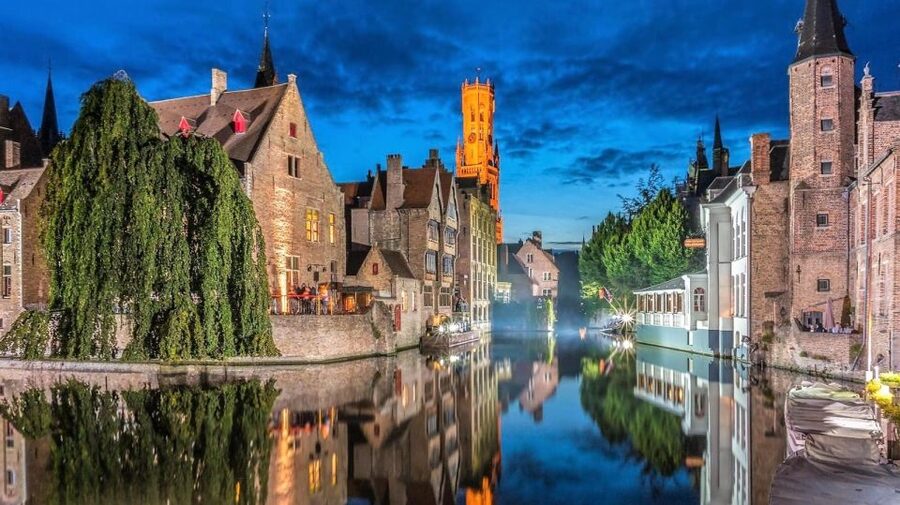
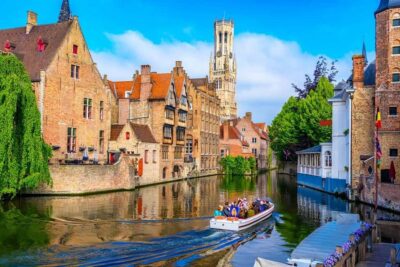
The Bruges walk opens in the old city wall park, near the Lake of Love. This waterway helps feed the canal network that earned Bruges its familiar nickname, the Venice of the North.
The setting gives you an immediate sense of Bruges as a water city. The lake is not simply a photo stop. It helps explain why canals shaped the city’s trade, defenses, and daily life.
From there, you visit the Beguinage, one of Europe’s best-preserved medieval gated communities. Women lived in these enclosed communities, often in a religious setting but without taking formal monastic vows. The quiet courtyards and whitewashed buildings offer a welcome pause from the busier squares.
This is one of the more meaningful stops because it adds social history to the usual list of towers and churches. You see how medieval women could build a life within a protected community, a subject that can easily be missed on a quick city walk.
Bruges churches, hospitals, and Michelangelo
The route continues past Brewery De Halve Maan, the only brewery still operating in Bruges city center. The tour does not include a brewery visit, but the building helps connect the modern city with its brewing tradition.
Next comes Old St. John’s Hospital, one of Europe’s oldest hospitals. Its buildings cover about 800 years of European architecture, making the site valuable even if you do not enter the museum.
You can optionally visit the Hans Memling Museum here. If medieval and early Flemish art interests you, this is one of the places where the extra time would pay off. If you want to keep pace with the group and save room for lunch or a boat trip, view the exterior and continue.
Our Lady of Bruges brings another major sight. Its tower is one of the tallest brickwork towers in the world, and the church contains Michelangelo’s Madonna with the Child. Seeing the sculpture requires handling the available time carefully, since the day already includes several stops and a later free period.
The useful approach is to decide before arriving what matters most to you. If art is your priority, the museum and church treasures may matter more than shopping or the boat. If this is your first look at Bruges, the outdoor walk gives you more ground coverage.
Same old town, a completely different kind of day:
- Brussels: Atomium Entry Ticket with Design Museum Ticket
★ 4.4 · 9,254 reviews - From Brussels: Guided Day Trip to Bruges and Ghent
★ 4.6 · 8,353 reviews - From Brussels: Bruges & Ghent Day Tour – 2 Fairytale Cities
★ 4.7 · 8,242 reviews - Choco-Story Brussels: Chocolate Museum Entrance with Tasting
★ 4.3 · 4,883 reviews
Fishmarket, guildhalls, and Bruges’ main squares
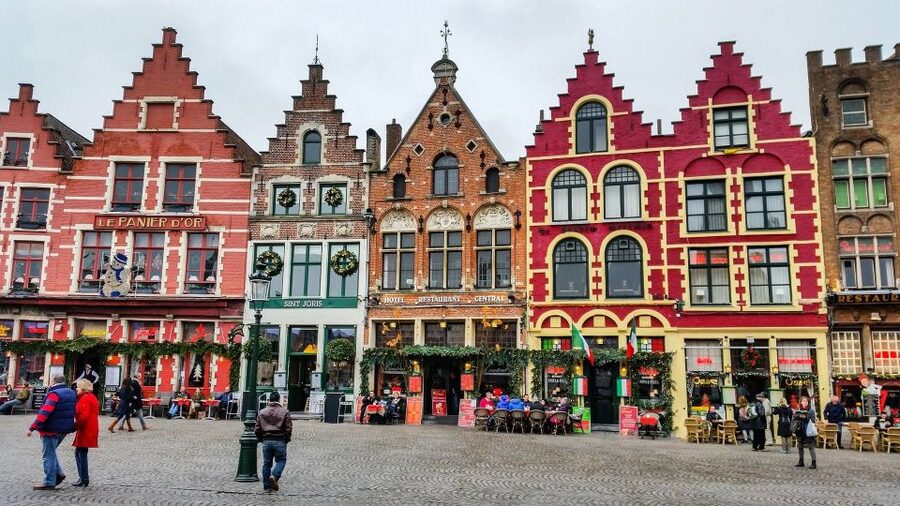
The VisMarkt, or fish market, and Tanners’ Square are among the oldest squares in Bruges. Their guildhalls, cafés, and restaurants make them good places to notice the city’s commercial past.
The walk also includes the Groeninge Museum, Burg Square, and Markt Square. Markt is the economic heart of Bruges, framed by ornate guildhalls and the famous Belfort tower.
You should expect commentary from the street rather than a long indoor museum visit. That is a strength for a first introduction, but it also explains why the schedule feels tight. You will learn where the important places are, see the main façades, and hear the story behind them. You will not have time to study every collection at length.
The Belfort is one of Belgium’s best-known Gothic buildings. It gives the square its powerful vertical focus, though climbing or entering major sights is not presented as part of the included program. Treat the tower as a landmark and photo stop unless your guide says otherwise.
The optional Bruges canal boat
You get roughly two hours of free time in Bruges for lunch, souvenirs, and an optional canal ride. The boat costs €8 per person, paid when you board.
I consider the boat a sensible add-on if the weather is decent and the queue fits your schedule. Bruges looks different from the water. Bridges, rear façades, gardens, and narrow passages become easier to understand when you are moving through the canal system.
The problem is time. A boat ride competes directly with lunch, shopping, and independent wandering. You probably cannot do everything comfortably. Decide early, and keep an eye on the meeting time.
For food, this is your chance to try Belgian favorites such as moules frites, Belgian chocolate, and local beer. A full restaurant meal may feel rushed, so choose according to your priorities. A quick lunch gives you more time for the boat or shops. A long meal gives you a better taste of Flemish dining but less time in the streets.
Ghent starts at Saint Bavo Cathedral
After Bruges, the train carries you to Ghent, located where the Leie and Scheldt Rivers meet. Ghent’s center feels broader and more varied than Bruges, with a stronger sense of city life around its medieval core.
The tour begins at Saint Bavo Cathedral. The Gothic church contains Baroque decoration, a marble choir, private chapels, and a Rococo pulpit. The Romanesque crypt adds another layer, taking you below the later church into an older part of the building.
Saint Bavo is also home to The Adoration of the Mystic Lamb by the Van Eyck brothers, one of the most important works of medieval European art. Entry to see the altarpiece costs an additional €4.
That small fee can be excellent value if you care about painting, religious art, or the development of Northern European realism. But it is another time decision. If the group has a fixed schedule, you may need to choose between the altarpiece and a more relaxed walk through the city.
Ghent’s towers, churches, and old port
The route passes City Hall, where Gothic, Renaissance, and Baroque styles meet in one complex. It is a useful reminder that historic buildings are often layered over centuries, rather than built in one clean period.
At the Market Hall, you can look toward the Belfort Tower and the covered market. Ghent’s medieval skyline becomes especially clear here, with church towers and civic buildings packed close together.
You then pass Saint Nicholas Church, Saint James, and Saint Michael. These churches preserve the shape of Ghent’s medieval center and help explain the city’s former importance as a trading port.
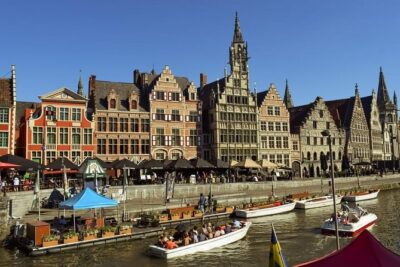
The old port of Graslei is one of the day’s best outdoor stops. The Leie River, old guildhalls, and waterfront views create a fine place for photographs, but the setting is also historically useful. This was a commercial heart, where goods and people moved through the city by water.
I like Graslei because it gives you a strong visual read of Ghent without requiring a museum ticket. You can see how the river, warehouses, guild buildings, and streets fit together.
Gravensteen Castle and the Patershol quarter
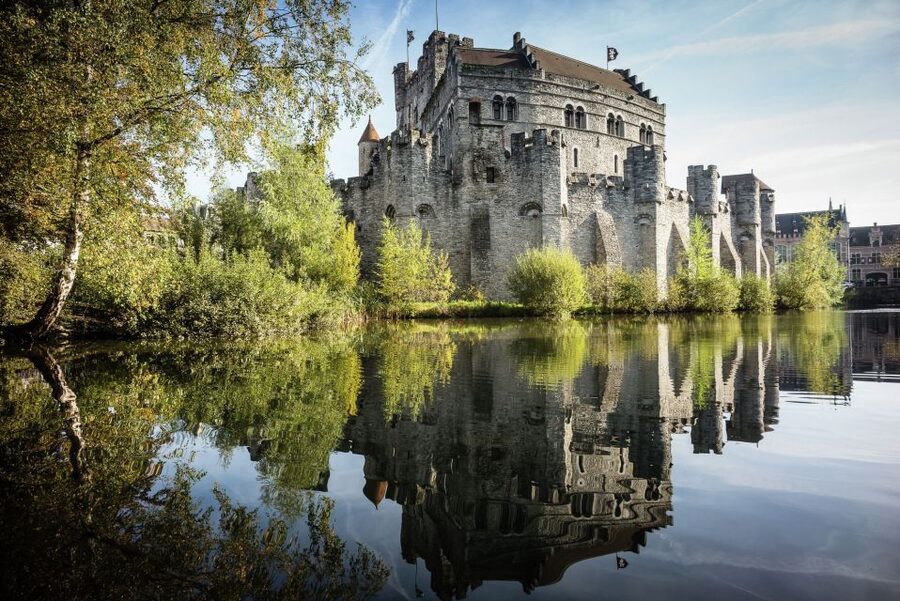
Gravensteen, the medieval castle of the Counts of Flanders, supplies the day’s most dramatic building. Its stone walls and defensive form make a sharp contrast with Bruges’ elegant canals and decorative façades.
The program takes you to the castle, but an interior visit is not listed as included. If you want to explore every room, confirm the available time and entry arrangements with your guide. On a tight day, even an exterior look gives you a clear sense of the counts’ power.
Near the castle, Patershol offers a more intimate view of Ghent. Brick buildings line narrow streets, and restaurants and cafés serve Flemish food. This is a good place to note the difference between a medieval neighborhood and a formal monument. You are not simply looking at a single landmark. You are walking through a district that still supports everyday city life.
The Great Butchers’ Hall, dating from the 15th century, closes the main program. It was one of Europe’s oldest meat markets and adds another practical detail to the city’s past. Medieval towns depended on organized markets, guilds, rivers, and food trade. This stop helps make those systems easier to picture.
The pace, guide style, and walking demands
The total duration is about ten hours, with around 2.5 hours of guided walking in Bruges and about two hours of free time there. Ghent then adds another substantial walking section.
Wear comfortable shoes. This is not a polite suggestion. Uneven surfaces, long stretches between sights, and the need to keep up with a group can make the day tiring. Two people rated the experience highly while also warning that it was demanding, and that is the fairest way to describe it.
The guide quality can shape the whole day. Louise has been praised for humor, patience, and the ability to stop for photos, including helping families with children. Heloise has also been singled out for lively delivery and strong knowledge of the cities. Guides may vary by date, and the advertised languages are English, Spanish, and French.
If the guide speaks in two languages, some explanations will take longer. That can slow the walking pace and reduce free time, but it also lets mixed-language groups share the same tour.
This works best for you if you like clear direction, historical context, and a full schedule. It is less suited to anyone who dislikes groups, walks slowly, or wants to spend half a day inside one museum.
What you can and cannot fit into one day
You can see the key outdoor sights of both cities. You can also fit in one extra activity, such as the Bruges boat or the Van Eyck altarpiece, if you manage your time well.
You cannot comfortably explore every museum, take a horse ride, enjoy a long Belgian lunch, shop at leisure, and inspect both cities in detail. A one-day visit gives you an overview, not a complete stay.
That limitation is not a flaw if you use the day as a first look. You can identify which city deserves a return visit. Bruges is the better choice for canals, carefully preserved streets, and compact beauty. Ghent is the better choice for a larger historic center, the castle, churches, and a more lived-in urban feel.
The scheduled return to Brussels is at 5:00 PM, with arrival around 6:00 PM alongside the guide. In small groups, you may be offered the choice of returning at the planned time or staying longer and making your own way back later. That option is useful, but confirm the details before splitting from the group.
Is this Bruges and Ghent day trip worth it?
Book it if you have only one free Sunday in Brussels and want both cities explained by a local guide. The $82 price is reasonable for the transportation and structured coverage, especially if arranging two separate rail journeys feels like work.
Choose it for the medieval streets, the canal views, Graslei, Saint Bavo Cathedral, and Gravensteen Castle. Add the €8 boat if Bruges’ waterways are a priority, or the €4 Van Eyck visit if art matters more.
Skip it if you want a slow trip. You would be happier spending a full day in Bruges and another in Ghent, with time for museums, long meals, and unplanned walks. For everyone else, this is an efficient and rewarding first taste of Flanders, provided you accept the walking and keep your expectations focused on highlights rather than complete exploration.
FAQ
How long does the tour last?
The experience lasts about 10 hours. The scheduled return to Brussels is at 5:00 PM, with arrival around 6:00 PM.
What time and where do I meet the guide?
The meeting point is in front of the Tourist Information Office at Brussels Grand Place. The information gives an 8:30 AM meeting time and a 9:30 AM departure, so confirm the exact timing when booking. The guide carries a white umbrella.
Which languages are available?
The live guide service is offered in English, Spanish, and French.
Is transportation included?
Yes. Transportation from and back to Brussels by train is included.
Is the Bruges canal boat included?
No. The canal boat costs €8 per person, paid when you board.
How much does it cost to see the Van Eyck altarpiece?
Entry to see The Adoration of the Mystic Lamb by the Van Eyck brothers costs an additional €4.
Do I need comfortable shoes?
Yes. The tour includes a lot of walking on uneven surfaces, so comfortable shoes are essential.
Is the experience wheelchair accessible?
Yes, the activity is listed as wheelchair accessible.
Can I stay longer in Bruges or Ghent?
In small groups, you may have the option of returning with the guide at the scheduled time or staying longer and returning later by yourself. Confirm the arrangement with the guide before leaving the group.
More 1-Day Tours in Brussels
- Luxembourg and Dinant Day Trip from Brussels
★ 4.0 · 1,474 reviews - From Brussels: Bruges Day Trip with Boat Tour Option (ENG)
★ 4.6 · 1,352 reviews - From Brussels: Bruges Day Trip with Boat Tour Option (ES)
★ 4.7 · 1,171 reviews - Bruges and Ghent Day Trip from Brussels
★ 4.5 · 784 reviews
Just added around Brussels
- Standard vehicle from Brussels airport to city of Antwerp★ 5.0 · 4 reviews
- Private transfer from BRU Airport to Brussels city with luxury limousine 3 pax★ 4.5 · 8 reviews
- Luxury vehicle from Brussels airport to the city of Brussels★ 4.0 · 5 reviews
- Transfer Brussels Airport –> City MB E Class 1-3 PAX (ONE WAY)★ 5.0 · 6 reviews
- PRIVATE MPV TRANSFER FROM/TO BRUSSELS AIRPORT (Max 6 pax) ONE-WAY★ 5.0 · 4 reviews
- Transfer Brussels Airport (BRU) –> City Center 7 PAX (ONE WAY)★ 5.0 · 7 reviews
- Transfer Brussels Airport –> Brussels MB V Class 7 PAX (ONE WAY)★ 5.0 · 4 reviews
- Brussels: City Walk with Audioguide in 7 Languages on your Phone★ 3.5 · 4 reviews
Full-Day, compared.
Private Full-Day Tour Bruges & Ghent from Brussels with tastings
Read our review →
Private Tour: Ghent and Bruges From Brussels Full Day
Read our review →
Private tour : Treasures of Flanders Ghent and Bruges from Brussels Full day
Read our review →Browse the lists this tour appears in