
Reviewed · FULL-DAY
Ghent and Bruges Full Day Tour from Brussels
Ghent and Bruges give you two very different views of medieval Belgium in one long day. Ghent feels lived-in and youthful, with students around its old harbor and a mighty castle in the middle of town. Bruges is more polished and storybook-like, with canals, beguinage lanes, and landmarks packed into an easy walking route.
I like the way this tour covers the major sights without asking you to arrange trains, stations, and city walks on your own. I also like that you get time for independent exploring, including the option of a canal boat ride in Bruges. The main tradeoff is the pace: ten hours is a lot of ground to cover, and the guided commentary may feel formal if you prefer a small, chatty group.
In This Review
- Key Points at a Glance
- Why Pair Ghent and Bruges in One Day
- Ghent: A Medieval City That Still Feels Local
- Bruges: Canals, Beguinage Lanes, and Famous Towers
- The Walking Pace and the Need for Good Shoes
- What the Guide Adds to the Experience
- Lunch and Free Time in Bruges
- Meeting Point, Group Size, and Cancellation Risk
- Who Will Get the Most From This Day
- Should You Book the Ghent and Bruges Tour?
- FAQ
- How long is the Ghent and Bruges tour?
- Where does the tour start?
- How much time do you spend in each city?
- Is the tour offered in English?
- Are admission tickets included?
- What happens if the tour is canceled?
Key Points at a Glance
- Two medieval cities in one day: Spend about five hours in Ghent and five hours in Bruges.
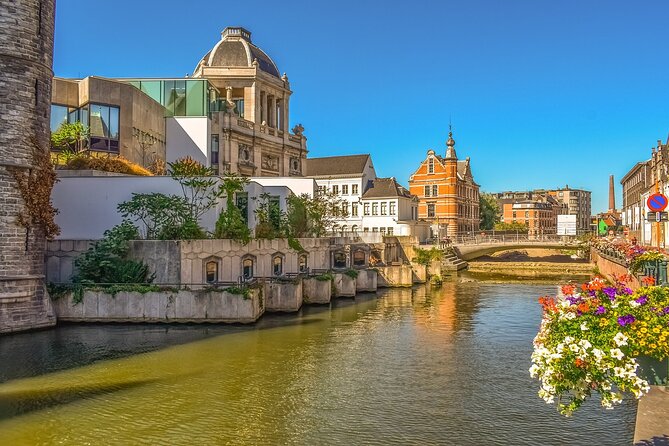
- Ghent’s castle and historic center: See St Bavo’s Cathedral, the Belfry, St Nicholas’ Church, City Hall, and the former residence of the Counts of Flanders.
- Bruges by canal and cobbled lane: Visit Minnewater, the Beguinage, the Basilica of the Holy Blood, the Bell Tower, and other central landmarks.
- A history-heavy outing: The guide covers Belgium, Brussels, Ghent, and Bruges, from the Viking Age through Bruges’ medieval decline.
- Practical round-trip transport: Meet at Bd de Berlaimont 18 in Brussels at 9:00 a.m. and return there at the end.
- Best for first-time visitors: You see the big sights efficiently, but you should be ready for plenty of walking and a full schedule.
Why Pair Ghent and Bruges in One Day
If you have only one free day from Brussels, this outing solves a real planning problem. Ghent and Bruges are both easy to reach by train, but a train ticket only gets you to the station. You still need to build a route, find the main monuments, manage lunch, and get back in time.
This tour handles the transport and gives you a guide to put the buildings into context. That matters in Belgium, where a grand church may reflect several centuries of construction and a narrow lane may have once served a very different purpose.
The day is split fairly evenly. You spend roughly five hours in Ghent, then continue to Bruges for another five hours. A review described each drive between Brussels and the cities as about 45 minutes, making the transfers manageable rather than exhausting stretches of highway time.
The schedule is still demanding. You are not getting two relaxed city breaks. You are getting a well-organized introduction to two important places, with enough time to see the core sights and some room to wander. If you want long museum visits or a slow lunch, this is not the right format.
A few more Brussels trips to weigh up
- From Brussels: Full-Day Antwerp and Ghent Guided Tour
★ 4.6 · 1,019 reviews - From Brussels: Bruges and Ghent Full-Day Trip by Train
★ 4.3 · 103 reviews - Private Full-Day Tour Bruges & Ghent from Brussels with tastings
★ 4.5 · 38 reviews
Ghent: A Medieval City That Still Feels Local
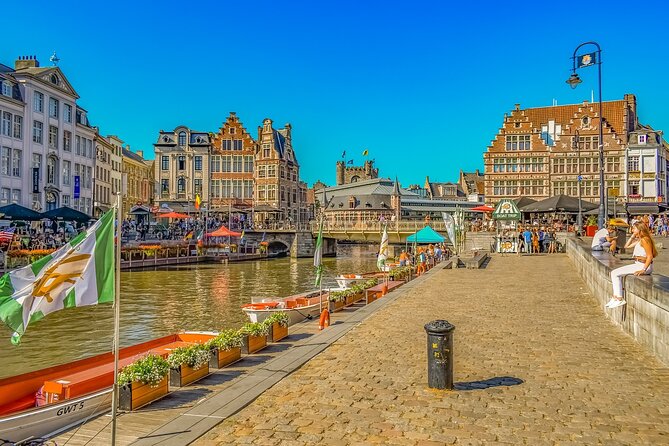
Ghent is often the more surprising first stop. Bruges can feel like a carefully preserved medieval scene. Ghent has the same grand architecture, but daily life carries on around it. Students, residents, and visitors gather around the old harbor, giving the center more of a working-city feel.
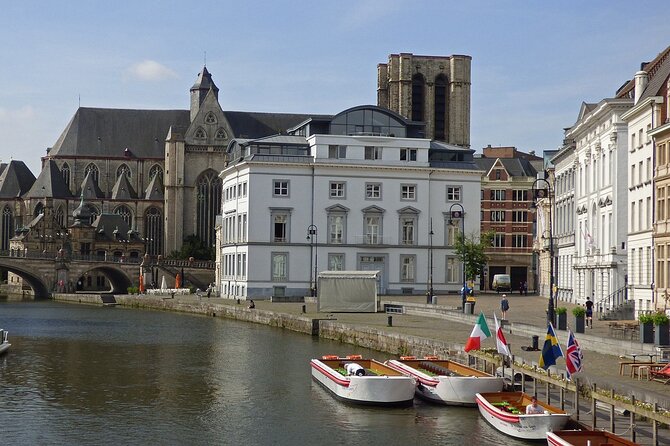
The walking route brings you past St Bavo’s Cathedral, one of the city’s major landmarks. The cathedral is part of a tight cluster of historic buildings, so you can take in several major sights without long transfers between them.
You also see Ghent’s City Hall, the Belfry, and St Nicholas’ Church. Together, these buildings show how civic power, trade, and religion shaped the city. The Belfry is especially useful for understanding Ghent’s old confidence. It was not simply a decorative tower, but a civic symbol linked to the city’s independence and wealth.
The medieval harbor is another highlight. This is where Ghent’s historic center feels most atmospheric, with old façades along the water and people using the area as a place to meet. I would give this part of the walk your full attention rather than treating it as a quick photo stop.
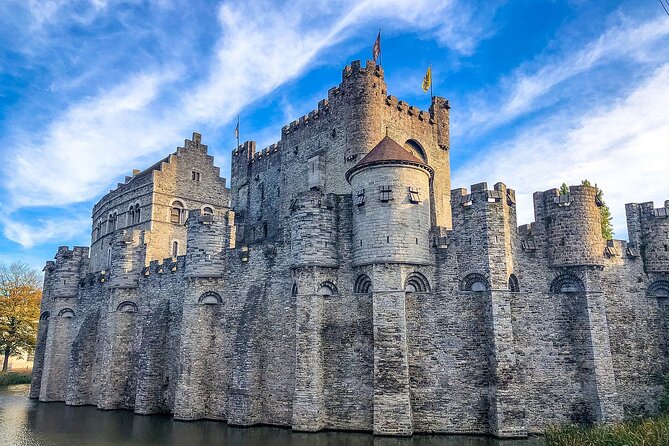
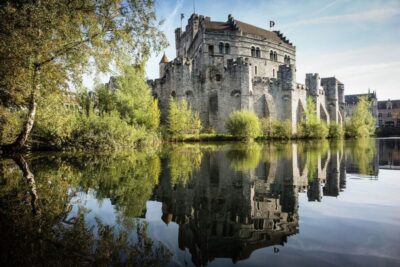
The tour also introduces you to the Gravensteen, the fortress associated with the Counts of Flanders. Its stone walls make a strong contrast with the elegant guild houses and churches nearby. You may not have a separate interior visit, since the listed attractions have no admission included, but seeing the fortress from the outside gives the city a clear sense of power and defense.
Ghent is a good place to listen to the guide’s historical explanation. The city’s story is not just a parade of pretty façades. It is tied to commerce, political authority, religion, and the rivalry between powerful cities in Flanders.
Bruges: Canals, Beguinage Lanes, and Famous Towers
After Ghent, the tour continues to Bruges, where the mood changes. The city’s center is compact, photogenic, and filled with the landmarks most people hope to see on a first visit.
The Bruges portion begins with a photo stop near Minnewater, often called the Lake of Love. The water and surrounding historic setting give you one of the city’s classic views. It is a sensible first pause because you can take photographs before moving into the denser streets of the center.
From there, you visit the Beguinage. This quiet complex was associated with beguines, religious women who lived in a community without taking formal monastic vows. Its white façades and enclosed setting offer a calmer experience than the main squares.
The guide explains Bruges from the Viking Age through its medieval peak and eventual decline. That final chapter is important. Bruges’ beauty can make it seem frozen in time, but its old importance depended on trade and access to waterways. As those conditions changed, the city lost influence. The preserved center you see today is partly the result of that long economic shift.
The route includes the Basilica of the Holy Blood, the Bell Tower, the Church of Our Lady, and St John’s Hospital. You get a broad look at Bruges’ religious, civic, and commercial past rather than focusing on a single building.
The Bell Tower is one of the city’s defining sights. Even if you do not climb it, seeing it from the square helps you understand Bruges’ old civic structure. The Church of Our Lady adds another layer, while St John’s Hospital brings the story back to care, religion, and public life.
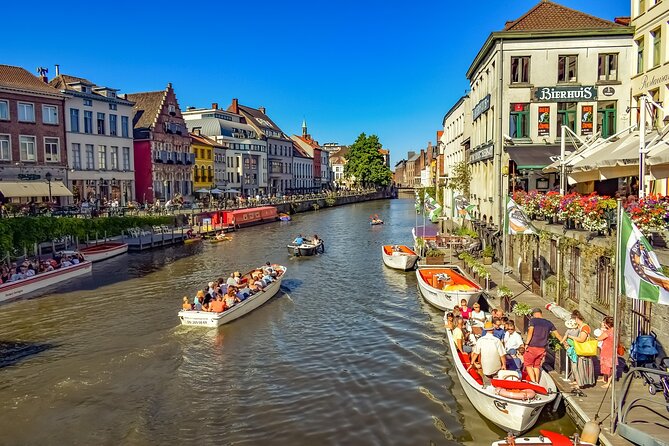
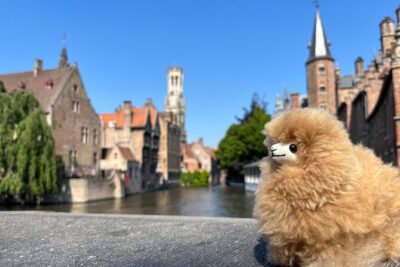
You also have the chance to take a boat trip through Bruges’ narrow canals. The boat ride is not presented as a guaranteed included feature, so treat it as an optional activity if timing and availability allow. It can be a pleasant change after several hours on foot, but you should not count on it as the central part of the tour.
The Walking Pace and the Need for Good Shoes
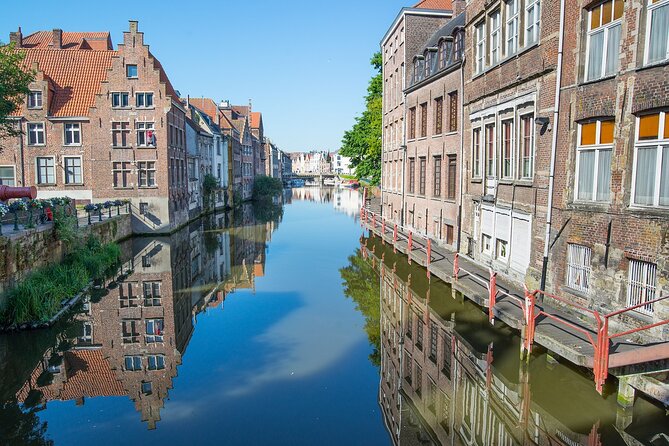
This is a walking tour with bus transport between cities, not a sightseeing ride where you stay on the coach. One review specifically described a lot of walking, and that is exactly what the itinerary suggests.
Ghent and Bruges reward walking because their most interesting details are close together on foot. You see churches, towers, harbor views, lanes, and façades in sequence. The cost is that your feet will notice the day, especially if you add a canal ride queue, shopping, or a long independent walk.
Wear comfortable shoes and keep your day bag light. The tour lasts about ten hours, beginning at 9:00 a.m. and ending back at the Brussels meeting point. Plan your energy around the full day rather than assuming the coach will provide frequent rest.
You should also keep your camera ready. The tour is particularly good for photographs, with Minnewater, the Beguinage, the harbor, fortress walls, and Bruges’ canals all offering different types of views.
Same old town, a completely different kind of day:
- Brussels: Atomium Entry Ticket with Design Museum Ticket
★ 4.4 · 9,254 reviews - From Brussels: Guided Day Trip to Bruges and Ghent
★ 4.6 · 8,353 reviews - From Brussels: Bruges & Ghent Day Tour – 2 Fairytale Cities
★ 4.7 · 8,242 reviews - Choco-Story Brussels: Chocolate Museum Entrance with Tasting
★ 4.3 · 4,883 reviews
What the Guide Adds to the Experience
The strongest part of the tour is the amount of historical explanation packed into the day. Guides named Bruno and Stefan received especially warm praise for clear, thorough presentations, while drivers including Farooq and Daniel were singled out for patient or dependable service.
The guiding style may vary. One account described a guide speaking through a microphone while the group followed with headsets. That setup can make it easier to hear in a large group, but it can also feel less personal than a small walking tour with frequent questions.
Another point to consider is language. The experience is offered in English, but one account described a tour that included both English and French commentary, with some waiting between languages. If you are booking specifically for an English tour, confirm the language arrangement at the time of booking.
Group size also deserves attention. The stated maximum is 40 people, though one experience involved a group of 55. A larger group can slow movement through narrow streets and make it harder to ask questions. The benefit is that the tour is generally more affordable than arranging a private guide and vehicle.
The guide is most useful in the opening walks through each city. Once you understand the layout and the main stories, you can use free time to choose your own pace. One person asked to explore independently during the Bruges stop and was allowed to do so, even taking time for a brewery visit.
Lunch and Free Time in Bruges
Lunch takes place in Bruges, but the tour does not specify a restaurant or a fixed meal. That gives you flexibility, though it also means the cost of lunch is separate from the $111.75 tour price.
I would use the guide’s timing carefully. Bruges has plenty of places to eat, but a full-service meal can consume a large part of your five-hour stop. If your priority is seeing the Bell Tower, Basilica, Church of Our Lady, and St John’s Hospital, keep lunch practical.
You may prefer a quick meal and then save time for the canals or independent walking. If food is a major part of your visit, you can take a slower approach, but you will likely need to choose between a leisurely table and extra sightseeing.
The price is reasonable for a full-day guided excursion if you value convenience. It covers the organized day and transport between the cities, while the principal landmarks are visited from the outside without separate admission charges. Lunch, optional canal boating, and any paid personal activities are extra.
Meeting Point, Group Size, and Cancellation Risk
The meeting point is Bd de Berlaimont 18, 1000 Bruxelles, with a 9:00 a.m. start. The tour ends at the same meeting point, which is helpful if you do not want to solve a second transport problem late in the day.
Be early. The experience has a fixed departure and a non-refundable policy. If you miss the tour, the stated terms do not allow a refund or amendment, even for a personal delay. One booking was lost after an accident caused a late arrival at the meeting point, which is a useful warning to build in extra time.
The operator says most people can participate, and no special fitness requirement is listed. Still, the amount of walking makes comfortable mobility important. Poor weather can cause cancellation, in which case you are offered another date or a full refund. The same applies if the minimum number of participants is not reached.
The listed capacity is a maximum of 40 people, but the reported group-size variation suggests you should not assume a small-group feel. If personal attention is your top priority, a private or smaller tour may suit you better.
Who Will Get the Most From This Day
I would choose this tour if you are staying in Brussels and want an efficient first look at both cities. It suits you especially well if you enjoy architecture, medieval history, and guided context more than lingering over one neighborhood.
It is also a good choice for a short Belgian visit. You can see the main parts of Ghent and Bruges without changing hotels or figuring out two separate day trips.
You may want another plan if you dislike fixed schedules, large groups, or audio-style commentary. The day gives you some independent time, but the main structure is set. You will also need to accept that each city gets only one portion of the day.
Should You Book the Ghent and Bruges Tour?
Book it if you want maximum sightseeing in one day, value included transport, and like having a guide explain the churches, towers, harbor, fortress, and canals as you go. The strongest guides can turn a fast itinerary into a useful introduction, and the route covers the essential sights in both cities.
Skip it if you want a slow Bruges visit, extensive museum time, or a highly personal guide relationship. For most first-time visitors with only one day available, though, $111.75 is a fair exchange for transport, structure, and a solid introduction to two of Belgium’s most rewarding historic cities.
FAQ
How long is the Ghent and Bruges tour?
The experience lasts about 10 hours. It starts at 9:00 a.m. and ends back at the Brussels meeting point.
Where does the tour start?
You meet at Bd de Berlaimont 18, 1000 Bruxelles, Belgium. The activity also ends at this meeting point.
How much time do you spend in each city?
The planned schedule allows about five hours in Ghent and five hours in Bruges.
Is the tour offered in English?
English is the listed tour language. One account described commentary in both English and French, so confirm the language arrangement when booking if this is important to you.
Are admission tickets included?
The itinerary lists no admission ticket charge for the Ghent and Bruges sightseeing portions. Optional activities, such as a canal boat trip, may involve separate arrangements or costs.
What happens if the tour is canceled?
If poor weather causes cancellation, you are offered a different date or a full refund. If the minimum number of participants is not reached, you are offered a different date or experience, or a full refund.
Just added around Brussels
- Standard vehicle from Brussels airport to city of Antwerp★ 5.0 · 4 reviews
- Private transfer from BRU Airport to Brussels city with luxury limousine 3 pax★ 4.5 · 8 reviews
- Luxury vehicle from Brussels airport to the city of Brussels★ 4.0 · 5 reviews
- Transfer Brussels Airport –> City MB E Class 1-3 PAX (ONE WAY)★ 5.0 · 6 reviews
- Transfer Brussels Airport (BRU) –> City Center 7 PAX (ONE WAY)★ 5.0 · 7 reviews
- PRIVATE MPV TRANSFER FROM/TO BRUSSELS AIRPORT (Max 6 pax) ONE-WAY★ 5.0 · 4 reviews
- Transfer Brussels Airport –> Brussels MB V Class 7 PAX (ONE WAY)★ 5.0 · 4 reviews
- Brussels: City Walk with Audioguide in 7 Languages on your Phone★ 3.5 · 4 reviews
Full-Day, compared.
Private Full-Day Tour Bruges & Ghent from Brussels with tastings
Read our review →
Private Tour: Ghent and Bruges From Brussels Full Day
Read our review →
Browse the lists this tour appears in