
Reviewed · HISTORICAL TOURS
Private Historical Tour: Legends of Antwerp
Antwerp’s story comes alive through its odd little clues: stone giants, carved hands, a butcher’s guild hall, a hidden medieval lane, and the grand church where Rubens once worked. This private two-hour walk gives you a brisk introduction to the city without burying you in dates.
I like the focus on legends and local symbols, especially the hand that appears throughout Antwerp. I also like the private format, since your guide can adjust the pace and spend more time on the subjects you care about. The tradeoff is that the tour covers a lot in two hours, and cobblestones plus several outdoor stops may not suit everyone.
In This Review
- Key points to know before you book
- Why Antwerp’s legends make a better introduction than a list of dates
- Grote Markt sets the stage in 15 minutes
- Het Steen and the giant at Antwerp’s oldest building
- Vleeshuis shows the rougher side of medieval Antwerp
- Carolus Borromeus Church brings Rubens into the route
- The Meir and the Rubens connection
- Vlaeykensgang offers the most atmospheric ten minutes
- The Cathedral closes the main story with legends and art
- Plantin-Moretus connects Antwerp to the printed word
- What the private format really adds
- Is $105.82 per person good value?
- Who will enjoy this walk most?
- Should you book Legends of Antwerp?
- FAQ
- Where does the tour begin?
- Where does the tour end?
- How long does the tour last?
- Is the tour private?
- Is the tour offered in English?
- What is included in the price?
- Does the tour include hotel pickup?
- Can most people participate?
- What should I know about the walking conditions?
- Can I cancel for a full refund?
Key points to know before you book
- Antwerp’s hand legend gets top billing: Learn why the hand became the city’s symbol and how it connects to the story of the giant.
- The route covers the medieval core: Grote Markt, Het Steen, Vleeshuis, Vlaeykensgang, the Cathedral, and other central sights appear in a compact walk.
- Private means flexible pacing: Guide Beren is specifically praised for adapting the walk to the group’s speed, while guides such as Luc D, Joske, and Flip have also led highly praised tours.
- The Golden Age is the main historical thread: You’ll hear how Antwerp became one of Europe’s wealthiest cities in the 16th century, then slipped into decline.
- You see major sights from the outside: Admission tickets are not included, and the supplied details describe stops rather than interior visits.
- The price makes most sense for a small group: At $105.82 per person, the value improves when several people share the private guide.
Why Antwerp’s legends make a better introduction than a list of dates
The best part of this tour is its storytelling. Antwerp can look like a collection of handsome buildings until someone explains why the city uses a hand as its emblem, why it is called the city of giants, and how trade made it one of Europe’s leading cities in the 1500s.
That approach suits me because it gives you a way to remember the place. You are not simply told that Antwerp was wealthy. You learn to connect its riverfront, guild buildings, churches, merchants, artists, and printers into one story.
The tour also deals with Antwerp’s decline, not just its high point. That matters. A short city walk can easily turn into a parade of pretty façades, but this one aims to explain how the city rose and why that power faded.
The route is delivered in English and lasts about two hours. That is enough time to get your bearings and see the historic center, but not enough for long museum visits or a leisurely stop at every sight. Think of it as a strong orientation walk, not a full day of sightseeing.
A few more Antwerp trips to weigh up
- Historical Walking Tour: Legends of Antwerp
★ 5.0 · 1,837 reviews - Antwerp: Historical Walking Tour in the Old City
★ 4.8 · 373 reviews - Private tour: Highlights & History of Antwerp
★ 5.0 · 299 reviews
Grote Markt sets the stage in 15 minutes
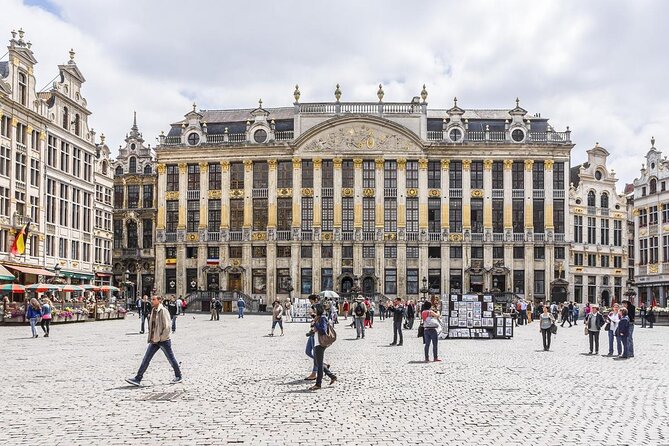
The tour begins at Grote Markt, Antwerp’s main square. This is the right place to start because it gathers the city’s public story in one view: grand historic buildings, civic power, trade, and the legends that shaped Antwerp’s identity.
Your guide explains the city’s nickname as the city of giants, the meaning of the hand symbol, and Antwerp’s rise to great wealth in the 16th century. You also hear about the causes of its later decline.
I would pay close attention here. The first 15 minutes establish the themes that return throughout the walk. If you are new to Antwerp, this is where the city starts to make sense. If you already know the basics, ask about the hand legend or the shift from prosperity to decline.
There is no admission charge for this stop, and the tour treats it as an outdoor introduction. Expect history in the open air rather than time inside a museum or building.
Het Steen and the giant at Antwerp’s oldest building
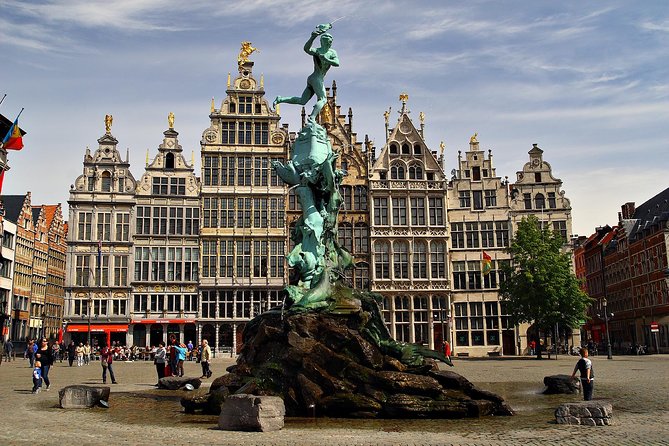
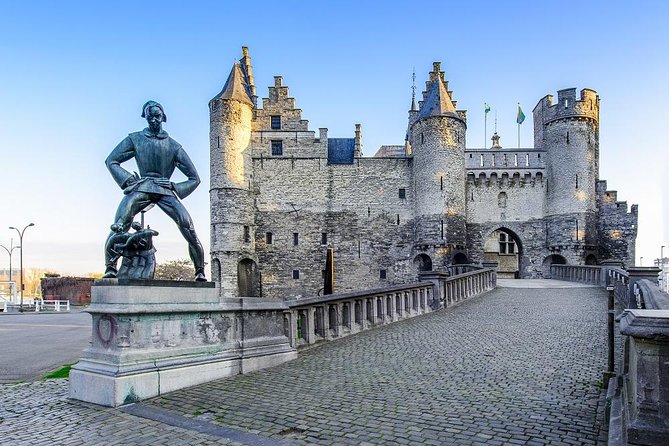
From Grote Markt, the walk continues to Het Steen, known as the Stone Castle. It is described as the oldest building in the city and is closely tied to the giant who figures in Antwerp’s legends.
The 10-minute stop focuses on the building’s changing roles over time. That gives you more than a quick photograph. You learn how one old structure could serve different purposes as Antwerp changed around it.
Het Steen is also a useful reminder that Antwerp’s past is not limited to merchants and painters. Its oldest surviving stone architecture connects the city to earlier periods, when fortification and local power mattered more than grand commerce.
This is a short stop, so you should expect an explanation from outside rather than an extended visit. The tour is about context and stories, with the walking route doing the rest.
Vleeshuis shows the rougher side of medieval Antwerp
The Museum Vleeshuis, or Butcher’s Hall, receives only about five minutes, but it adds a different tone to the tour. It was the city’s oldest guild house and carried a history tied to the butcher trade.
The stop is described as having a long and often bloody past. That makes it a useful counterweight to Antwerp’s polished squares and grand churches. Medieval city life was not all art, trade, and fine clothes. Guilds controlled work, status, and commerce, while food production brought its own hard realities.
Because the stop is brief, I would not expect a museum visit. You are getting the building’s story and a glimpse of the guild system that helped organize urban life.
Same old town, a completely different kind of day:
- Antwerp: City Highlights Walking Tour
★ 4.7 · 816 reviews - Antwerp: City Highlights Guided Bike Tour
★ 4.7 · 529 reviews - Guided Bike Tour: 2 Hours Highlights of Antwerp
★ 5.0 · 347 reviews - Historical Walking Tour in Antwerp Old City
★ 5.0 · 277 reviews
Carolus Borromeus Church brings Rubens into the route

The next major sight is Carolus Borromeus Church, a Baroque church associated with Peter Paul Rubens. The tour allows about 10 minutes here.
The church helps explain Antwerp’s artistic reputation. Rubens was not just a painter who happened to live in the city. He was part of a setting where religious buildings, wealthy patrons, and ambitious public art created work on a large scale.
The guide also frames the church as a place where Rubens once played and worked, linking the famous artist to the city as a living person rather than a name on a museum label.
Again, the emphasis is on the exterior and the story. If you want to spend time studying the church’s interior, artwork, or architecture, you may need to return on your own. The two-hour schedule keeps moving.
The Meir and the Rubens connection
The route passes the Farmers Tower and Meir shopping street on the way toward the Rubens museum. The provided schedule does not assign a separate time to this stretch, so treat it as part of the walk rather than a formal stop.
Meir brings you from the older center toward one of Antwerp’s major commercial streets. That change in setting helps show how the city is layered. You move from medieval lanes and guild buildings toward a more modern shopping district, then back into the personal story of Rubens.
The Rubens museum is described as the place where Antwerp’s most famous painter lived and worked his whole life. The tour takes you to it, but the supplied details do not include admission. You should not assume that entry is part of the $105.82 price.
For art fans, this part of the walk adds real value even without a museum visit. You get the address and the city connection, then can decide if you want to return for a longer look.
Vlaeykensgang offers the most atmospheric ten minutes
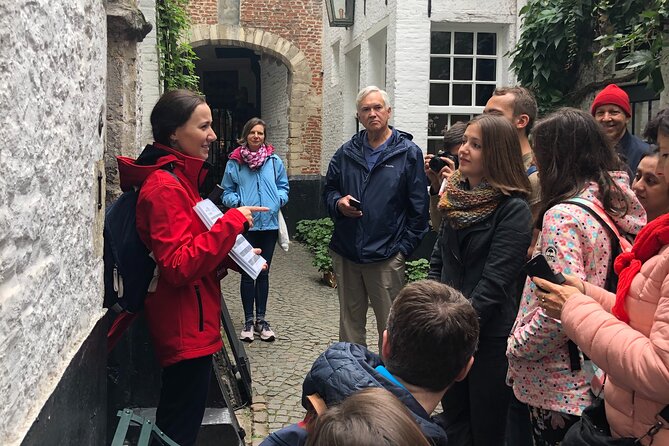
Vlaeykensgang is presented as Antwerp’s smallest street and a throwback to the Middle Ages. Of all the stops, this may be the one most likely to surprise you.
After broad squares, major churches, and shopping streets, a narrow lane changes the scale of the city. It gives you a short look at a more intimate side of Antwerp, one that can be easy to miss if you follow only the main roads.
The stop lasts about 10 minutes. That should be enough to hear the story and take in the setting, though the lane is not the place for a long lecture or a large group gathering.
I would keep this stop in mind when choosing footwear. One guide specifically advised that you should be comfortable walking on cobblestones. The route is not described as strenuous, and most people can participate, but comfortable shoes are a sensible choice.
The Cathedral closes the main story with legends and art
The Cathedral of Our Lady is the grand finish to the central part of the walk. The tour ends in front of the cathedral, at Handschoenmarkt, about 50 meters from Grote Markt.
The 15-minute stop focuses on the cathedral’s history and old legends. It also brings together several threads from the walk: Antwerp’s religious life, its artistic legacy, its public monuments, and the stories that give the city a strong sense of place.
The cathedral is especially important in a Rubens-focused visit, though the supplied tour details do not promise an interior entry or admission ticket. You can hear the story outside, then make your own plan for visiting inside if time allows.
There is a slight oddity in the supplied route description. Museum Plantin-Moretus appears as another stop after the Cathedral, while the meeting information says the tour ends at the Cathedral. I would confirm the exact order and final stop when booking, especially if you have a tight schedule afterward.
Plantin-Moretus connects Antwerp to the printed word
The route also passes the fashion quarter and fashion district before stopping at the Plantin-Moretus museum. This is where the tour turns from paintings and churches to books, type, and industrial printing.
The museum is identified as the place where industrial printing was born. That makes it an important stop for anyone interested in how ideas spread through Europe. Antwerp’s power did not rest only on trade and art. Printing helped carry religious, scientific, and commercial information far beyond the city.
The stop lasts about 10 minutes. As with the Rubens museum, the details provided do not include admission, so expect a visit outside unless your guide explains otherwise.
This is one of the tour’s more useful contrasts. Rubens represents Antwerp’s visual culture, while Plantin-Moretus represents its role in producing and distributing knowledge.
What the private format really adds
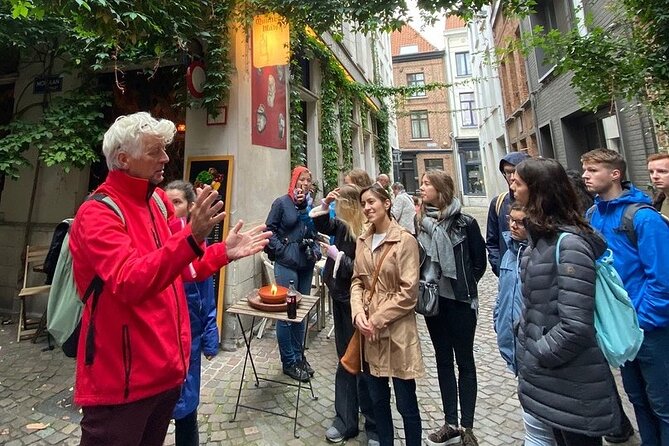
A private tour means only your group participates. That matters more here than it would on a simple transfer because the walk depends on questions and pacing.
You can ask for more detail about the Golden Age, Rubens, the cathedral, printing, or local legends. You can also slow down if someone in your group needs a break. One account specifically praises Beren for adjusting the pace to suit the group.
Several guide names appear in the tour’s feedback. Beren is praised for knowing a great deal about Antwerp, adapting the route, and bringing up the city’s hand symbols and the history of the Red Star Line. Luc D is described as personable and highly informed, while Joske is praised for making the history come alive and being accommodating. Flip is also singled out for passion and a strong grasp of the city.
A guide is not a guarantee of a particular experience, so I would treat these names as useful clues rather than a promise that one of them will lead your walk. The overall rating is 4.9 from 125 reviews, with 98 percent recommending the experience, but one account raises a fair concern: a guide may present some facts incorrectly, ask too many questions, or give little attention to Antwerp’s Jewish community.
That criticism is worth noting if Jewish history is a main reason for your visit. The listed route focuses on medieval Antwerp, Rubens, legends, guilds, printing, and the Golden Age. It is not presented as a specialist Jewish history tour.
Is $105.82 per person good value?
At $105.82 per person, this is not the cheapest way to see Antwerp. The value depends heavily on group size and what you want from a guide.
For one or two people, the price is a serious expense for a two-hour walk. You are paying for a private English-language guide, route flexibility, and a focused introduction rather than for museum entry.
For a larger private group, the price becomes easier to justify because the guide fee is shared. Group discounts are available, which may improve the calculation further. If your group wants a single guide who can answer questions and adjust the pace, the private format has a clear advantage over a fixed public walk.
The tour includes the guide, but the listed stops have free admission and no museum tickets are included. You should budget separately if you plan to enter the Rubens museum, Plantin-Moretus museum, Cathedral, or other attractions.
I see the best value for first-time visitors who want a well-shaped introduction, especially if they have only one afternoon in Antwerp. If you are comfortable researching a route and reading plaques on your own, the price may feel high.
Who will enjoy this walk most?
I would recommend it for:
- First-time visitors who want the historic center explained in a clear order
- Small private groups that prefer their own pace
- People interested in legends, medieval buildings, Rubens, and Antwerp’s Golden Age
- History fans who want to connect art, trade, religion, guilds, and printing
- Visitors who want a guide to point out places they can revisit later
It is less suited to anyone looking for long museum visits, a food tour, or a specialist account of Antwerp’s Jewish community. It also may not suit you if cobblestones or two hours of walking are difficult.
The tour is near public transportation, and optional hotel pickup is included for convenience. The official meeting point is Grote Markt, while the end point is Handschoenmarkt by the Cathedral. Service animals are allowed, and most people can participate.
You receive confirmation at booking unless you book within three days of departure. In that case, confirmation can arrive within 48 hours, subject to availability. Free cancellation is available up to 24 hours before the start time. After that cutoff, you will not receive a refund, and changes are not accepted.
Should you book Legends of Antwerp?
Book this tour if you want a private historical orientation with strong local stories, a compact route, and the freedom to ask questions. The hand legend, Het Steen, Vlaeykensgang, Rubens, the Cathedral, and Plantin-Moretus give you a broad picture of Antwerp in only two hours.
I would book it early, since it is often reserved about 50 days ahead. Before paying, confirm the precise route order and whether your preferred guide is available. If you want interiors, museum time, or a focused look at Jewish Antwerp, plan a separate visit.
For a small group sharing the cost, this is a practical way to get your bearings. For a solo visitor on a tight budget, it is harder to call it a bargain. The choice comes down to whether you want Antwerp’s stories explained as you walk, or prefer to explore the same central sights on your own.
FAQ
Where does the tour begin?
The tour begins at Grote Markt, 2000 Antwerpen, Belgium.
Where does the tour end?
The stated end point is Handschoenmarkt, 2000 Antwerpen, Belgium, in front of the Cathedral of Our Lady. It is about 50 meters from the main square.
How long does the tour last?
The walking tour lasts approximately two hours.
Is the tour private?
Yes. Only your group participates in the private tour or activity.
Is the tour offered in English?
Yes. English is the listed language.
What is included in the price?
A tour guide is included. Admission tickets for the listed sights are not included in the supplied details.
Does the tour include hotel pickup?
Optional hotel pickup is included for convenience.
Can most people participate?
Yes. Most people can participate, and the tour is near public transportation. Service animals are allowed.
What should I know about the walking conditions?
The route includes cobblestones, so you should be comfortable walking on that surface.
Can I cancel for a full refund?
Yes. You can cancel at least 24 hours before the experience start time for a full refund. Cancellations or changes made less than 24 hours before the start are not refunded or accepted.
Just added around Antwerp
- Discover Antwerp while playing! Escape game – The alchemist★ 4.5 · 4 reviews
- Discover Antwerp with this Outside Escape city game tour!★ 5.0 · 4 reviews
- Antwerp Private Custom Walking Tour With A Guide (Private Tour)★ 4.5 · 12 reviews
- Private Tour in Antwerp, Belgium with a Local Guide★ 5.0 · 11 reviews
- Landed On Time 60 min. Max 1 Person★ 4.0 · 5 reviews
- Exciting Murder Mystery – Interactive city walk in Antwerp★ 3.5 · 12 reviews
- Guided E-kickscooter tour: The big five of Antwerp★ 5.0 · 3 reviews
- Antwerp Pub Crawl★ 5.0 · 8 reviews
Historical Tours, compared.

Historical Walking Tour with Chocolate & Waffle Tasting
Read our review →THE Storytelling Tour of Bruges | First Day Must | History & Tips
Read our review →
Historical Tour with Chocolate & Waffle Tasting
Read our review →
Historical Walking Tour: The Story of Bruges – by Legends
Read our review →
Browse the lists this tour appears in