
Reviewed · FLANDERS FIELDS WWI TOURS
Flanders World War I Battlefields Private Tour from Brussels
The most moving part of this day is how the battlefields connect to real names and places. At Essex Farm, you see the dressing station linked with John McCrae and In Flanders Fields. At Tyne Cot and the Menin Gate, the scale of loss becomes impossible to miss. Ypres gives the day a living center, not just a string of memorials.
I like the ease of hotel pickup and private transportation from Brussels, especially for a long day across Flanders. I also like the range of stops: Canadian, Australian, British, and Commonwealth memorials, trenches and bunkers, a museum, cemeteries, and time in Ypres. The main drawback is the price, $889.89 per person, and the packed schedule can push lunch late, with one reported lunch time of 2:15 p.m.
In This Review
- Key points to know before booking
- Why this Flanders day trip works from Brussels
- Saint Julien and the Brooding Soldier
- Poelkapelle and the Ypres Salient
- One hour inside the In Flanders Fields Museum
- Essex Farm, John McCrae, and the poem
- Hill 60 and the war beneath the ground
- Tyne Cot Cemetery and the missing
- Lunch and free time in Ypres
- Menin Gate and the Last Post ceremony
- What $889.89 per person really buys
- Who should book this private battlefield tour?
- Should you book it?
- FAQ
- How long does the Flanders battlefield tour from Brussels last?
- Is hotel pickup and drop-off included?
- Is the tour private?
- Is museum admission included?
- Is lunch included?
- What transportation is provided?
- What is the cancellation policy?
Key points to know before booking
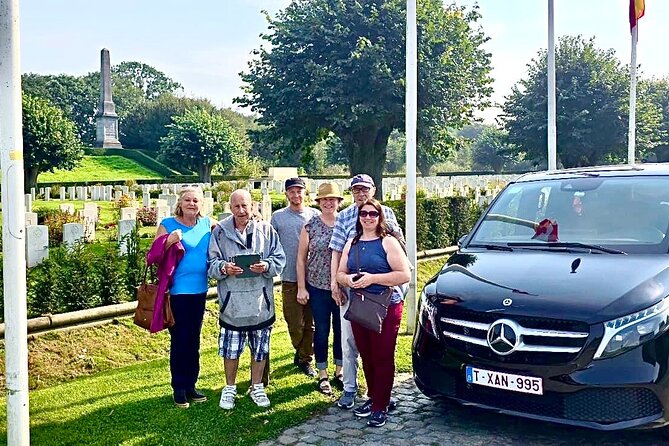
- Private transport from Brussels: You ride in an air-conditioned vehicle with WiFi and bottled water, without renting a car or planning the route.
- Seven major battlefield stops: The day includes Saint Julien, Poelkapelle, the In Flanders Fields Museum, Essex Farm, Hill 60, Tyne Cot, and Ypres.
- The museum is included: Entry to the In Flanders Fields Museum is part of the price, so confirm that enough time is set aside for it.
- A guide-led history day: Guides such as Marikea and Henry have been praised for clear, informed commentary, while driver Adel was noted for helpful service.
- Lunch is your own expense: You have free time in Ypres, but the timing may be late after a full morning of sites.
- Best for serious history enthusiasts: The tour covers a lot in 8 to 10 hours, so it suits you if you want depth and variety more than a relaxed day.
Why this Flanders day trip works from Brussels
Flanders is easy to reach from Brussels by road, but the battlefield area is spread across a wide part of West Flanders. The sites do not line up neatly for a first-time visitor, and several are in rural areas where public transport is not a practical sightseeing tool.
That is where this private tour earns part of its cost. You are collected at your Brussels hotel and driven between the memorials, cemeteries, museum, and town of Ypres. You can look out at the countryside instead of dealing with navigation, parking, and a rental car.
The day lasts about 8 to 10 hours, so expect a full schedule. This is not a quick stop at one memorial followed by a leisurely lunch. You move from site to site, often with only 30 or 40 minutes at smaller memorials, then spend longer at the museum, Ypres, and the Menin Gate.
A private tour also gives your group its own vehicle and guide. That matters when you want to ask about a particular regiment, national memorial, or battlefield feature. Guides Marikea and Henry are specifically associated with strong historical explanations, while Adel, the driver, received praise for careful driving and helping with an unplanned return destination.
The private format does not remove every limitation. The itinerary is tightly timed, and a guide may need to keep you moving. If your priority is one museum or one battlefield explored at length, a shorter, custom day may suit you better.
More flanders fields wwi tours in Brussels:
- Flanders Fields Remembrance Tour from Brussels
★ 4.5 · 334 reviews - Private World War I Battlefield Tour from Brussels to Flanders
★ 5.0 · 8 reviews - Historic Ypres WWI Sites – Tour from Brussels
★ 5.0 · 6 reviews
Saint Julien and the Brooding Soldier
The first stop is the Saint Julien Memorial, also called the Brooding Soldier. This Canadian monument honors the men who fought in the Second Battle of Ypres, and its single soldier figure gives the site a quiet, human focus.
You have about 40 minutes here, including the nearby Polygon Wood and the 5th Australian Division Memorial. The combination is useful because it introduces more than one national story at the start of the day. You are not looking at Flanders through only a British or Canadian lens.
This is an outdoor stop, so practical clothing matters. Wear shoes suitable for uneven ground and bring a coat or rain layer. Flanders weather can change quickly, and the tour continues outdoors at several later stops.
The short visit is enough to see the memorials and hear the main explanation, but not enough for a long walk through the area. I would treat this as a thoughtful opening chapter rather than the place to spend most of your time.
Poelkapelle and the Ypres Salient
The drive toward Ypres takes you through the countryside and into the former Ypres Salient, one of the key battle areas of the First World War. At Poelkapelle, you visit the Tank Memorial, a reminder of the mechanical warfare that became part of the fighting here.
You have roughly an hour for this portion, including the scenic drive and the battlefield area. That road time is not wasted. It helps you understand that the memorials are spread across a broad region, and it gives your guide room to explain how the separate locations fit together.
The Ypres Salient saw some of the largest battles of the war, with enormous numbers of soldiers killed, wounded, or listed as missing. You may find the open countryside deceptively peaceful. The calm fields make the wartime accounts feel even more stark because little about the present view signals what happened there.
The Tank Memorial is a good stop for visitors interested in military technology, but it may have less emotional weight than Essex Farm or Tyne Cot. Your guide’s explanation is important here, since the object alone cannot tell you much about the people and battles connected to it.
One hour inside the In Flanders Fields Museum
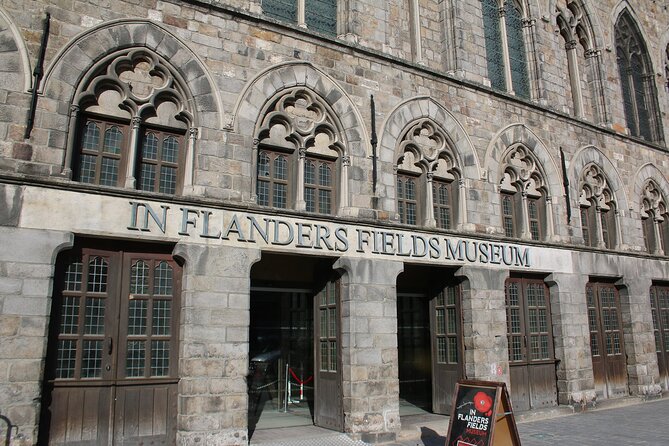
The In Flanders Fields Museum in Ypres is the main indoor stop and has about an hour allotted to it. The museum places the First World War in the setting of the city and surrounding battlefields, giving names, artifacts, and personal stories a place alongside the military account.
I like having this museum early enough in the day to provide context for the cemeteries that follow. After seeing the exhibits, Tyne Cot, Essex Farm, and the Menin Gate are easier to understand as parts of one enormous memorial system rather than unrelated stops.
Admission is included, which is important at this price. One practical concern is that a guide reportedly skipped the museum entry on one occasion, so I would confirm at the start of the day that your visit is planned. If the museum matters to you, say so clearly before leaving Brussels.
An hour lets you see the main sections, but it is not enough for every display at a slow pace. If you read every panel, you may need to choose carefully. I would focus on the material that explains Ypres, the battlefield map, and the personal accounts.
A few more Brussels trips to weigh up
- Brussels Highlights & Hidden Gems Private Tour with a Local Guide
★ 5.0 · 251 reviews - Brussels: Belgian Beer Tasting and Course at a Private Bar
★ 4.6 · 219 reviews - Brussels PRIVATE TOUR With Locals: Highlights & Hidden Gems
★ 5.0 · 177 reviews - Brussels: Private 3-Hour Sightseeing Walking Tour
★ 4.6 · 112 reviews
Essex Farm, John McCrae, and the poem
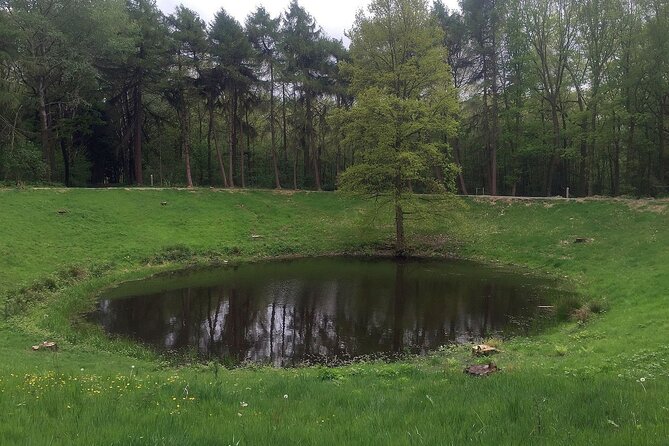
Essex Farm Cemetery and its bunkers offer one of the day’s most personal connections. The site served as a dressing station during the war and is associated with Canadian soldier John McCrae, who wrote In Flanders Fields while stationed in the area.
You have about 30 minutes here. That is enough to see the cemetery, the bunkers, and the setting connected with McCrae, though not enough for a long, unhurried visit. The stop works best when you pause and consider the practical role of the site as a medical station, not just its literary connection.
The cemetery itself is quiet and restrained. I find that useful. There is no need for a large display to make the place meaningful. The link between medical work, a nearby cemetery, and one of the war’s best-known poems gives the stop a direct human connection.
If you know the poem already, your guide can help place it in its wartime setting. If you do not, the stop still works because the bunkers and graves show the physical conditions behind the writing.
Hill 60 and the war beneath the ground
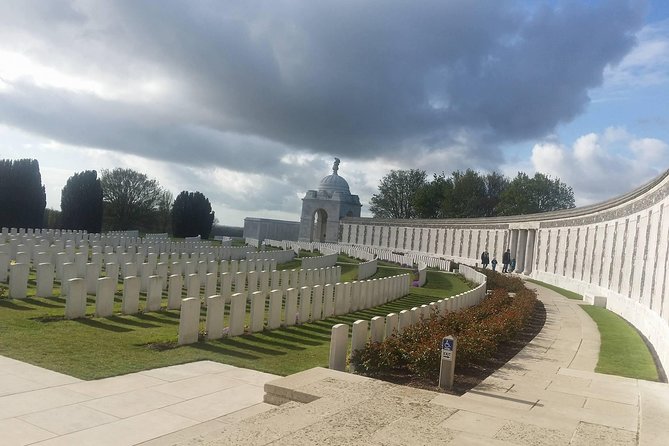
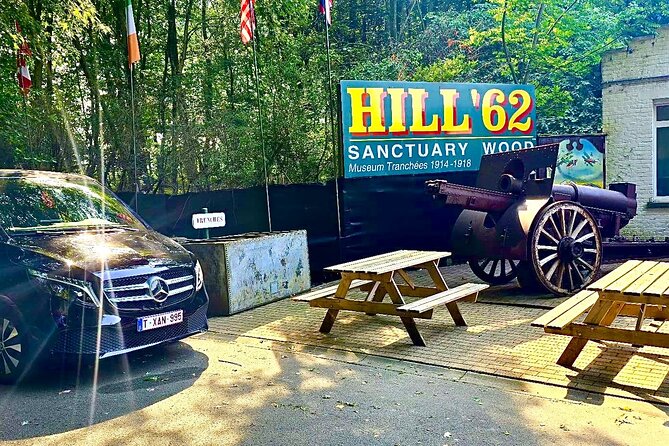
Hill 60 is one of the most distinctive battlefield stops because the fighting took place above and below ground. This raised area saw heavy action, including underground warfare that left craters and other physical traces.
The visit lasts around 30 minutes and involves walking up to the site. That is not a major hike, but you should still wear firm shoes and expect uneven ground. The surface can feel more immediate than a formal memorial because the land itself carries signs of the fighting.
A guide adds real value here. Without explanation, a crater or raised patch of ground can be hard to interpret. With the military context, you begin to see why a small height mattered and why tunneling became part of the battle.
The short timing is the main limitation. You will not have the freedom for an extended walk or close study of every feature. Still, Hill 60 gives the day a different texture from the cemeteries and museum. It is a place where you look at the ground and think about what happened below it.
Tyne Cot Cemetery and the missing
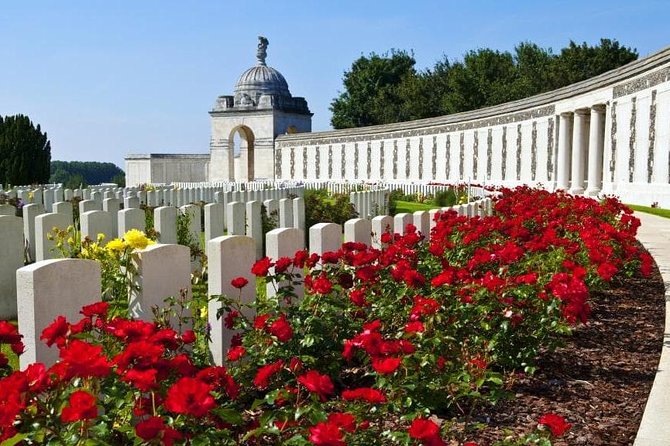
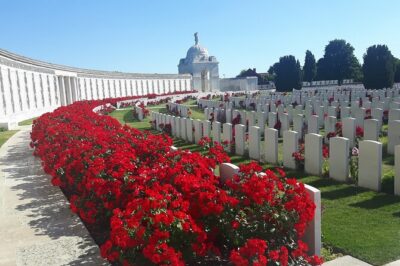
Tyne Cot Cemetery is among the most important memorial stops on the route. It contains the graves of many soldiers who died in the Ypres Salient and includes the Tyne Cot Memorial to the Missing.
The memorial wall surrounds the cemetery and carries the names of Commonwealth soldiers whose graves are unknown. That wall changes the way you read the site. The graves mark individual burials, while the names on the memorial show the much larger number of men who were never recovered or identified.
You have about 30 minutes. Use the time first to take in the layout, then read a few names rather than trying to absorb everything. The scale is too large for a complete reading, and the stop is more powerful when you let the design and silence do some of the work.
Tyne Cot can be emotionally heavy, especially after Essex Farm and Hill 60. Your guide’s role is useful here, but you also need a few quiet minutes without a running explanation. In a private group, it is reasonable to ask for that pause.
Lunch and free time in Ypres
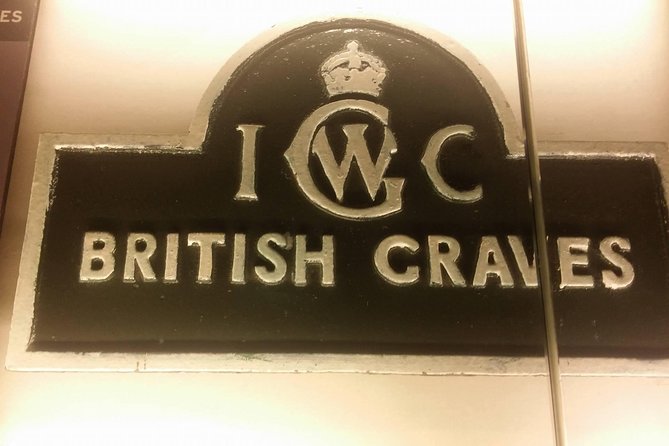
Ypres gives you a break from the rural memorials and a chance to eat lunch at your own expense. You have free time to explore the town, though the exact amount depends on traffic, the pace of earlier visits, and the timing of the Menin Gate portion.
Plan for a late lunch. One day ran as late as 2:15 p.m. before the meal, so I would eat a solid breakfast and carry a small snack if needed. Lunch is not included, and the tour does not promise a specific restaurant.
This is also your chance to reset before the final memorial. You can walk through Ypres, get your bearings, and see how a modern town sits beside places marked by war. The contrast is valuable. The day is not only about ruins and graves; it is also about a living Belgian town.
The timetable may not allow a long independent stroll. If you want a leisurely meal, ask your guide how much time is available before ordering. A quick lunch will leave more room to see the town, while a slower meal may be the better choice after a morning of outdoor stops.
Menin Gate and the Last Post ceremony
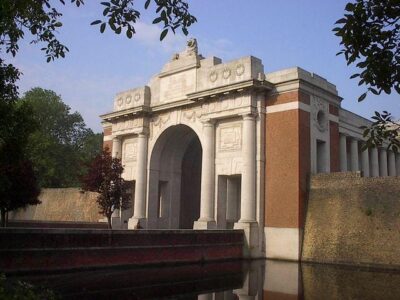
The Menin Gate Memorial is the final major stop before the ride back to Brussels. It carries the names of thousands of missing Commonwealth soldiers and is one of Ypres’s best-known memorials.
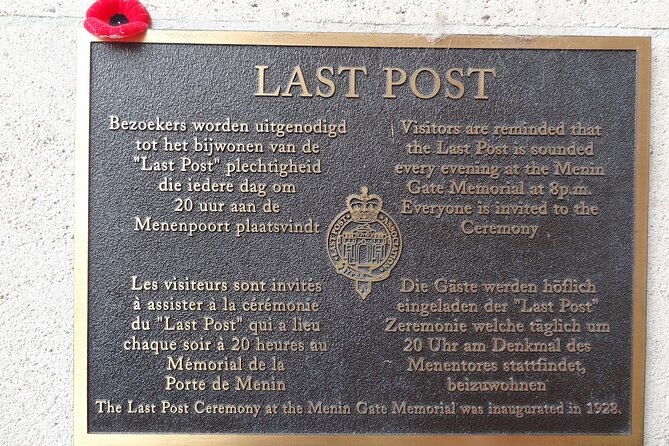
The planned visit lasts about an hour and a half, which is longer than most of the smaller stops. That gives you time to see the structure, study the names, and take part in the Last Post ceremony mentioned as part of the experience.
The ceremony adds a public act of remembrance to a day otherwise shaped by museums, cemeteries, and quiet battlefield sites. Timing is important, so confirm with your guide how the visit is arranged on your date. The schedule may also determine how much free time you have in Ypres.
After the gate, the private vehicle returns you to Brussels. WiFi, bottled water, air conditioning, and round-trip transport make the long return easier, though it will still be a full day on the road.
What $889.89 per person really buys
At $889.89 per person, this is an expensive day trip. The price makes the most sense for a small private group that values a dedicated vehicle, hotel pickup, and a guide who can explain the sites in detail.
You are paying for convenience as much as admission. The tour removes the need to rent a car, learn the roads around Ypres, arrange parking, and build a route across scattered locations. Museum entry is included, along with bottled water, onboard WiFi, and private transportation.
The price is harder to justify if you are traveling alone or mainly want to see one or two famous memorials. Group discounts may help, but the available information does not specify the discount amount. Compare the total for your group rather than judging the per-person figure alone.
The reported experiences also show why expectations matter. Marikea was praised for combining the modern Ypres museum with the more rustic Hill 62 museum and a walk through Hill 60, although Hill 62 is not listed among the scheduled stops here. Henry was praised for clear explanations, and Adel for going out of his way with a return drop-off.
That suggests the human element can add value, but the exact guide and day-to-day schedule may vary. Confirm the museum visit, lunch timing, and ceremony plan before you set off.
Who should book this private battlefield tour?
I would recommend it to you if the First World War is a main reason for visiting Belgium and you want to see many key locations in one day. It is also a good fit if you prefer a private vehicle and guide instead of organizing a complicated self-drive route.
The tour suits adults, families with children accompanied by an adult, and most people who can manage short walks at outdoor sites. Service animals are allowed, and the tour is near public transportation, although hotel pickup is offered from Brussels.
I would be more cautious if you dislike long days, need a slow lunch, or want extensive time at every cemetery. The schedule covers a lot, and the price is substantial. The combination of outdoor walking, museum time, driving, and emotional subject matter can feel demanding.
Free cancellation is available if you cancel at least 24 hours before the start time. Changes made within 24 hours are not accepted, and there is no refund for a late cancellation. The tour also requires a minimum number of participants, with a different date or a full refund offered if that requirement is not met.
Should you book it?
Book this tour if you want the broadest possible Flanders battlefield day from Brussels without driving yourself. The strongest reasons are the private transport, the mix of memorials and museum time, and the chance to see Ypres and the Menin Gate in the same outing.
Before paying, ask for three details: which guide is assigned, when lunch will happen, and how much time is guaranteed at the In Flanders Fields Museum. If those answers suit you, the high price can be reasonable for a private, carefully guided day. If you want a cheaper or slower visit, choose fewer sites and arrange them independently.
FAQ
How long does the Flanders battlefield tour from Brussels last?
The tour lasts approximately 8 to 10 hours, including transportation between Brussels, Ypres, and the battlefield sites.
Is hotel pickup and drop-off included?
Yes. Pickup and drop-off from hotels in Brussels are included in the experience.
Is the tour private?
Yes. Only your group participates in the private activity.
Is museum admission included?
Yes. Entry to the In Flanders Fields Museum is included in the tour price.
Is lunch included?
No. Lunch is not included, and you pay for it yourself during free time in Ypres.
What transportation is provided?
You travel in an air-conditioned private vehicle. Bottled water and WiFi onboard are also included.
What is the cancellation policy?
You can cancel at least 24 hours before the start time for a full refund. Cancellations or changes made less than 24 hours before the start time are not accepted and are not refunded.
Just added around Brussels
- Standard vehicle from Brussels airport to city of Antwerp★ 5.0 · 4 reviews
- Private transfer from BRU Airport to Brussels city with luxury limousine 3 pax★ 4.5 · 8 reviews
- Luxury vehicle from Brussels airport to the city of Brussels★ 4.0 · 5 reviews
- Transfer Brussels Airport –> City MB E Class 1-3 PAX (ONE WAY)★ 5.0 · 6 reviews
- PRIVATE MPV TRANSFER FROM/TO BRUSSELS AIRPORT (Max 6 pax) ONE-WAY★ 5.0 · 4 reviews
- Transfer Brussels Airport (BRU) –> City Center 7 PAX (ONE WAY)★ 5.0 · 7 reviews
- Transfer Brussels Airport –> Brussels MB V Class 7 PAX (ONE WAY)★ 5.0 · 4 reviews
- Brussels: City Walk with Audioguide in 7 Languages on your Phone★ 3.5 · 4 reviews
Flanders Fields WWI Tours, compared.
Great War Flanders Fields Minibus Tour w/ Lunch
Read our review →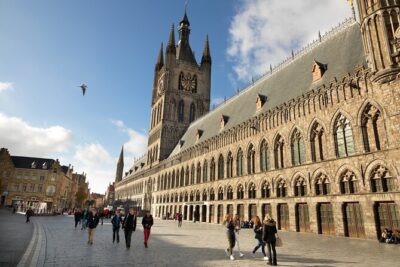
Flanders Fields Remembrance Tour from Brussels
Read our review →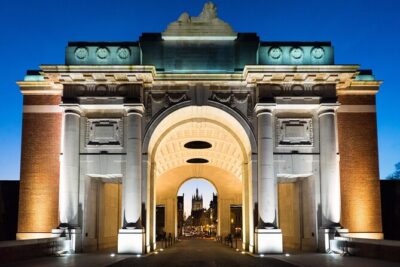
In Flanders Fields and Passchendaele Half Day Morning Tour
Read our review →
From Ypres, The Christmas Truce to Passchendaele Ypres Based WW1 private tour
Read our review →
Browse the lists this tour appears in