
Reviewed · FLANDERS FIELDS WWI TOURS
Flanders Fields Remembrance Tour from Bruges
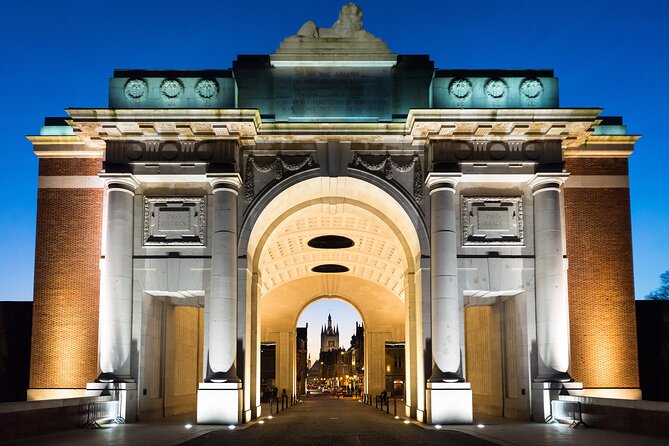
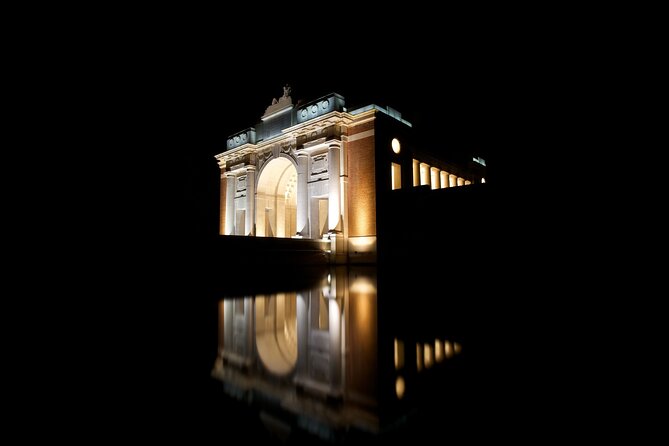
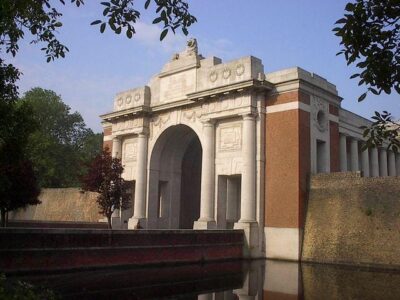
The most powerful moment comes at the end, when you gather beneath Ypres’ Menin Gate for the daily Last Post Ceremony. After a full day among trenches, bunkers, cemeteries, and battlefields, the simple bugle call has real weight. You are not just looking at names on memorials. You have spent the day learning where the fighting happened.
I like the way this tour connects several kinds of sites: the German cemetery at Vladslo, the Trench of Death, Hill 60, Essex Farm, Tyne Cot, and Ypres. I also like the guides, particularly Diederiek Naeyaert, Stephen, and Stefan, who are praised for bringing military details and human stories together. The main drawback is the length. At roughly 10 hours and 30 minutes, with many stops, this is a serious day out rather than a light excursion.
In This Review
- Key points to know before booking
- Why this Bruges battlefield tour matters
- Vladslo and Käthe Kollwitz’s grieving parents
- The Trench of Death and the Brooding Soldier
- Lunch and the route toward Ypres
- Passchendaele and Tyne Cot Cemetery
- Hill 60 and the physical shape of battle
- Essex Farm and John McCrae
- The Flanders Fields Museum in Ypres
- Menin Gate and the Last Post Ceremony
- Transport, group size, and the long day
- Who will get the most from this tour?
- Practical advice for making the day work
- Should you book the Flanders Fields Remembrance Tour?
- FAQ
- How long is the Flanders Fields Remembrance Tour?
- Where does the tour begin?
- What time does the tour start?
- Where does the tour finish?
- Is hotel pickup included?
- Is lunch included in the price?
- What transportation is provided?
- Is the tour offered in English?
- Can I cancel for a full refund?
Key points to know before booking
- The Last Post closes the day: The daily ceremony at Menin Gate is the emotional high point and usually the reason many people remember this tour.
- You see several sides of the war: German, French, Canadian, and Commonwealth memorials help you understand the conflict beyond one national story.
- The route includes real battlefield remains: The Trench of Death, Hill 60, Essex Farm bunkers, and Passchendaele connect the facts to the ground itself.
- Expect a long, tightly planned day: The schedule fits in a lot, but you will not have unlimited time at every cemetery or museum.
- Do not assume a small minivan: The description refers to an air-conditioned minivan, but some departures have used a large coach with a sizable group.
- Lunch is not listed as included: Budget for your midday meal unless your booking confirmation says otherwise.
Why this Bruges battlefield tour matters
Flanders Fields is not one single sight. It is a wide area of former battlefields, rebuilt towns, cemeteries, memorials, museums, and preserved fragments of the Western Front. Seeing it properly takes time, and this excursion uses most of a day to create a broad picture.
I find the route effective because it moves between places with different moods. A German cemetery feels different from a Commonwealth cemetery. A trench gives you a sense of physical confinement, while a museum explains the weapons, uniforms, and daily routines behind the fighting. Then Ypres brings the story into a living city that was destroyed and rebuilt.
The tour leaves from Bargeplein on Bargeweg in central Bruges at 11:00 am. Hotel pickup is not included, so you need to reach the meeting point yourself. The tour returns to the same meeting point, with some departures also reported as ending near Bruges railway station.
The listed price is about $95.34 per person. For a full-day guided trip covering a large area, that can be good value, especially if you do not have a car or do not want to plan a battlefield route yourself. You are paying for transport, a professional multilingual guide, and a full schedule of major sites. Lunch, personal spending, and hotel transfers are extra.
More flanders fields wwi tours in Bruges:
- From Bruges: Great War Flanders Fields Minibus Tour w/ Lunch
★ 4.9 · 1,257 reviews - From Bruges: Flanders Fields Remembrance Full-Day Trip
★ 4.8 · 65 reviews - Flanders Fields Remembrance Tour from Brussels
★ 4.5 · 334 reviews
Vladslo and Käthe Kollwitz’s grieving parents
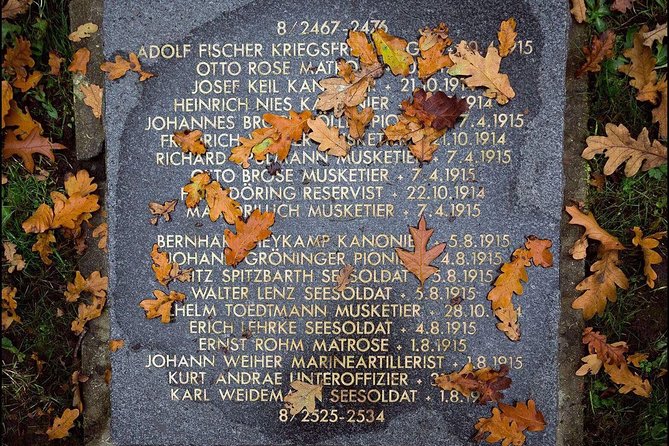
The first major stop is the German Military Cemetery at Vladslo. Thousands of German soldiers are buried here, and the cemetery offers a useful counterpoint to the Commonwealth memorials you visit later.
The most memorable feature is Käthe Kollwitz’s sculpture Grieving Parents. Kollwitz created it after her son Peter died in the war, and the figures give the site a private, human focus. You do not need a long lecture to understand the mood. The sculpture makes the cost of war feel personal rather than abstract.
This stop is not about grand architecture or dramatic ruins. It is quiet and restrained. Give yourself time to look closely and listen to the guide. The value here comes from the contrast between the orderly cemetery and the grief represented by the sculpture.
The Trench of Death and the Brooding Soldier
Near Diksmuide, you leave the vehicle for the Trench of Death, one of the preserved sections of the Western Front. The name is blunt, and the site is a useful reminder that trench warfare was not simply a line of soldiers hiding underground. Trenches were wet, cramped, exposed, and constantly threatened by artillery and attack.
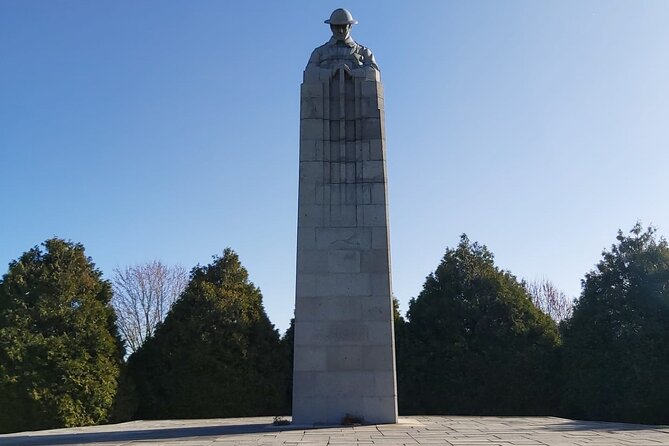
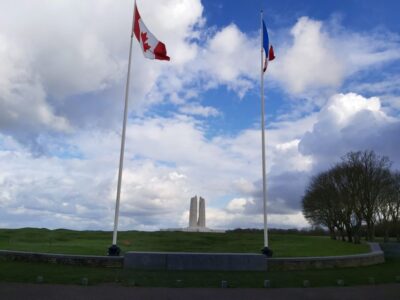
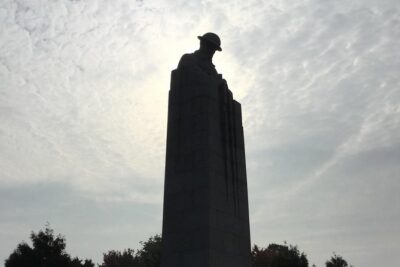
You also see the statue of the Brooding Soldier, which commemorates 2,000 Canadian soldiers killed during the first German gas attack. The memorial gives a Canadian dimension to the day and helps show how widely the war drew troops from across the Commonwealth and beyond.
This is one of the stops where sturdy shoes matter. The tour requires a moderate level of physical fitness, and you will be getting in and out of the vehicle and walking around outdoor sites. The walking is not described as strenuous, but uneven ground and a full day on your feet are part of the experience.
Lunch and the route toward Ypres
Lunch is scheduled around the Ypres portion of the day. The supplied tour details list lunch as not included, so plan to pay for your own meal. Some descriptions refer to a hearty plowman-style lunch or a simple meal at a local restaurant, so check your specific confirmation rather than relying on the general listing.
This pause matters more than it may seem. The route is packed, and lunch gives you a chance to rest, eat, and talk with other people in the group. It is also a useful break before the afternoon’s cemeteries and the final ceremony.
The schedule may change with daylight, opening hours, and special events. One recorded departure had to work around a museum closure and Menin Gate refurbishment, while another adjusted the timing in December. If a particular museum is essential to you, confirm its opening status close to your date.
Same old town, a completely different kind of day:
- Bruges: Small Group Boat Cruise and Guided Walking Tour
★ 4.8 · 4,102 reviews - Bruges: Walking Tour, Canal Boat Trip w/Beer Tasting Option
★ 4.4 · 2,759 reviews - Historical Walking Tour: Legends of Bruges
★ 5.0 · 2,541 reviews - Bruges: Choco-Story Chocolate Museum Guided Tour w/Tastings
★ 4.2 · 1,379 reviews
Passchendaele and Tyne Cot Cemetery
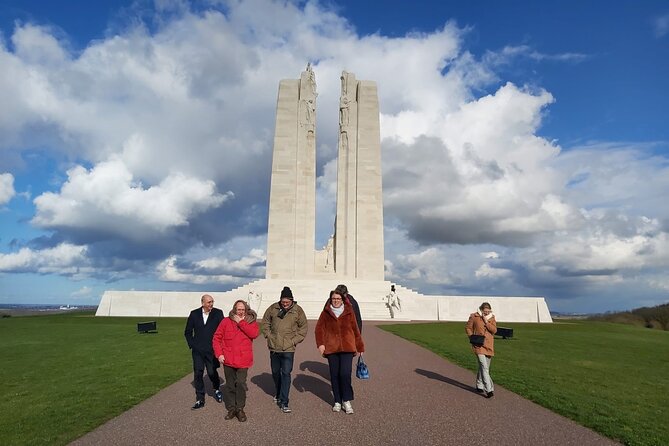
After lunch, the tour heads toward Passchendaele, the setting of one of the war’s bloodiest battles. Today, the area is peaceful and traditionally Belgian, which makes the distance between present-day calm and wartime destruction hard to grasp.
That contrast is one of the tour’s strengths. You can stand in a quiet town and hear how the same ground became a place of mud, shellfire, and mass casualties. The guide’s explanation is especially useful here because the battlefield itself does not always look dramatic.
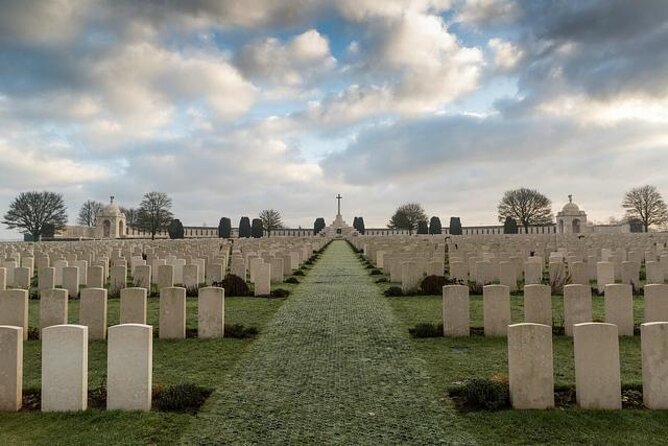
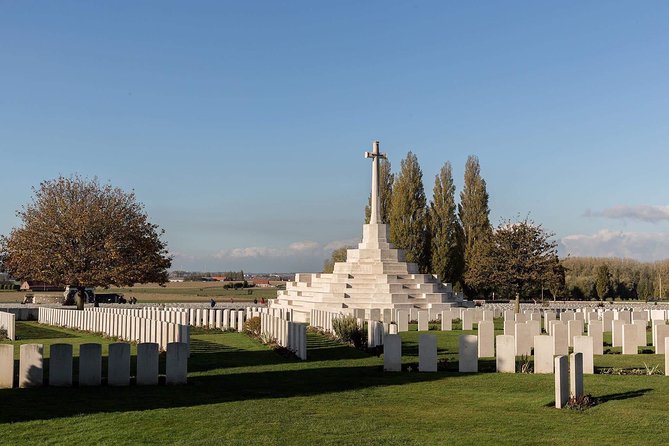
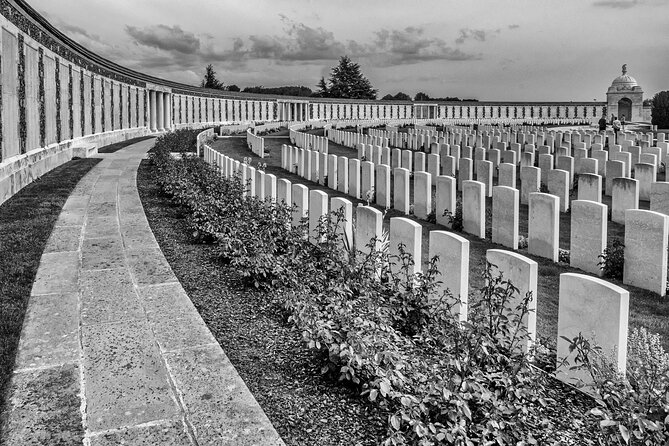
The route includes Passchendaele New British Cemetery and Tyne Cot, the world’s largest Commonwealth cemetery. Tyne Cot’s rows of white headstones cover a broad site, while the memorial walls record names of soldiers with no known grave. The scale can be difficult to take in. Rather than rushing through, I suggest taking a few quiet minutes after the main explanation.
Time is the tradeoff. The itinerary includes many stops, and some people may want longer at Tyne Cot or the Passchendaele museum. You get a wide view of the area, but this is not a slow, specialist archaeology tour.
Hill 60 and the physical shape of battle
Hill 60 is a battlefield memorial site and park near Zillebeke. The name sounds modest, but even a small rise mattered greatly in a war where observation and artillery positioning could decide lives.
The tour passes the site and points out tunnels that played a role in the fighting. This helps you understand why the Western Front was fought above and below ground. The battlefield was not only a network of trenches. Tunneling, mining, artillery, and observation all shaped the action.
Hill 60 works best when your guide explains the ground as you see it. Without context, it can look like a quiet park. With context, the slight elevation and preserved features become clues to the military problem facing both sides.
Essex Farm and John McCrae
At Essex Farm Cemetery, you visit the dressing station where Canadian doctor John McCrae wrote In Flanders Fields. The stop is short, around 15 minutes, but it carries a strong literary and personal connection.
You can see the bunkers associated with the field hospital and consider the setting in which McCrae worked with wounded soldiers. The poem became one of the most familiar pieces of writing linked to the First World War, yet this stop brings it back to a particular place rather than treating it as a detached classroom text.
Because the stop is brief, listen carefully when the guide begins the explanation. You may not have much spare time to wander. That is a recurring feature of this excursion: the route gives you access to many meaningful places, but the schedule asks you to keep moving.
The Flanders Fields Museum in Ypres
The Flanders Fields Museum adds objects and personal accounts to the outdoor sites. The exhibitions contain artifacts connected with the battlefield, and an audio-guided visit helps explain the war from a wider perspective.
This is a useful middle section of the day. Cemeteries show the result of the fighting, while the museum helps explain how soldiers lived, how the war was fought, and why the conflict lasted so long. If you prefer military history with objects and displays, this may be one of your favorite stops.
The exact museum time can vary. One recorded visit had less time than desired at the Passchendaele museum, and another found the Flanders Fields Museum closed. Treat the museum portion as an important possibility within a larger route, not as the sole reason to book.
Ypres itself also deserves attention. Much of the city was destroyed during the war and rebuilt afterward. The rebuilt streets and buildings help you see how remembrance became part of the city’s identity.
Menin Gate and the Last Post Ceremony
The final stop is the Last Post Ceremony at Ypres’ Menin Gate. Held daily, it honors Commonwealth soldiers and officers who went missing after the battles.
The ceremony is simple. That is part of its strength. After a day filled with dates, battle names, troop movements, and cemetery statistics, the bugle call and the gathering beneath the gate bring the focus back to individual loss.
The ceremony normally lasts about 30 minutes, though special occasions can affect its length and presentation. Menin Gate has also undergone refurbishment at times, so scaffolding or construction equipment may affect the view on a particular date.
Arrive ready for a crowd. The ceremony is a public tribute, not a private tour performance. You will be expected to behave respectfully and remain quiet. The guide can explain the tradition beforehand, but the ceremony itself needs no sales pitch.
Transport, group size, and the long day
The tour information describes an air-conditioned minivan, but you should be prepared for a larger coach. The vehicle has been described as comfortable, yet group sizes can be larger than the small-group format some people expect. One departure had 27 people, and the published maximum is as high as 200.
That matters because a larger group can make it harder to hear commentary at outdoor stops. If you have hearing difficulties, stay close to the guide when leaving the vehicle. The quality of the day depends heavily on the guide’s delivery, and guides such as Diederiek Naeyaert, Stephen, and Stefan have received especially strong praise for their command of First World War facts and their calm, respectful manner.
The air conditioning is welcome, particularly in warm weather. Still, motion sickness may be a concern if you were expecting a small minivan and are sensitive to large-vehicle travel. The tour involves substantial time on the road, so bring water and use each stop as a chance to stretch.
The English-language option is the one clearly specified. The guide is described as multilingual, but confirm the language arrangement when booking if you need commentary in a language other than English.
Who will get the most from this tour?
I would choose this excursion if you want a broad introduction to the Flanders battlefields without renting a car. It suits people with a strong interest in the First World War, family members tracing a soldier’s service, and anyone who wants to understand the connection between Ypres, Passchendaele, the cemeteries, and the trenches.
It is also a good fit if you value explanation. The battlefield remains can be hard to interpret on your own, and the guide supplies the dates, names, and stories that make each place meaningful.
I would think twice if you dislike long days, frequent stops, or solemn memorial sites. This is not a casual countryside outing. You spend much of the day moving between cemeteries and military sites, and the subject matter is often painful.
A specialist with several days in Belgium may prefer a slower private tour or a dedicated visit to one battle sector. This excursion is better for coverage than for lingering. You see a great deal, but you must accept a firm schedule.
Practical advice for making the day work
Wear comfortable shoes and clothing suitable for outdoor walking. The tour requires moderate physical fitness, and the ground around trenches, cemeteries, and battlefield parks may not feel as easy as city pavement.
Bring water, and plan for lunch costs because lunch is not included in the stated price. Keep your schedule open for the full 10 hours and 30 minutes. Delays, ceremony timing, and the distance between Bruges and Ypres make this a poor choice for a day with another fixed evening appointment.
The meeting point is Bargeplein, Bargeweg, 8000 Brugge. There is no hotel pickup or drop-off, so allow time to reach it. Confirmation is provided at booking, and free cancellation is available up to 24 hours before the start time. Changes or cancellations inside that window are not accepted for a refund.
Should you book the Flanders Fields Remembrance Tour?
Book it if you want the main Flanders battlefields in one carefully arranged day, with transport from Bruges and a guide who can explain what happened on the ground beneath your feet. The German cemetery, Trench of Death, Tyne Cot, Essex Farm, Hill 60, Ypres, and the Last Post Ceremony give you a substantial introduction for about $95.34.
Go in expecting a full schedule, possible coach transport, and limited time at some stops. If the Last Post Ceremony matters to you, this tour gives you a practical way to attend it while connecting the ceremony to the battlefields and cemeteries that came before.
At a rating of 4.3 from 207 ratings, the experience is strong but not flawless. Its best features are the guides, the range of sites, and the final tribute. Its weak points are the long duration, variable group size, and possible changes to museum access. For most first-time visitors to the battlefields from Bruges, I would book it, provided you are ready for a serious, demanding, and deeply reflective day.
FAQ
How long is the Flanders Fields Remembrance Tour?
The tour lasts approximately 10 hours and 30 minutes.
Where does the tour begin?
It begins at Bargeplein, Bargeweg, 8000 Brugge, Belgium.
What time does the tour start?
The stated start time is 11:00 am.
Where does the tour finish?
The activity ends back at the meeting point in Bruges.
Is hotel pickup included?
No. Hotel pickup and drop-off are not included.
Is lunch included in the price?
Lunch is listed as not included, so you should budget for your own meal unless your booking confirmation states otherwise.
What transportation is provided?
Transportation is provided in an air-conditioned vehicle. Although the description refers to a minivan, some departures use a large tour bus.
Is the tour offered in English?
Yes. English is a stated tour language, and the guide is described as multilingual.
Can I cancel for a full refund?
Yes, if you cancel at least 24 hours before the experience start time. Cancellations or changes made less than 24 hours in advance are not refunded or accepted.
Just added around Bruges
- 2-Hour Private Walking Tour of Bruges★ 5.0 · 13 reviews
- The Waffles ‘n Coffee Breakfast in Bruges Centre★ 4.5 · 9 reviews
- Explore the Instaworthy Spots of Bruges with a Local★ 5.0 · 3 reviews
- Photo Tour “Jan van Eyck”★ 4.0 · 7 reviews
- 6 Hour Bruges Shore Excursion from Zeebrugge Cruise Port★ 4.5 · 23 reviews
- Ticket Expo Body Worlds in Bruges, Belgium★ 4.5 · 11 reviews
- Bruges Walking Tour with Audioguide on Your Smartphone★ 4.5 · 14 reviews
- Discover the secrets of Bruges by playing!★ 4.5 · 7 reviews
Flanders Fields WWI Tours, compared.
Great War Flanders Fields Minibus Tour w/ Lunch
Read our review →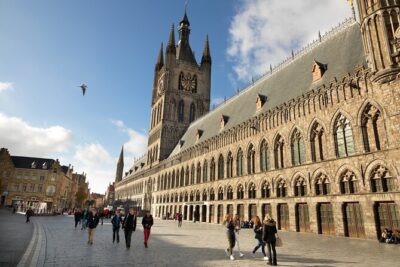
Flanders Fields Remembrance Tour from Brussels
Read our review →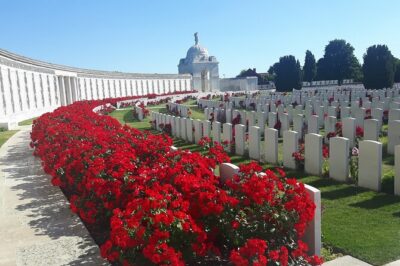
In Flanders Fields and Passchendaele Half Day Morning Tour
Read our review →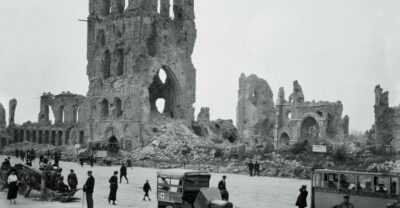
From Ypres, The Christmas Truce to Passchendaele Ypres Based WW1 private tour
Read our review →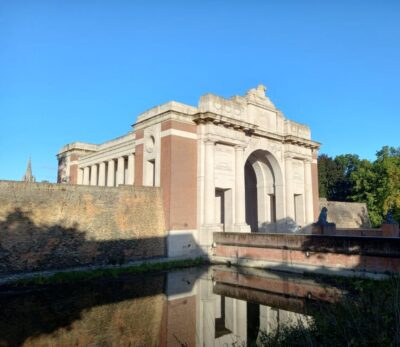
In Flanders Fields and Passchendaele Grand Tour
Read our review →Browse the lists this tour appears in