
Reviewed · FLANDERS FIELDS WWI TOURS
From Ypres: WWI Battlefields Private Tour
The most moving part of this private Ypres battlefield tour is the way it connects battle sites with individual names. You can walk original trenches at Sanctuary Wood, stand beside the vast Caterpillar mine crater, and visit cemeteries where the scale of the First World War becomes painfully clear.
I like the flexible route, especially if you have an ancestor who served here. I also like the personal touch brought by guides such as Søren Hawkes and Sabine, who use maps, service records, and family details to put the fighting into context. The main drawback is time: four hours gives you a strong introduction, but not enough for every battlefield and cemetery around Ypres.
In This Review
- Key points to know before booking
- Why a private Ypres tour works so well
- Hill 60 B and the Caterpillar mine crater
- Sanctuary Wood and the original trench remains
- Tyne Cot Cemetery and the weight of names
- The Brooding Soldier at Vancouver Corner
- John McCrae’s dressing station and In Flanders Fields
- Essex Farm Cemetery in the final stretch
- Three national routes through the Ypres Salient
- Guides who make the difference
- Transport, timing, and practical comfort
- Price, value, and the four-hour limit
- Who should book this battlefield tour?
- Should you book it?
- FAQ
- Where does the tour begin and end?
- How long does the tour last?
- Which languages are available?
- Can the tour focus on my ancestor?
- Which national routes can I choose?
- Is museum entry included?
Key points to know before booking
- Walk original First World War trenches at Sanctuary Wood, with about 50 minutes for the museum and site.
- See the Caterpillar mine crater at Hill 60 B, a huge reminder of the underground war and the 1917 attack.
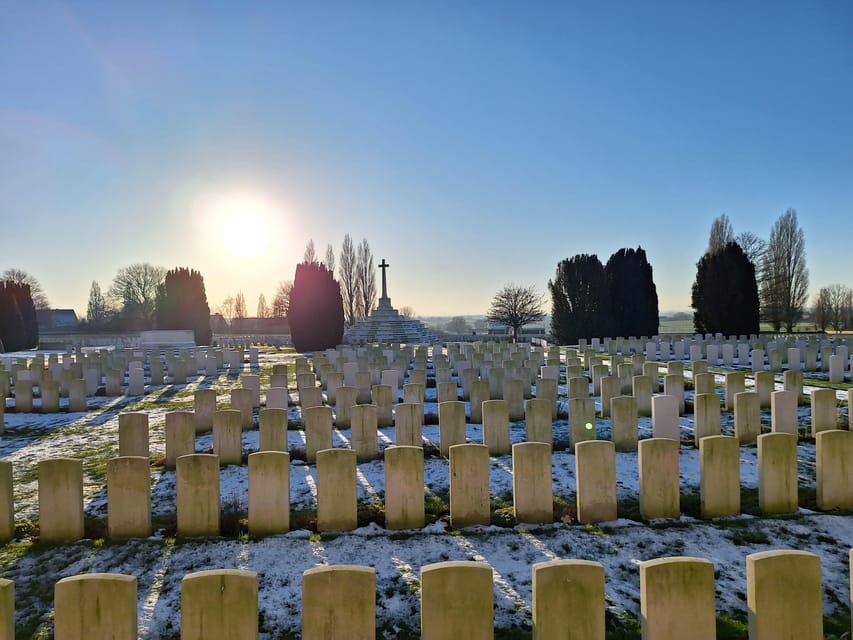
- Visit Tyne Cot Cemetery, one of the most important Commonwealth war cemeteries in the Ypres area.
- Choose a national focus, with Australian, Canadian, and New Zealand routes available.
- Ask for family research before the tour, since the guide can tailor stops around ancestors where possible.
- Ride in a private group, with hotel pickup and drop-off from Ypres, mineral water, and museum admission included.
Why a private Ypres tour works so well

The Ypres Salient is not a single battlefield with one obvious monument. It is a wide area of farms, villages, roads, cemeteries, memorials, and preserved ground. Without a guide, you can visit the famous places, but it is harder to understand how they fit together.
A private tour gives you a guide who can explain the movement of Australian, Canadian, New Zealand, South African, and British troops toward Passchendaele in 1917. You are not tied to a large group or a fixed script. If your family story points toward a particular regiment, nationality, cemetery, or action, the route can be adjusted.
That flexibility matters most at the cemeteries. A name on a headstone can feel distant when viewed alone. It becomes more meaningful when you have just seen the ground where the unit fought, the road it used, or the memorial connected with the action.
The tour is conducted in English and is designed for a private group. The advertised price is $530 for up to four people, so the value improves when shared by a small family or group of friends. It includes transport, the guide, water, and museum admission. Food is not included.
More Flanders Fields WWI Tours in Ypres
- In Flanders Fields and Passchendaele Half Day Morning Tour
★ 5.0 · 117 reviews - From Brussels: Flanders Fields Remembrance Full-Day Trip
★ 4.4 · 65 reviews - From Ypres, The Christmas Truce to Passchendaele Ypres Based WW1 private tour
★ 5.0 · 29 reviews
Hill 60 B and the Caterpillar mine crater
The first major stop is the Caterpillar mine crater at Hill 60 B, with about 30 minutes for a guided visit and walk. This is one of the best places on the route for understanding the underground side of the war.
The name Caterpillar comes from the shape of the large crater left by the 1917 mine explosion. You do not need a long lecture to grasp the force involved. The scale of the hollow in the ground makes the military plan visible, even before the guide explains the action.
I like this stop because it changes your view of the battlefield. The war was not fought only by infantry moving across open ground. Engineers dug tunnels, stored explosives, and tried to weaken positions from below. The crater gives that hidden work a physical form.
The stop is short, so listen closely to the explanation and use your time well. If you have a strong interest in Hill 60, ask about the amount of time available when arranging your route. Four hours must be shared among several important sites.
Sanctuary Wood and the original trench remains
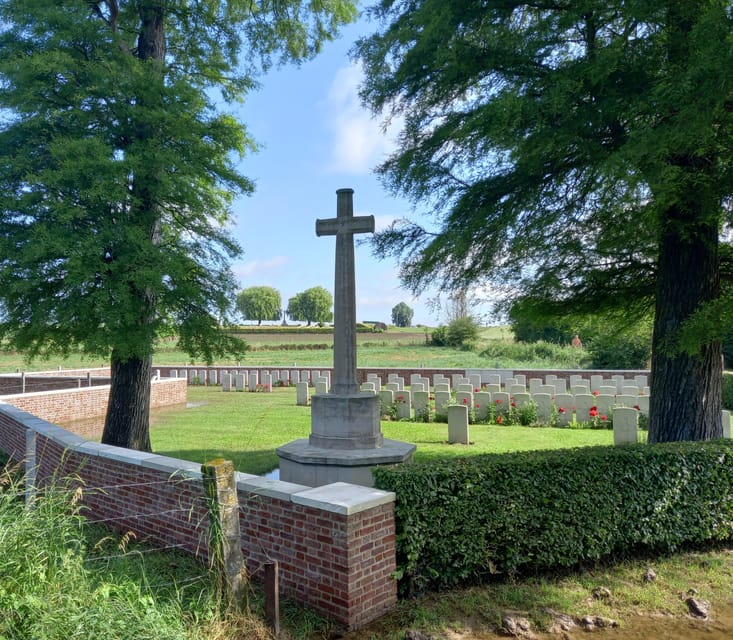
Sanctuary Wood combines a museum visit with a walk through preserved trench remains. The planned visit lasts about 50 minutes, making it one of the longer stops on the tour.
This is where the war feels closest to ground level. Instead of viewing a distant memorial or a row of graves, you can see the uneven defensive cuts where soldiers lived and fought. The surviving trenches help explain the cramped conditions and the importance of small changes in height and cover.
The museum adds objects and displays to the outdoor site. Together, the two parts work better than either would alone. The guide can explain what you are looking at, then place those remains within the wider fighting around Ypres and Passchendaele.
Wear sturdy, comfortable shoes. The tour information specifically recommends comfortable footwear and weather-appropriate clothing, and that advice matters here. Rain can make outdoor ground less pleasant, while hot weather can make a cemetery and trench route tiring.
Tyne Cot Cemetery and the weight of names
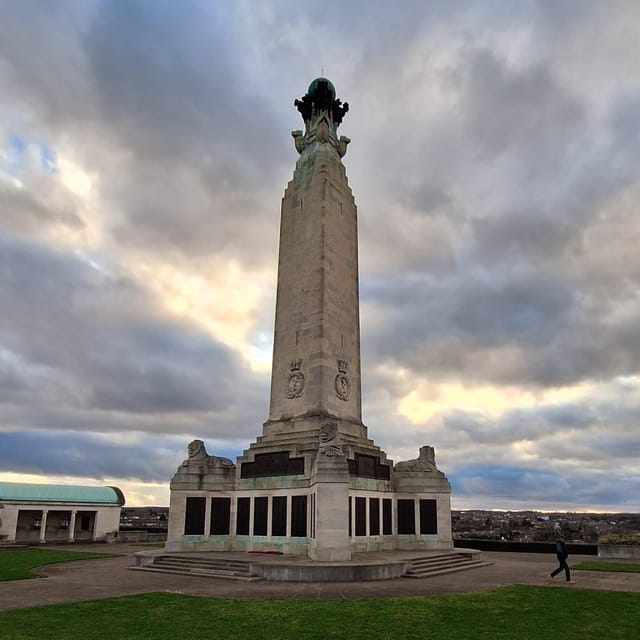
Tyne Cot Cemetery receives about 50 minutes on the standard route. This is enough time for a careful visit, though the number of names and the size of the site can easily absorb longer.
The cemetery is one of the central stops because it shows the human cost of the battles in a setting that is both orderly and overwhelming. Around 12,000 war dead are buried here, according to the tour information. The scale is difficult to take in from a single viewpoint, so give yourself quiet time as well as time for the guide’s explanation.
This is also a valuable stop for family research. The guide can help you look for a particular soldier or unit, and one tour participant received assistance searching for a Victoria Cross recipient. If you have a name, service number, regiment, or family document, bring it with you.
I would send family information to the guide before arrival rather than handing it over at the meeting point. The guide may be able to research the person and shape the route around the relevant locations. That is one of the clearest reasons to choose a private tour instead of a general sightseeing circuit.
Same old town, a completely different kind of day:
- From IEPER Private 4-hour Tour of the Ypres Battlefield
★ 5.0 · 154 reviews - Ypres: An exploration of the deadly salient battlefields
★ 5.0 · 76 reviews - In Flanders Fields and Passchendaele Grand Tour
★ 5.0 · 25 reviews - e-Scavenger hunt Ypres: Explore the city at your own pace
★ 4.5 · 6 reviews
The Brooding Soldier at Vancouver Corner
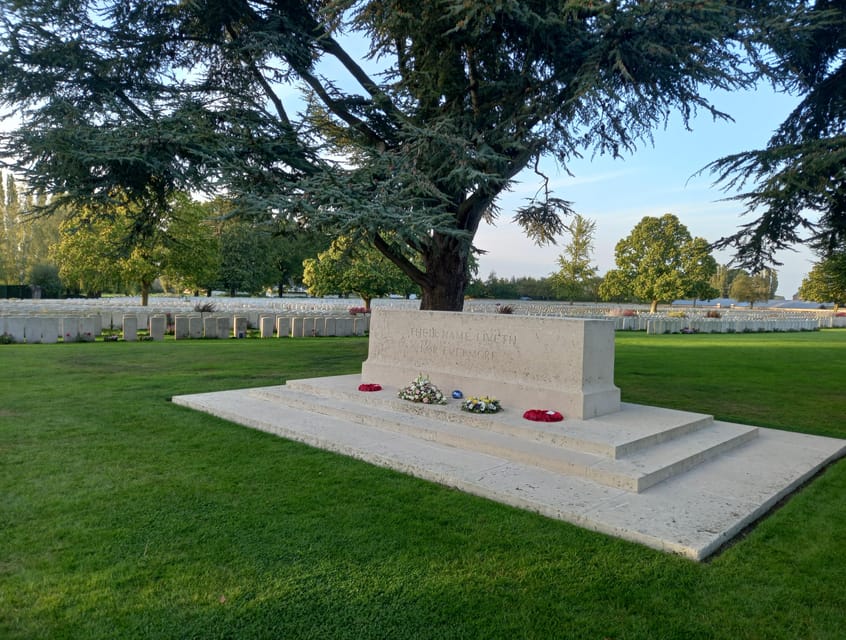
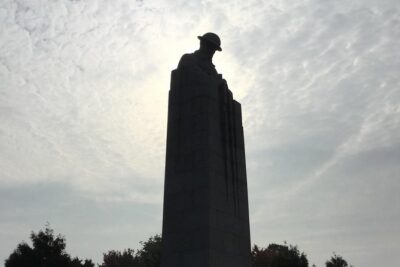
The Brooding Soldier memorial gets about 20 minutes. It commemorates Canadian soldiers and the first German gas attack of 1915, an event that changed the nature of the fighting on the Western Front.
The memorial is quieter and more focused than Tyne Cot. Its value comes from the explanation around it: the guide can connect the monument to the Canadian role in the Ypres Salient and to the new dangers introduced by chemical warfare.
This stop is especially useful on the Canadian itinerary, which covers Canadian action in 1915 and again in 1916 and 1917. It can also add a different layer to a tour built around another nationality, since the Ypres fighting involved several armies operating across the same area.
Twenty minutes is a sensible amount of time for the memorial itself. You will have enough room for photographs and reflection without losing too much of the limited tour time.
John McCrae’s dressing station and In Flanders Fields
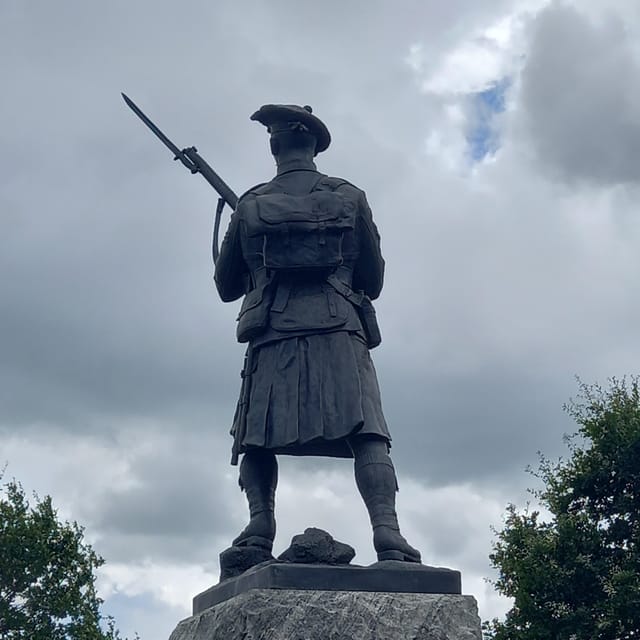
The stop connected with John McCrae lasts about 35 minutes and is listed as a photo stop. It marks the dressing station where McCrae wrote In Flanders Fields, one of the most familiar poems associated with the First World War.
The site links literature, medical work, and battlefield experience. McCrae was not writing from a peaceful distance. The dressing station was part of the immediate wartime setting, and the poem’s continued power comes partly from that connection.
Do not expect a large attraction with a long indoor program here. The stop is primarily about the place, the story, and the chance to understand the setting. The guide’s context is important because the physical remains alone may not tell you why the location matters.
If the poem is important to you, allow a little quiet time. This is one of those stops that works best when you are not rushed from one photograph to the next.
Essex Farm Cemetery in the final stretch
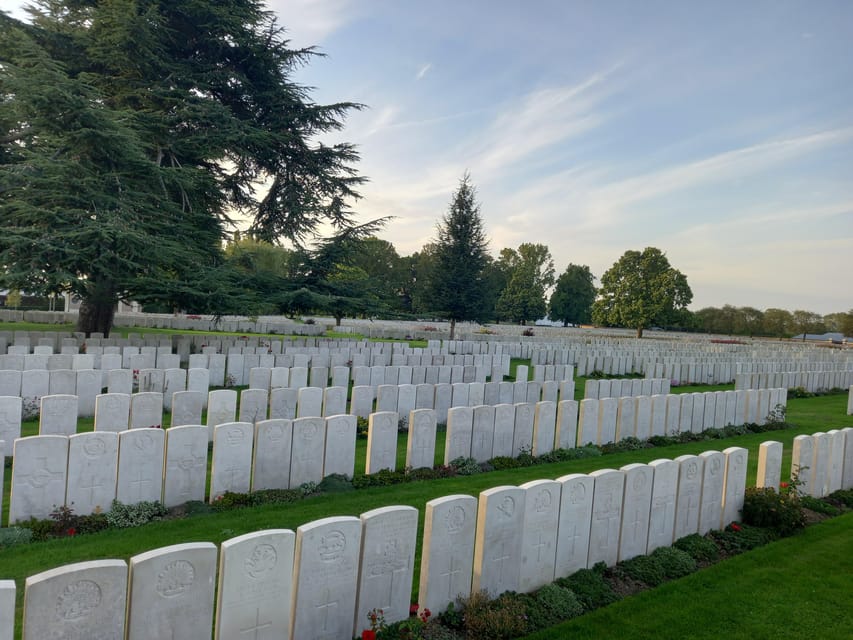
Essex Farm Cemetery is a shorter guided stop of about 10 minutes. It follows the McCrae site and gives you another chance to see how burial places are tied to the battlefield route.
Ten minutes is brief, but that can be useful after the larger cemeteries and memorials. The visit adds another named place to the story without taking too much time from the main stops.
If you are researching a particular soldier, tell the guide before the tour begins. The standard schedule may not allow a long search at every cemetery, but the private format gives the guide room to adjust when a family connection is known.
Three national routes through the Ypres Salient
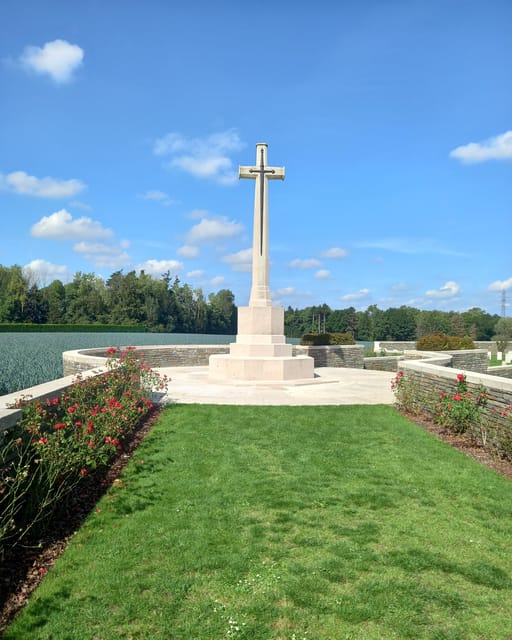
There are three stated route options:
- Australian 1917 Ypres Battlefields
- Canadian 1915 and 1916/1917 Ypres Battlefields
- Kiwi 1917 Ypres Battlefields
This choice is more than a national label. It helps the guide select sites that fit your family or historical interest instead of giving you the same general loop used for everyone.
Australian visitors can follow the 1917 advance toward Passchendaele and see places linked with Australian units. The Canadian route covers earlier and later Canadian action, while the Kiwi route focuses on New Zealand involvement in 1917.
You can also mix interests within a private group. A New Zealand family might want to include a Canadian memorial, or an Australian visitor might be travelling with a friend from another country. The route can be tailored, and the guides have been praised for making room for these different interests.
Some participants had relatives buried in the area, while others wanted to follow a named division or regiment. One Canadian family tour was shaped around a grandfather’s service, including his diary and service record. A New Zealand-focused visit included searches for relatives’ graves and battle locations. Bring whatever family material you have, but do not assume that every ancestor can be located during the four-hour window.
Guides who make the difference
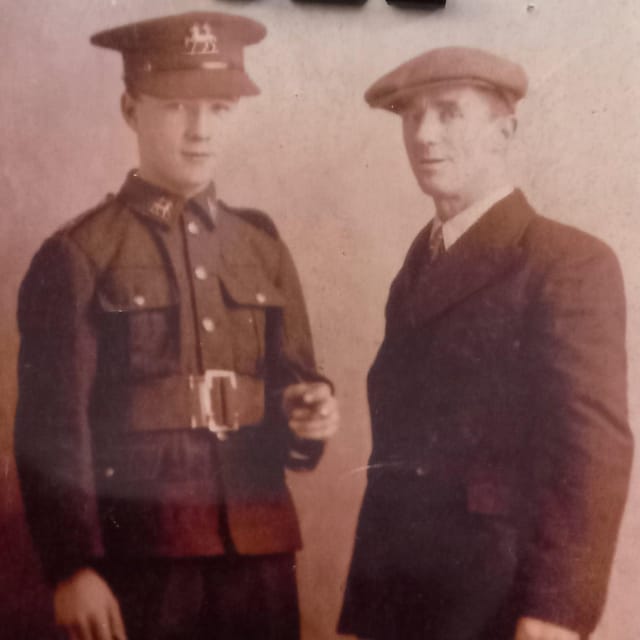
The strongest part of this experience is the guide’s role. Søren Hawkes is the named guide associated with A Foreign Field Battlefield Tours and Passchendaeleprints.com. Sabine also leads tours and has handled tailored New Zealand visits.
Søren’s approach combines maps, battlefield explanation, family research, and a light touch of humor. That balance matters. The subject is grim, but a tour that is solemn every second can become hard to absorb. The better approach is to explain clearly, give you room to think, and use gentle humor only when it fits.
The maps are especially useful. The Ypres area can be confusing because roads and farms do not always make the historic route obvious. A map lets you see where you are in relation to the front, the attack routes, and the cemeteries.
The guide can also point out details you might miss from a car, such as wartime remnants found in a farmer’s field awaiting disposal. These small observations help connect the famous sites with the fact that the battlefield still forms part of everyday rural life.
Do not be afraid to ask questions. The tour is designed to move at your pace, and the guide can spend more time on a site that matters to you. Some tours have gone beyond the planned four hours, but I would treat that as a possible courtesy rather than something guaranteed.
Transport, timing, and practical comfort
Pickup and drop-off are included from your Ypres-based accommodation or Ypres Railway Station. You can also meet the guide at another agreed location in Ypres.
A private vehicle is a major advantage here. The roads between sites wind through the countryside, and several stops are spread across the Ypres Salient. You avoid the work of finding each cemetery and memorial yourself, and you can use the driving time to ask questions.
The vehicle has been described as clean, comfortable, and air-conditioned. One group of four adults had plenty of room. Another group of six also used the vehicle, but the advertised price covers up to four people, so larger groups should confirm the arrangement before booking.
The tour lasts four hours and has a lot packed into it:
- Caterpillar mine crater: 30 minutes
- Sanctuary Wood: 50 minutes
- Tyne Cot Cemetery: 50 minutes
- Brooding Soldier: 20 minutes
- John McCrae dressing station: 35 minutes
- Essex Farm Cemetery: 10 minutes
Those listed stop times total more than the nominal four hours once driving and pickup are added, so the schedule should be viewed as a guide rather than a stopwatch. The exact route and time at each stop can change based on your chosen focus.
Bring a camera, but do not let photography take over at the cemeteries. Comfortable shoes and clothing suited to the weather are more important than anything else. Wheelchair access is listed as available, though you should confirm the practical details of each outdoor stop if that is important for your group.
Price, value, and the four-hour limit
At $530 per group of up to four, this is not a budget bus tour. Split four ways, it becomes a more reasonable cost for a private guide, vehicle, hotel pickup, museum entry, and a route built around your interests.
The value is highest for families tracing an ancestor. Research and personal attention can turn a general battlefield visit into a meaningful half-day. It is also good value for a small group that wants to avoid driving on unfamiliar roads and prefers asking questions along the way.
The value is lower if you want only a quick view of the famous memorials. You can see several headline sites in four hours, but the tour is best suited to someone who wants the explanation between them.
The biggest limitation is coverage. Ypres and Passchendaele offer far more than can fit into one half-day. If you want long walks, several detailed cemetery searches, or a broad study of every national force, consider asking about a longer or more focused arrangement.
The booking terms are useful for uncertain plans. You can cancel up to 24 hours ahead for a full refund, and the reserve-now, pay-later option lets you hold a place without paying at once.
Who should book this battlefield tour?
I would choose this tour if you have a family connection, a strong interest in Australian, Canadian, New Zealand, South African, or British military history, or limited time in Ypres.
It also suits you if you prefer a quiet private visit over a large group. The guide can answer questions, change the emphasis, and leave time for reflection. That personal pace is hard to get on a standard coach excursion.
I would be more cautious if your main interest is a long walking tour. This experience uses a vehicle to connect the sites, with walks at selected stops. It is also not the best choice if you want a full-day study of the entire Ypres Salient, since four hours passes quickly.
Should you book it?
Book this tour if you want the battlefield to make sense, not just a list of monuments. The combination of Sanctuary Wood, Hill 60 B, Tyne Cot, the Brooding Soldier, McCrae’s dressing station, and Essex Farm gives you a strong range of military, personal, and literary history.
Before booking, send the guide your ancestor’s name, regiment, dates, and any service papers you have. If you are choosing between the national routes, select the one closest to your family connection and explain any other interests in advance.
For a small group sharing the $530 price, this is a thoughtful and practical way to see the Ypres battlefields. For anyone who needs more time at cemeteries or wants a wider route, ask about extending the visit. The four-hour tour is best viewed as a focused introduction, with enough depth to make you want to keep exploring.
FAQ
Where does the tour begin and end?
The tour begins in Ypres and returns to Ypres. Pickup and drop-off are available at your Ypres-based accommodation or Ypres Railway Station, with another meeting place in Ypres possible by arrangement.
How long does the tour last?
The stated duration is four hours. The route includes several stops, and the exact time at each place can change because the tour is private and tailored to your interests.
Which languages are available?
The tour is conducted in English.
Can the tour focus on my ancestor?
Yes. If you have an ancestor who fell in the battle, the guide can tailor the route to include that person where possible. You should provide the relevant family details in advance.
Which national routes can I choose?
The available routes are Australian 1917, Canadian 1915 and 1916/1917, and Kiwi 1917 Ypres Battlefields.
Is museum entry included?
Yes. Museum admission, a guide, mineral water, hotel pickup and drop-off, and the private four-hour tour are included. Food is not included.
Just added around Ypres
- In Flanders Fields and Passchendaele Grand Tour★ 5.0 · 25 reviews
- From LIlle or Bruges, Christmas Truce to Passchendaele Ypres 1 day WW1 private★ 5.0 · 5 reviews
- PRIVATE Australian Western Front Battlefields 3-Day Tour Ypres to Amiens★ 5.0 · 3 reviews
- e-Scavenger hunt Ypres: Explore the city at your own pace★ 4.5 · 6 reviews
- Discover Tournai while playing! Escape game – The alchemist★ 4.0 · 3 reviews
- From Ypres 4hr Christmas Truce and Monster Mines of Messines PRIVATE Tour★ 5.0 · 5 reviews
- Full Day Canadian WW1 Vimy and Somme Battlefield Tour from Ypres★ 5.0 · 6 reviews
- From Ypres, The Christmas Truce to Passchendaele Ypres Based WW1 private tour★ 5.0 · 29 reviews
Flanders Fields WWI Tours, compared.
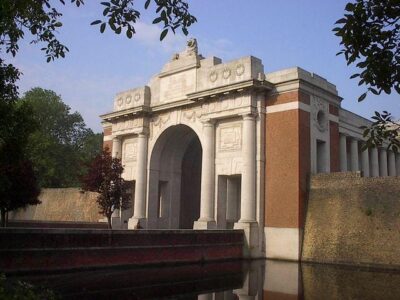
Great War Flanders Fields Minibus Tour w/ Lunch
Read our review →
Flanders Fields Remembrance Tour from Brussels
Read our review →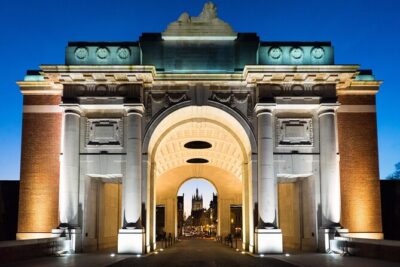
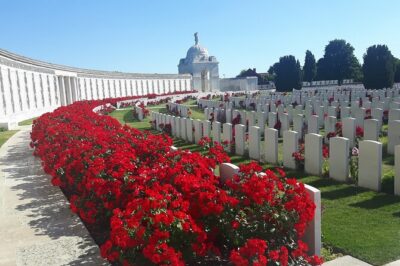
In Flanders Fields and Passchendaele Half Day Morning Tour
Read our review →
From Ypres, The Christmas Truce to Passchendaele Ypres Based WW1 private tour
Read our review →
In Flanders Fields and Passchendaele Grand Tour
Read our review →Browse the lists this tour appears in