
Reviewed · YPRES TOURS
From IEPER Private 4-hour Tour of the Ypres Battlefield
The most moving part of this Ypres tour is the way it connects huge events to individual lives. At Hill 60, you hear about the mines exploded on June 7, 1917. At Essex Farm, you stand where Lieutenant Colonel John McCrae wrote In Flanders Fields. At Tyne Cot, the scale of loss becomes almost impossible to grasp. Soren and Sabine bring these places into focus with maps, photographs, stories, and careful attention to your family history.
I like two things right away: the tour is genuinely private, and the guide can shape the four hours around your interests. Several guests had ancestors in the area, and the guide researched their service records before the visit. I also like the relaxed pace, with time at each stop rather than a race from one cemetery to the next. The main drawback is simple: four hours gives you a strong introduction, but Ypres has far more battlefield sites than this tour can cover.
In This Review
- Key points at a glance
- Why this private Ypres tour works so well
- Hill 60: mines, tunnels, and the ground war
- Sanctuary Wood Museum: original trenches and a small museum
- Tyne Cot Cemetery: the scale of loss
- Saint Julien Memorial: the first gas attack
- Essex Farm Cemetery and the story behind the poppy
- A four-hour schedule that respects your time
- What the $399.25 price really buys you
- Who should book this experience
- A few limits to keep in mind
- Should you book the Ypres battlefield tour?
- FAQ
- How long is the Ypres battlefield tour?
- How many people can join the private tour?
- What sites does the tour visit?
- Is hotel pickup available in Ypres?
- Can I be picked up at Ypres train station?
- Is the tour offered in English?
- Can I cancel for a full refund?
Key points at a glance
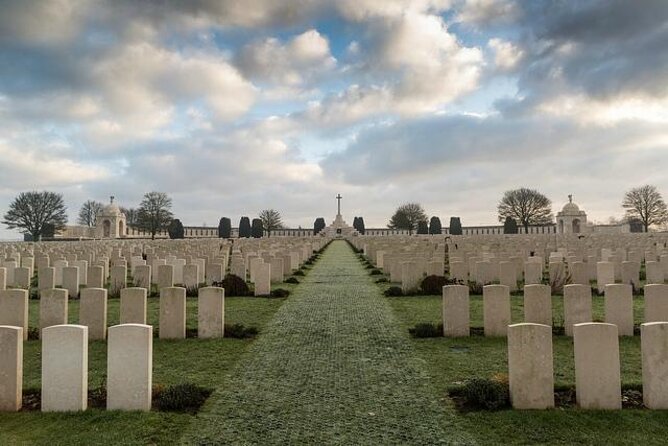
- Five important WWI sites: Visit Hill 60, Sanctuary Wood, Tyne Cot Cemetery, Saint Julien Memorial, and Essex Farm Cemetery.
- A personal research touch: Send details of an ancestor before the tour, and the guide may connect that person to nearby battles and units.
- Private transport for up to four: Pickup is available at Ypres train station, hotels, and bed-and-breakfasts.
- Maps and photographs make the story clear: The guide uses visual aids to explain troop movements, trenches, and the changing front.
- A manageable half-day: The tour runs for about four hours, with morning and afternoon departure choices.
- Strong value for a small group: At $399.25 per group of up to four, the cost works out to about $100 per person for four people.
Why this private Ypres tour works so well

Ypres is not a battlefield you understand from one monument or one museum. The fighting spread across fields, villages, roads, cemeteries, hospitals, and trench lines. A good guide helps you see how these places fit together. That is the real value here.
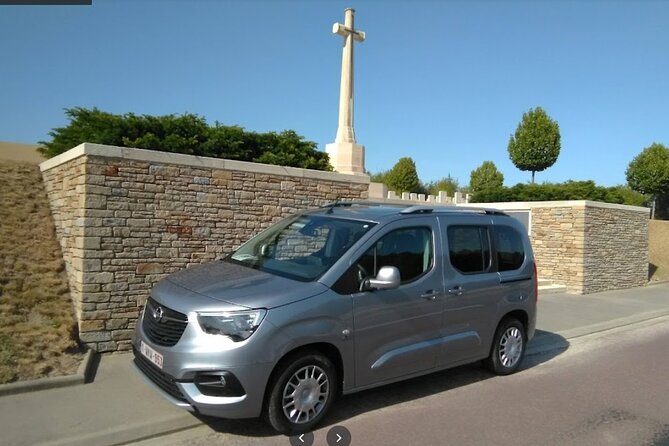
You travel in a private vehicle, reported by one guest as a comfortable hybrid SUV, and pickup can be arranged at the Ypres train station or your local hotel or bed-and-breakfast. That saves you from trying to read battlefield signs while driving unfamiliar rural roads. It also lets you focus on the stories.
Soren is the guide most often named in the supplied information, while Sabine also leads tours. Soren is described as passionate, witty, and deeply familiar with the Ypres area. Sabine is described as a native of Ypres with a strong command of the local WWI story. The most useful difference for you is not the guide’s personality, but the personal approach shared by both: they answer questions, adjust the route, and explain the sites in relation to your interests.
The private format matters. You are not listening to a set speech for a large bus group. If you are Canadian, Australian, New Zealander, British, American, or tracing a particular regiment, you can ask for the relevant connection. One Canadian family received extra attention to Canada’s role in the fighting. Another family followed an ancestor’s movements through several battles. That level of tailoring is hard to achieve in a standard group tour.
A few more Ypres trips to weigh up
- From Ypres, The Christmas Truce to Passchendaele Ypres Based WW1 private tour
★ 5.0 · 29 reviews - From Ypres: WWI Battlefields Private Tour
★ 5.0 · 25 reviews - From LIlle or Bruges, Christmas Truce to Passchendaele Ypres 1 day WW1 private
★ 5.0 · 5 reviews
Hill 60: mines, tunnels, and the ground war
The first stop is Hill 60, where the guide explains the massive mines detonated on June 7, 1917. The date matters because the explosions formed part of a major British attack, and the story shows how WWI was fought below the ground as well as above it.
Hill 60 is especially useful early in the tour because it gives you a physical sense of the fighting. This is not simply a talk about generals and dates. The contours of the site help explain why high ground mattered and why soldiers fought so fiercely for a position that might look modest on a modern map.
You have about 40 minutes here. That is enough time for an explanation and questions, though not enough for every detail connected to the site. The admission charge is included at no extra cost, according to the tour details.
If you have a family connection to the area, tell the guide before the day begins. The guide has researched service records and used those records to point families toward battlefields connected to their relatives. That preparation can turn Hill 60 from a general history stop into a place with a personal meaning.
Sanctuary Wood Museum: original trenches and a small museum
Sanctuary Wood offers one of the clearest physical links to the soldiers who fought around Ypres. Here you see original WWI trenches and visit a modest museum. One especially memorable detail is the chance to walk through a tunnel among the trench remains.
The museum is described as quaint rather than grand, and that is part of its appeal. You are not entering a polished national institution designed to tell every chapter of the war. Instead, the site gives you a direct, close-up look at the rough conditions of trench warfare.
You have about 45 minutes, and the admission fee is included. The guide’s maps and photographs help place the trenches in the larger front line. Without that explanation, it is easy to see a trench and understand only that it was unpleasant. With context, you begin to understand its purpose, position, and connection to nearby attacks.
This stop may be particularly useful for families. One review describes children from ages six to ten joining the tour, with the guide adjusting the pace and presenting facts in an engaging way. Still, the subject is harsh. Parents should decide in advance how much detail is right for their children.
Tyne Cot Cemetery: the scale of loss
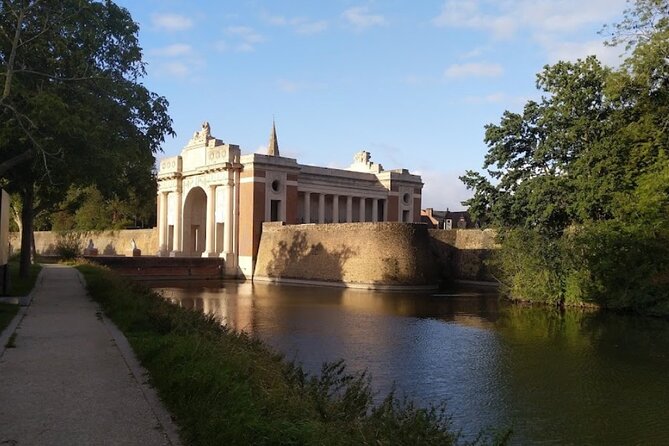
Tyne Cot Cemetery is the emotional center of the route. It is the world’s largest Commonwealth War Graves Commission cemetery, with about 12,000 soldiers buried there. Only around 3,000 have identified names, a figure that gives the cemetery its full weight.
You have approximately 45 minutes. The admission cost is free, and the time allows you to absorb the setting rather than simply step out, take a photograph, and leave. The cemetery’s orderly design contrasts with the confusion and violence that produced it.
Two Australian Victoria Cross recipients and one Canadian Victoria Cross recipient are buried here. Those details add a personal layer to a place that could otherwise feel overwhelming in its size. Ask the guide about the national connections that matter to your group. Several tours have been shaped around Canadian, Australian, British, and New Zealand family backgrounds.
This is also the stop where a guide’s tone matters most. Soren is praised for combining humor with respect, but the humor is used to keep the story human, not to make light of the dead. You can expect a serious explanation of the fighting and the cemetery’s meaning.
Same old town, a completely different kind of day:
- In Flanders Fields and Passchendaele Half Day Morning Tour
★ 5.0 · 117 reviews - Ypres: An exploration of the deadly salient battlefields
★ 5.0 · 76 reviews - From Brussels: Flanders Fields Remembrance Full-Day Trip
★ 4.4 · 65 reviews - In Flanders Fields and Passchendaele Grand Tour
★ 5.0 · 25 reviews
Saint Julien Memorial: the first gas attack
At Saint Julien Memorial, the focus shifts to chemical warfare. In 15 minutes, the guide explains the first German gas attack of WWI, launched on April 22, 1915, against French soldiers. The story then turns to the Canadians who held the line while facing a cloud of chlorine gas.
This is the shortest stop, so expect a focused explanation rather than an extended visit. That works well in a four-hour tour because it keeps the route moving while still covering a major turning point in the war.
The site also shows how the Ypres fighting involved different armies and national forces. The story is not limited to British troops. French soldiers, Canadian units, German forces, and many other nationalities were caught up in the battles around the city. Your guide can help connect the memorial to the wider front.
Essex Farm Cemetery and the story behind the poppy
Essex Farm Cemetery is the final scheduled stop, with about 30 minutes. The site was once a hospital location, and it is associated with Lieutenant Colonel John McCrae, who composed In Flanders Fields there. The poem helped make the red poppy a lasting symbol of WWI remembrance.
This stop gives the tour a different mood. Hill 60 and Saint Julien focus on attacks and military tactics. Tyne Cot confronts mass death. Essex Farm brings the story closer to medical care, grief, and the words that shaped public memory after the war.
The stop is free to enter. You have enough time to hear the story, look around, and ask how McCrae’s experience influenced the poem. If you are interested in remembrance traditions, this is one of the most meaningful parts of the route.
The five stops also create a sensible arc. You begin with the mechanics of underground warfare, see the trenches themselves, confront the dead at Tyne Cot, learn about gas warfare, and finish with a poem that still shapes how the war is remembered.
A four-hour schedule that respects your time
The tour lasts about four hours and offers morning or afternoon departure times. That makes it practical for a short stay in Ypres, especially if you are arriving by train or combining the tour with other plans.
You should not expect every minute to be spent at a formal attraction. The itinerary gives roughly 40 minutes at Hill 60, 45 minutes at Sanctuary Wood, 45 minutes at Tyne Cot, 15 minutes at Saint Julien, and 30 minutes at Essex Farm. The remaining time covers driving, transitions, and guide commentary.
The schedule is fairly full, but it is not described as rushed. Guests appreciated having enough time at the stops, and the guide has adjusted pickup and drop-off points when plans changed. One family traveling by train even received a suggestion for a supermarket where they could buy fresh sandwiches for the trip back to Paris.
That kind of practical help is worth noting. The guide is not limited to battlefield facts. Restaurant suggestions, ideas for Bruges and Ypres, and help with onward travel have also been part of the service.
What the $399.25 price really buys you
The listed price is $399.25 per group of up to four people. For four people, that is about $100 each. For two people, the cost is about $200 each, so the value depends heavily on your group size and how much you want personal attention.
You are paying for a private half-day, transport, a guide, the included Sanctuary Wood admission, and a route that covers five significant locations. You also avoid the hassle of navigating between scattered battlefield sites. If you tried to reproduce the route alone, you would still need to research the history, find the right roads, understand the cemetery layouts, and decide how much time each stop deserves.
The strongest added value is the personal research. If you provide an ancestor’s name or service information, the guide may prepare relevant material before the tour. Several families received a more focused experience because the guide traced a relative’s regiment, battles, or military record.
For a family of four with a serious interest in WWI, the price is reasonable. For a solo visitor, couple, or person mainly looking for a quick sightseeing loop, it is a bigger investment. You are paying for depth and flexibility, not just transport.
Who should book this experience
I would recommend this tour to you if Ypres is tied to family history. Bring any information you have about an ancestor, including a name, regiment, service number, country, or known battle. The more specific your starting point, the more useful the guide’s research and explanations can be.
It also suits first-time visitors who want to understand the area without driving themselves. The guide’s maps and photographs help turn a series of cemeteries and memorials into a connected story.
Families can make good use of the private format. The guide has worked with children and adjusted the pace for different ages. The subject remains serious, so younger children may need preparation, but the ability to pause and ask questions is a real advantage.
Older family members or anyone with limited walking ability may also appreciate the flexibility. A guide adjusted one tour to accommodate walking restrictions after surgery. You should still discuss your needs in advance, since the supplied details do not give a formal accessibility rating for every stop.
The tour is offered in English. Service animals are allowed, and the experience is near public transportation. Most people can participate, but you should mention mobility concerns, pickup changes, or family-history goals before the tour.
A few limits to keep in mind
Four hours cannot cover the whole Ypres Salient. One guest regretted not having time for a full-day tour, and that is the honest tradeoff. You will see five major sites, but you will not get every battlefield, museum, cemetery, or trench system in the region.
Sanctuary Wood has the only paid admission included in the stated route, while the other listed stops are free. If you want extensive museum displays, this may feel light on indoor exhibits. The real focus is the outdoor sites and the guide’s explanation.
The emotional weight can also be intense. Tyne Cot and Essex Farm are not casual sightseeing stops. You may leave thoughtful and affected, especially if you are tracing a family member. The guide’s respectful storytelling helps, but no guide can make the subject easy.
Finally, confirmation is sent within 48 hours of booking, subject to availability. Free cancellation is available if you cancel at least 24 hours before the start time. Changes or cancellations made less than 24 hours ahead are not accepted for a refund.
Should you book the Ypres battlefield tour?
Book it if you want a personal, guided introduction to the Ypres battlefields, especially if you have a family connection or limited time. The private vehicle, flexible pickup, clear visual aids, and strong guide involvement make the route far more useful than simply ticking off memorials on your own.
I would choose it for a family of four, a first visit to Ypres, or anyone who wants a guide to research an ancestor before the day. If you already know the area well or want to spend an entire day on specialized sites, book a longer option instead.
At $399.25 for up to four people, it is not the cheapest way to see the region. But the price buys a focused route, personal attention, and the chance to connect your own family story to one of Europe’s most important WWI battlefields. The perfect outcome is not leaving with a list of monuments. It is leaving with a clearer sense of who fought here, what happened, and why these quiet fields still matter.
FAQ
How long is the Ypres battlefield tour?
The tour lasts approximately four hours.
How many people can join the private tour?
The price covers a private group of up to four people. Only your group participates.
What sites does the tour visit?
The route includes Hill 60, Sanctuary Wood Museum, Tyne Cot Cemetery, Saint Julien Memorial, and Essex Farm Cemetery.
Is hotel pickup available in Ypres?
Yes. Pickup is offered from Ypres hotels and bed-and-breakfasts. If your accommodation is not listed, you can message the provider with its name.
Can I be picked up at Ypres train station?
Yes. If you arrive by train, the guide can meet you at Ieper train station. You should send your arrival time by message.
Is the tour offered in English?
Yes. The tour is offered in English.
Can I cancel for a full refund?
Yes, if you cancel at least 24 hours before the experience start time. Cancellations or changes made less than 24 hours in advance are not accepted for a refund.
Just added around Ypres
- In Flanders Fields and Passchendaele Grand Tour★ 5.0 · 25 reviews
- From LIlle or Bruges, Christmas Truce to Passchendaele Ypres 1 day WW1 private★ 5.0 · 5 reviews
- e-Scavenger hunt Ypres: Explore the city at your own pace★ 4.5 · 6 reviews
- PRIVATE Australian Western Front Battlefields 3-Day Tour Ypres to Amiens★ 5.0 · 3 reviews
- Discover Tournai while playing! Escape game – The alchemist★ 4.0 · 3 reviews
- From Ypres 4hr Christmas Truce and Monster Mines of Messines PRIVATE Tour★ 5.0 · 5 reviews
- Full Day Canadian WW1 Vimy and Somme Battlefield Tour from Ypres★ 5.0 · 6 reviews
- From Ypres: WWI Battlefields Private Tour★ 5.0 · 25 reviews
Ypres Tours, compared.
In Flanders Fields and Passchendaele Half Day Morning Tour
Read our review →
An exploration of the deadly salient battlefields
Read our review →
From Ypres, The Christmas Truce to Passchendaele Ypres Based WW1 private tour
Read our review →
In Flanders Fields and Passchendaele Grand Tour
Read our review →
Full Day Canadian WW1 Vimy and Somme Battlefield Tour from Ypres
Read our review →
Browse the lists this tour appears in