
Reviewed · YPRES TOURS
Ypres: An exploration of the deadly salient battlefields
The most powerful part of this Ypres tour is the contrast between the neat cemeteries you see today and the mud, medical crises, and industrial killing that once filled these fields. At Essex Farm, Yorkshire Trench, Langemark, and Tyne Cot, the First World War feels tied to real places and real people, not just dates in a textbook.
I like the small group, limited to seven, and the way the route includes both Commonwealth and German sites. I also like the personal touch: Kim has adjusted tours for family research, made short detours to relatives’ graves, and used photographs and maps to explain what happened. The main consideration is pace. You cover a lot in 210 minutes, so this is a strong introduction rather than a full day for serious battlefield study.
In This Review
- Key points at a glance
- Why this short Ypres tour works
- Essex Farm Cemetery and the casualty system
- Yorkshire Trench and Dug-out
- Langemark German Cemetery and another view of the war
- The Brooding Soldier at Vancouver Corner
- Driving across the Passendale battlefields
- Tyne Cot Cemetery, the emotional finish
- Guide style, van, and group size
- Who should book this Ypres battlefield tour?
- Booking details and practical value
- Should you book it?
- FAQ
- Where does the tour begin and end?
- How long does the tour last?
- What sites are included?
- What language is the tour in?
- How many people are in the group?
- What vehicle is used?
- What should I bring?
Key points at a glance
- Essex Farm Cemetery: Connect the casualty system with the medical work that took place near the front.
- Yorkshire Trench and Dug-out: See one of the few preserved trench sites in the Ypres area.
- Langemark German Cemetery: Hear the German side of the war and see a very different memorial style.
- The Brooding Soldier: Pause at the Canadian memorial at Vancouver Corner, linked to the first gas attacks.
- Passendale and Tyne Cot: Cross the infamous battle area before visiting the world’s largest Commonwealth War Graves Commission cemetery.
- Small-group transport: Ride between sites in a dark-blue Mercedes van, with pickup and return in Ypres.
Why this short Ypres tour works
Ypres is one of the best places in Europe to understand the Western Front because the battlefields are close to town. You can leave the medieval center and, within minutes, be among cemeteries, memorials, farms, and flat fields that still carry the names of wartime battles.
This tour gives you a useful framework before the details become overwhelming. Kim, Lucas, and Roger are listed as guides for different departures, and the guiding style is clear, warm, and adapted to the group. Kim has been especially praised for explaining difficult subjects in simple terms, using maps and wartime photographs, and adjusting the visit for British, Australian, New Zealand, American, Canadian, Spanish, and other family connections.
That flexibility matters here. The Ypres area has hundreds of cemeteries and memorials. Without some direction, you can spend a great deal of time driving between places without understanding how they fit together. This route chooses six major stops and gives you a narrative that links the casualty system, trench warfare, medical care, German remembrance, Canadian sacrifice, Passendale, and the work of the Commonwealth War Graves Commission.
The price is $88 per person. For a private car, that might seem high at first, but this is a small group of no more than seven, with pickup and drop-off in Ypres, a guide, and transport between widely separated sites. You are paying for interpretation as much as for the van. If you tried to reproduce the route by taxi, rental car, or public transport, you would lose the guide’s maps, photographs, family research help, and ability to adjust the stops.
Other Ypres days worth putting on the list:
- From IEPER Private 4-hour Tour of the Ypres Battlefield
★ 5.0 · 154 reviews - In Flanders Fields and Passchendaele Half Day Morning Tour
★ 5.0 · 117 reviews - From Brussels: Flanders Fields Remembrance Full-Day Trip
★ 4.4 · 65 reviews
Essex Farm Cemetery and the casualty system
Your first major stop is Essex Farm Cemetery, about ten minutes from Ypres. The visit lasts about an hour, giving the guide time to explain the cemetery, the medical system, and the human stories connected with the site.
This is where the tour begins to explain how the Commonwealth War Graves Commission handled the dead after the war. The casualty system can sound like dry administration, but it is central to understanding what you see across Flanders. Names, ranks, units, dates, headstones, memorials to the missing, and cemetery design all reflect decisions made after the fighting ended.
You will also hear about the medical work carried out near the front and the conditions faced by wounded soldiers. The tour connects those broad subjects with the memorial to John McCrae, the Canadian doctor and poet associated with In Flanders Fields. That link gives the stop a personal entry point without turning the visit into a simple literary anecdote.
I appreciate the generous hour here. Essex Farm is not a place to rush through with a quick photograph. You have time to listen, look at the graves, and understand why this small cemetery matters. If your main interest is military tactics, the opening section may feel slower than the later battlefield stops. If you want to understand the human cost of the war, it is a strong start.
Wear shoes you can walk in comfortably. The tour is not described as a strenuous hike, but you move through several outdoor sites, and Belgian weather can change quickly.
Yorkshire Trench and Dug-out
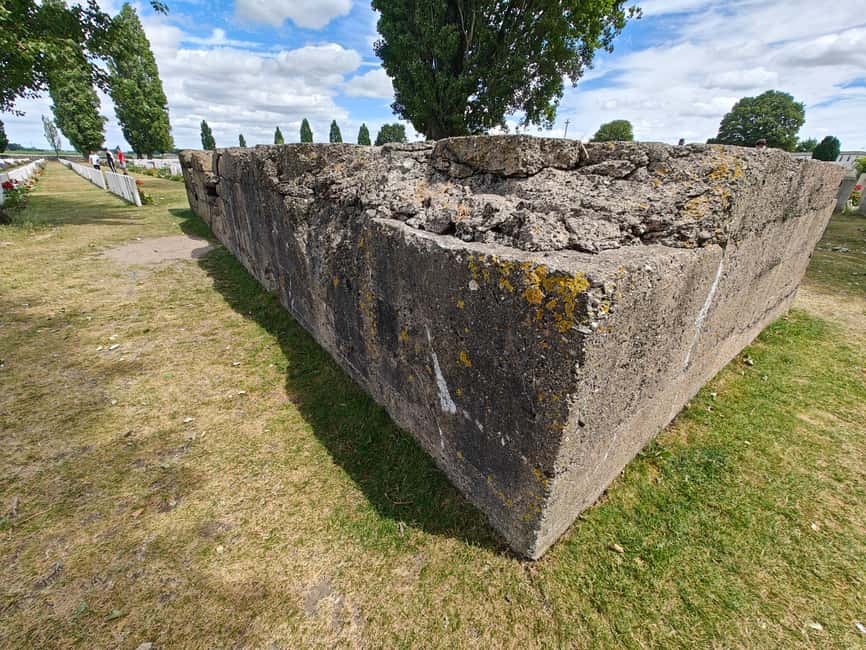
A short drive brings you to Yorkshire Trench and Dug-out, with about 25 minutes for the guided visit. This is one of the most useful stops for anyone who has trouble picturing trench warfare from photographs alone.
Here, the physical form of the trench helps explain the cramped, exposed nature of life near the front. You can see why the words mud, shelter, parapet, dug-out, and bombardment were not abstract military terms. The site gives the guide something solid to point toward while explaining how troops lived, moved, and tried to survive.
The short visit means the guide has to keep the explanation focused. That is a benefit if you want a broad tour of the Ypres Salient, but it may leave a specialist wanting more time with the trench system. Still, it is far better than simply driving past a field and asking you to imagine everything.
The strength of this stop lies in the physical setting. Photographs and personal accounts help, but a preserved trench changes your sense of scale. You begin to grasp how little distance separated opposing positions and how much the terrain shaped daily life.
Langemark German Cemetery and another view of the war
After another short drive, you reach Langemark German Military Cemetery for roughly 45 minutes. This is an important inclusion because it prevents the tour from presenting the war only through Allied memorials.
Langemark offers a different view of remembrance. The cemetery reflects the German experience and the enormous impact of the war on Germany, its soldiers, and its families. You will learn how the Great War affected both sides, not just the armies that ultimately held the ground around Ypres.
This stop also helps you compare memorial traditions. The Commonwealth cemeteries are often associated with carefully maintained rows of individual headstones and a consistent design system. Langemark gives you a different visual and emotional experience. The contrast is not used to rank one side above the other. It helps you see that remembrance is shaped by national experience, politics, grief, and the conditions of the post-war years.
I consider this one of the most valuable parts of the route. It is easy to visit battlefield sites through a single national lens, especially if you are tracing a British, Canadian, Australian, or New Zealand relative. Seeing a German cemetery adds balance and makes the conflict harder to reduce to simple heroes and villains.
The guide’s tone matters here. The subject is sensitive, and the tour is designed to be informative rather than sensational. You should expect serious history, but not a theatrical presentation.
Same old town, a completely different kind of day:
- From Ypres, The Christmas Truce to Passchendaele Ypres Based WW1 private tour
★ 5.0 · 29 reviews - In Flanders Fields and Passchendaele Grand Tour
★ 5.0 · 25 reviews - From Ypres: WWI Battlefields Private Tour
★ 5.0 · 25 reviews - e-Scavenger hunt Ypres: Explore the city at your own pace
★ 4.5 · 6 reviews
The Brooding Soldier at Vancouver Corner
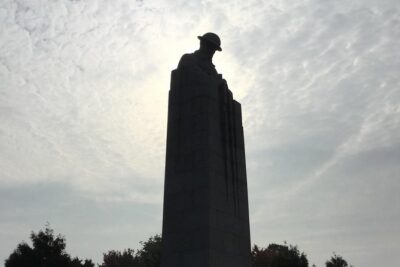
The next stop is the St Julien Canadian War Memorial, commonly known as the Brooding Soldier, at Vancouver Corner. The guided visit lasts about 25 minutes.
The memorial is linked to the Canadian troops who faced the first large-scale use of poison gas on the Western Front. The soldier’s pose gives the site a quiet, reflective mood, and the memorial’s position helps connect it to the surrounding battlefield area.
This is a good place to pause after Langemark. The previous stop presents German remembrance, while Vancouver Corner brings you back to the Canadian experience. The route does not treat these as isolated monuments. Instead, it builds a chain of events and perspectives across the Ypres Salient.
The guide may use maps and photographs to show how the ground looked during the fighting. That is especially useful because today’s fields can appear calm and ordinary. Without explanation, you might see only roads, crops, and distant buildings. With the historical setting in place, you can start to understand why this corner mattered.
The visit is fairly brief, so you will not get a long independent study period. If you have a particular Canadian unit or family member in mind, tell the guide early. Kim has helped people trace relatives and has adjusted routes for family connections, though any extra stop depends on time and the day’s arrangements.
Driving across the Passendale battlefields
Between the memorials, the van ride is part of the lesson. The route crosses the Passendale battlefields, giving you a chance to see the terrain rather than only the cemeteries placed on it.
Passendale is closely linked with some of the worst conditions of the war. The ground, roads, drainage, and weather all affected military movement and survival. Your guide uses the drive to explain how the area shaped the campaign, while photographs and maps help bridge the gap between the present-day view and the wartime scene.
Do not expect a continuous battlefield panorama with trenches visible everywhere. Much of the area has returned to ordinary agricultural use. That is precisely why guiding is useful. You need someone to point out the relationship between the roads, villages, ridges, memorials, and former positions.
One unusual touch reported from this route is a possible short stop at a chocolatier in Passendale. It is not the central feature of the tour, and it should not be treated as guaranteed, but it shows the flexible approach that can make a small-group outing feel less rigid. The core route remains focused on the war.
Tyne Cot Cemetery, the emotional finish
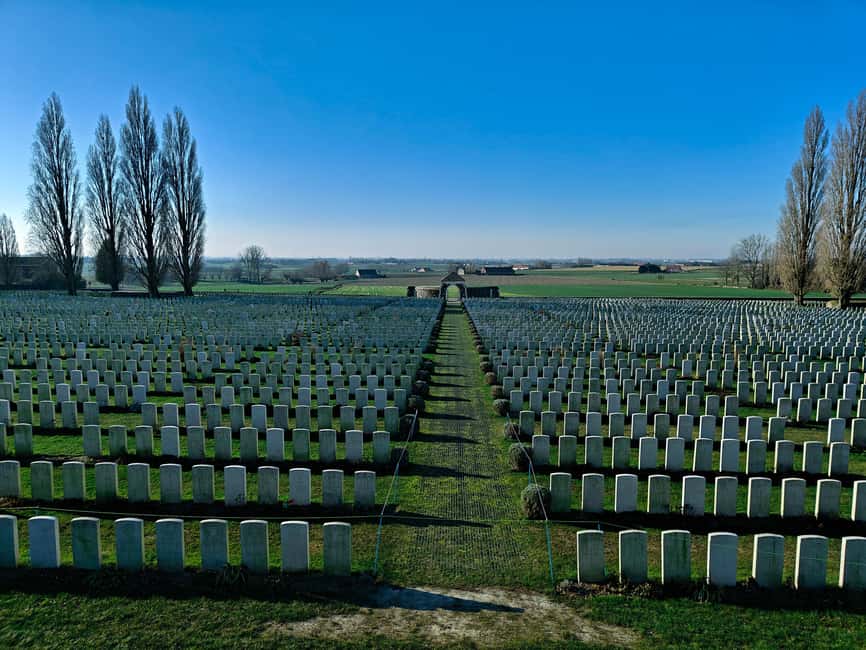
The final major stop is Tyne Cot Cemetery, with about 45 minutes for the guided visit. This is the largest Commonwealth War Graves Commission cemetery in the world, and it is a fitting place to end a tour about the scale of the Ypres fighting.
Tyne Cot can be overwhelming in size. The rows of headstones and the memorial to those with no known grave make the casualty figures feel personal. After the earlier stops, you have enough context to understand why so many names are here and why the post-war work of identifying, recording, and maintaining graves became such a major task.
The cemetery is beautifully cared for, but the neatness should not soften the reality of what it represents. The ordered rows are the result of enormous loss. Your guide helps connect the design and names to the campaigns fought around Passendale and the wider Ypres Salient.
Forty-five minutes is enough for a meaningful guided visit, though you may wish you had longer for quiet reflection. The schedule must return you to Ypres, and the tour has already covered a great deal. If Tyne Cot is your main reason for booking, you may want to ask in advance how much time will be available on your particular departure.
I like the order of the route. Tyne Cot has more impact after you have seen a trench, heard about medical care, considered the German perspective, and crossed the Passendale area. It is not simply a famous cemetery added to a sightseeing list. It becomes the final point in the story.
Guide style, van, and group size
The dark-blue Mercedes van carries the Kims Battlefield Tours logo and provides transport from site to site. Pickup and drop-off at an agreed location in Ypres are included, which is useful if you do not have a car or prefer not to navigate the rural roads yourself.
The small-group limit of seven is one of the clearest advantages. You can hear the guide, ask questions, and raise a family connection without speaking over a large coach group. The van also makes it easier to adjust the conversation to the people present. Guides have tailored explanations for national backgrounds and made thoughtful detours when time allowed.
The guides named in the information are Kim, Lucas, and Roger. Kim is repeatedly praised for her warmth, clear explanations, careful driving, and use of photographs. Lucas and Roger are also described as engaging and well informed. The experience can vary slightly by guide, but the central promise is an English-language tour with live commentary.
There is a practical limit to the small van: space is more intimate than on a coach. That is usually a plus, but anyone who dislikes close-group transport should consider it. The vehicle is described as clean, comfortable, and warm, which matters in winter, but you should still bring comfortable shoes and dress for outdoor stops.
Who should book this Ypres battlefield tour?
I would choose this tour if you have one morning or afternoon in Ypres and want a well-organized introduction to the salient. It suits first-time visitors, family historians, military-history enthusiasts, and anyone who wants the major sites explained without spending a full day on the road.
It is particularly useful if you are tracing a relative. Bring the soldier’s name, unit, dates, or cemetery details if you have them. The guide may be able to offer helpful context or adjust the route, but do not assume that a specific grave or detour can always be added.
The tour also suits people who want a balanced account. Langemark is not an optional afterthought. Including a German cemetery alongside Canadian and Commonwealth sites gives you a fuller sense of the war’s reach and its long aftermath.
I would not choose it as your only battlefield experience if you want several hours at each site, extensive walking, or detailed study of a single regiment. The 210-minute format is designed to show you a carefully chosen set of places. It gives you range, context, and strong guidance, not exhaustive research time.
The subject is serious. There are no light entertainment stops built into the core route, and the stories can be upsetting. The guide’s warmth and occasional humor help keep the experience human, but this remains a memorial and battlefield tour.
Booking details and practical value
The price is $88 per person, with free cancellation up to 24 hours before departure and the option to reserve now and pay later. Starting times depend on availability, so check before making connected plans.
Short-notice bookings may not be possible. Contact the operator by email if your plans are close to departure or if you have a special pickup request. Pickup is included from an agreed location in Ypres, but the practical details should be confirmed in advance.
The transport receives a 95 percent perfect score, and the overall experience is rated five out of five from 76 reviews. More important than the numbers is what the package gives you: a small group, an English-speaking guide, a clean minivan, admission access to the listed sites, and a route that would be awkward to manage independently in a short visit.
Should you book it?
Book this tour if you want the Ypres battlefields explained with care, clear maps, personal stories, and a route that includes both Allied and German memorials. The best reasons to go are the small group, the thoughtful guiding, the preserved trench, and the progression from Essex Farm to Tyne Cot.
Skip it only if you already know the salient well or want a slow, specialist study of one battle or regiment. For most first-time visitors, $88 is fair value for three and a half hours of transport and interpretation. Bring comfortable shoes, allow time for a serious experience, and share any family-history details with Kim or the assigned guide before setting off.
FAQ
Where does the tour begin and end?
The tour begins in Ypres and returns to Ypres. Pickup and drop-off are included at an agreed location.
How long does the tour last?
The stated duration is 210 minutes, or three and a half hours.
What sites are included?
The route includes Essex Farm Cemetery, Yorkshire Trench and Dug-out, Langemark German Military Cemetery, the St Julien Canadian War Memorial known as the Brooding Soldier, the Passendale battlefields, and Tyne Cot Cemetery.
What language is the tour in?
The live tour guide speaks English.
How many people are in the group?
The tour is limited to seven participants.
What vehicle is used?
You travel between sites in a dark-blue Mercedes van with the Kims Battlefield Tours logo.
What should I bring?
Bring comfortable shoes because the tour includes visits to outdoor cemeteries, memorials, and the trench site.
Just added around Ypres
- In Flanders Fields and Passchendaele Grand Tour★ 5.0 · 25 reviews
- From LIlle or Bruges, Christmas Truce to Passchendaele Ypres 1 day WW1 private★ 5.0 · 5 reviews
- e-Scavenger hunt Ypres: Explore the city at your own pace★ 4.5 · 6 reviews
- PRIVATE Australian Western Front Battlefields 3-Day Tour Ypres to Amiens★ 5.0 · 3 reviews
- From Ypres 4hr Christmas Truce and Monster Mines of Messines PRIVATE Tour★ 5.0 · 5 reviews
- Discover Tournai while playing! Escape game – The alchemist★ 4.0 · 3 reviews
- Full Day Canadian WW1 Vimy and Somme Battlefield Tour from Ypres★ 5.0 · 6 reviews
- From Ypres, The Christmas Truce to Passchendaele Ypres Based WW1 private tour★ 5.0 · 29 reviews
Ypres Tours, compared.
In Flanders Fields and Passchendaele Half Day Morning Tour
Read our review →
From Ypres, The Christmas Truce to Passchendaele Ypres Based WW1 private tour
Read our review →
In Flanders Fields and Passchendaele Grand Tour
Read our review →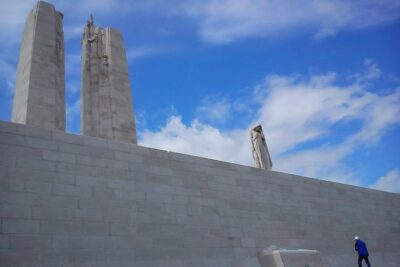
Full Day Canadian WW1 Vimy and Somme Battlefield Tour from Ypres
Read our review →
Browse the lists this tour appears in