
Reviewed · FLANDERS FIELDS WWI TOURS
In Flanders Fields and Passchendaele Half Day Morning Tour
Flanders Fields is not a place you simply look at. You need someone to explain what happened between the cemeteries, bunkers, fields, and quiet village roads. This 3.5-hour Ypres Salient tour does that with Roger, an expert guide who brings a clear sense of place to the First World War.
I like two things right away: the small group, capped at eight, and the air-conditioned vehicle, which gets you to sites that are awkward to reach on foot. I also like the balance between famous memorials and less obvious stops such as Essex Farm’s dressing-station bunkers.
The main drawback is time. This is a brisk half-day, and the van can feel a little tight in the back. The €8 entrance fee for Sanctuary Wood Museum is extra, and the museum is closed on Mondays, when the tour visits alternative trenches.
In This Review
- Key points to know before booking
- Why a guide matters in Flanders Fields
- The morning begins at Sanctuary Wood
- Preserved trenches at Sanctuary Wood Museum
- Essex Farm and the work of saving lives
- Langemark German Cemetery and the politics of memory
- Saint Julien and the first gas attacks
- Passendale and the meaning of Passchendaele
- Tyne Cot, the powerful final stop
- A small van makes the route possible
- Is $108.84 good value?
- Who should book this Ypres tour?
- Practical details that matter
- Should you book it?
- FAQ
- Where does the tour start?
- What time does the tour begin?
- Where does the tour end?
- How long does the tour last?
- How many people can join?
- Is Sanctuary Wood Museum admission included?
- What happens if the tour takes place on a Monday?
- Is the tour offered in English?
Key points to know before booking
- Roger is the heart of the tour: His detailed knowledge, personal warmth, and ability to answer family-history questions add far more than a simple drive between monuments.
- You see seven important sites: The route covers Sanctuary Wood, Essex Farm, Langemark, Saint Julien, Passendale, and Tyne Cot, with the museum visit included when open.
- The group stays small: With no more than eight people, you can ask questions and hear the guide without fighting a crowd.
- The tour suits a short Ypres visit: It begins at 10 a.m. near Ieper train station and returns there after about three and a half hours.
- The subject is solemn: This is not light sightseeing. Expect cemeteries, battlefield loss, gas warfare, wounded soldiers, and the long shadow of Passchendaele.
- The price is $108.84 per person: That is fair if you value transport, expert commentary, and access to scattered sites, but the cost is harder to justify if you only want a quick orientation.
Why a guide matters in Flanders Fields
The Ypres Salient can look deceptively calm. Today, you see roads, farms, church towers, cemeteries, and tidy fields. Without context, many sites can blur together. A guide helps you understand how the front moved, why certain places mattered, and how the fighting shaped the ground around Ypres.
Roger’s strength is explanation. He has written two books about the war, and his talks are described as clear, direct, and easy to follow. That matters here. First World War history can become a jumble of dates, offensives, national units, and place names. Roger connects those pieces without turning the morning into a classroom lecture.
He also adjusts the commentary to the people in the van. Canadians receive attention to Canada’s role and memorials. Americans, Australians, and New Zealanders can hear about their own forces and the sites linked to them. If your family has a connection to the area, tell him before or during the tour. He has helped people trace relatives buried near Ypres, including a family grave at Hooge Crater.
That personal touch is one reason this tour feels different from visiting alone. You still get time to look around quietly, but you are not left guessing what you are seeing.
More Flanders Fields WWI Tours in Ypres
- From Brussels: Flanders Fields Remembrance Full-Day Trip
★ 4.4 · 65 reviews - From Ypres, The Christmas Truce to Passchendaele Ypres Based WW1 private tour
★ 5.0 · 29 reviews - In Flanders Fields and Passchendaele Grand Tour
★ 5.0 · 25 reviews
The morning begins at Sanctuary Wood
The first stop is Sanctuary Wood, where Roger gives an overview of the fighting in the Ypres Salient. This is a useful opening because it gives you a map in your head before the details begin.
The site is linked with preserved trench remains and battlefield ground. Roger explains the wider pattern of the fighting, helping you see Sanctuary Wood as part of a larger military zone rather than an isolated attraction. The opening talk lasts about 30 minutes and does not require an admission ticket.
You should expect the tone to be serious from the start. This is not a quick photo stop. The value lies in learning how the salient functioned and why the area around Ypres became such a hard-fought section of the Western Front.
Preserved trenches at Sanctuary Wood Museum
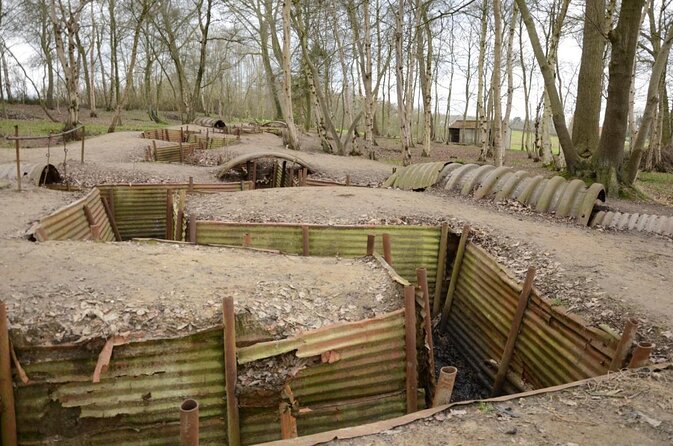
The Sanctuary Wood Museum adds a physical element that museums in town cannot match. You walk among preserved trenches and see the cramped defensive works that shaped daily life at the front.
The museum visit lasts about 50 minutes. The €8 entrance fee is not included, so bring that extra amount into your budget. The museum is closed on Mondays. On those days, the tour visits alternative trenches, which keeps the battlefield focus intact but changes the exact experience.
This is one of the places where the tour’s short length works both for and against you. Fifty minutes gives you enough time to see the museum and trenches without letting one stop swallow the morning. If you want to study every display in detail, you may wish for more time. If you want a broad introduction, the pace is sensible.
Essex Farm and the work of saving lives
Essex Farm Cemetery offers a different view of the war. The preserved dressing-station bunkers show what happened after a soldier was wounded, including the process used to evacuate casualties.
That focus is valuable because battlefield tours can lean heavily toward generals, attacks, and casualty figures. Essex Farm brings attention back to the wounded men and the medical chain behind the front line. The stop lasts around 30 minutes and is free to enter.
The cemetery setting also changes the rhythm of the morning. You are not only hearing about an attack or walking through a trench. You are considering the aftermath, the men who survived long enough to be treated, and those who did not.
Same old town, a completely different kind of day:
- From IEPER Private 4-hour Tour of the Ypres Battlefield
★ 5.0 · 154 reviews - Ypres: An exploration of the deadly salient battlefields
★ 5.0 · 76 reviews - From Ypres: WWI Battlefields Private Tour
★ 5.0 · 25 reviews - e-Scavenger hunt Ypres: Explore the city at your own pace
★ 4.5 · 6 reviews
Langemark German Cemetery and the politics of memory
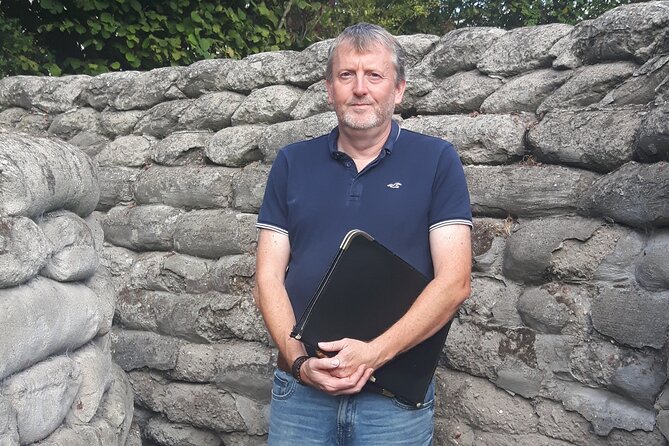
Langemark Cemetery is one of the most striking stops because it presents the German side of the conflict. Around 44,000 burials are recorded here, and the site has strong links to Hitler and the Nazi period that followed the First World War.
Roger uses Langemark to explain more than who is buried there. The cemetery also opens a discussion about how Germany remembered the war, how memorial spaces changed over time, and how First World War memory fed into later political movements.
This is a particularly good stop if you want to move beyond a simple Allied victory story. The tour includes British, Commonwealth, German, medical, and battlefield perspectives. That makes the morning more thoughtful and less like a string of national memorials.
You have about 30 minutes here. That is enough to take in the setting and hear the main explanation, though anyone interested in military memorial design or German remembrance may want additional time on a separate visit.
Saint Julien and the first gas attacks
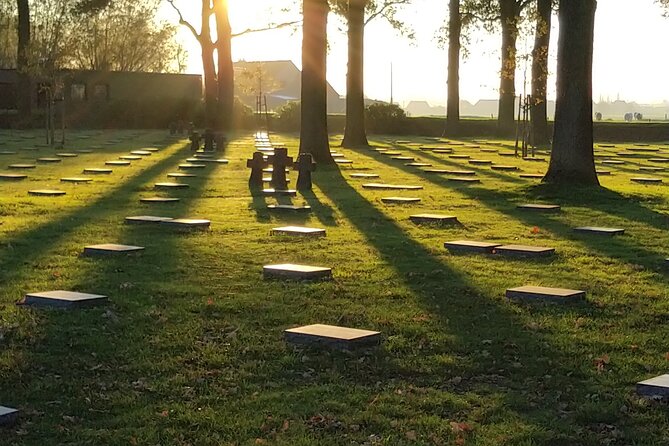
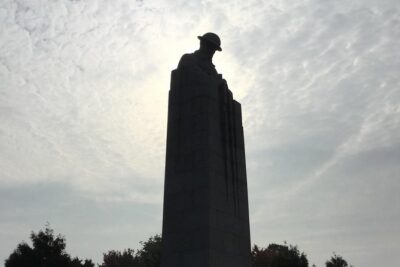
At Saint Julien, the Brooding Soldier Memorial recalls the first large-scale gas attacks in the Ypres area. The stop lasts only about 10 minutes, but its subject carries considerable weight.
The memorial’s design gives the stop a human focus. You are not simply looking at another stone marker. You are hearing about a weapon that changed the nature of the war and exposed soldiers to a new kind of fear.
The short visit is practical. With seven stops packed into one morning, some locations must be brief. Roger’s role is important here because he can give the memorial meaning quickly, then let you reflect before moving on.
Passendale and the meaning of Passchendaele
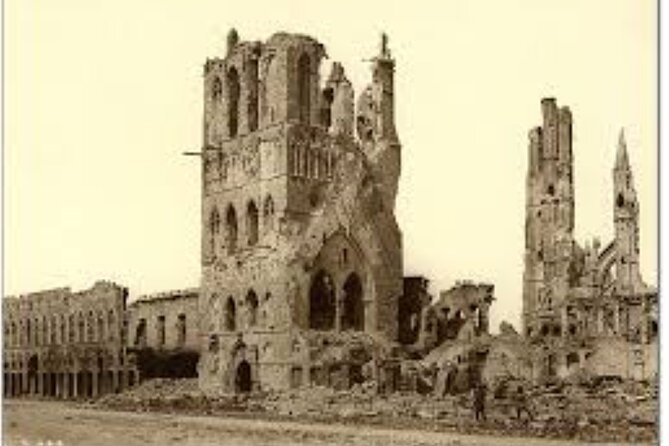
The tour continues to Passendale, the village tied to the Battle of Passchendaele. You spend about 15 minutes considering the battlefield and the legacy of the offensive.
Passchendaele has become a byword for mud, exhaustion, and terrible losses, but the tour treats it as more than a famous name. Roger explains how the battle fits into the wider story of the Ypres Salient and why its memory remains so powerful.
This stop will not satisfy someone who wants a full, detailed study of every phase of the battle. That is not what this half-day tour tries to do. Instead, it gives you a strong introduction and places Passendale within the route’s larger story.
Tyne Cot, the powerful final stop
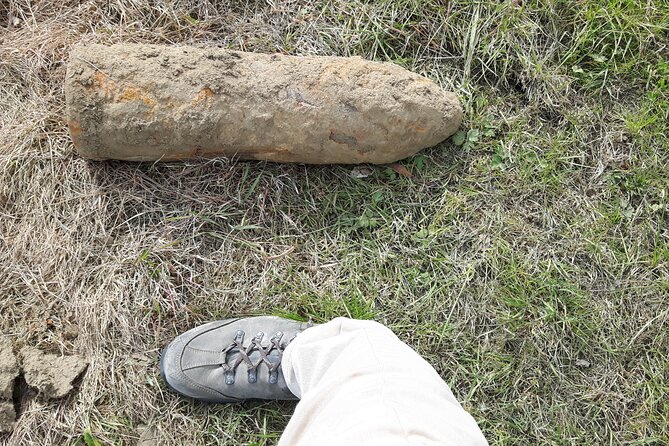
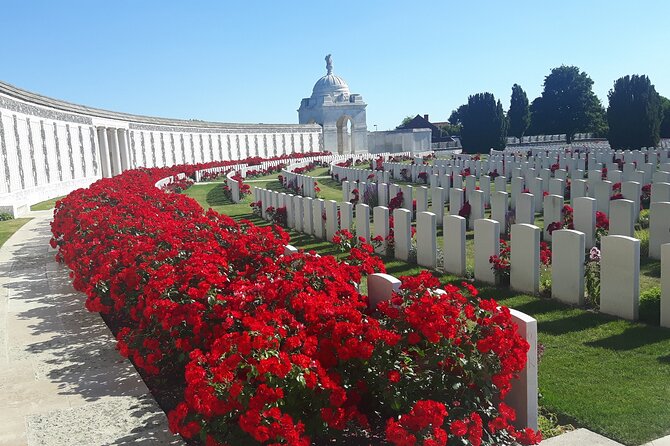
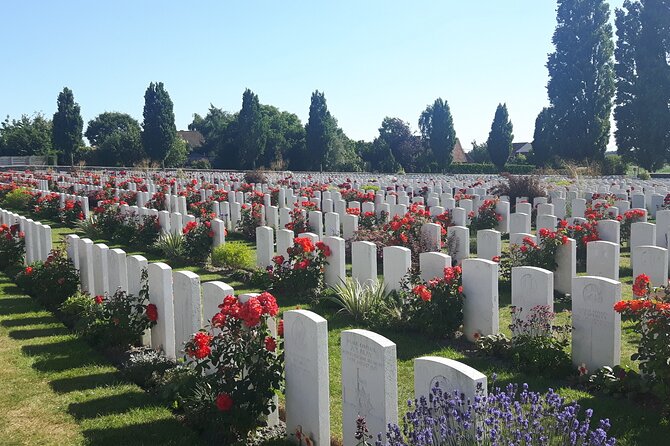
Tyne Cot Cemetery is the last major stop and one of the morning’s most moving places. It is the largest Commonwealth war-grave cemetery in the world, and its size makes the scale of the fighting hard to ignore.
You have about 35 minutes here. That is a useful amount of time to walk, read names, take in the rows of headstones, and listen to Roger’s explanation. The cemetery is carefully maintained, but the order of the site does not soften the number of lives represented there.
Tyne Cot works well as the final stop because the morning has already built the necessary context. By this point, you have heard about the fighting, the wounded, German remembrance, gas attacks, and Passchendaele. The cemetery brings those threads together in a quiet, personal way.
Allow yourself some silence here. You do not need to fill every minute with questions or photographs. The tour gives you a chance to absorb what you have seen before returning to Ypres.
A small van makes the route possible
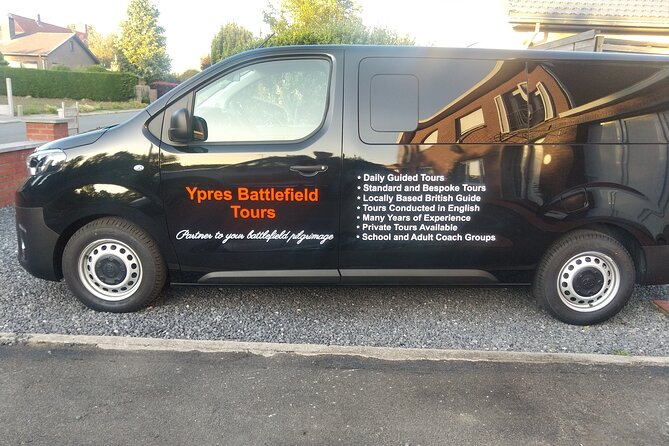
The air-conditioned vehicle is not a glamorous feature, but it is one of the reasons this tour offers good value. The sites are spread around the Ypres Salient, and reaching them independently would take planning, transport, and more time than the morning allows.
The group limit is eight people. That is small enough for direct conversation, and it allows Roger to tailor the discussion. People who had visited the sites alone found that the guide made a major difference to their understanding. That is easy to believe: a cemetery without context is still moving, but a guide explains whose story is being remembered and why the site is there.
The tradeoff is space. One person described the rear of the van as a little cramped. It was not considered a serious problem, but you should know that this is a compact small-group vehicle, not a large coach with wide seats and room to stretch out.
Pickup is at Station Ieper, Colaertplein 35, near the train station, at 10 a.m. The activity returns to the same meeting point. That setup is handy if you are making a day trip from Brussels or using Ypres as a base.
Is $108.84 good value?
At $108.84 per person, this is not the cheapest way to see the battlefields. You are paying for a specialist guide, a vehicle, and the ability to cover scattered sites in a little over three hours.
For me, the price makes sense if you have limited time or care about the history. A taxi-based visit would not provide the same commentary, while walking or cycling independently would require more planning and would limit how much ground you can cover. The small group also gives the tour a more personal feel than a large coach trip.
The value is less clear if you only want to stop at a few cemeteries for photographs. You could visit some sites independently, but you would lose the connections between them. You also need to add the €8 Sanctuary Wood Museum admission when it is open.
The tour’s record is unusually strong, with a 5 out of 5 rating from 117 reviews and a 100 percent recommendation rate. More important than the number is the pattern behind it: praise centers on Roger’s explanations, flexibility, family-history help, and ability to make difficult material understandable.
Who should book this Ypres tour?
I would recommend it to anyone visiting Ypres for the first time, especially if you have only one morning. It is also a good choice for families, since Roger can explain the subject in a way that younger visitors can follow without flattening the seriousness of the events.
It suits people with a family connection to the First World War particularly well. Roger has gone beyond the standard route to help trace graves, and his research background can add meaning to a visit that may already be emotional.
This is also a useful first step for cyclists. One person used the tour to get oriented before a solo cycling trip the next day. You can learn where the main sites are, understand the basic story, and then return independently for longer visits.
I would hesitate to book it if you want a slow, single-site visit. The tour moves at a steady pace, and the short stops leave limited time for extended museum study. It is an overview with depth from the guide, not a full-day archaeological or military study.
The subject can be confronting. Expect accounts of battlefield death, wounded soldiers, gas attacks, and mass burial. That is not a flaw, but you should choose this morning because you want an honest look at the war, not a light excursion.
Practical details that matter
Confirmation arrives when you book. The tour is offered in English, and service animals are allowed. It is near public transportation, and most people can participate.
Free cancellation is available up to 24 hours before the 10 a.m. start time for a full refund. Changes or cancellations inside that window are not accepted for a refund. The tour also needs a minimum number of participants. If that minimum is not reached, you are offered another date or experience, or a full refund.
Plan to arrive at the station meeting point with enough time to find the pickup area. If you are coming by train, allow for delays. Roger has shown flexibility when rail problems caused late arrival, but you should still contact the operator as soon as trouble appears rather than assume the vehicle will wait.
Should you book it?
Book this tour if you want a clear, personal introduction to the Ypres Salient and would rather spend one morning learning than piecing together the sites alone. Roger’s expertise, warm manner, and willingness to answer family-history questions are the main reasons to choose it.
Skip it if you need a slow museum day or prefer to explore every cemetery at your own pace. For most first-time visitors, though, the combination of transport, small-group discussion, preserved trenches, and Tyne Cot makes the $108.84 worthwhile. It gives you the map, the stories, and the emotional weight needed to understand Flanders Fields.
FAQ
Where does the tour start?
It starts at Station Ieper, Colaertplein 35, 8900 Ieper, Belgium.
What time does the tour begin?
The tour begins at 10 a.m.
Where does the tour end?
It ends back at the meeting point near Ieper train station.
How long does the tour last?
The tour lasts approximately 3 hours and 30 minutes.
How many people can join?
The group has a maximum of eight participants.
Is Sanctuary Wood Museum admission included?
No. Admission costs €8 per person and is paid separately.
What happens if the tour takes place on a Monday?
Sanctuary Wood Museum is closed on Mondays. On those days, the tour visits alternative trenches.
Is the tour offered in English?
Yes. The tour is offered in English.
Just added around Ypres
- From LIlle or Bruges, Christmas Truce to Passchendaele Ypres 1 day WW1 private★ 5.0 · 5 reviews
- In Flanders Fields and Passchendaele Grand Tour★ 5.0 · 25 reviews
- e-Scavenger hunt Ypres: Explore the city at your own pace★ 4.5 · 6 reviews
- PRIVATE Australian Western Front Battlefields 3-Day Tour Ypres to Amiens★ 5.0 · 3 reviews
- Discover Tournai while playing! Escape game – The alchemist★ 4.0 · 3 reviews
- From Ypres 4hr Christmas Truce and Monster Mines of Messines PRIVATE Tour★ 5.0 · 5 reviews
- Full Day Canadian WW1 Vimy and Somme Battlefield Tour from Ypres★ 5.0 · 6 reviews
- From Ypres, The Christmas Truce to Passchendaele Ypres Based WW1 private tour★ 5.0 · 29 reviews
Flanders Fields WWI Tours, compared.
Great War Flanders Fields Minibus Tour w/ Lunch
Read our review →
Flanders Fields Remembrance Tour from Brussels
Read our review →
From Ypres, The Christmas Truce to Passchendaele Ypres Based WW1 private tour
Read our review →
In Flanders Fields and Passchendaele Grand Tour
Read our review →Browse the lists this tour appears in