
Reviewed · GHENT TOURS
Small Group Liège to Aachen to Maastricht Border Crossing Tour
The best thing about this tour is its unusual reach. In one long day, you move from Belgium to the point where Belgium, Germany, and the Netherlands meet, then continue to Aachen and Maastricht. It is a clever way to sample three distinct places without arranging several train trips or hotel changes.
I like the small maximum of eight people, which keeps the day more personal than a coach tour. I also like the mix of grand sights and ordinary pleasures: Calatrava’s remarkable Liège station, a walk through Parc de la Boverie, Aachen Cathedral, and time for waffles, cheese, pastries, or a proper meal. The drawback is simple: this is a very full day, with roughly four hours of transport and short sightseeing stops.
In This Review
- Key points to know before booking
- Why this border-crossing day works
- Starting from Ghent at 8:00 am
- Liège-Guillemins, where the day begins with architecture
- A short riverside pause at Parc de la Boverie
- The Three-Country Point and lunch across borders
- Aachen, with a quick look at its historic center
- Aachen Cathedral and the Palatine Chapel
- Maastricht by way of the Sint Servaas Bridge
- Maastricht streets, the Basilica of Saint Servatius, and dinner
- The return to Ghent and the real cost of the day
- Who should book this experience?
- Should you book the Liège, Aachen, and Maastricht tour?
- FAQ
- Where does the tour begin?
- How long does the experience last?
- Which places does the tour visit?
- How many people can join the tour?
- Is the tour offered in English?
- Is lunch included?
- Is dinner included?
- What is the cancellation policy?
Key points to know before booking
- Three countries in one day: Visit Liège, the Three-Country Point, Aachen, and Maastricht from a Ghent base.
- A maximum of eight people: The small vehicle and group size should make pickups, questions, and short walks easier.
- Joris may be your guide: He is praised for a friendly, attentive style, local knowledge, and a good feel for when to chat or let the group rest.
- A long but varied schedule: Expect 11 to 13 hours, including transport, with an 8:00 am start and a return to your hotel.
- Historic sights without a rushed museum program: The route focuses on outdoor walks, city centers, churches, and architecture rather than long indoor visits.
- Food is part of the day: Lunch is taken at the border point, where you choose which country to eat in, followed by dinner in Maastricht.
Why this border-crossing day works
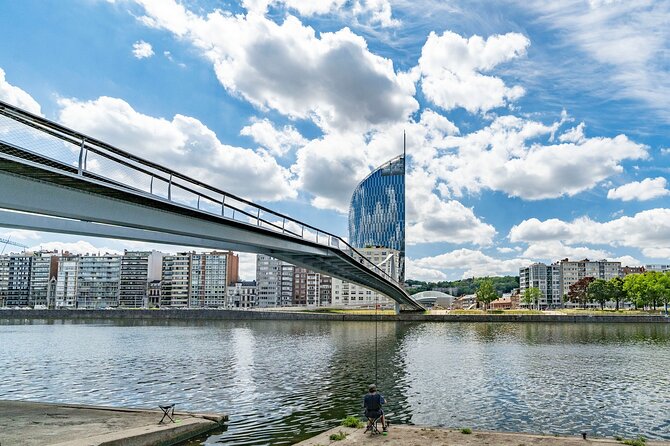
This experience is less about seeing every corner of four cities and more about connecting them into one memorable story. Liège gives you modern architecture and riverside parkland. The border point supplies the novelty. Aachen brings Charlemagne-era grandeur, while Maastricht offers old bridges, lanes, cafés, and a gentler evening finish.
That variety is the tour’s main strength. You are not spending 12 hours on one theme or in one museum. You keep changing scenery, and each stop feels different from the last.
The pace also suits you if you enjoy getting a broad sense of a place. A 30-minute city-center walk cannot reveal all of Aachen or Maastricht, but it can give you bearings, a few strong photographs, and enough atmosphere to decide where you might return for a longer stay.
You should book with realistic expectations. This is a sampler, not a deep visit to each city. The schedule allows about 30 minutes at several major stops, and travel time is included in the 11 to 13-hour total. If you prefer a slow lunch, long museum visits, or unplanned wandering, the day may feel too structured.
Other Ghent days worth putting on the list:
- Ghent: 50-Minute Medieval Center Guided Boat Trip
★ 4.5 · 5,637 reviews - Historical Walking Tour: Legends of Gent
★ 5.0 · 1,761 reviews - Ghent: 40 Minute Medieval Center Guided Boat Tour
★ 4.4 · 884 reviews
Starting from Ghent at 8:00 am
Pickup is offered from your hotel, with the live location shared through WhatsApp during pickup. That is useful on an early start, especially if the meeting point changes slightly or you are waiting outside a large hotel.
The first transfer takes you toward Gare de Liège-Guillemins. The schedule allows two hours for transport from your hotel to the station area. Since the full day is long, bring water, wear shoes suited to city walking, and treat the first ride as part of the experience rather than wasted time.
The tour is offered in English. Confirmation arrives when you book, and the group can include no more than eight people. That small size matters here because the route involves several transfers and multiple countries. A smaller group can usually move between stops with less fuss than a large organized party.
The price is $480.71 per person, so value deserves a close look. You are paying for a private-feeling day trip with pickup, transport between four main areas, an English-speaking guide, and a route that would take more planning to reproduce independently. You are not paying for a full guided visit inside every monument, and the posted stop information lists the attractions as free admissions. Food costs should be treated separately unless your booking confirmation says otherwise.
The tour is often reserved about 53 days ahead. That does not mean you must book exactly that early, but it is a useful signal for planning. If your dates are fixed, reserve well before departure, particularly if you want a small-group experience.
Liège-Guillemins, where the day begins with architecture
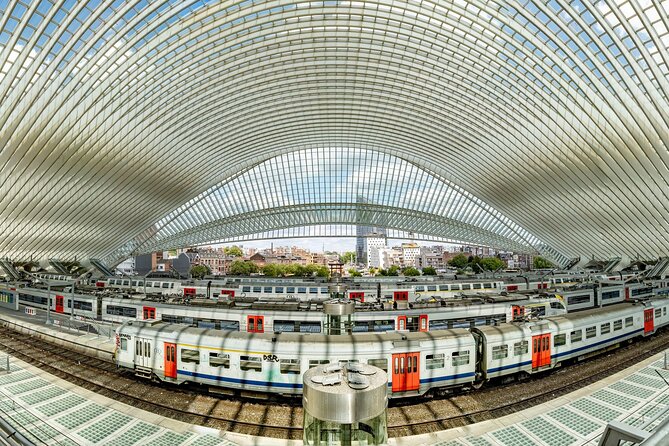
Gare de Liège-Guillemins is more than a place to pass through. Designed by Spanish architect Santiago Calatrava, the station has a vast steel-and-glass canopy that curves above the platforms. Daylight filters through the roof, and the open structure gives the station a light, almost weightless feel.
You get around 30 minutes at the station after the longer transfer. That is enough to appreciate the roofline, take photographs, and hear why the building matters to Liège. It also gives the day a strong opening: instead of beginning with a generic roadside stop, you begin inside one of Belgium’s most striking modern buildings.
The station also creates a useful contrast with the older parts of the city. Liège is presented here through its mix of new design and established urban character. If modern architecture interests you, this may be one of the most satisfying short stops on the route.
Do not expect a full city tour of Liège. The schedule does not leave much time for the historic Carré district or a long walk through central streets. Think of this stop as an architectural introduction, not a complete visit.
A short riverside pause at Parc de la Boverie
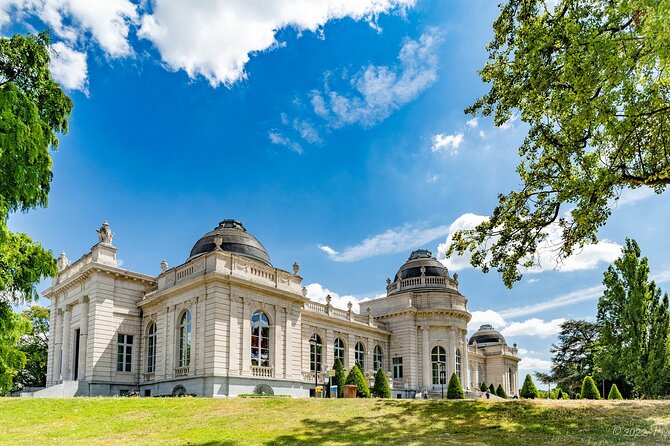
Next comes Parc de la Boverie, set along the Meuse River. The park offers a change of rhythm after the station and the morning drive. You can stroll among lawns, statues, greenery, and water features, with about 30 minutes to stretch your legs.
The park dates from the 19th century, and the Boverie Palace sits within it. The palace now serves as an art museum with classical and contemporary works, but the scheduled visit is a walk through the park rather than a museum session.
I like this stop because it keeps the day from becoming a string of churches and city streets. A short green-space break can make a major difference on a long excursion. You get fresh air, a riverside setting, and a chance to reset before the next transfer.
The trade-off is that 30 minutes passes quickly. You will likely need to choose between a relaxed stroll, photographs, and a closer look at the palace exterior. If the museum is your priority, this tour does not provide a dedicated visit.
Same old town, a completely different kind of day:
- Evening Tour of the Dark Side of Gent
★ 5.0 · 646 reviews - Ghent Bike Tour Off-the-beaten-track
★ 5.0 · 505 reviews - Ghent: 40-Minute Historical Boat Tour of City Center
★ 4.3 · 430 reviews - Ghent: Guided Urban Bike Tour
★ 4.9 · 297 reviews
The Three-Country Point and lunch across borders
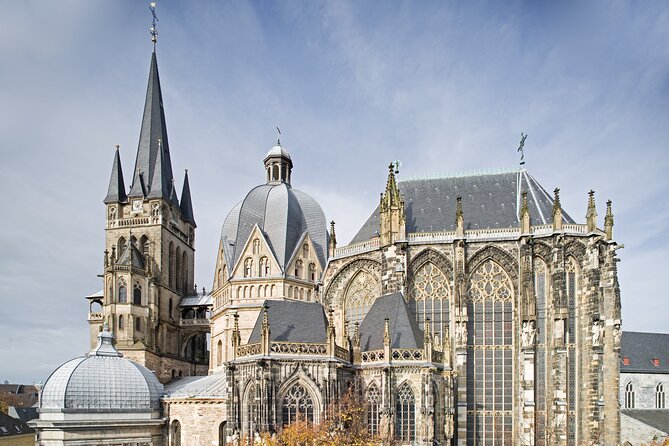
The route then heads to Drielandenpunt, the Three-Country Point. The transfer takes about an hour, followed by another hour at the site. This is the tour’s most distinctive idea: you can see Belgium, Germany, and the Netherlands connected in one place.
The appeal is not a long list of monuments. It is the simple pleasure of geographic oddity. You can move between national borders within moments and take in a broad view of the surrounding area. For many people, this becomes the day’s most memorable photo stop because it is difficult to recreate by accident during an ordinary city break.
Lunch takes place here, and you choose which country you want to eat in. That gives the stop a playful, practical edge. Rather than treating the border as an abstract line on a map, the tour turns it into a decision at the table.
The information provided does not specify a fixed restaurant, included menu, or lunch price. Plan to pay for your own meal unless your booking details state otherwise. Since the stop lasts about an hour, aim for a meal that fits the schedule. A leisurely restaurant visit could cut into your time at the border.
Aachen, with a quick look at its historic center
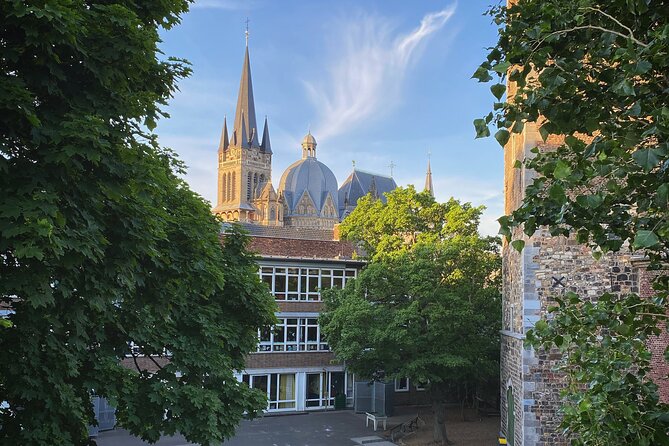
From Drielandenpunt, it is about 30 minutes to Aachen. The city-center walk lasts roughly 30 minutes, so you should see it as an introduction rather than a full urban tour.
Aachen has a compact feel, with cafés, shops, markets, and historic buildings close together. The city’s identity is tied to its long political and religious past, but it also feels like a living university city. This combination gives the walk some variety even when time is limited.
A short guided stroll is especially useful if you have never been to Aachen. Your guide can point out the main center, help you get oriented, and explain how the city fits into the wider border region. The guide’s local approach is an important part of the day here. Joris is described as friendly, attentive, and good at adjusting his pace to the group.
That flexibility matters. A group that wants to talk can enjoy conversation, while a quieter group can rest during the rides. Joris is also noted for carrying coffee, snacks, and meals along the route. Because arrangements can vary, confirm exactly what is included when you book.
Aachen Cathedral and the Palatine Chapel
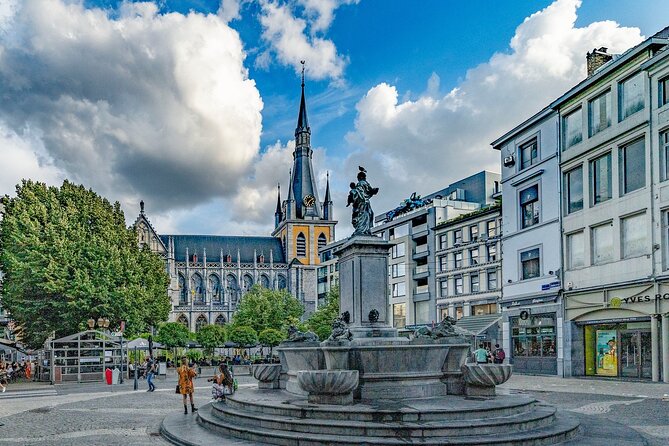
The Aachen Cathedral receives another 30-minute stop. Known locally as the Aachener Dom, it is one of the city’s defining buildings and a major piece of European religious and political history.
The cathedral is especially associated with the Palatine Chapel, whose Romanesque and Gothic elements create a powerful interior and exterior presence. It is also recognized as a UNESCO World Heritage site. Even with only half an hour, the cathedral gives the Aachen portion of the tour a clear focus.
Admission is listed as free for the stop, but the schedule does not promise a formal interior tour or a reserved entry. Your time may be used for an outside explanation, a look inside if access permits, and photographs around the square. If seeing every interior detail is essential to you, ask the operator about the visit before departure.
The short timing is the main limitation. Aachen Cathedral deserves much longer for anyone focused on architecture, medieval history, or sacred art. Here, it functions as a concentrated highlight within a broader day.
Maastricht by way of the Sint Servaas Bridge
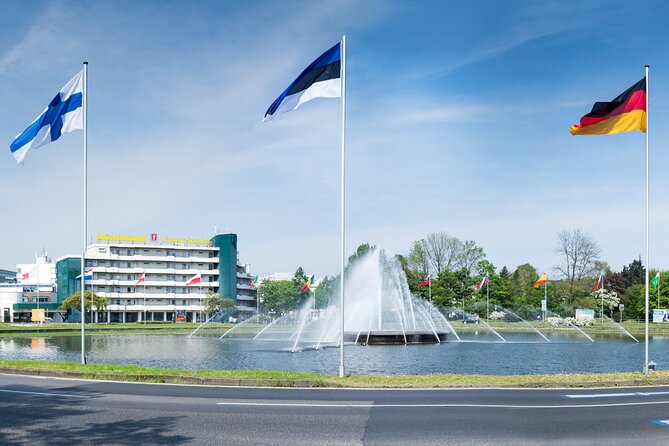
The transfer from Aachen to Maastricht takes about 40 minutes. The route then brings you to the Sint Servaas Bridge, one of Maastricht’s best-known landmarks.
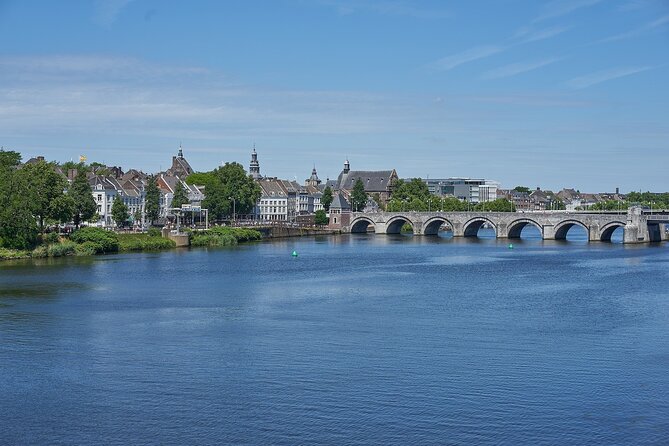
The stone bridge dates to the 13th century and crosses the Maas River. Its arches connect the old town with the newer parts of the city, making it both a historic structure and a useful entry point for your walk.
This is a good place to slow down briefly. After several transfers, the river and bridge offer a clear visual marker that you have entered a different city and country. The bridge also gives you a sense of Maastricht’s old-town setting before the city-center stroll begins.
Again, the stop is about orientation rather than detailed study. You may have time for photographs and a short explanation, but not a long riverside walk.
Maastricht streets, the Basilica of Saint Servatius, and dinner
The Maastricht city-center walk lasts around 30 minutes. The city has cobblestone streets, cafés, boutiques, markets, and a blend of old buildings with modern daily life. It feels more relaxed than a formal sightseeing circuit, which makes it a pleasant late-afternoon stop.
Food is a natural part of Maastricht. You might look for Limburgse vlaai, a traditional fruit-filled pastry, or zoervleis, a sweet-and-sour stew. Local beers and wines also fit the setting. The experience allows time for dinner, with about an hour set aside in the city.
Dinner is not described with a fixed restaurant or included price, so you should be ready to choose and pay for your own meal unless your confirmation says otherwise. One hour is enough for a focused meal, but not for a long, multi-course evening.
The Basilica of Saint Servatius receives its own 30-minute stop. Its old stonework and religious importance add weight to the Maastricht visit. For you, the basilica provides a strong counterpoint to Liège-Guillemins: the day begins with bold modern engineering and later reaches a place shaped by centuries of worship.
The order of the Maastricht stops may be adjusted by the guide, but the essential pattern is clear: bridge, city center, basilica, dinner, then the return to Ghent.
The return to Ghent and the real cost of the day
The ride back to your hotel takes about two hours. By then, the 11 to 13-hour day will feel full. The return transfer is useful because you do not need to manage a late-night train connection from Maastricht, but it also confirms that this is not a light half-day outing.
At $480.71 per person, the experience makes the most sense if you value convenience, a small group, and a guide who handles the cross-border route. Independent transport could cost less, but you would need to coordinate timing across Belgium, Germany, and the Netherlands, then navigate the border point and return to Ghent after dinner.
The price is harder to justify if you mainly want one city. For example, Aachen or Maastricht each deserve a longer, slower visit. This tour earns its cost through range and organization, not through extensive time at any one attraction.
Free cancellation is available up to 24 hours before the start time for a full refund. Changes made within 24 hours are not accepted, and the tour requires a minimum number of participants. If that minimum is not reached, you are offered another date or experience, or a full refund.
Who should book this experience?
I would choose this tour if you want a broad border-region sampler and prefer a guide to manage the driving and timing. It fits couples, families, and small groups who like history, architecture, food, and changing scenery more than long museum visits.
It also suits you if you enjoy small details that make a day memorable: drinking coffee before an early start, deciding where to eat at a three-country border, comparing Liège’s futuristic station with Aachen’s cathedral, and ending among Maastricht’s old streets.
I would hesitate if you dislike early starts, long rides, or short stops. The schedule is demanding, and the most important buildings receive only about 30 minutes each. Travelers with limited mobility should also consider the repeated transfers and city walks, although the information states that most people can participate and that everyone can take part.
Should you book the Liège, Aachen, and Maastricht tour?
Book it if the idea of crossing three countries in one day excites you and you want someone else to handle the route from Ghent. The small group, English service, hotel pickup, and personal guiding style can make a complicated day feel manageable.
Skip it if your priority is slow sightseeing or serious museum time. For the right person, this is an energetic, well-packed introduction to one of Europe’s most interesting border regions. Just bring comfortable shoes, protect your meal budget, and accept that you are sampling these cities rather than fully exploring them.
FAQ
Where does the tour begin?
The tour begins with pickup from your hotel in Ghent. The start time is 8:00 am, and the live pickup location is shared through WhatsApp.
How long does the experience last?
The full experience lasts approximately 11 to 13 hours. Travel time is included in that total.
Which places does the tour visit?
The route includes Gare de Liège-Guillemins, Parc de la Boverie, Drielandenpunt, Aachen, Aachen Cathedral, Maastricht, the Sint Servaas Bridge, and the Basilica of Saint Servatius.
How many people can join the tour?
The tour has a maximum of eight participants.
Is the tour offered in English?
Yes. The experience is offered in English.
Is lunch included?
Lunch takes place at the Three-Country Point, where you choose which country you want to eat in. The provided details do not specify whether the meal cost is included.
Is dinner included?
The schedule includes one hour for dinner in Maastricht, but no fixed restaurant or inclusion is specified. Check your booking confirmation for payment details.
What is the cancellation policy?
You can cancel up to 24 hours before the start time for a full refund. Cancellations or changes made less than 24 hours before the start time are not accepted for a refund.
Just added around Ghent
- Walking Food Tour in Ghent★ 5.0 · 13 reviews
- Historic Highlights, by a local guide★ 5.0 · 9 reviews
- Discover Mons while playing! Escape game – The alchemist★ 4.0 · 5 reviews
- Discover Ghent while playing! Escape game – The Walter case★ 4.5 · 4 reviews
- e-Scavenger hunt Ostend: Explore the city at your own pace★ 4.5 · 10 reviews
- Ghent Walking Tour with Audioguide on Your Smartphone★ 4.5 · 13 reviews
- Discover Ghent with a self-guided Outside Escape city game tour!★ 4.0 · 10 reviews
- e-Scavenger hunt Kortrijk: Explore the city at your own pace★ 4.5 · 15 reviews
Ghent Tours, compared.
Browse the lists this tour appears in