
Reviewed · HISTORICAL TOURS
Ghent: Private Tour in Historical Center
Ghent’s medieval center gives you a lot in a short walk: Saint Bavo’s Cathedral, the Belfry, guild houses, a castle, and the old harbor all sit within the compact Kuip. I like the way this private tour connects the city’s grand landmarks instead of treating them as separate photo stops. I also like the chance to shape the walk around your interests, as one guide adjusted the route for a guest who wanted to see the beguinage area.
The small private group is another strong point. At $147 for up to five people, the price works out well if you can fill the group, and a guide can adjust the pace more easily than on a large public walk. The main drawback is the fixed two-hour limit: you will see the outside of many major buildings, but this is an orientation walk rather than a full museum tour. Chocolate tasting is possible at the end, but it is not included.
In This Review
- Key points to know before you book
- Starting at Saint Bavo’s Cathedral and Sint-Baafsplein
- Patrician houses and Ghent’s City Hall
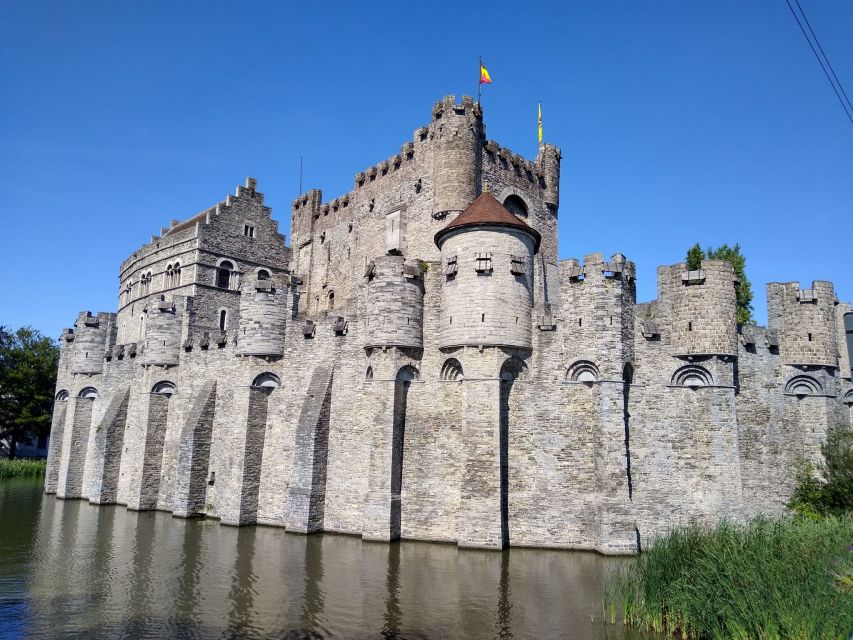
- The Castle of the Counts, Ghent’s medieval centerpiece
- A taste of the region at the Great Butchers’ Hall
- The old harbor and the Lys quays
- St Michael’s Bridge and the famous three-tower view
- What the private format is really worth
- Guides, languages, and the pace of the walk
- Who should choose this Ghent walk?
- Should you book the WalkinGent private tour?
- FAQ
- How long is the Ghent private tour?
- How many people can join the private group?
- What languages are available?
- Where does the tour meet?
- Is the tour wheelchair accessible?
- Is chocolate tasting included?
Key points to know before you book
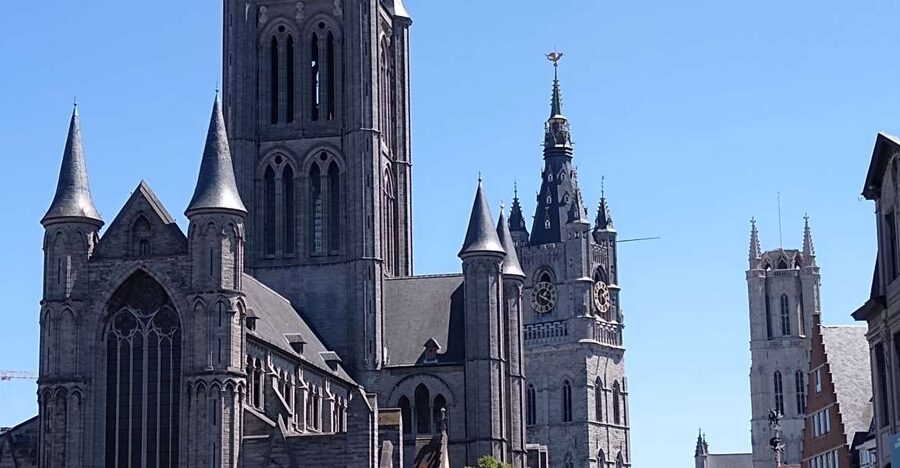
- Three towers in one view: St Michael’s Bridge gives you the classic sightline toward Saint Bavo’s Cathedral, the Belfry, and Saint Nicholas’ Church.
- A private route for up to five: The guide can respond to your interests and adjust the walk when practical.
- A compact medieval center: The route links Sint-Baafsplein, the City Hall, the Castle of the Counts, the old harbor, and the Lys quays.
- Several language choices: Tours are offered in English, French, or Dutch.
- A food stop is possible: You can arrange chocolate tasting at the end, but expect to pay separately.
- Easy meeting point: Find the guide in front of Saint Bavo’s Cathedral by looking for the WalkinGent logo.
Starting at Saint Bavo’s Cathedral and Sint-Baafsplein
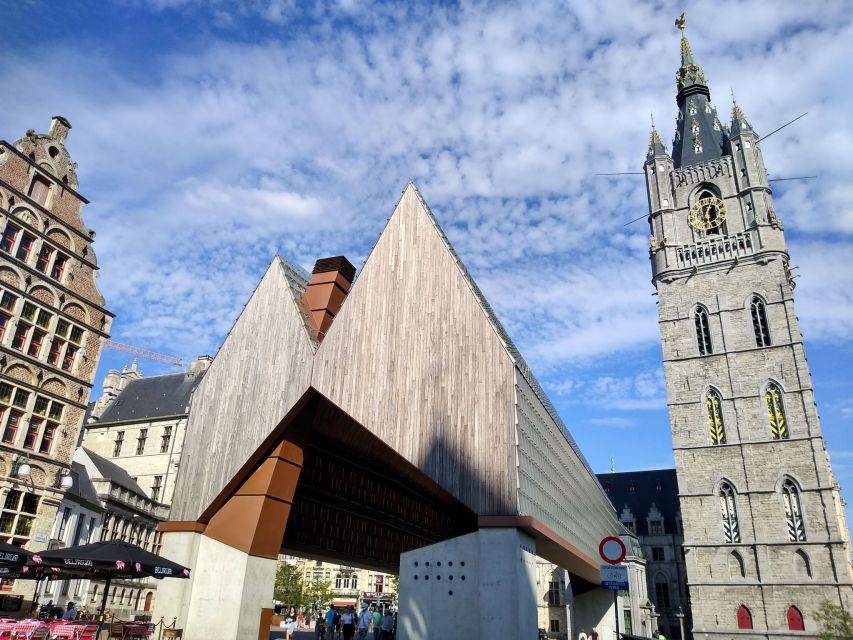
The walk begins at Sint-Baafsplein, one of the best places in Ghent to get your bearings. Three major buildings gather here: Saint Bavo’s Cathedral, the Belfry, and the Cloth Hall. Together, they explain why Ghent became such an important medieval city.
Saint Bavo’s Cathedral is the most imposing of the three. Its scale tells you that this was not a minor provincial town. The cathedral is also tied to Ghent’s famous artistic heritage, although this two-hour walk does not promise an interior visit or a detailed look at every artwork. I would treat the cathedral as the opening chapter, then return later if you want more time inside.
The Belfry and Cloth Hall provide a useful contrast. The Belfry represents the city’s civic power and independence, while the Cloth Hall points to the trade that helped make Ghent wealthy. Your guide can explain how these buildings fit together, which is more useful than simply collecting three photographs.
Allow a little patience at the start if you want good pictures. Sint-Baafsplein is an open urban space, and the three landmarks reward different angles. The guide will set the context, but you will want to save a few minutes for your own photographs.
A few more Ghent trips to weigh up
- Historical Walking Tour: Legends of Gent
★ 5.0 · 1,761 reviews - Ghent: 40-Minute Historical Boat Tour of City Center
★ 4.3 · 430 reviews - Private Historical Tour: The Best of Ghent
★ 5.0 · 115 reviews
Patrician houses and Ghent’s City Hall
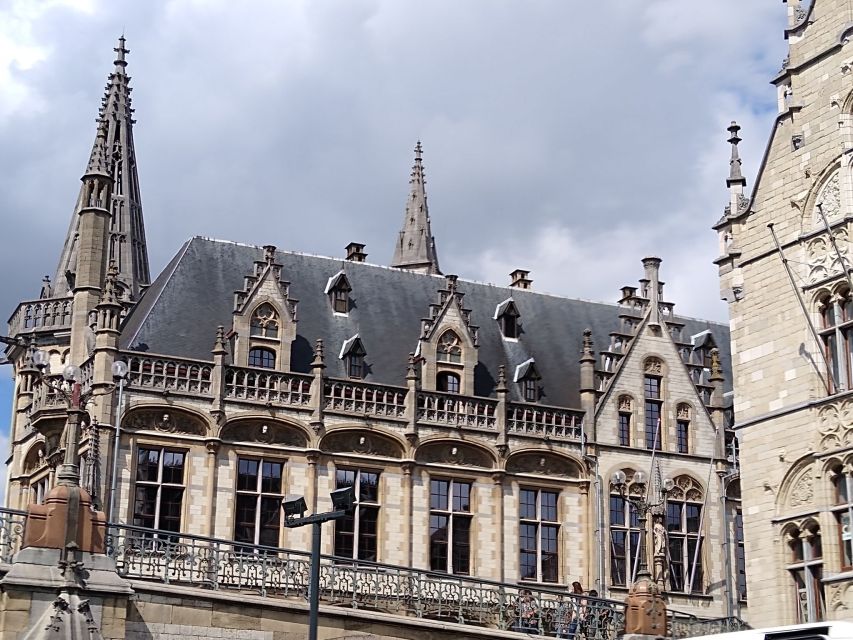
From the square, the route continues past patrician houses and toward the City Hall. This stretch helps you read Ghent as a working city rather than a collection of isolated monuments.
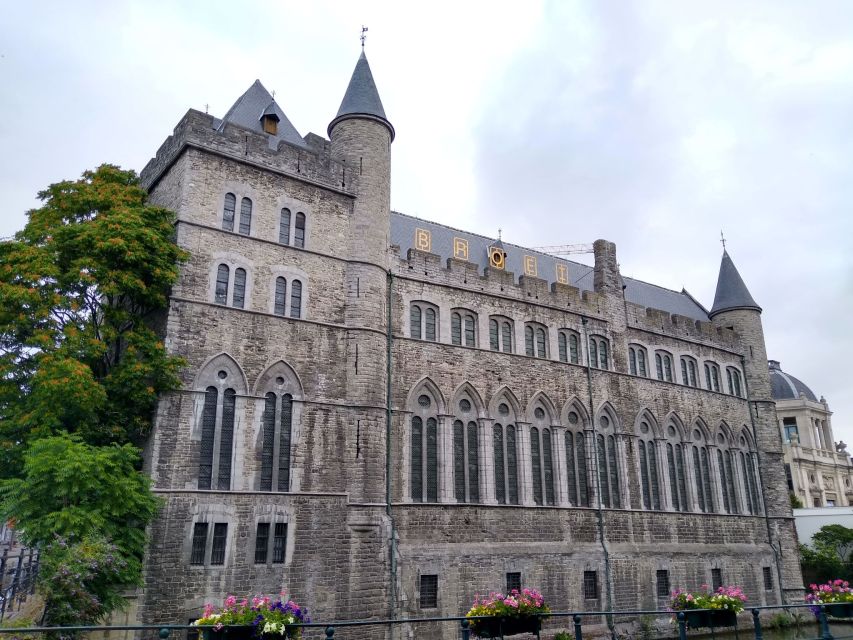
The patrician houses show how successful merchants and civic leaders expressed their place in society. Look up as you walk. The details above street level often tell you more than the ground-floor businesses, and a guide can point out the differences between private residences, guild buildings, and commercial spaces.
The City Hall adds another layer to the story. Its architecture reflects the changing needs and tastes of a city that developed over centuries. The building is not just a pretty facade. It represents local government, civic pride, and the long argument over who should control Ghent.
This is one reason a private walk can be useful. You can ask why one building looks medieval while another feels more formal or later in style. A guide can also slow down for architecture and art if those are your main interests. One German-speaking visitor with a strong interest in architecture and art history found this part especially suitable, and the available French, Dutch, and English languages give you a good chance of getting explanations in a language that feels natural.
The Castle of the Counts, Ghent’s medieval centerpiece
The Castle of the Counts, known locally as Gravensteen, is the route’s most theatrical stop. Its stone walls and defensive form make the Middle Ages feel close at hand. Compared with the elegant houses along the waterways, the castle is blunt, heavy, and built to control.
The tour presents the castle as part of the city’s larger story, not just as a quick castle photograph. That matters because Ghent’s power was divided among merchants, civic authorities, religious institutions, and rulers. The castle gives you the ruler’s side of that equation.
This walk focuses on the historical center and does not state that admission to the castle interior is included. If you want to explore its rooms, exhibits, or upper levels, ask the operator about adding that separately or return on your own. The two-hour route is better suited to seeing the exterior and understanding its place in the city.
I like this stop for families and first-time visitors because the castle is instantly readable. You do not need a long lecture to understand what the towers and walls were meant to do. Still, anyone with mobility concerns should ask the guide about the exact route if you plan to add an interior visit, since the tour itself is described as wheelchair accessible but the castle’s interior is not part of the stated package.
A taste of the region at the Great Butchers’ Hall
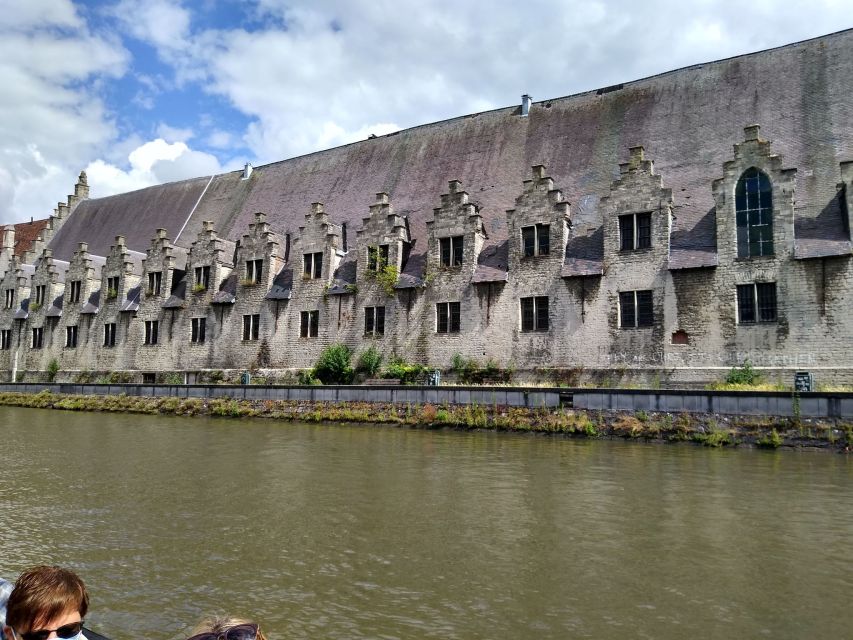
The Great Butchers’ Hall comes next, offering a change from stone facades and civic buildings. It is connected with local food specialties and gives the walk a practical, everyday side.
The hall is a good reminder that historic centers were places where people bought, sold, stored, and prepared food. In Ghent, the old commercial life is not far from the grand religious and political buildings. You can ask the guide what regional products are associated with the hall and what is available to taste.
Do not confuse this stop with an included tasting. The tour description says that chocolate tasting is possible at the end, but it does not include chocolate or another food tasting in the price. If sampling local specialties matters to you, clarify what can be arranged before you start.
I would keep expectations sensible here. This is a brief city walk, not a food tour. The hall adds flavor and context, but the main subject remains Ghent’s streets, buildings, and waterways.
Same old town, a completely different kind of day:
- Ghent: 50-Minute Medieval Center Guided Boat Trip
★ 4.5 · 5,637 reviews - Ghent: 40 Minute Medieval Center Guided Boat Tour
★ 4.4 · 884 reviews - Evening Tour of the Dark Side of Gent
★ 5.0 · 646 reviews - Ghent Bike Tour Off-the-beaten-track
★ 5.0 · 505 reviews
The old harbor and the Lys quays
From the Great Butchers’ Hall, the old harbor is only a short step away. This is where Ghent’s commercial identity becomes easier to picture. Water was the city’s transport system, and the harbor connected trade, storage, and daily work.
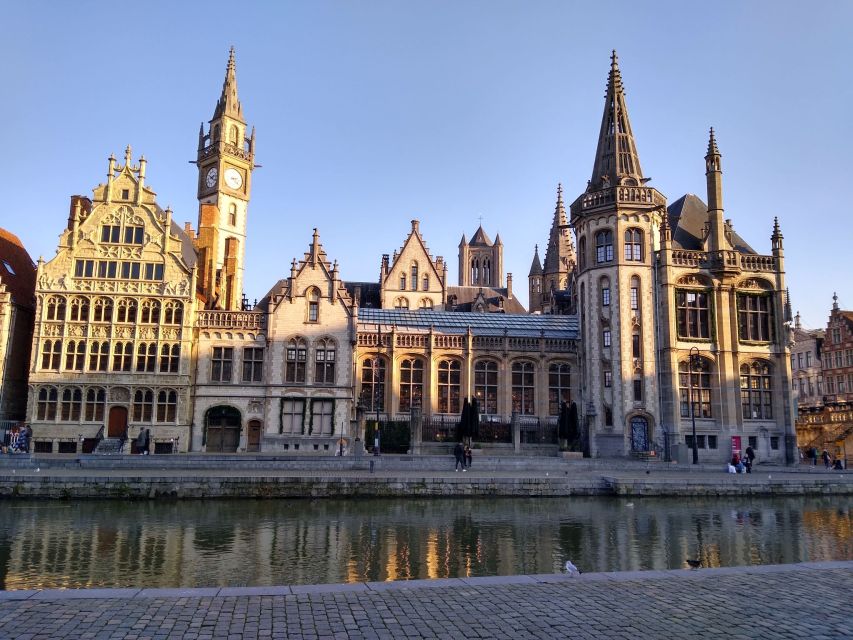
The most memorable stretch follows both banks of the Lys: Graslei and Korenlei. Their guild houses and former grain warehouses line the water in a way that makes the city feel almost staged for a history book, though these were practical buildings with practical jobs.
Graslei and Korenlei are also among Ghent’s busiest photo areas. You will see handsome facades, reflections on the river, and plenty of reasons to stop. The tradeoff is that the quays can be crowded, so your guide may need to keep the group moving rather than pause at every doorway.
Listen for the differences between the two banks. The names are not simply decorative labels. They point to the old trade functions of the area, especially grain and river commerce. A good explanation turns the quays from a pretty waterfront into a picture of how Ghent made its living.
This is also where a private guide earns the fee. You can ask about a particular facade, return to a detail you missed, or request a slower pace for photographs. On a large group tour, those small requests are harder to manage.
St Michael’s Bridge and the famous three-tower view
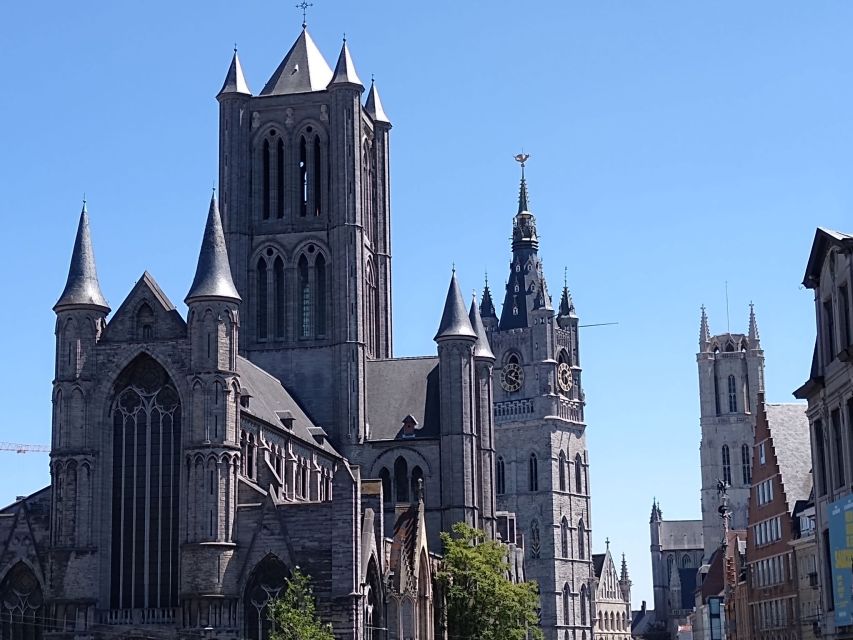
The walk finishes at St Michael’s Bridge, where you get the classic view of Ghent’s three towers. Saint Bavo’s Cathedral, the Belfry, and Saint Nicholas’ Church line up across the historic center.
This view is more than a standard selfie point. It brings the opening stop back into focus and shows how close the city’s main landmarks are to one another. From the bridge, you can understand the relationship between the religious, civic, and commercial parts of Ghent in a single glance.
Bring your camera, but do not rush the stop. The bridge offers a useful moment to ask final questions and get suggestions for the rest of your time in the city. You might want directions to a museum, a food stop, or another neighborhood, although the specific advice available will depend on your guide.
The tour ends with the possibility of a chocolate tasting. Since this is optional and not included, consider it an add-on rather than part of the two-hour value. If you have children or a serious sweet tooth, it may be a pleasant finish. If not, you can simply end the walk with the view.
What the private format is really worth
The $147 rate covers a private group of up to five people. For one or two people, that is a fairly serious price for two hours. For five, it comes to about $29.40 per person, which is much easier to justify for a personal route and a guide who can respond to your questions.
The format is especially useful when your group has different interests. One person may care about architecture, another about trade, and another about photographs. A private guide can usually shift the emphasis without losing the basic route.
The experience also gives you flexibility before you pay. You can reserve now and pay later, and cancellation is free up to 24 hours before the start time. Check the available starting times when booking, since the tour lasts two hours and departure options can vary.
A private walk is not automatically better for everyone. If you enjoy meeting strangers, prefer the lowest possible price per person, or want a longer formal tour, a public group option may suit you better. WalkinGent also offers other themes and tours, so you can compare before committing.
Guides, languages, and the pace of the walk
The tour uses qualified local guides and operates in English, French, or Dutch. Ann is one of the named guides associated with this experience, and her approach appears particularly adaptable: she has adjusted a route toward the beguinage area and tried to investigate access to one of the houses when that was relevant to the group.
That detail gives you a useful tip. Tell your guide at the beginning what you care about. If you want architecture, art, food, photography, or a particular neighborhood, say so before the route gets underway. The guide cannot promise every detour, but the private setting gives your request a fair chance.
The pace should be manageable for most people because the tour lasts only two hours and stays in the historic center. Wear comfortable shoes anyway. You will be walking on city streets and stopping often, and the most rewarding parts of the route are outdoors.
The tour is listed as wheelchair accessible. If you use a wheelchair, contact the operator with any route questions before booking, especially if you hope to add the castle interior or a tasting venue. The stated walk itself is the part confirmed as accessible.
Who should choose this Ghent walk?
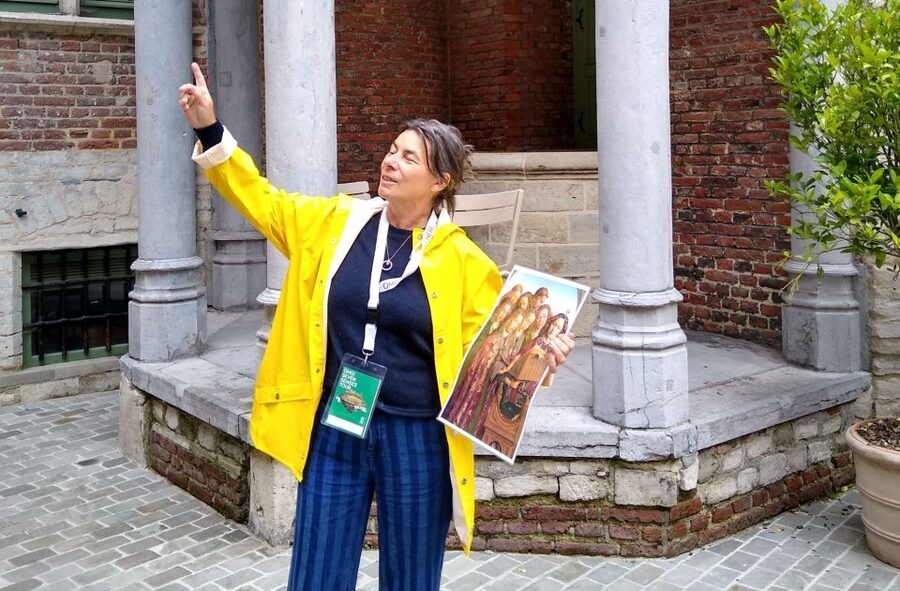
I would recommend it to first-time visitors who want a clear introduction before exploring alone. The route covers the city’s essential visual landmarks without requiring a full day, and the final bridge view helps you understand the center’s layout.
It also suits families and small groups that want control over the pace. You can ask direct questions, pause for pictures, and avoid waiting for a large group to catch up.
Architecture and art lovers should find plenty to discuss, especially around Saint Bavo’s Cathedral, the civic buildings, and the guild houses. Food-focused visitors will get some local context at the Great Butchers’ Hall, but should not book this as a dedicated tasting tour.
I would be more cautious if your main goal is entering every major building. The description centers on a guided walk past the landmarks, not included admissions. You will need extra time and possibly separate tickets for interiors.
Should you book the WalkinGent private tour?
Book it if you want Ghent’s center explained by a local guide in a compact, private format. The route is well chosen: it starts with the three landmarks at Sint-Baafsplein, moves through civic and commercial Ghent, reaches the castle and harbor, then ends with the city’s best three-tower view.
The value is strongest for a group of three to five, especially if you appreciate tailored commentary. Ask for English, French, or Dutch, mention your interests at the start, and confirm any desired chocolate tasting or extra detour in advance.
Skip it if you want a long interior-focused visit or the cheapest possible introduction. For everyone else, this is a practical first look at Ghent, with enough history to make the streets meaningful and enough flexibility to feel personal.
FAQ
How long is the Ghent private tour?
The walk lasts two hours.
How many people can join the private group?
The price covers a private group of up to five people.
What languages are available?
The guide can lead the tour in English, French, or Dutch.
Where does the tour meet?
Meet in front of Saint Bavo’s Cathedral on Sint-Baafsplein. Look for the WalkinGent logo.
Is the tour wheelchair accessible?
The activity is listed as wheelchair accessible.
Is chocolate tasting included?
No. Chocolate tasting is possible at the end, but it is not included in the tour price.
Just added around Ghent
- Walking Food Tour in Ghent★ 5.0 · 13 reviews
- Historic Highlights, by a local guide★ 5.0 · 9 reviews
- Discover Mons while playing! Escape game – The alchemist★ 4.0 · 5 reviews
- Discover Ghent while playing! Escape game – The Walter case★ 4.5 · 4 reviews
- Ghent Walking Tour with Audioguide on Your Smartphone★ 4.5 · 13 reviews
- Discover Ghent with a self-guided Outside Escape city game tour!★ 4.0 · 10 reviews
- e-Scavenger hunt Ostend: Explore the city at your own pace★ 4.5 · 10 reviews
- e-Scavenger hunt Kortrijk: Explore the city at your own pace★ 4.5 · 15 reviews
Historical Tours, compared.

Historical Walking Tour with Chocolate & Waffle Tasting
Read our review →THE Storytelling Tour of Bruges | First Day Must | History & Tips
Read our review →
Historical Tour with Chocolate & Waffle Tasting
Read our review →
Historical Walking Tour: The Story of Bruges – by Legends
Read our review →
Browse the lists this tour appears in