
Reviewed · DESSERT TOURS
Discover authentic Ghent with historian & taste the best chocolate
Ghent’s story is packed into a small, walkable center, and this tour makes that story easy to follow. Historian and teacher Wim begins at Sint-Baafsplein, then links the city’s money, politics, faith, trade, rebellions, and architecture as you walk toward the old harbor. The chocolate stop adds a pleasant taste, but the main course is Ghent itself.
I like the small group limit of 15, which should make it easier to hear and ask questions. I also like the route: it connects major sights rather than parking you at one monument, and Wim’s local knowledge gives the buildings a human story. The main caution is simple: this is a history walk with chocolate, not a two-hour chocolate tasting. Several people wanted more time or more chocolate at the chocolatier.
In This Review
- Key points to know before booking
- Why this walk gives Ghent a clear shape
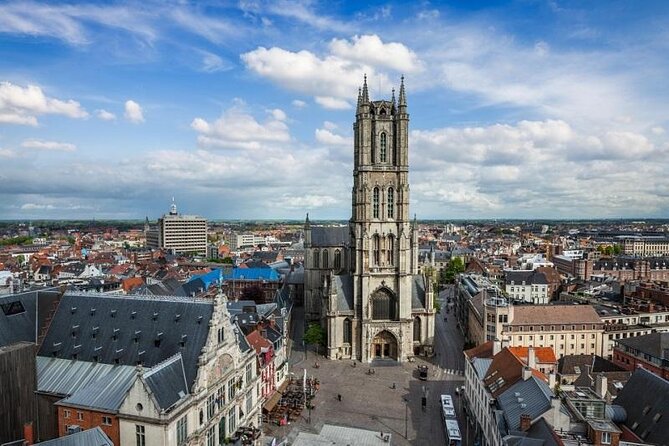
- Starting at Sint-Baafsplein and St. Bavo’s Cathedral
- Van Eyck, the Scheldt, and Ghent’s darker characters
- Medieval streets at Hoogpoort and the Town Hall
- The Stadshal and the contested modern building
- Korenmarkt and the old meat market
- Gravensteen and the count’s message
- St. Veerleplein and the harbor at Graslei
- The chocolate stop, and what to expect
- Price, pace, and group size
- Who will enjoy this Ghent walk
- Booking, cancellation, and practical details
- Should you book Discover authentic Ghent?
- FAQ
- Where does the tour start?
- Where does the tour end?
- How long does the experience last?
- Is the tour offered in English?
- Who guides the tour?
- Is chocolate included?
- Is this mainly a chocolate tour?
- How many people can join the tour?
- Are the major attractions entered during the walk?
- Can I cancel for a full refund?
Key points to know before booking
- Wim teaches as he walks: Expect stories about Ghent’s political and religious past, not just dates and building names.
- The route covers the medieval core: You visit 12 places, including St. Bavo’s Cathedral, Gravensteen, Korenmarkt, and Graslei.
- Chocolate is a short feature: It works as a tasty pause during the walk, but it is not the central activity.
- The start and finish are different: Meet at the white statue on Sint-Baafsplein and finish at Saint Michael’s Bridge.
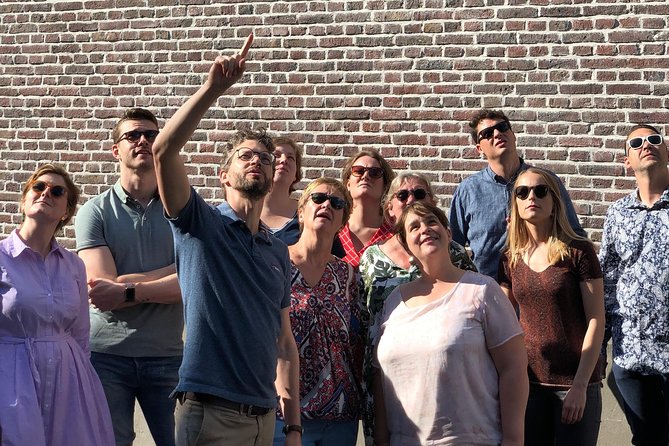
- The group is limited to 15 people: That is a useful size for a guided city walk.
- The pace is steady: The tour lasts about two hours and keeps moving through central Ghent.
Why this walk gives Ghent a clear shape
Ghent can feel confusing at first. Its grand squares, canals, towers, castles, guild houses, and narrow streets come from different centuries, and the city’s story is not always obvious from the outside. This walk helps you connect those pieces.
The route begins with a broad explanation of Ghent, then moves into particular buildings and characters. You hear about commerce at the old harbor, religion around St. Bavo’s Cathedral, political conflict at the Town Hall, and military power at Gravensteen. By the time you reach Graslei and Korenlei, the harbor looks less like a pretty photo stop and more like the working center of an old city.
That approach is useful if you have just arrived in Ghent. You get your bearings early, see the major sights in one sweep, and learn which places deserve a second look later. It also suits anyone who prefers stories and explanation over a rapid list of dates.
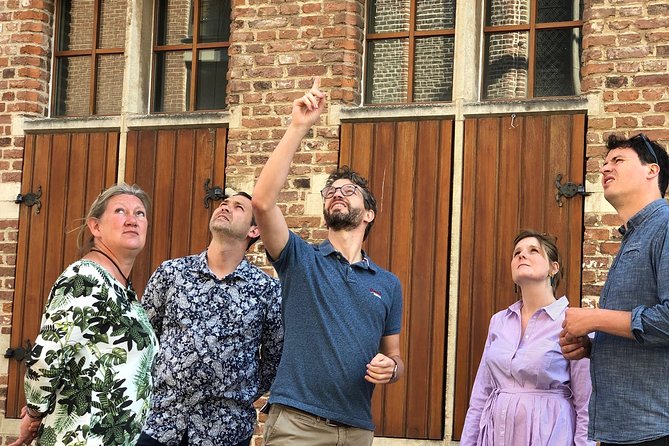
Wim’s role matters here. He is presented as a historian and teacher who has lived in Ghent for many years, and his style is described as friendly, professional, enthusiastic, and natural. The strongest praise focuses on his ability to explain the city in an engaging way without making the walk feel stiff or overly formal.
A few more Ghent trips to weigh up
- Ghent: Belgian Chocolate Walking Tour with Tastings
★ 4.9 · 259 reviews - Ghent: Famous Belgian Chocolate Walking Tour with Tastings
★ 5.0 · 131 reviews - A Taste of Ghent: Beer & Chocolate with storytelling by a local
★ 5.0 · 77 reviews
Starting at Sint-Baafsplein and St. Bavo’s Cathedral
Meet Wim in front of the white statue in the middle of Sint-Baafsplein. This is not just a convenient meeting point. The square gives him a useful stage for introducing Ghent’s economic, political, cultural, and religious past.
You begin with the big picture, then look at how all four forces appear around the square. That is a smart opening because it gives you a framework for the rest of the walk. Later buildings make more sense when you already understand that Ghent was shaped by faith, trade, civic power, and conflict at the same time.
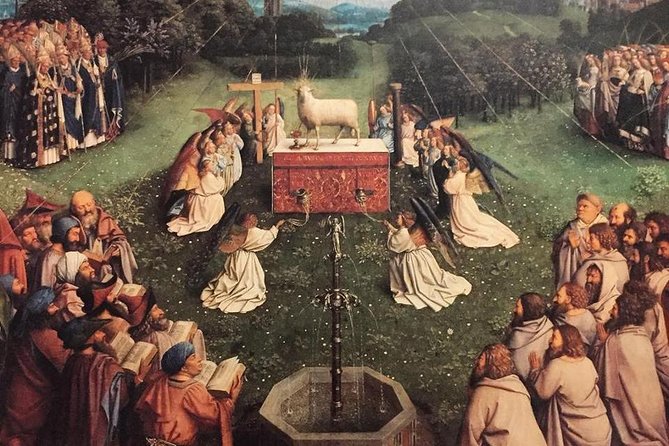
The walk then moves around St. Bavo’s Cathedral. The stop lasts about 10 minutes and focuses on the building’s development and its art treasure. You do not receive an admission ticket as part of this outdoor stop, so think of it as an architectural and historical introduction rather than a cathedral visit.
That distinction matters if you want to see the interior. The tour description says you walk around the cathedral, so you should not assume that an inside visit or extended viewing of its art is included. Still, the exterior is an important part of Ghent’s central story, and Wim’s explanation can help you understand why the cathedral took shape over time.
Van Eyck, the Scheldt, and Ghent’s darker characters
At Maaseikplein, the tour pauses for about five minutes to consider the image of the Van Eyck brothers. This is a short stop, but it adds an artistic angle to a walk otherwise filled with civic and military history.
The question about whether the image resembles the brothers gives the moment a lighter tone. It is also a reminder that Ghent’s story is not only about walls and rulers. Art and public memory are part of the city’s identity, too.
Next comes Geeraard de Duivelsteen, known in English as the Castle of Gerald the Devil. Here the tour turns toward the Scheldt and introduces two very different threats: Viking raiders and Geeraard De Duivel.
The stop lasts only about five minutes, so do not expect a long castle visit. The value is in the connection between place and story. A brief look at the building becomes a chance to discuss fear, defense, and the villains attached to Ghent’s past. The unusual name alone makes this an easy stop to remember.
Medieval streets at Hoogpoort and the Town Hall
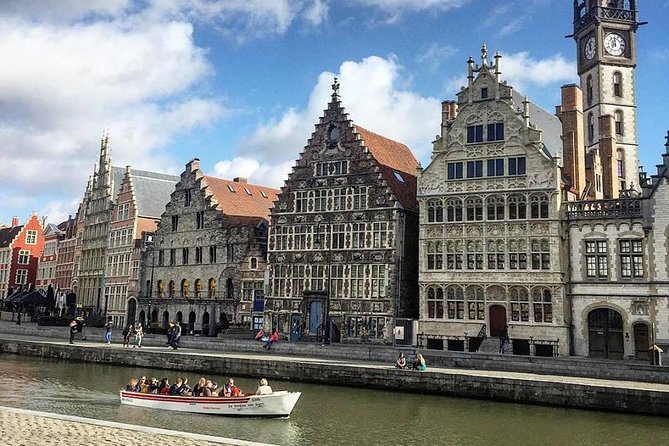
At Hoogpoort, Wim asks you to look closely at old buildings dating to the 13th century. This is the kind of stop that can slip past you if you explore alone. Ghent’s center contains so many attractive facades that it is easy to admire them without thinking about their age or original purpose.
The Town Hall brings the history into sharper political focus. The building was constructed over centuries, and its long building story connects to Emperor Charles V. The tour explains how conflict with Charles V helped produce Ghent’s nickname, noose bearers, a reference to the city’s revolt against him.
This is one of the more memorable facts on the route because it links architecture to civic resistance. You are not simply looking at an old administrative building. You are hearing about a city that challenged a powerful ruler and carried the consequences into its public identity.
The Town Hall stop lasts about 10 minutes, one of the longer pauses on the walk. That gives Wim time to explain the building and the political episode without reducing it to a quick anecdote. If you enjoy the way local history reveals the character of a place, this should be one of the stronger sections.
Same old town, a completely different kind of day:
- Ghent: 50-Minute Medieval Center Guided Boat Trip
★ 4.5 · 5,637 reviews - Historical Walking Tour: Legends of Gent
★ 5.0 · 1,761 reviews - Ghent: 40 Minute Medieval Center Guided Boat Tour
★ 4.4 · 884 reviews - Evening Tour of the Dark Side of Gent
★ 5.0 · 646 reviews
The Stadshal and the contested modern building
The Stadshal offers a change of mood. It is described as the most contested building in Ghent, and Wim asks if you know its nickname.
The available details do not give the nickname, so you will need to hear that part during the tour. What makes this stop useful is the contrast between old Ghent and a more recent architectural argument. After several stops focused on medieval buildings, the Stadshal shows that debates about how Ghent should look did not end centuries ago.
This is also a good example of why a local guide adds value. A building may look strange or out of place when you see it on your own. A short explanation about public reaction and local opinion gives you a way to read it as part of the city rather than as an interruption to the old center.
Korenmarkt and the old meat market
Korenmarkt carries roughly 800 years of history in its buildings. The stop focuses on the houses and their mysterious inscription, another small detail you might miss without someone pointing it out.
At only five minutes, this is not a long architectural lecture. Instead, it works as a close look at the square’s details. You get a reminder that historic streets are full of clues, and that the best city walks train you to notice them.
The route then reaches Het Groot Vleeshuis, the old Great Butchers’ Hall. The guiding question is practical: how did people maintain meat quality before refrigerators? The answer was to bring the butchers together in one building.
This stop gives you a glimpse of everyday regulation and urban organization. Medieval city life was not only kings, cathedrals, and battles. Food supply, trade, and public standards mattered just as much. The hall helps make that side of Ghent visible.
Gravensteen and the count’s message
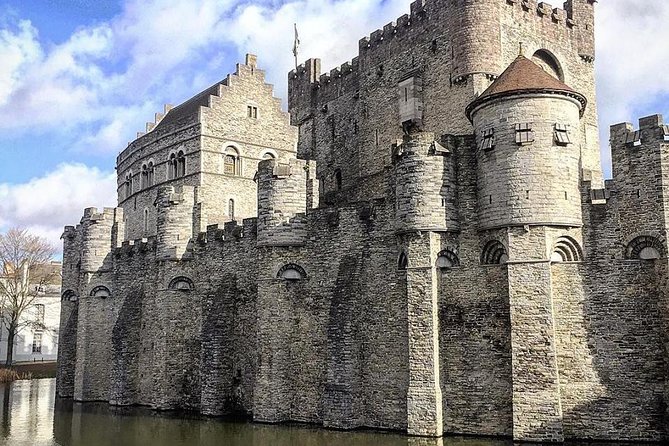
Gravensteen is one of the route’s headline sights. The story here is blunt: the count of Flanders wanted to show the people of Ghent a fist, so he built a small castle.
The description is intentionally compact, but the point is clear. Gravensteen was not merely a romantic castle placed in a pretty city. It represented authority and pressure. Its position in the center made the count’s power hard to ignore.
The tour stops at the castle but does not include an admission ticket. You should treat this as an exterior explanation and an orientation to the site, not a full interior castle tour. If you want to explore Gravensteen inside, you will need separate time and admission arrangements.
Even from outside, it is an important stop because it brings together several themes from the walk: rulers, citizens, defense, and control. After hearing about Ghent’s revolt against Charles V, the castle’s message feels part of a longer pattern of tension between local independence and outside authority.
St. Veerleplein and the harbor at Graslei
At St. Veerleplein, Wim points out Neptune, seahorses, and strange dolphins. This brief stop turns your attention to the symbols and sculptures around the square.
It is a pleasant visual pause after the heavier political material. The focus on odd details also keeps the walk from becoming a solemn march through history. You get a chance to look up, inspect decorative features, and hear the stories attached to them.
The final major section brings you to Graslei and Korenlei. For many people, this is the visual high point of the route. The beautiful harbor was a working place for skippers for centuries, and it also offered them entertainment after work.
That combination is important. The waterfront is now one of Ghent’s most attractive places to sit and take photographs, but Wim’s explanation restores its practical past. Boats, trade, labor, and leisure all met here. You finish at Saint Michael’s Bridge, where the harbor views give you a fitting end to the walk.
The bridge is also a useful end point for continuing your own exploration. The tour does not provide a return transfer to Sint-Baafsplein, so remember that you finish in a different part of central Ghent.
The chocolate stop, and what to expect
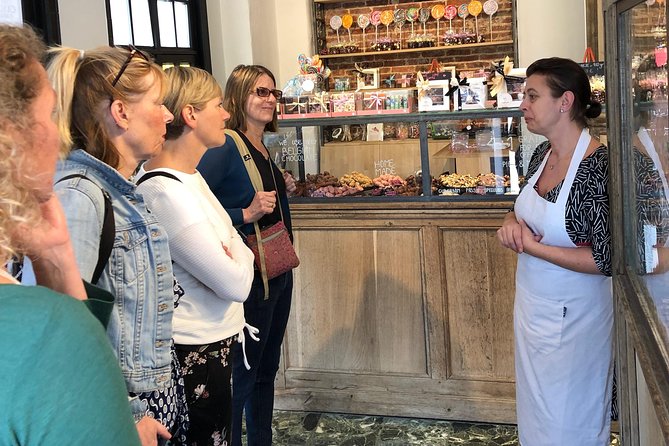
The chocolate element is best understood as a small refresher in the middle of a city walk. The experience promises a taste of Belgian chocolate, and the chocolate is praised as excellent. It gives you a welcome break and adds a distinctly Belgian flavor to the afternoon.
Do not book this if your main goal is an extended tasting session. One person specifically wished there had been more chocolate, while another felt the visit to the chocolatier could have lasted longer. Those comments point to the same practical truth: the tour is about Ghent’s history first.
That balance may be ideal for you if you want a snack-sized chocolate experience paired with real context. You get to sample something local without giving up most of your two hours to food. If you are seeking several tastings, detailed chocolate-making information, or a long stop inside a shop, choose a dedicated chocolate tour instead.
Price, pace, and group size
At $42.05 per person, the price is reasonable if you value a focused introduction to Ghent with a personal guide and a chocolate taste. You are paying for about two hours of English-language guiding, a route through many central landmarks, historical interpretation, and a small food feature.
The value depends on how you use it. For a first visit, the tour can save you from wandering past important sites without understanding them. It also gives you a list of places to revisit, especially the cathedral, Gravensteen, Town Hall, and Graslei.
The walk includes 12 stops, but many are brief. The listed stop times add up to about 85 minutes, leaving time for walking between locations, transitions, and chocolate. You should expect a steady tour rather than long periods at each sight.
The group limit is 15 people. That is large enough to have company but small enough to keep the guide’s voice within reach. Most people can participate, service animals are allowed, and the meeting point is near public transportation. The tour is offered in English and uses a mobile ticket.
It is booked, on average, 24 days ahead. That does not guarantee that every date sells out, but it is a useful reason to reserve before your visit rather than waiting until the last minute.
Who will enjoy this Ghent walk
I would choose this tour for a first-time visitor who wants to understand the city quickly. It also suits anyone who likes architecture, political history, medieval stories, and local details more than a long food tasting.
It is a good fit for couples, families, and solo visitors who prefer a guided introduction before exploring independently. The route has enough variety to keep the two hours moving: cathedral, art, castle, Town Hall, market buildings, statues, canals, and chocolate.
You may want something else if you dislike walking tours, need long indoor visits, or want a detailed look inside every landmark. The stops are mostly outdoors, and several are only five minutes long. You also need to be comfortable following a steady route through the historic center.
Booking, cancellation, and practical details
Your meeting point is Sint-Baafsplein in Ghent, in front of the white statue in the middle of the square. The tour ends at Saint Michael’s Bridge on Sint-Michielshelling, not back at the starting point.
Confirmation is provided when you book. Free cancellation is available up to 24 hours before the local start time for a full refund. Changes or cancellations inside that 24-hour window are not accepted for a refund.
The experience requires a minimum number of participants. If the operator cancels because that minimum is not reached, you can receive a full refund or be offered another date or experience.
Should you book Discover authentic Ghent?
Book it if you want Ghent explained by a local historian, with a well-chosen route through the medieval center and a modest chocolate taste along the way. Wim’s greatest strength is his command of the city’s stories, especially the links between buildings, rulers, trade, religion, and rebellion.
Keep your expectations clear. This is not a chocolate-heavy excursion, and it is not a series of long interior visits. It is a compact, thoughtful introduction to Ghent that ends with the city’s most scenic harbor views. At $42.05, it offers solid value for a first look, especially if you want to know what you are seeing instead of simply collecting photographs.
FAQ
Where does the tour start?
The tour starts at Sint-Baafsplein in Ghent, in front of the white statue in the middle of the square.
Where does the tour end?
The walk ends at Saint Michael’s Bridge on Sint-Michielshelling.
How long does the experience last?
The experience lasts approximately two hours.
Is the tour offered in English?
Yes. The tour is offered in English.
Who guides the tour?
The guide is Wim, a historian and teacher who has lived in Ghent for many years.
Is chocolate included?
Yes. The experience includes a taste of Belgian chocolate during the walk.
Is this mainly a chocolate tour?
No. The main focus is Ghent’s history and landmarks. The chocolate is a short feature rather than an extended tasting.
How many people can join the tour?
The group has a maximum of 15 participants.
Are the major attractions entered during the walk?
The route includes outdoor stops at places such as St. Bavo’s Cathedral and Gravensteen. The provided details do not state that admission to their interiors is included.
Can I cancel for a full refund?
Yes. You can cancel at least 24 hours before the local start time for a full refund. Cancellations or changes made less than 24 hours before the start are not refunded.
Just added around Ghent
- Walking Food Tour in Ghent★ 5.0 · 13 reviews
- Historic Highlights, by a local guide★ 5.0 · 9 reviews
- Discover Mons while playing! Escape game – The alchemist★ 4.0 · 5 reviews
- Discover Ghent while playing! Escape game – The Walter case★ 4.5 · 4 reviews
- e-Scavenger hunt Ostend: Explore the city at your own pace★ 4.5 · 10 reviews
- Ghent Walking Tour with Audioguide on Your Smartphone★ 4.5 · 13 reviews
- Discover Ghent with a self-guided Outside Escape city game tour!★ 4.0 · 10 reviews
- e-Scavenger hunt Kortrijk: Explore the city at your own pace★ 4.5 · 15 reviews
Dessert Tours, compared.

Choco-Story Brussels: Chocolate Museum Entrance with Tasting
Read our review →
Belgian Chocolate Making Workshop with Tastings
Read our review →
Choco-Story Chocolate Museum Guided Tour w/Tastings
Read our review →
2.5-Hour Chocolate Museum Visit with Workshop
Read our review →
Historical Walking Tour with Chocolate & Waffle Tasting
Read our review →

Browse the lists this tour appears in